Latest News
From Sea to Shining Sea
Kathy Herald-Marlowe
Jul 01, 2026

In 1895, a Wellesley professor, Katherine Bates, traveled cross country from New England to Colorado.Upon arriving she wrote a poem that evolved into a beloved American anthem (melody by Samuel Ward added years later).America the Beautiful easily gins up vociferous American clammer at any time, at any moment as it justly portrays our nation today as it did for the July 4th commemoratives of 1895.
Oh beautiful for Spacious Skies here in the Northwest corner of Connecticut where star studded skies go on forever as do the vastness of green woods, the charm of small towns and villages, the friendliness of folk, the grace of horses and the surprising appearance of bears.Across the nation are the splendor of flat lands, majestic mountains, a near six pack of Great Lakes, the mighty Mississippi, tall cities,cherished monuments of history:Washington Monument, Lincoln Memorial, Statue of Liberty, Mount Rushmore as well as national parks protecting wonders of natures.Farm lands are rich with produce, industrial lands employee millions, academia and laboratories bring miracles forth.
Across the fruited plains from across the globe, people have come to the U.S. to engage in the World Cup, which for them, not us, is their national game (ours is “real” American football). Many came reluctantly, some were tormented with ridiculous entry barriers or barred from entry entirely.These international fans came to 11 U.S. cities for competitions but 39 cities/towns across the country offered visiting teams “home” bases.These World Cup fans – not traditional tourists- speak of the beauty and vast differences of the terrain.All seem to expound on how everything is LARGE from skyscrapers, to massive discount stores, to the size of meals, to the generosity and welcome of the American people.In Lawrence, Kansas, residents greeted the Algerian team with valiant attempts to serenade them with their national anthem- in Algerian. In Boston, Scottish bagpipers paraded in Red Sox shirts. Americans are keen, super keen sports enthusiasts (e.g. the Knicks) so we are easily contagious to the excitement, roars, joy of all sports.
A thoroughfare for freedom beat across the wilderness. Attempts to rewrite or conceal American history at D.C. museums and national parks have met with judicial blocks.History is - ours has been struggling yet advancing, standing up for liberty for all. More than 600,000 soldiers died in the Civil War seeking equality through unity. For centuries, folks have marched, protested in peace, been relocated, incarcerated and attacked – white, black, red, yellow.Periods of supremacy rise and they fall.The U.S. is large, it is diverse – defamation and immoral speeches don’t change its essence.America has been a staunchly democratic place of envy, it has blundered of late, yet its history is rich with spreading health, reducing poverty across the globe while advocating freedom and democracy.
Crown thy good with brotherhoodLending a hand, helping others in need, risking one’s safety for others is as American as apple pie, as common as sports jerseys.The news and more importantly communities celebrate daily heroes, those who when crisis emerges step forward without hesitation, are oblivious to fanfare, to severe weather, to impossibilities. Governmental responses may or may not emerge timely with effectiveness but citizenry is certain to be present, to respond with immediacy, to offer all that can be provided, to be there for others.The U.S. hasn’t always been in military battles/conflicts of high regard, but in World War I and particularly World World II Americans were essential to ending despots and death.
The 250th commemoration of the Declaration of Independence, the founding of the USA will this July 4th primarily reside in neighborhoods, communities, states.Historical enactments, massive parades, fireworks and 150 million hot dogs and about an equal number of hamburgers will be the anchors of celebration.What happens in D.C. may be split between a congressional organization and a presidential show.The 4th festivities are not of politics or government but people. No one can reduce the enormity of a nation celebrating its birth and its sustainment of 250 years.
Go well on the 4th of July, be proud to be an American.
Kathy Herald-Marlowe lives in Sharon.
Keep ReadingShow less
Fix Connecticut’s big problems before trying to seize utilities
Chris Powell
Jul 01, 2026
In principle there’s nothing wrong with government ownership of electricity, water, and gas delivery utilities, since they are natural monopolies. People building a state or country from scratch might do best to start that way — if they have the necessary capital.
But lacking the necessary capital, Connecticut did not start that way and now its basic electricity infrastructure is already in place. So advocating municipal government ownership of electric utilities, as Hamden state Rep. Josh Elliott is doing in his challenge to Governor Lamont in the Democratic primary, is a silly distraction from the state’s far more compelling problems. Elliott’s idea is just a way for him to display his leftist inclinations and to demagogue against big utility companies, as if government isn’t far bigger and often far more exploitive.
Elliott would authorize municipalities to commandeer the electrical system within their borders through an eminent domain that would allow purchase to be made at less than market value of the property seized. This would be of doubtful constitutionality. But even such a steal still would require payments in the scores of millions of dollars, money that would have to be borrowed and repaid with interest for many decades, money municipalities often don’t have for their regular capital improvement needs.
There also would be the challenge of management. The town would have to assemble a staff with a technical expertise it now lacks.
There would be risk in separating the state’s electrical grid into smaller units. The state already has five municipalities with their own government-owned electric companies and it manages well enough with them, since most have been around for a century, having begun when electrification was new. But having more electric companies would diminish the economies of scale provided by statewide and regional electric companies.
Establishing a municipal electric company would be doubly expensive because the new company, unlike investor-owned utilities, would be exempt from municipal property taxes, even as investor-owned utilities are the largest property taxpayers in most towns. Municipal electric companies are also unregulated by the state, so they provide less legal assurance of consumer protection.
Yes, electricity in Connecticut is nearly the most expensive in the country, but this is less because the electric utilities are shareholder-owned, strive to earn a profit, and pay some executives excessively than because inflation has increased energy costs generally, the state lacks adequate access to natural gas and won’t use coal, and because state government taxes electricity heavily with its lately infamous “public benefits” charges.
While municipally owned electric utilities provide electricity cheaper in large part because they are exempt from property taxes and “public benefits” charges and don’t have regional service obligations as the major electric companies do. The municipal systems don’t generate their own electricity and would be lost if they could not obtain it by connecting to the regional electric companies.
This doesn’t mean that government ownership of utilities can’t be made to work in a broader way. It means that government’s acquisition of regional utilities or local components would be hugely expensive and that socializing them on a scattershot municipal basis, as Elliott contemplates, would be complicated, disruptive, and distracting to government without offering any guarantee of reducing electricity bills in the foreseeable future.
Connecticut’s schools are failing the poor, remain largely segregated racially, and still cost more every year without improving their results. The state’s transportation system is creaky. The state has a desperate shortage of housing, and homelessness is rising. State government’s pension obligations remain grossly underfunded. Municipal property taxes keep rising, also without an improvement in services to the public. The state’s cost of living is soaring and no one in authority even tries to reduce the cost of government itself lest government’s employees be offended.
So whether he is elected governor or is just re-elected to the General Assembly, Elliott should apply his socialist inclinations to those problems for a few years before trying to take the electricity business apart. Government in Connecticut has no competence to spare.
Chris Powell has written about Connecticut government and politics for many years.
Keep ReadingShow less
Turning Back the Pages - July 2, 2026
Norma Bosworth
Jul 01, 2026
125 years ago — 1901
SALISBURY — Mrs. T.S. Russell had the misfortune to lose one of her farm horses this week.
C.F. Wanger captured a very large snapping turtle Sunday while on his way home from Mt. Riga. He took Mr. Turtle into custody and thought he had him secure, but on going to look at him Monday morning he could not be found.Soon after Mr. Wanger was called by telephone to come and get his new pet. Seeing the rear door of the Maple Shade open the turtle entered. Imagine the landlady’s surprise on entering one of the bed rooms to find turtle in possession which proves that it knew where to look for a first class boarding place.
SHARON — Miss Neenah Ryan opened her Kindergarten school on Monday of this week with nine pupils.
LIME ROCK — About 2,000 pine logs have been hauled to the saw mill here during the past winter. A. Palmer commenced sawing them on Tuesday.
100 years ago — 1926
The marriage of two popular young people took place on Wednesday morning at 11 o’clock at the Congregational Church in Salisbury, when Mr. Charles Nash of Portland, Me. and Miss Lila May Senior, daughter of Mrs. Mary Senior of Salisbury, were united in the holy bond of matrimony by the Rev. John Calvin Goddard.
ORE HILL — Mrs. John Rowe received quite a painful injury recently when she ran a sliver nearly an inch long under a finger nail while employed at Lakeville Manor.
WANTED — Competent woman over twenty-five years old for general housework with cooking — Electric stove — no washing — good wages. Telephone Lakeville 214-2.
50 years ago — 1976
A stone grinding wheel was unearthed last week at the site of Ethan Allen’s furnace in Lakeville.Leonard Godding excavated the spot near the Lakeville Hose Company firehouse in preparation for the addition to that building and came up with numerous specimens of iron ore containing charcoal, and slag, the glassy substance remaining after iron ore is melted down. A leading arsenal of the Revolution, the blast furnace was built in 1762 by Allen and some sturdy neighbors.
A young goshawk was stolen from its artificial nest at the Miles Wildlife Sanctuary in Sharon early Sunday. Arthur Gingert, sanctuary caretaker, speculated that the thief probably intended to use the bird for falconry. The 6 ½ week old chick was nearly ready to fledge, or fly, Gingert said, and he added that he wished the bird had flown away a day sooner. The bird of prey is not rare — Gingert termed the species uncommon but not endangered. Falconers in New York State and Connecticut have offered to help in the search for the bird. Gingert said there is a black market for the goshawk because it is illegal to buy or sell the bird, valued for the sport of falconry. He said the bird is probably worth several hundred dollars on the black market. The foundling had been carefully tended at the sanctuary and it was hoped that it would soon return to the wild but about 1:30 a.m. Sunday, “someone who knew what he was doing” removed it from its nest.
A microscopic parasitic organism known as “schisotome dermatitis” has been identified as responsible for a recent series of “lake bites” from persons swimming at the Town Grove on Lake Wononscopomuc. Many children have come home covered with bites in recent days. According to First Selectman Charlotte Reid and Recreation Director Art Wilkinson, the organism was identified early this week by representatives of the Union Carbide Environmental Sciences branch in Tarrytown, N.Y. Mrs. Reid said Wednesday the town is in the process of posting a notice at the lake that would explain the problem, but the lake will not be closed to swimmers.
Mr. Wilkinson said the problem is a temporary one, adding that cooler water temperatures will cause the parasites to die.
LAKEVILLE — On June 30, Mabel and Robert Livsey celebrated their 50th wedding anniversary. They have been residents of Lakeville since 1939 and have lived in the same house on Lincoln City Road for the past 20 years. Mr. Livsey has served as school crossing guard for Salisbury Central for the past nine years. Mrs. Livsey commented that the children of the town love her husband and even tell him when they lose their teeth.
John Flynn, 14, of Lakeville, was the winner of Monday’s Litchfield County Insurance Agents’ Youth Golf Classic at the Litchfield Country Club in the 14-15 year old division.
25 years ago — 2001
SALISBURY — The Yerkes girls have performed a remarkable hat trick. Sisters Nancy, Robin and Lyn Yerkes were all valedictorians of their classes at Housatonic Valley Regional High School. Nancy was the most recent, graduating last Thursday evening. Her older siblings proudly report she had the highest grade-point average of the three.
A tractor trailer and carnival ride from James B. Strates Show of Orlando were left behind in the middle of Canaan last week. The train was headed south on the Housatonic Railroad line when the car had to be pulled out of the train for repairs.
These items were taken from The Lakeville Journal archives at Salisbury’s Scoville Memorial Library, keeping the original wording intact as possible.
Keep ReadingShow less

Want more of our stories on Google? Click here to make us a Preferred Source.
A warm send-off for Susan Kelsey in Falls Village
Lakeville Journal
Jul 01, 2026
Ruth Epstein
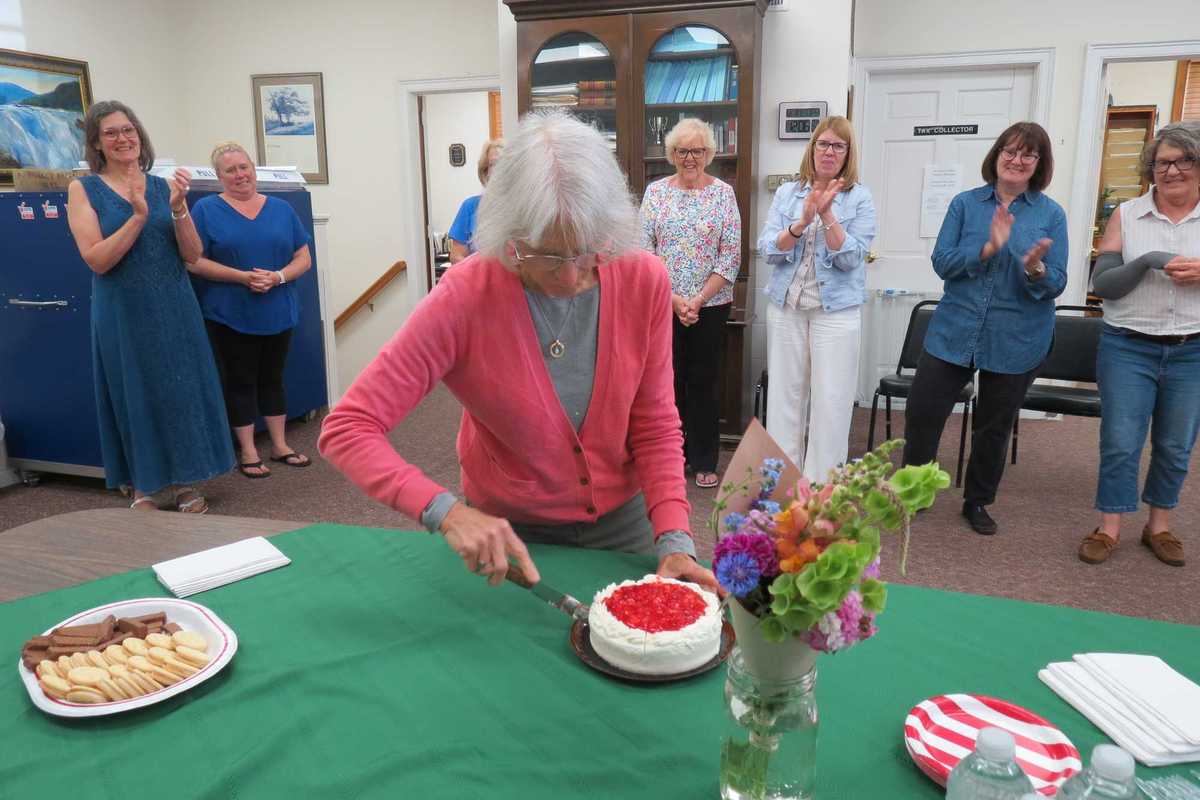
Susan Kelsey was honored by the Falls Village Town Hall staff with a reception Wednesday, June 24. She is stepping down as Republican Registrar of Voters after more than a decade of service.
$1.5M state grant advances protection of 245-acre Housatonic River property
Debra A. Aleksinas
Jul 01, 2026

The Northwest Connecticut Land Conservancy received a $1.5 million state grant to help protect this 245-acre property along the Housatonic River in North Canaan and create a new public nature preserve.
Provided
It will create an unparalleled opportunity for residents to enjoy the river and nature near downtown North Canaan.
—Catherine Rawson, Executive director of NCLC
CANAAN — A 245-acre riverfront property in North Canaan is a major step closer to permanent protection after the Northwest Connecticut Land Conservancy (NCLC) secured a $1.5 million state grant to help acquire it. The tract, one of the largest remaining undeveloped stretches along the Housatonic River in Northwest Connecticut, had previously been approved for residential subdivision.
The grant, announced June 26 and awarded through the Connecticut Department of Energy and Environmental Protection’s Open Space and Watershed Land Acquisition (OSWA) Grant Program, will support preservation of more than a mile of Housatonic River frontage and more than a half-mile along the Blackberry River where it joins the Housatonic in the Weatogue Valley.
According to NCLC Executive Director Catherine Rawson, preserving the property will protect one of the last major unprotected landscapes along the Housatonic River corridor from future development.
NCLC is purchasing the property from H. Bruce McEver, who had received approval for a 20-lot subdivision on the land before abandoning the project last year, clearing the way for the conservation purchase.
The acquisition would conserve what NCLC describes as the largest contiguous tract of unfragmented riverine and interior forest habitat remaining on the east side of the Housatonic River between the Massachusetts border and Connecticut’s Great Falls.
Just as importantly, the project would complement thousands of acres already protected across the river in Salisbury, helping create an expansive, permanently conserved landscape spanning both sides of the federally designated National Wild and Scenic Housatonic River.
“With the support of our members, partners and the North Canaan community, NCLC is advancing the protection of one of the largest remaining stretches of undeveloped riverfront and forest habitat along the Housatonic River,” said Rawson. “It will create an unparalleled opportunity for residents to enjoy the river and nature near downtown North Canaan.”
The purchase price is $2.25 million, with the state grant covering about two-thirds of the cost. NCLC is seeking to raise about $2.6 million in total to cover the purchase, environmental due diligence, legal and transaction expenses, and the infrastructure and long-term stewardship needed to prepare the preserve for public access.
While the grant marks a major milestone, additional fundraising is still needed before the purchase can be completed. If fundraising is successful and the project stays on schedule, Rawson said NCLC hopes to begin opening the preserve to the public by the summer of 2028.
Several additional land preservation groups were also awarded state preservation grants on June 26.
The Salisbury Association (SA) received two grants: a $124,150 grant to acquire 63 acres along Routes 7 and 112 in Salisbury, including 34 acres to be preserved through OSWA where Salmon Kill Creek flows into the Housatonic River. The property adjoins and is part of the Appalachian Trail Corridor. SA also received a $468,000 grant to preserve 96 acres of mostly core forest land on Lincoln City Road in Salisbury.
The Sharon Land Trust Inc. (SLT) was awarded a $243,750 grant to acquire 65 acres on Gay Street. The property slopes from the heights of Red Mountain down to Beardsley Pond, a town drinking water reservoir. The land is surrounded on three sides by conservation properties and connected to thousands of acres of protected land. SLT plans to extend its existing Red Mountain public-access trail to the property.
“Open space provides benefits to residents across Connecticut and makes our state a great place to live,” Gov. Ned Lamont said in making the announcements. “These community assets provide free recreational opportunities and connect our residents to all the health benefits that come from spending time outdoors.”
A critical piece of the river corridor
The North Canaan acquisition would permanently conserve a landscape recognized for its ecological, scenic and recreational value along the Housatonic River.
According to Connecticut’s Natural Diversity Database, the property provides habitat for 10 state-listed species, including the northern long-eared bat, mudpuppy, wood turtle and skillet clubtail dragonfly. The northern long-eared bat is also listed as federally endangered. The property also supports several rare plant species and contains prime farmland soils considered important statewide.
Once completed, the preserve will offer hiking, wildlife observation, fishing and other low-impact recreation using existing woods roads and gentle terrain. Within walking distance of downtown North Canaan, it will expand public access to open space while strengthening connections to the Appalachian Trail, Twin Lakes and the Housatonic Heritage Area’s Hou-Bike-Walk Trail.
North Canaan First Selectman Jesse Bunce called the project “an incredible opportunity for our community.”
“Protecting this land will preserve an important part of North Canaan’s natural heritage while creating new opportunities for residents and visitors to enjoy the outdoors,” Bunce said in a statement. “We appreciate the partnership of NCLC and the State of Connecticut in making this investment in our town and future generations.”
Founded in 1965 and based in Kent, NCLC is the state’s largest land trust, protecting more than 14,400 acres across Litchfield and northern Fairfield counties. Its portfolio includes public hiking preserves, working farms, rivers and streams, and habitat supporting numerous rare and endangered species.
Keep ReadingShow less
Celebrating the spirit and founders of Norfolk’s Aton Forest
Jennifer Almquist
Jul 01, 2026

Dr. Frank Egler, ecologist and founder of Aton Forest, smiles next to his wife, Happy Kitchel Egler. The couple will be honored this month.
Provided
NORFOLK – This month, Norfolk will celebrate the legacy of two Connecticut conservation pioneers. Ecologist Dr. Frank Egler and his wife, photographer Happy Kitchel Egler, founded Aton Forest, the 2,496-acre natural area land trust and ecosystem research field station, which is marking its centennial year.
The milestone will be celebrated throughout July with an exhibition, lectures, and other events marking 100 years of Aton Forest. The recent acquisition of the965-acre Spaulding Pond preserve in South Norfolk from the Connecticut River Conservancy will also be recognized. The preserve was originally created by Happy Kitchel (1912-1978).
Today, Aton Forest’s staff and trustees continue the Eglers’ work by studying and protecting forest preserves, essential ecosystems and vital habitats for wildlife.
Frank Egler (1911-1996) spent more than a half century living in the forest, conducting scientific research, experimenting with vegetation science, and developing his concepts of an integrated ecosystem in the 1500-acre Egler Preserve in North Norfolk and Colebrook. He also worked at The Museum of Natural History where he began a research program on herbicide spraying in rights of way.
Egler praised his wife’s efforts to preserve Spaulding Pond, writing that protecting that tract “was one of the remarkable accomplishments of an extraordinary woman.”
A lesser known experience of Egler’s is his collaboration with aquatic biologist Rachel Carson during her research for her seminal book “Silent Spring.” Carson sought his expertise on the ecological effects of chemical pollution, and correspondence between the two is preserved in Aton Forest’s archives. Egler became an early advocate for limiting herbicide use and wrote of Carson, “Among biologists, the most unsilent and courageous man I know is a woman.”
A prolific writer of five books and more than 300 articles, Egler’s best-known book, “The Wild Gardener and the Wild Landscape: The Art of Naturalistic Landscaping,” is illustrated with his wife’s photographs of Woodchuck Hill, where Egler developed his gardening skills for fifty years, and where he is buried.
Current Aton Forest President and Chief Steward Billy Gridley described Egler as “primarily a plant ecologist . . .and a pioneer in the philosophy of science and the need to understand the human ecosystem.”
Gridley’s new book, “The Spirit of Aton Forest: Frank Egler, Rebel Ecologist in Pursuit of Science and Natural Area Protection,” will be available in a limited edition at the opening reception for the centennial exhibition. Gridley will also speak July 10 at 4:30 p.m. at the Hub in Norfolk.
In the future, Aton Forest plans to expand forest succession research, weather monitoring, citizen science work, and educational opportunities for scientists and students. While not open to the public, through events, gatherings, and education days, the mission of Aton Forest remains constant: “to positively impact thriving natural and human communities in an increasingly ecologically challenged bioregion and biosphere in the 21st century.”
Keep ReadingShow less
Want more of our stories on Google? Click here to make us a Preferred Source.
loading