Latest News
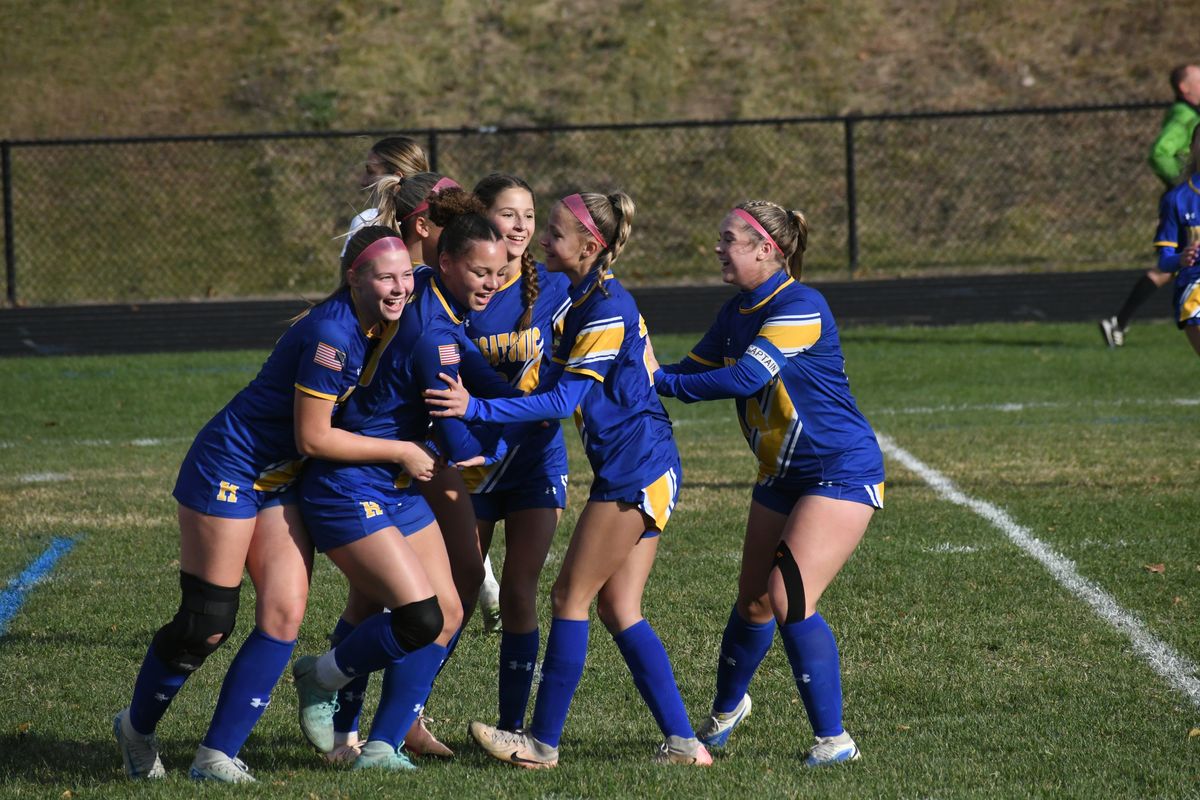
Housatonic Valley Regional High School’s girls soccer team celebrates a goal in the quarterfinal game Nov. 7.
Riley Klein
HVRHS (3) got matched against Morgan High School (10) in the semifinals. On the other side of the bracket was Canton High School (4) versus Old Saybrook High School (9). The winners of both games will meet in the Class S championship game.
To start the tournament, HVRHS earned a first-round bye and then had home-field advantage for the second-round and quarterfinal games.
In the second round Tuesday, Nov. 4, HVRHS won 4-3 against Stafford High School (19) in overtime.
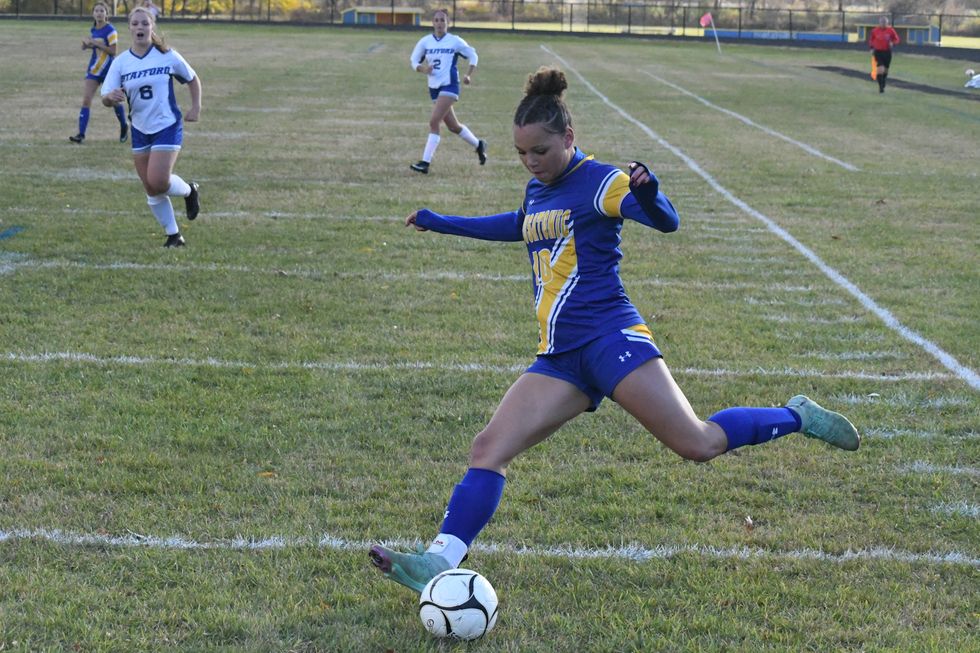 Ava Segalla lines up a shot.Riley Klein
Ava Segalla scored three goals for Housatonic, including the overtime winner, and Lyla Diorio scored once.
Bella Coporale scored twice for Stafford and Gabrielle Fuller scored once.
HVRHS matched up against Coventry High School (11) in the quarterfinal round Friday, Nov. 7.
In the 2024 tournament, Coventry eliminated the Mountaineers in the second round. Revenge was served in 2025 with a 4-2 win for HVRHS.
Segalla scored her second hat trick of the tournament and Georgie Clayton scored once.
Coventry’s goals came from Jianna Foran and Savannah Blood.
“The vibes are great,” said HVRHS Principal Ian Strever at the quarterfinal game.
The semifinal games were played Wednesday, Nov. 12, on neutral ground. HVRHS and Morgan met at Newtown High School.
Morgan was the runner-up in last year’s Class S girls soccer tournament, losing in penalty kicks to Coginchaug High School.
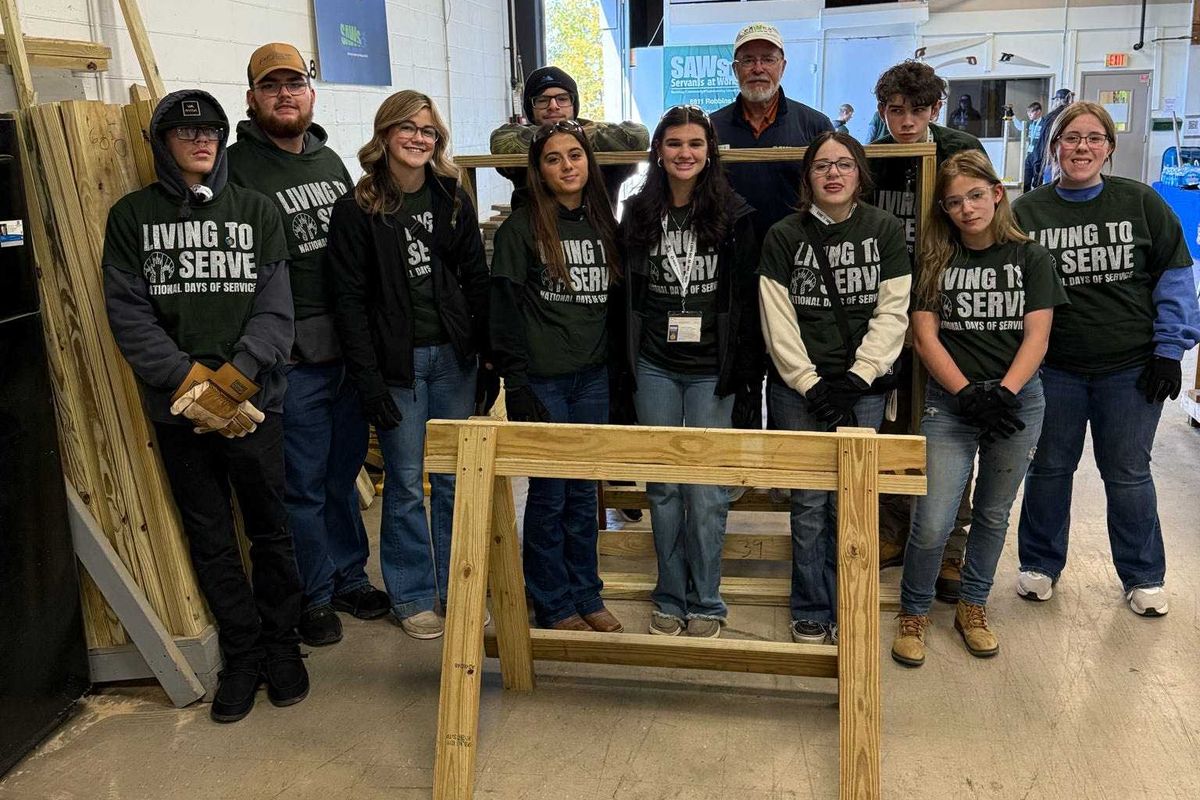
Housatonic Valley FFA built wheelchair ramps for homes during the FFA convention.
Provided
Four Housatonic students - Hannah Johnson, Madison Melino, Darwin Wolfe and Kellie Eisermann - competed in the horse evaluation competition, where the team won a bronze placement. The nursery landscape team, made up of Byron Bell, Hayden Bell, Madeline Collingwood and Michael Gawel, earned a silver placement overall in their competition.
In the leadership development events, Zayre Trail competed in the Creed Speaking with an overall bronze placement. Riley Mahaffey, in her third national public speaking event, advanced to the semifinals in Extemporaneous Speaking. Tyler Anderson represented our chapter by applying for and receiving a two-star national chapter award.
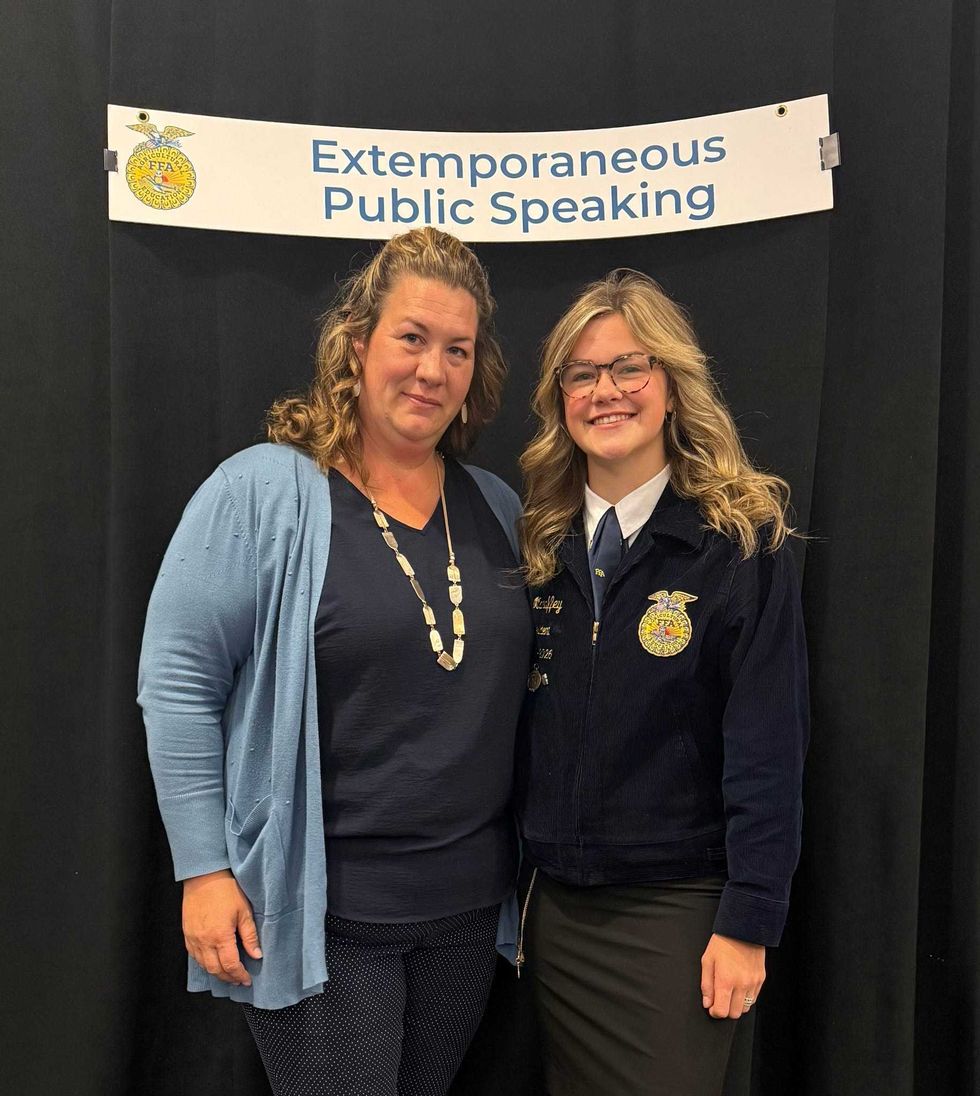 Teacher Sheri Lloyd and FFA student Riley Mahaffey at the FFA convention.Provided
Two recent HVRHS alumni, Emma Crane and Will Star, earned their American FFA Degrees. The American Degree is the highest degree an FFA member can achieve, recognizing exceptional leadership and dedication to agricultural education and supervised agricultural experience projects.
In addition, Levi Elliott and Daniel Moran were honored with the Brian Parker Award, sponsored by the Housatonic Valley FFA Alumni. This award is given to hardworking members who have not yet had the opportunity to attend the National Convention.
Other chapter representatives included Hayden Bachman, Christopher Crane, Daphne Paine, Logan Padelli and Taylor Green, who were all recognized for their dedication and involvement in FFA activities.
During the trip, students participated in “Days of Service,” including projects with Servants at Work (SAWS) to build wheelchair ramps for homes, volunteer in food kitchens and organize clothing donations. Members also attended leadership workshops to strengthen their leadership skills.
Students participated in other fun activities such as a rodeo with broncs and bull riding, a concert by Ernest and Ella Langley and of course the National Convention Expo, which is always a big hit. They also attended sessions at Lucas Oil Stadium, featuring keynote speakers, retiring addresses from national officers and performances from FFA talent shows.
Our chapter’s goal was to exchange information from different chapters across the country to set up exchange trips in the future.
Overall, everyone had a great time competing, meeting new members from across the country, and making unforgettable memories.
Kellie Eisermann is the FFA Reporter this year. She is a junior and lives in Lakeville.