Latest News

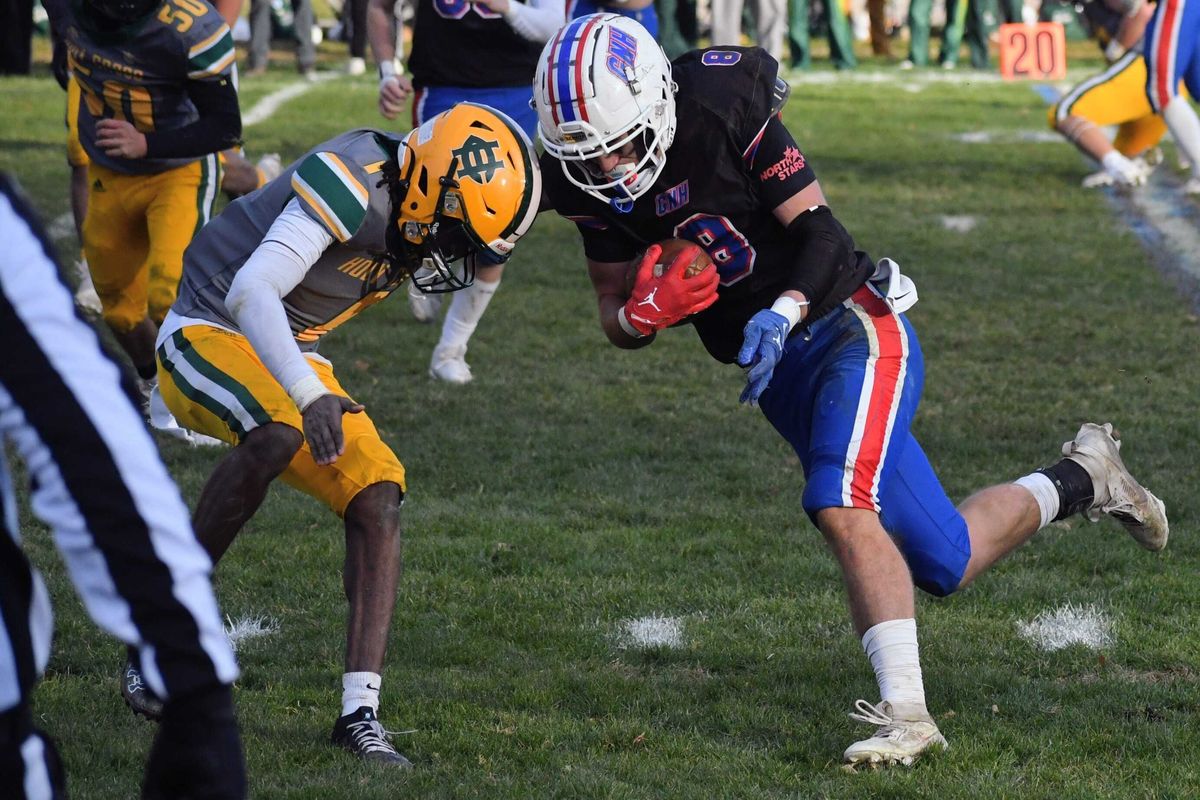
Dae'Sean Graves and Owen Riemer brace for impact Saturday, Nov. 15.
Photo by Riley Klein
GNH pounded the ground game for a total of 209 rushing yards. Cole Linnen, Jaden Hoffman and Trevor Campbell each ran in one TD. Wes Allyn caught an interception on defense.
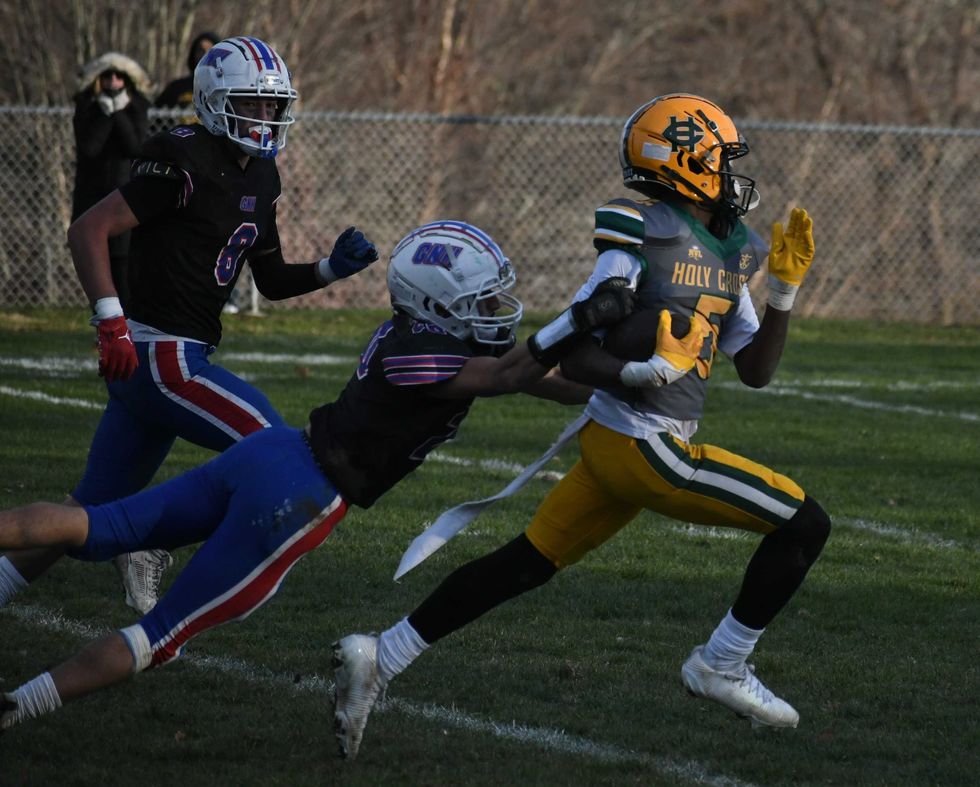 Devonne Drake caught two touchdown passes for Holy Cross against GNH.Photo by Riley Klein
The result did not alter Naugatuck Valley League (Tier 1) standings with Holy Cross (6-3) remaining in third place and GNH (4-5) remaining in fourth place. Seymour and Woodland Regional sit tied at the top with undefeated 9-0 records ahead of their showdown Nov. 26.
GNH scored first against Holy Cross on a seven-yard rush by Jaden Hoffman. Holy Cross responded with three quick reception touchdowns -- two by Dae’Sean Graves and one by Devonne Drake -- before halftime, creating an 18-7 lead at the break.
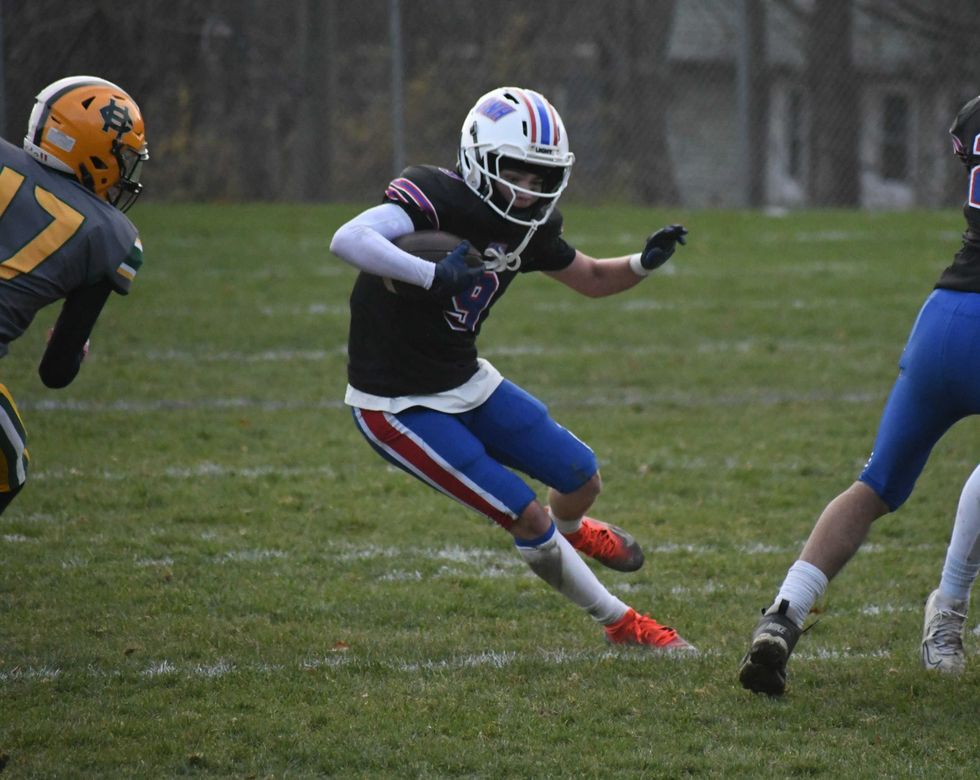 Tyler Roberts cuts on a drive from GNH.Photo by Riley Klein
In the third quarter, Trevor Campbell scored for GNH and Nathan Craft scored for Holy Cross.
Holy Cross added two more reception TDs in the final quarter with one by Aaden Hall and another by Drake. GNH’s Linnen scored a 31-yard touchdown run to bring the final score to 36-20.
The final regular season game for GNH will be the Turkey Bowl against St. Paul Catholic High School Wednesday, Nov. 26, at 6 p.m. in Bristol.
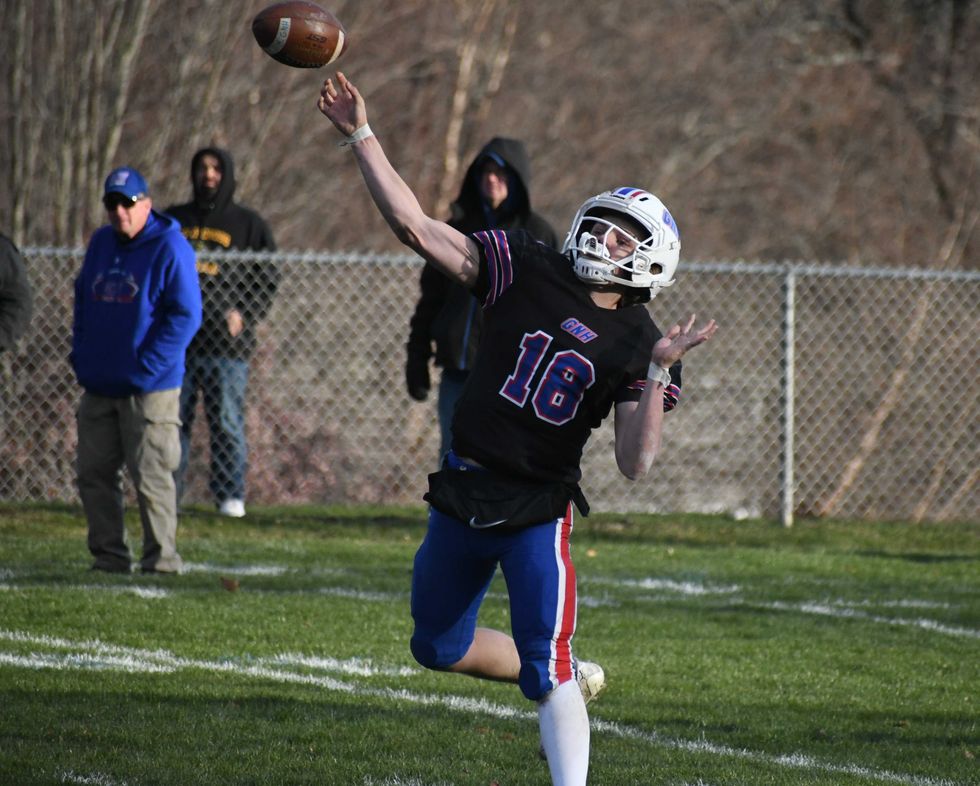 QB Trevor Campbell launches a pass downfield.Photo by Riley Klein

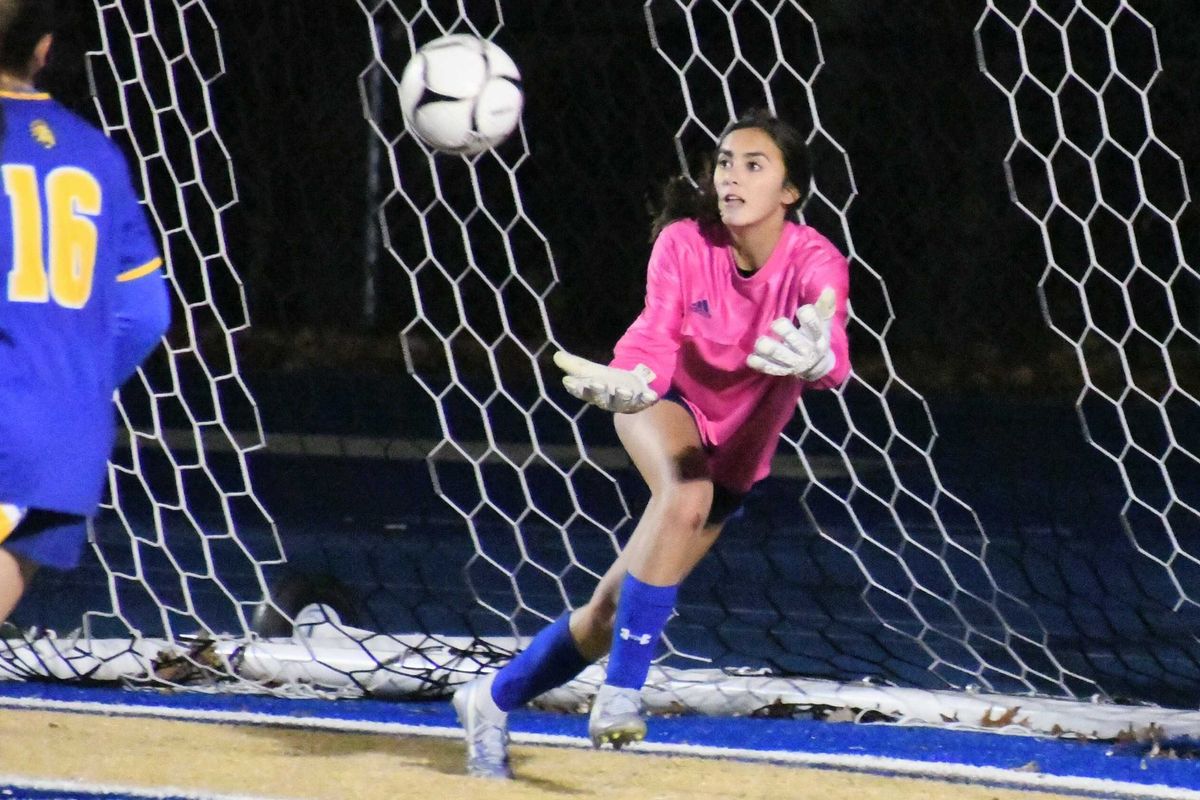
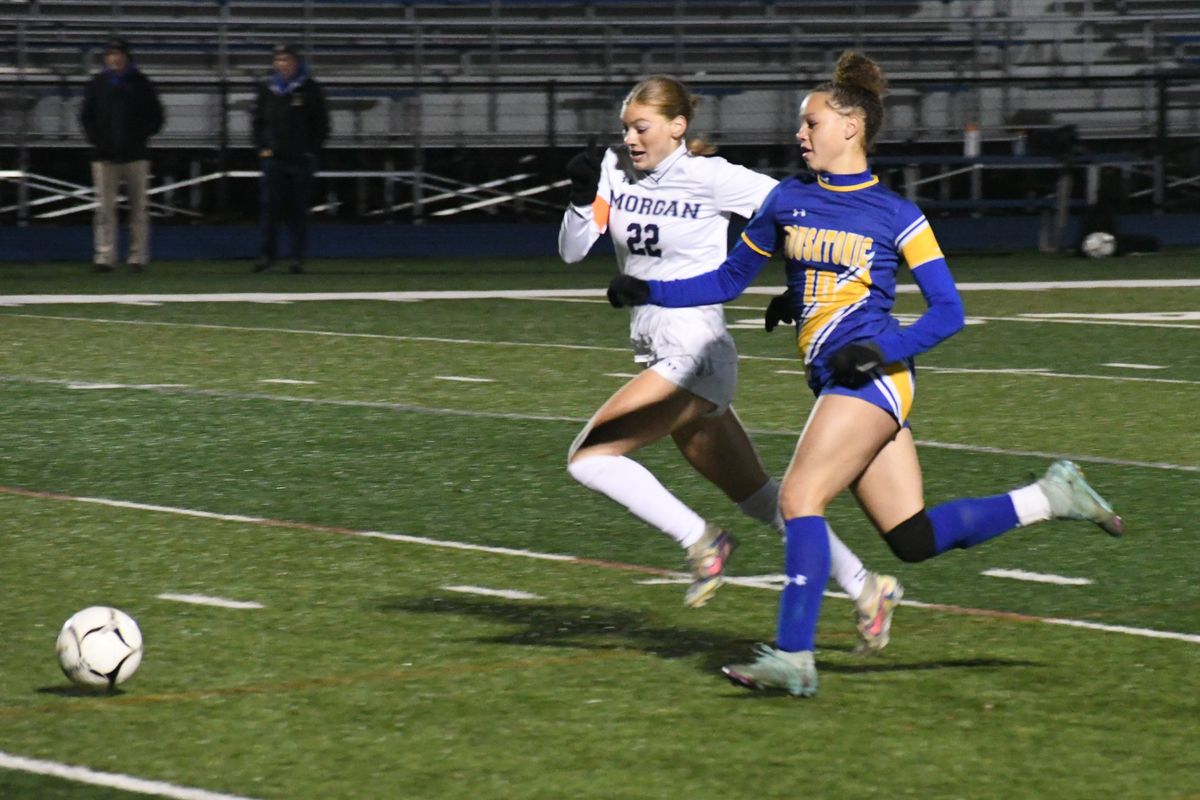
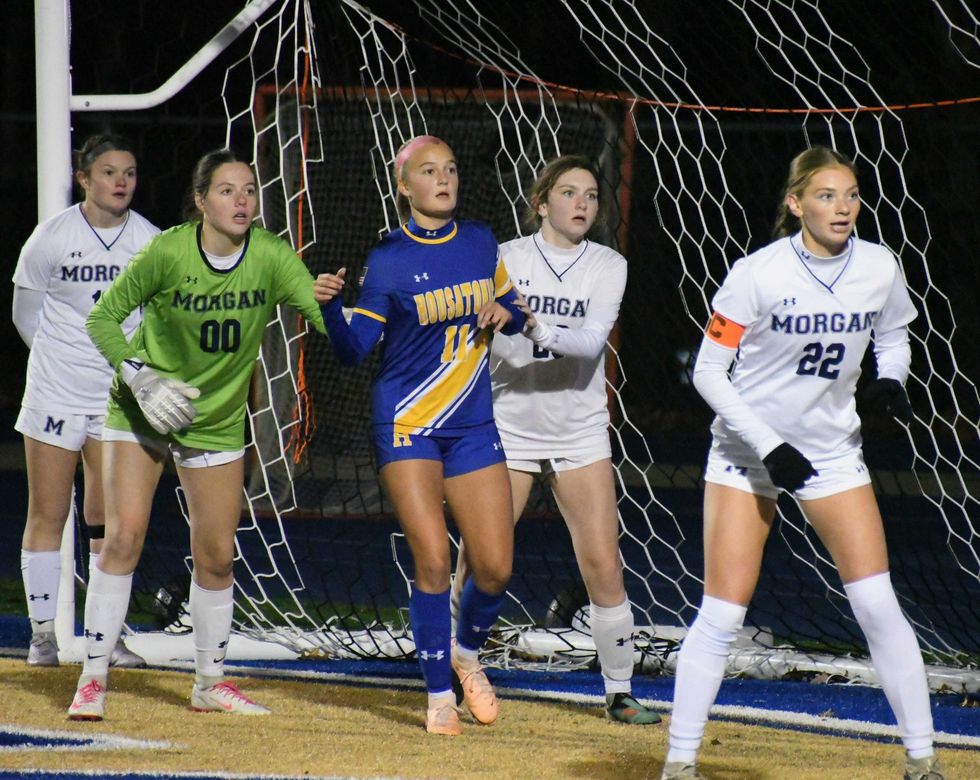
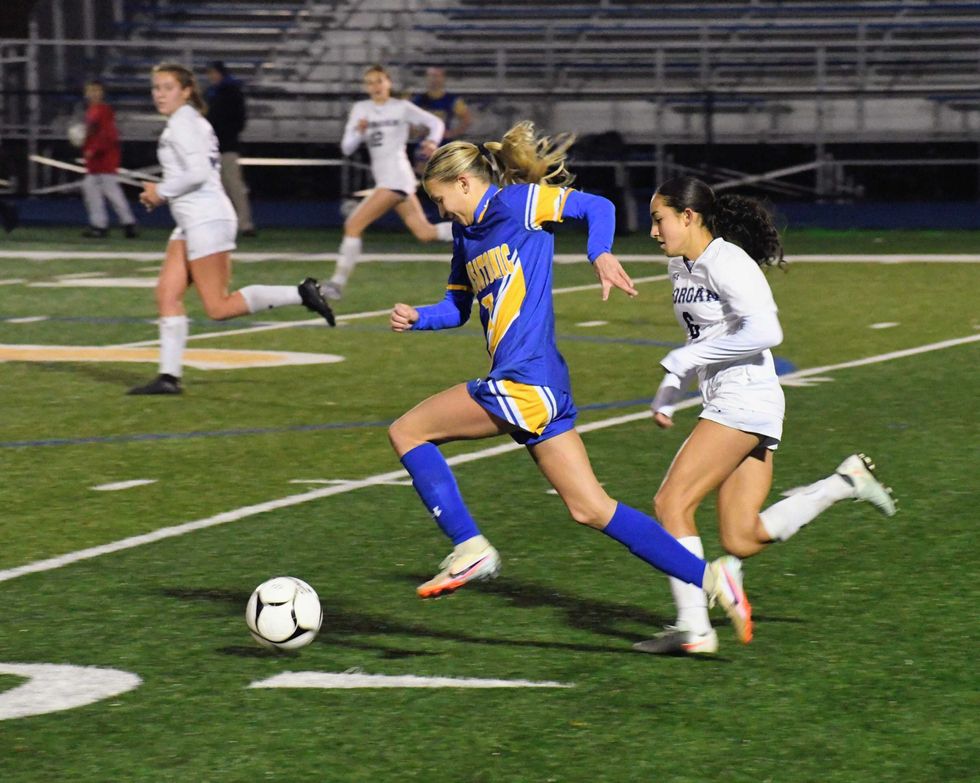
HVRHS goalie Vi Salazar made 10 saves in the semifinal game against Morgan Wednesday, Nov. 12.
Photo by Riley Klein
"It's an unfortunate loss but you know they played their hearts out," said HVRHS coach Don Drislane. "Awesome season."
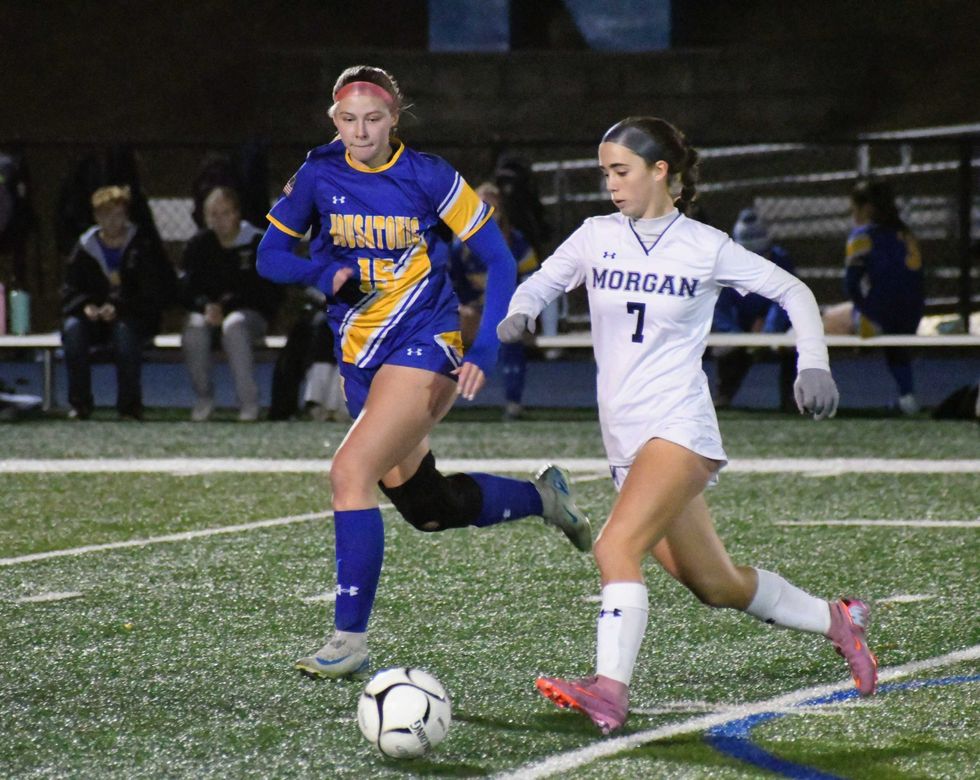 The Class S semifinal game was played at Newtown High School Wednesday, Nov. 12.Photo by Riley Klein
It was the final soccer game for HVRHS’s two senior captains: Ava Segalla and Madeline Mechare. Segalla ended her varsity career as the leading goal scorer in school history with a total of 133.
Morgan's size and speed on the field helped the Huskies dominate possession and earned them a bid to the Class S girls soccer championship for the second year in a row. In 2024, Morgan lost in penalty kicks to Coginchaug High School.
This year, the Huskies will face Old Saybrook High School in the Class S championship game at Trinity Health Stadium in Hartford on Saturday, Nov. 15 at 10 a.m. Old Saybrook defeated Canton High School 1-0 in the semis.
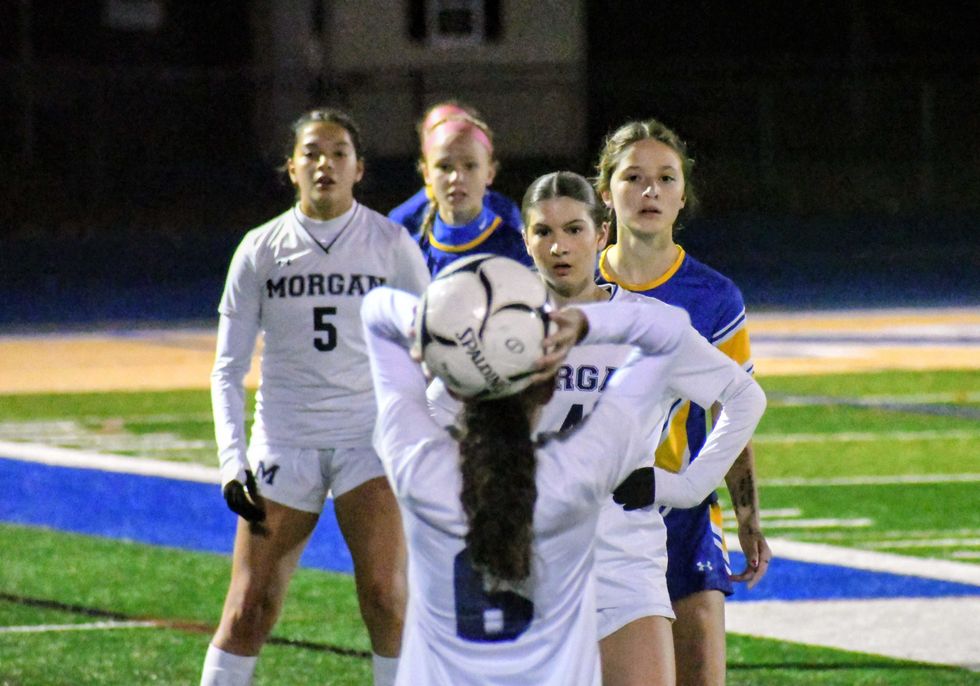
Photo by Riley Klein
Scenes from the sideline of Housatonic vs. Morgan.