Latest News
Curated finds at Half Shell Vintage
Sally Haver
Sep 09, 2026
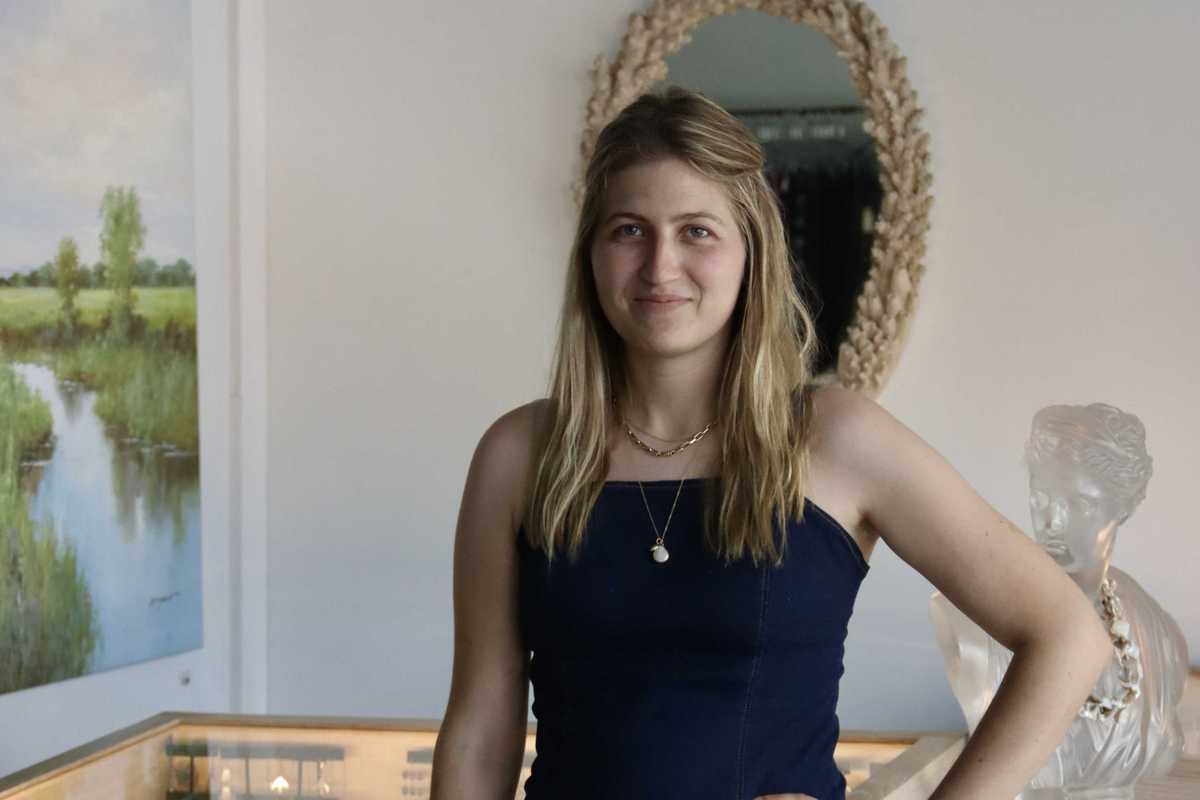
Pearl Elsbach, owner and proprietor of Half Shell Vintage in North Canaan.
Provided
Pearl Elsbach, owner and proprietor of Half Shell Vintage in North Canaan, has amassed a curated group of designer clothing, fine jewelry, housewares and timeless objects such as art and rare books. This store is hardly your usual antiques and vintage clothing store; it has a website featuring every item currently on offer, with price and description included. Customers can shop both online and in person at the storefront in North Canaan, Connecticut.
When asked where the store’s name came from, Elsbach explained, “I’ve always loved the famous birth of Venus painting by Botticelli, ‘Venus in the Half Shell,’ where Venus is pictured as the pearl, and I love the sea, so all together it’s a fun play on my name and the visuals that really speak to me.”
When first-time customers survey this vintage store’s unique offerings, the number one question Elsbach gets is, “Where do you source your items?” As she explained, “I’m in a unique position where the collection I’m sharing is made up of pieces most people won’t have access to. A lot of shops mainly source from thrift stores or estate sales, but I’ve been lucky enough to work with private collectors and artisans to rehome pieces they are ready to let go of.”
Elsbach was a born entrepreneur, starting her own business as a private organizer at age 13. She and her sister began selling their clothes online in 2018 as a hobby. When her grandmother, a lifelong collector of clothing and jewelry, died right before COVID, Elsbach began the business that is now flourishing, selling the collection online. “Both my grandmothers have inspired me to cherish well-made pieces and to cultivate a collection that will stand the test of time and trends,” Elsbach explained.
Elsbach’s background dovetails perfectly with her chosen profession. As the pandemic was winding down and she was living in New York City, Elsbach was working part time for a jewelry company, which gave her valuable exposure to that trade and a heightened awareness of quality and value. “Jewelry has always been a passion of mine,” she said. “The lasting power of metal and stones as well as the talismanic property of jewelry. Where my personal collection has always focused is on ‘vintage’.” To deepen her expertise, Elsbach earned her certification from the Gemological Institute of America, gaining a deeper understanding of jewelry as both an art form and a valuable commodity.
Elsbach initially opened her vintage business in a small storefront in Great Barrington. When that rental was no longer available, she decided to host a multivendor flea market, titled “413 Flea” in the Great Barrington Fairgrounds. “It was an attempt to counteract the soaring costs of operating a small business in the Berkshires and give community members an affordable space to come and sell their wares.” The flea market was very well received and since, Elsbach has hosted three more.
“When a storefront in Canaan opened up, I took a leap of faith,” Elsbach explained. “The town has given me such a warm welcome, and the new shop feels the truest to my vision.”
Half Shell Vintage is located at 11 Railroad St. in North Canaan, Connecticut. For more information and to see the inventory, visit half-shell-vintage.com.
Keep ReadingShow less
A whole new R.S.V.P. in West Cornwall
D.H. Callahan
Sep 09, 2026
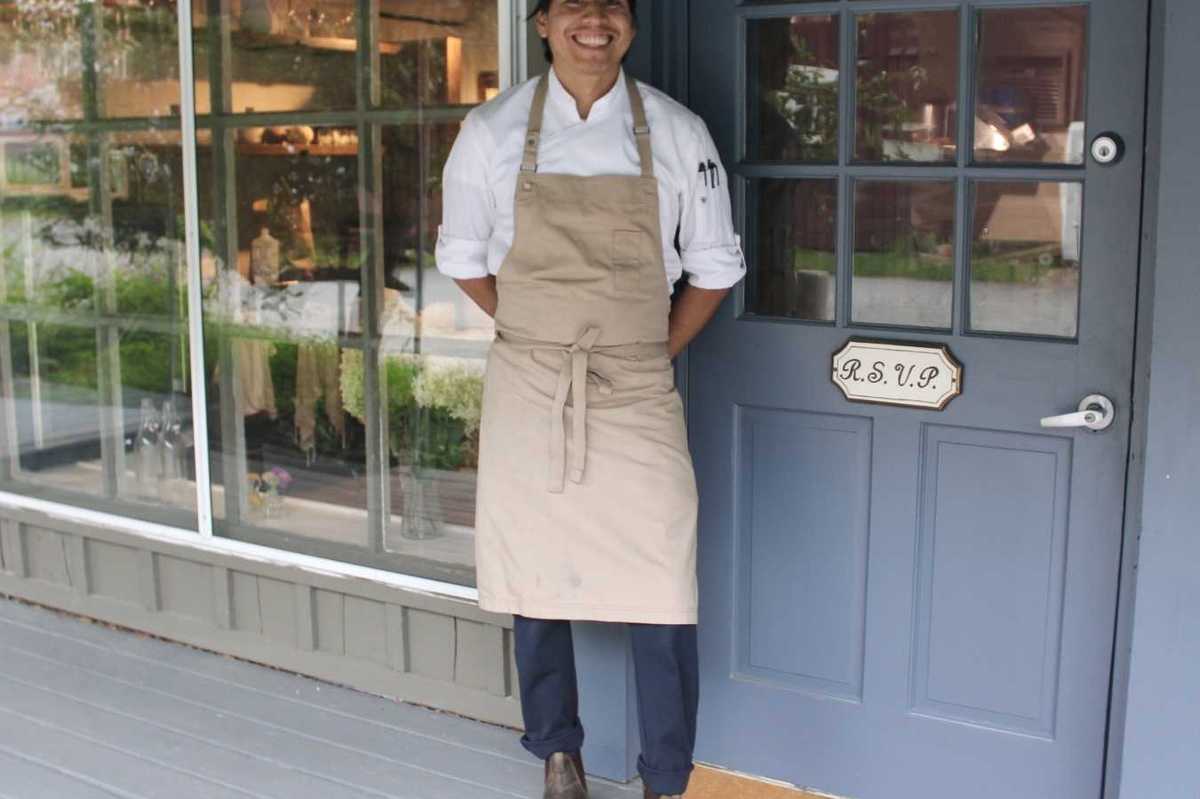
Chef Bolivar Hilario outside R.S.V.P. in West Cornwall, Connecticut.
D.H. Callahan
Bolivar Hilario is a total food nerd. He’s obsessed with the possibilities of fresh ingredients and studies the ways different processes used by different cultures can result in totally different flavors. Now, as the new executive chef and owner of R.S.V.P. in West Cornwall, Connecticut, he’s planning to explore it all.
Since its beginnings, R.S.V.P. has been a popular spot for serious foodies. Modeled after a French dinner party experience, chef Guy Birster and co-owner Charles Cilona were a two-man operation of no-fuss dining. The menu was unpredictable and uncompromising, favoring flavor over the comforts of other fine-dining establishments of comparable caliber. A famous New York Times review headline read: “Regulars Say R.S.V.P. Does Everything Wrong Except for the Food.” The tables and chairs were mismatched; the room itself seemed almost cobbled together from disparate endeavors. The only thing that mattered was the food.
Hilario is taking a slightly different approach. The redesign of the room has been carefully considered, as have the utensils and dishes. While Birster specialized in French cuisine, Hilario’s skills and palate are more internationally based. His family is Mexican, he trained under a chef who fastidiously studied Japanese techniques, and he’s worked in a wide variety of kitchens himself. Add to all that his approach to fresh, local and seasonal ingredients, and you have the perfect storm for some incredible dishes.
But food wasn’t always Hilario’s passion. He found it almost by accident. While he credits his mother and sisters for helping develop his taste for real food instead of the junk his childhood friends were eating, it wasn’t until working as a dishwasher at a chain restaurant in Florida that he noticed the possibilities of what food could be.
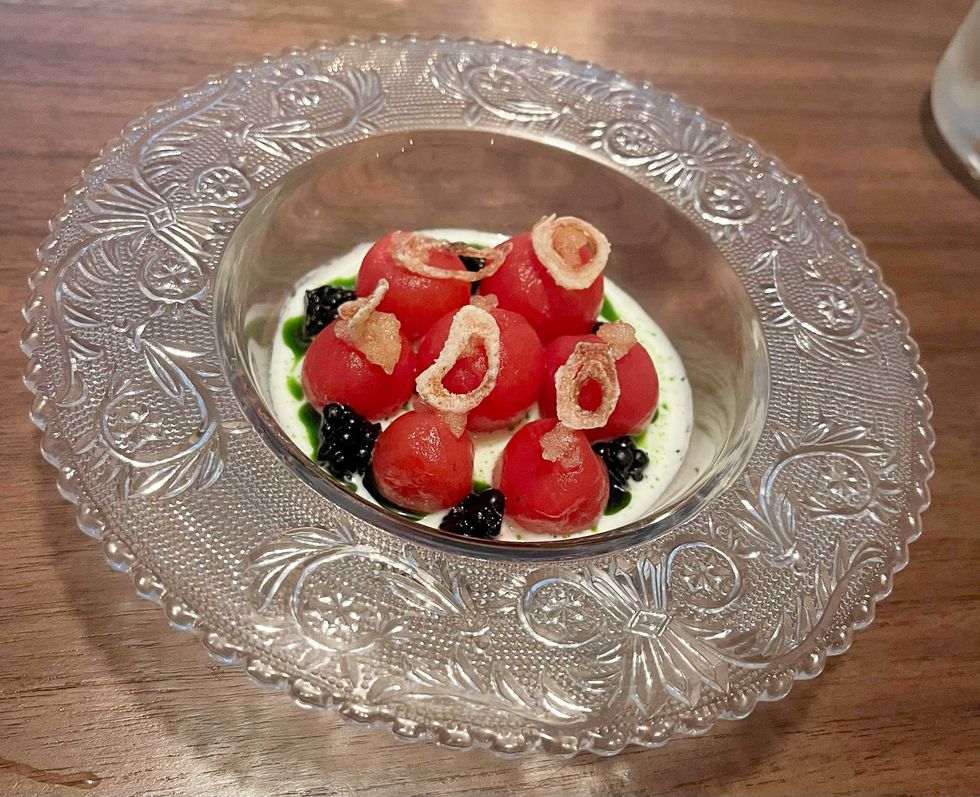
The kitchen caught his attention, and he was quickly asking the chefs why they did what they did. He’d poke and prod, asking why not substitute this ingredient for another. But even the most experienced chefs weren’t allowed to mess with a corporate menu. Instead, Hilario started experimenting with his own food. He’d come in early and use the tools of the industrial kitchens to learn how ingredients worked together to create surprisingly different results.
Soon, his passions had grown too big for the constraints of the corporate restaurants that dominated Florida’s food scene. So, he packed his bags and headed for New York City. While still working his way up, he found the city was more encouraging of innovation and curiosity than Florida had been. The chefs he worked with took his ideas seriously, but more importantly, they had the freedom to put those ideas on a menu. It was then that Hilario became obsessed with the radical potential of ingredients, techniques, textures and flavor combinations. It was then that his interests turned almost academic, reading about and absorbing all the knowledge other chefs were willing to share.
When he came to Connecticut, a whole new world opened up. First at Ore Hill and Swyft in Kent, he took the opportunity to meet the farmers growing his ingredients. By the time he’d worked his way up to becoming the executive chef at Community Table in New Preston, he was wowing everyone who walked in, including voters for some serious awards. In 2025, with a menu designed by Hilario, Community Table won Restaurant of the Year and Best Restaurant in Litchfield County from the Connecticut Restaurant Association. Then, in 2026, Hilario himself was named a semifinalist for the James Beard Best Chef in the Northeast award.
But now he’s out on his own. Following in the footsteps of R.S.V.P.’s founders, the restaurant is still a blind tasting menu, and flavor is still king. When you request a reservation, Hilario will email you, asking about allergies or aversions. He can cook around almost any dietary restriction and even finds some of them an exciting challenge. After that, there are no more decisions. You’ll eat what he makes, and what he makes is sensational. The blending of ingredients and regional highlights will wow diners with every bite.
The price, however, is something that might deter many potential diners, especially in a recession. But if you can afford to drop a few bills on a special dinner, it’s well worth it. Hilario argues that “it’s better to pay for good food at a restaurant than it is to pay for bad food at the doctors’ office.” And good food with good ingredients is certainly what they’re serving at R.S.V.P.
The restaurant opened on Sept. 1 and will have an abbreviated menu available for half price on Tuesdays. Wednesday through Sunday will feature the full menu, and all nights are B.Y.O.B. To learn more and request a reservation, go to rsvpdining.com.
Keep ReadingShow less
The Turd
Cheryl Heller
Sep 09, 2026
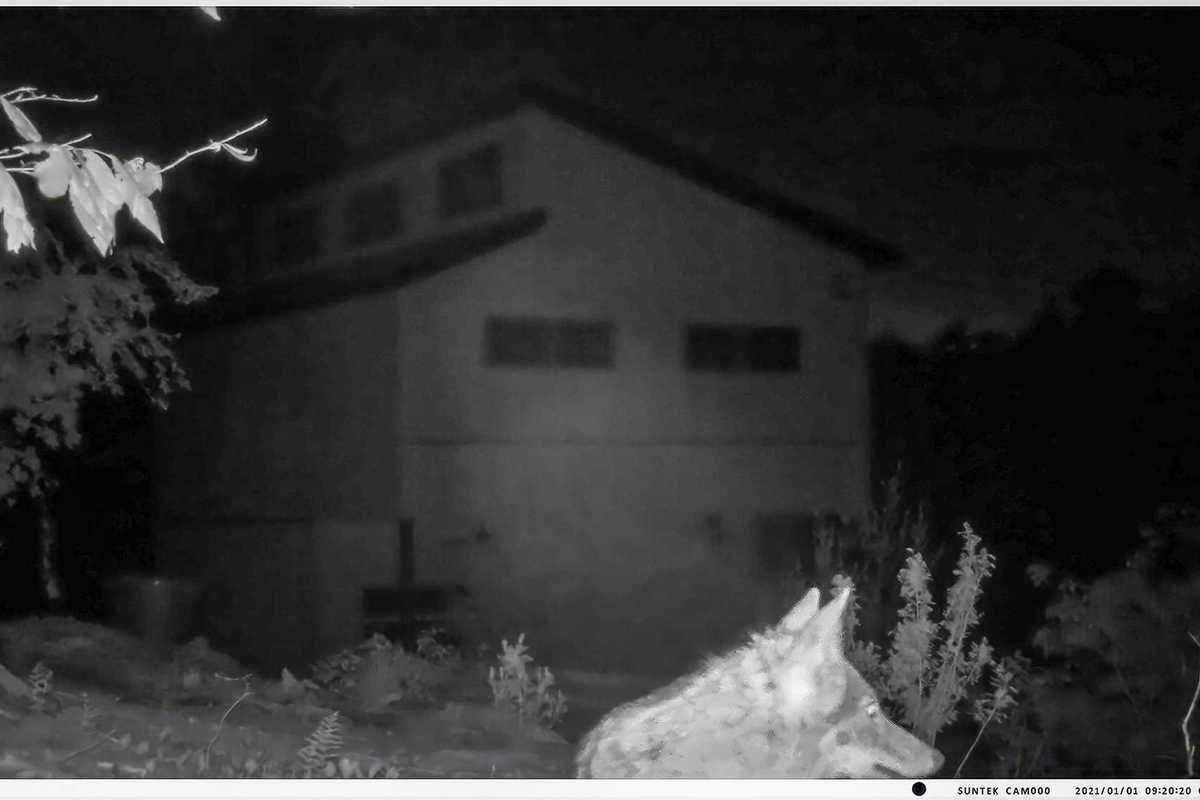
Fox caught on the trail cam at the compost pile.
Provided
Our compost pile has always been a community gathering spot. It’s where messages are exchanged, meals shared, habits and idiosyncrasies of close neighbors observed and celebrated.
Every day, except when the snow is deep enough to fall into our boot tops, we trudge out to a spot at the edge of the woods behind our house to deposit peels, cores, outer leaves and trimmed ends remaining from our cooking. Every year, we turn it and spread the nutrient-rich soil it produces, feeding vegetable beds, bushes and trees.
We still have much to learn about gardening and caring for multi-acre native gardens with snacks and habitat for local wildlife. For example, composted surplus lettuce seeds produce small circular salads surrounding every tree and bush on the property. Fall-composted tomatillos produce so many volunteer plants around the yard we could open a salsa stand. That’s the flora.
On the fauna front, observing what becomes of our composted items is an ongoing source of fascination. Watermelon rinds are picked clean over several days, showing progressively smaller bite marks, with probably the chipmunks having to settle for whatever little hot pink flesh the bigger biters leave behind.
Eggshells are always worth pushing around during the night, on the off chance they are not completely empty.Lychees, though exotic, are delectable, and portable enough to take back to a den or nest. Grapes, it goes without saying. A past-its-sell-by-date block of firm tofu was snapped up without a crumb remaining. (Probably by the same individuals who dug up every soybean I planted before they could sprout.)
I have read the articles that advise against feeding wild animals. I know the delicate line we’re treading but don’t believe a few food scraps will fool our many resident bears into thinking they can count on us for a regular dinner or make them want to get closer to us in any way.
So it’s extremely rare that I put animal protein out to compost —less than once a year. But I had a few ounces left of line-caught, Alaskan slow-roasted salmon that we were not going to come back to, and I could not justify denying a less-fussy eater the enjoyment of it. Plus, I hate to waste food.
Out of consideration, I kept the salmon separate from the daily remains from our French press, assuming that, given a choice, only humans or an Asian palm civet would prefer to have their salmon served with coffee grounds. To that end, I deposited the salmon a few feet away from the big pile, elevated on its own tree stump. I must admit, it looked tempting. And it made me wonder if the cliché that we eat with our eyes first applies to other creatures as well.
More-than-human beings have very few options for communicating with people, since we are so dense and oblivious to their signals. Lacking opposable thumbs, pens and pencils are out of the question. When they want to comment negatively on something, they can’t ghost us (the preferred method of office colleagues, in my experience), since we wouldn’t notice, and wild animals pretty much always want nothing to do with us anyway. Their vocalizing is lost on us because we’re too insensitive to interpret what they’re saying. That leaves them with biting, which gets our attention but is impractical most of the time. And the turd, a unit of communication that seems to hold meaning in any language.
For example, our first dog, Truman, lived with us in the Back Bay area of Boston. Every day on the Charles River Esplanade he met other dogs of myriad sizes and breeds. The protocol was inviolate. Sniff butts, take turns peeing on a nearby tree, be friends. Following this protocol demonstrated goodwill and confirmation of shared values for peace and freedom among the pack. Democracy in action. One day, a generously-haired Pomeranian (or something) broke protocol. He sniffed butt and then pooped. Truman was incensed and revealed a side of his personality that was new to us. He growled and lunged at the offender. But more interestingly, he developed a hatred for bushy dogs that he continued to nurture for the rest of his life. Just seeing a bushy dog across the street set him off. One bad experience became a hard-to-shake belief about an entire population.
The morning after my slow-roasted salmon offering, there was nothing but a fish oil stain where the salmon had sat on the stump’s pale flesh. But in its place, carefully placed, was a turd.
I deduced that the response came from a member of the fox family that lives just up the hill. I have caught them on trail cameras. And, I know they would not likely be sharing turf with the coyotes who live down near the wetlands. Coyotes are about the only other locals from whom the deposit size would fit, as it were.
But what did it mean? “Thank you”? “Here is my review.” “Hey, from now on this is my stump?” “ I was so excited to find this I couldn’t control myself?”
I have no doubt the fox knew we were having a conversation. And that the fox’s understanding was much more nuanced than my own limited grasp of information. My best guess is that after I said, “Here’s some salmon,” he said, “I was here, this matters, this is mine.” I put out a piece of fish, he gave it meaning and place, communicating to his entire skulk about status, territory, health, relationships and opportunity.
As I’ve been working on this essay, a good friend sent me links to several articles in today’s Financial Times, principally on why sustainability and concern for the environment have fallen out of fashion.
Every species is better than we are at reading the signs.
Cheryl Heller is a designer, educator and business strategist who pioneered the field of social design and founded the first social design MFA program at the School of Visual Arts. She lives in Norfolk.
Keep ReadingShow less

Want more of our stories on Google? Click here to make us a Preferred Source.

Every landscape tells a story
Lakeville Journal
Sep 09, 2026
Provided
On Sunday, Sept. 13 at 3:30 p.m. at the Hotchkiss Library of Sharon, 10 Upper Main St., author Annik LaFarge will explore the layers of history hidden within Frederic Church’s Olana. From Ice Age geology and Indigenous history to the Hudson River School and Church’s vision for his “greatest work of art,” LaFarge will trace the forces that shaped the celebrated Hudson Valley landscape. Using historic and contemporary photographs and maps, she will discuss her book, “Composing Olana,” and the artist, explorer and visionary behind Olana. Register at hotchkisslibraryofsharon.org
Lime Rock Historic Festival draws record field
Madi Long
Sep 09, 2026
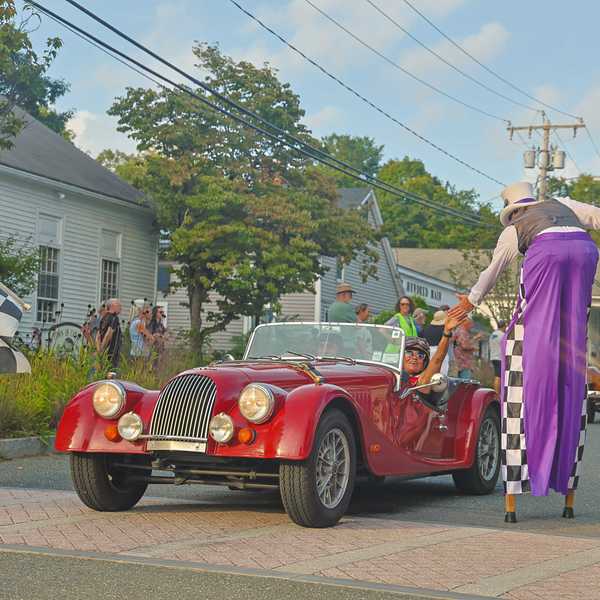
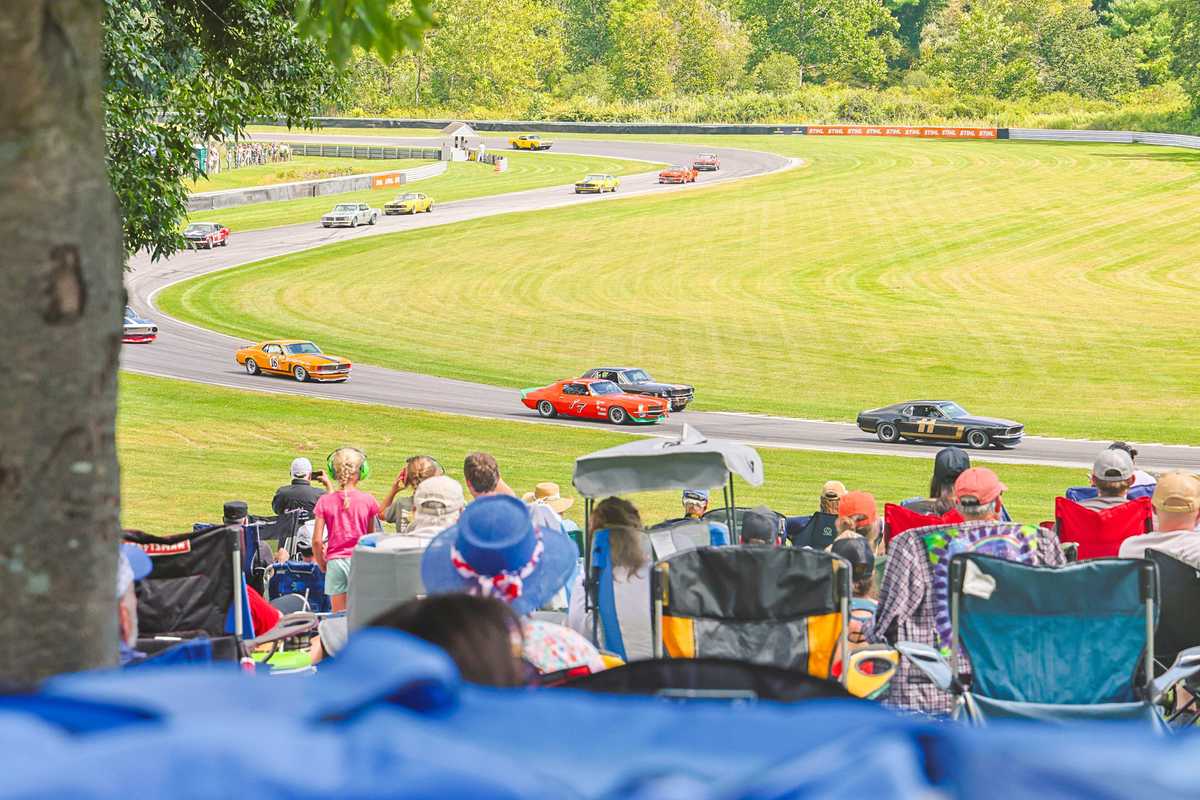
Spectators watch as the Historic Trans-Am race takes place on Saturday, Sept. 5.
Madi Long
LIME ROCK — Lime Rock Park hosted its 44th annual Historic Festival over Labor Day weekend, drawing thousands of spectators and a record number of entries.
The festivities began Thursday, Sept. 3, with the annual parade and continued through Monday, Sept. 7, with a weekend of racing and celebrations honoring the track’s history.
Nearly 300 race cars were entered for three days of on- track activity. More than 190 cars competed in the Lime Rock Concours on Sunday, with additional vehicles displayed at the Gathering of the Marques. The oldest car in the concours was a 1903 White Sewing Machine Company Model C. Other rare vehicles included a 1994 Alfa Romeo Spider Veloce Commemorative Edition.
Alfa Romeo, the Italian automaker known for its racing heritage, was the featured marque. Twenty-five Alfa Romeos were displayed at the park in what organizers described as the largest gathering of notable Alfa Romeo race cars ever assembled. On Monday, a field composed entirely of Alfa Romeos raced around the track.
Racing legends Skip Barber, Sam Posey and David Hobbs were at the track throughout the weekend. Barber raced at Lime Rock before founding the Skip Barber Racing School and later owning the track. Posey, an American racing driver and broadcaster who grew up in Sharon, designed several buildings at the park. Hobbs, a former British racing driver, competed in Formula One, NASCAR and endurance racing.
The festival also offered food trucks, vendors and activities for families. Attendees could even get a haircut from Skip Barber’s barber, a tradition that raises money for the Hole in the Wall Gang Camp, a nonprofit serving children with serious illnesses and their families.
The festival honored actor and race car driver Paul Newman and Bruce MacInnes, a championship-winning driver and instructor at the Skip Barber Racing School. Both were inducted into the Legends of Lime Rock, joining others who helped shape the park’s history.
While the weekend celebrated Lime Rock Park’s past, it also looked toward its future. Families picnicked on Spectator Hill as children played and got close-up views of the historic cars.
CEO Dicky Riegel takes the “park” in Lime Rock Park seriously, emphasizing that the venue is more than a racetrack. It is also a place for families to create experiences and memories for years to come.
Keep ReadingShow less
Housatonic volleyball opens season with Torrington scrimmage
Riley Klein
Sep 08, 2026
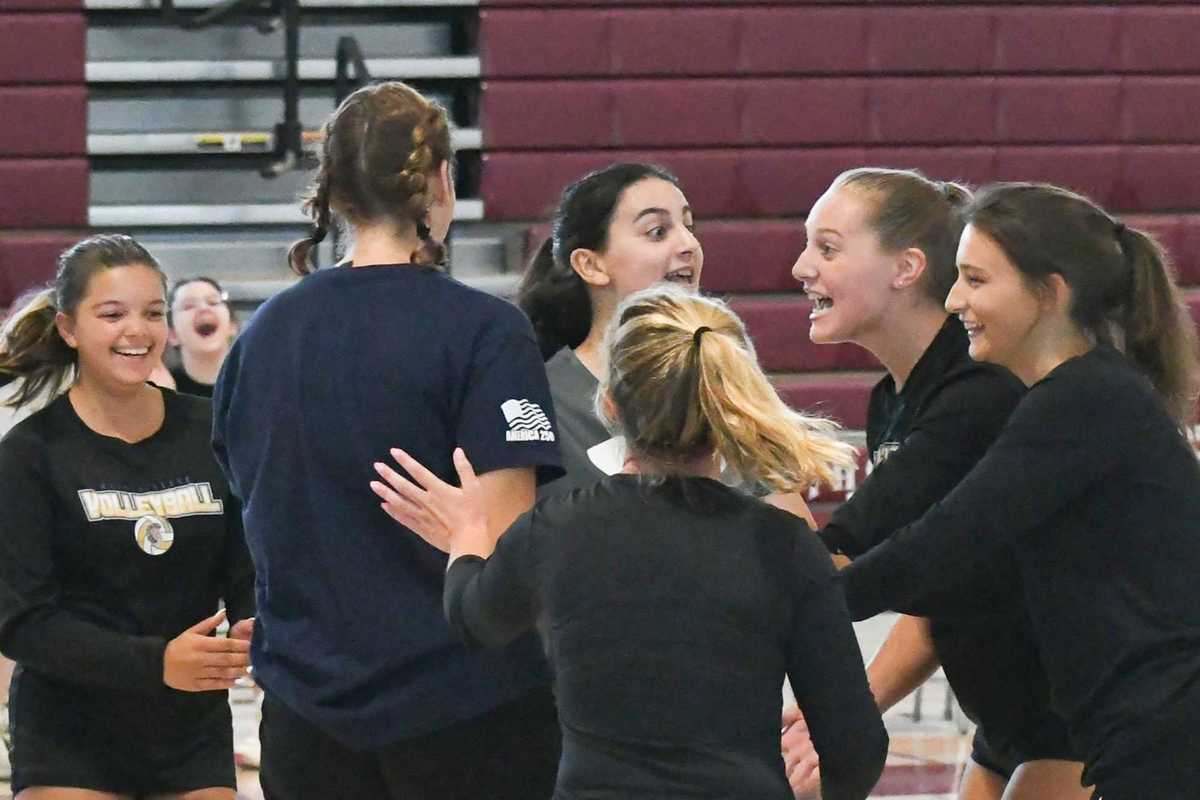
The HVRHS varsity team celebrates a point.
Riley Klein
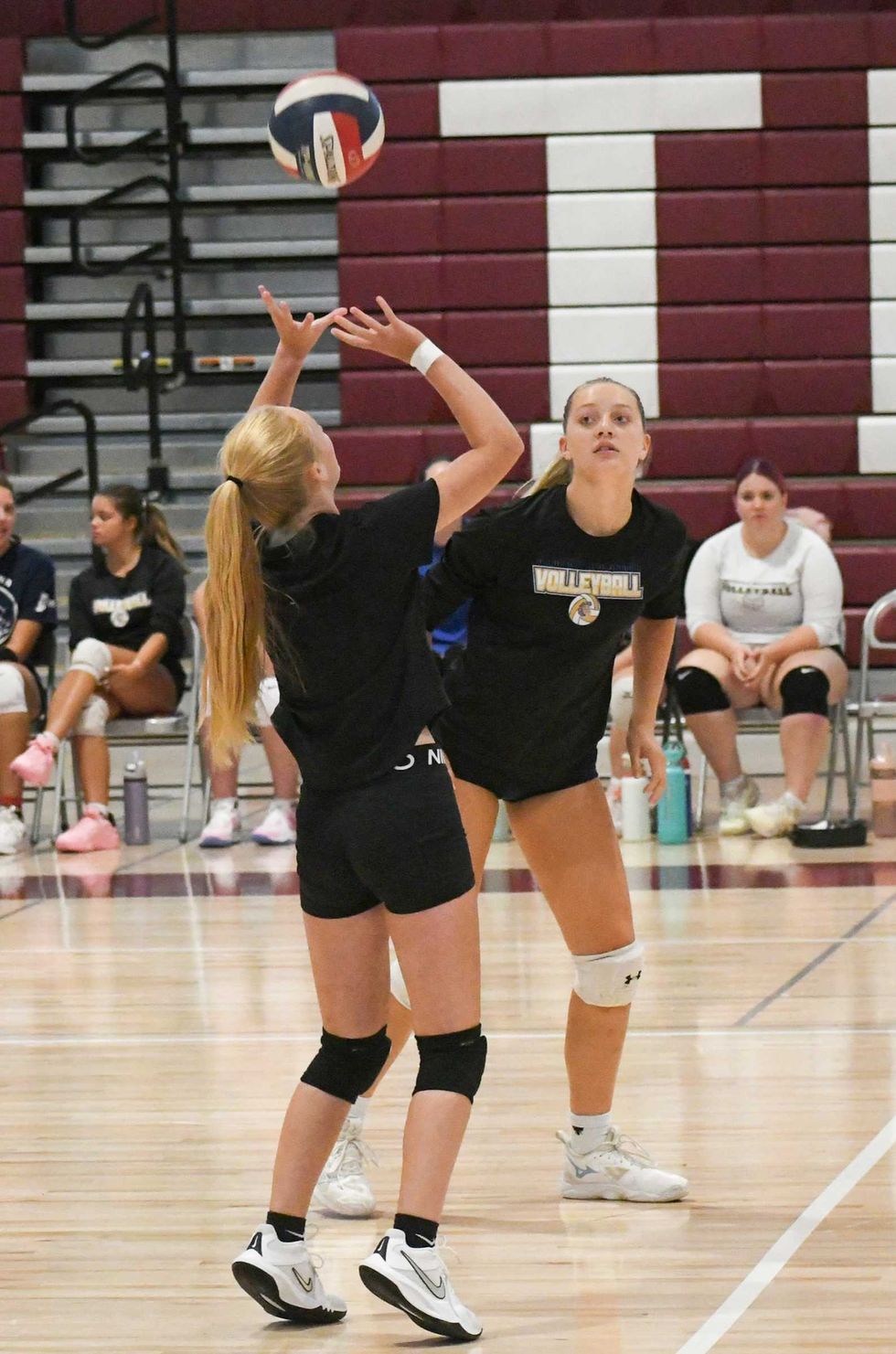
TORRINGTON — Housatonic Valley Regional High School’s girls volleyball team traveled to Torrington Monday, Aug. 31, for the first on-court competition of the season.
Torrington High School hosted HVRHS for an afternoon of scrimmages in Cornelius E. Donahue Gymnasium before the start of the regular season. First the junior varsity squads faced off for two sets, then the varsity teams played three sets.
The opening JV sets served as an introduction to the sport for some of the younger players. With the guidance of their coaches and the referees, both teams learned essential volleyball protocols including how to sub on and off the court, how to rotate after a side‑out and the correct positioning rules during serves.
Torrington’s passionate fans fueled momentum in long scoring runs and propelled the home team to 25-15, 25-11 wins in the two JV sets.
The varsity teams then took the court. Both squads featured a core of four seniors:Sydney Howe, Kenzsi Watson, Lydia Fleming and Kellie Esiermann for HVRHS, and Aaliyah Quintero, Jasmile Ruiz, Fiona Ramadani and Kailyn Castillo for Torrington.

HVRHS opened the first varsity set with an 8-3 lead behind a serving run from Howe. Torrington answered when Quintero took over as the server, pushing ahead 15-11. The set tightened at 15, then swung back and forth through seven ties and six lead changes before Torrington edged out a 26-24 win.
Torrington’s football team filed into the stands after concluding an afternoon practice, providing a boost to the crowd.
With the noise behind them, Torrington raced out to a 12-2 lead. Watson steadied HVRHS with a strong serving stretch, but Torrington maintained control and closed out the set 25-11.
The final set was shortened to 15 points, but it still produced a handful of sharp, extended rallies. HVRHS kept pace early, yet Torrington remained consistent and closed out the match with a 15-8 win.
HVRHS was scheduled to start the regular season with a three-stop road stretch in Waterbury Sept. 8, Woodbury Sept. 15 and Terryville Sept. 18. The team’s home opener has been scheduled for Monday, Sept. 21, at 5:15 p.m. against Lakeview High School.
Keep ReadingShow less

Want more of our stories on Google? Click here to make us a Preferred Source.
loading