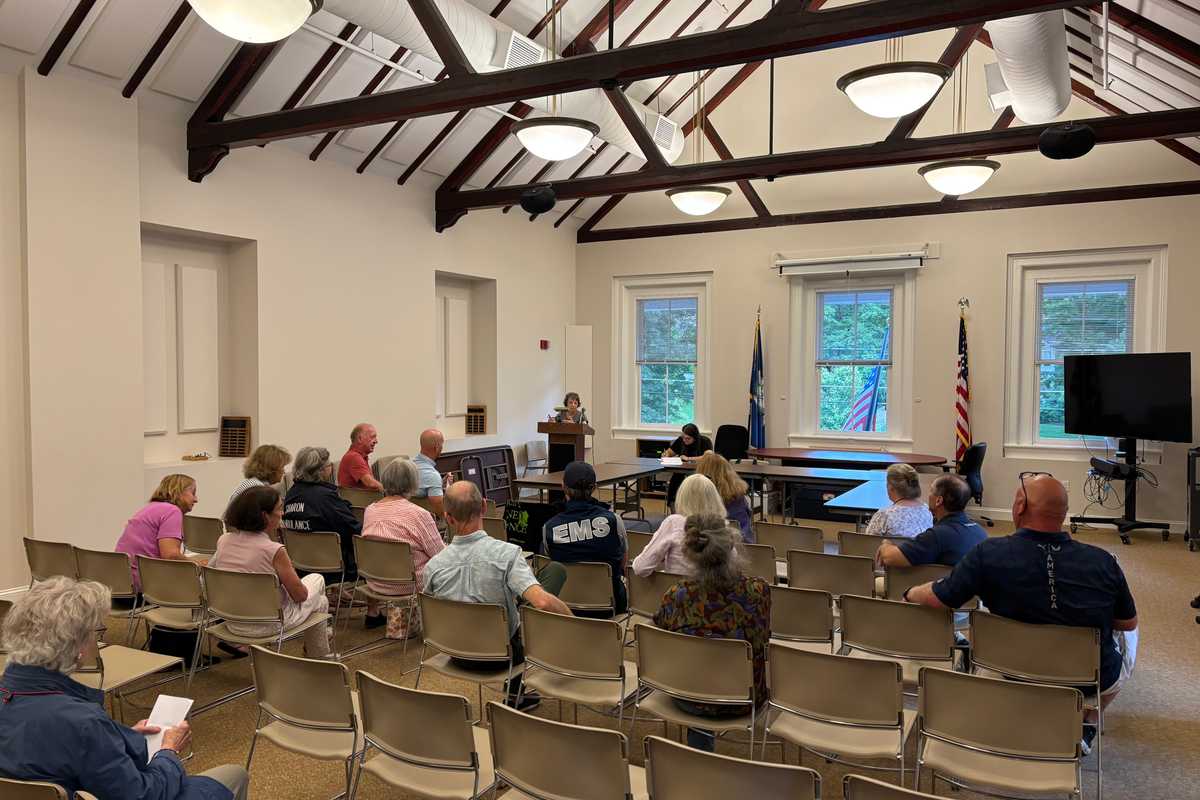
AMENIA — The Amenia Housing Board met for the first time Nov. 5 to review a 19-page document that will serve as the foundation for its constitution.
“We had to form a board in order to comply with the town’s master plan and zoning,� explained Betty Rooney, who acted as chairman of the previous Affordable Housing Committee and now sits on this board. “[Town Supervisor] Wayne Euvrard appointed us back in August.�
The previous Affordable Housing Committee was started in 2004 and lasted in various stages until Euvrard appointed the members of the Housing Board several months ago.
“What we did was to investigate the possibilities of how affordable housing could be brought into the town,� Rooney said.
Amenia is still without affordable or workforce housing units. Rooney said that many different speakers from Dutchess County had presented programs and ideas to the committee, but until the passage of the new comprehensive plan and zoning laws, the committee’s “hands were tied.�
Rudy Eschbach is now the “temporary chairman� (as he calls his position) on the new Housing Board, which has seven members.
“The county Planning Board got involved, and went through Amenia’s comprehensive plan,� Eschbach explained. “They put together a rough draft constitution document that covers everything that we want to do, as far as outlining responsibilities.� He said that most of the document is taken directly out of the comprehensive plan.
Eschbach was part of the Comprehensive Plan Committee, but said that he just wants to be on the Housing Board for a short period of time.
“I spent four years on the comprehensive plan, and wanted to lend my expertise to the new board,� he said, adding that the seven appointed members’ tenures are staggered, with the shortest term (one year) being served by Eschbach. All of the members’ terms will be served by 2015.
“One of the biggest problems we had [on the Housing Committee] was finding a piece of land suitable for affordable housing,� Rooney said. “Particularly for senior citizens, the property has to be near town so it’s accessible. That and a sewer system was needed that the town currently doesn’t have.�
That problem appears to be addressed by the proposed Silo Ridge development. When applicants are proposing building plans similar to Silo Ridge or Depot Hill, 10 percent of housing built is required to be affordable or workforce housing. But as Amenia Planning Board Chairman George Fenn explained, applicants aren’t always looking to put lower-income housing in their new developments.
“It’s commonplace that applicants look to substitute out,� he said. “They want their developments to be upscale and they’re worried that affordable housing would jeopardize marketing schemes.�
Money instead of housing
In lieu of the housing, the typical substitution for applicants is to provide for the town the amount of money it would have cost them to build the housing. That money is put into a trust fund that “may be only used to buy or build affordable or workforce housing,� according to Eschbach. For example, Depot Hill is looking to contribute to a trust fund in lieu of building affordable housing on the renovations to their horse stud farm. But Troutbeck Inn and Conference Center, which has recently come before the Planning Board with preliminary plans to build a senior citizen condominium complex on its property, is intending to incorporate affordable and workforce housing into its designs.
Silo Ridge, as mentioned by Fenn, is “a special case,� in that the applicants have proposed to build a sewer plant that the town would be able to use in lieu of affordable housing or a donation. The offer has earned the approval of many town residents, as well as Eschbach and Rooney, who believe that a town sewer plant would bring the possibility of affordable housing in Amenia that much closer to reality.
“It might be easier,� Rooney said. “Affordable housing doesn’t have to be something that’s built new. You can take older buildings and reassign them, but not if there isn’t a sewer system.�
Keep people in town
The importance of affordable and workforce housing was something stressed by both Housing Board members.
“It makes it possible for senior citizens to stay here in Amenia,� Rooney said, “as well as younger families. They don’t have to go out of town to find a place to live. It’s an issue that’s facing every town in the county, because of the way that the real estate market went.�
“I think [affordable housing in the town] would set a whole new pattern here as far as the Harlem Valley is concerned,� Eschbach added. “It’s usually the case that kids go through the school system and leave the area after college because it’s too expensive. If we could provide workforce housing we could retain a workforce that’s suitable for commercial establishments. The first thing businesses look for when they’re thinking about moving into a new area is the workforce.�
There are numerous issues that will have to be addressed by the board, as soon as a constitution is set in place and the board is legally able to act. An income line has yet to be made determining who is eligible for affordable housing and the price of living for affordable housing applicants has yet to be set.
Eschbach mentioned that one of his top priorities is to look at other affordable housing units in the surrounding areas and see how they operate and why they are or aren’t successful. There is also talk of a waiting list for affordable housing being set as well as a points system to determine the priority of applicants.
As far as concrete meeting schedules and agendas, Eschbach says it will all be decided once the constitution is in place. He said that things are currently a little hectic, but “when we’re ready we’ll entertain any and all phone calls. There’s no such way that we want to set ourselves up as a secretive organization.�

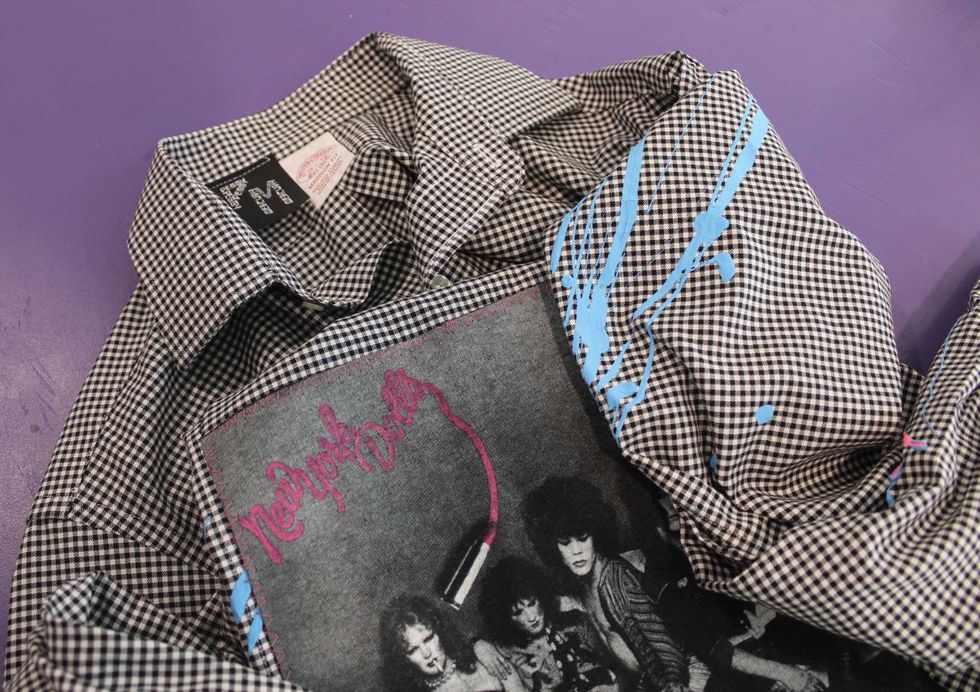 Classic styles, bold colors, and creative concerts make up the “Imaginary Concerts” line at Peggy Mercury.Provided
 Shirts from Peggy Mercury’s first fashion line, “Imaginary Concerts,” hang on display.Provided