PINE PLAINS — A small group of administration members and teachers gathered before the Pine Plains Central School District’s Board of Education (BOE) at its Oct. 20 meeting looking for support to reopen the district’s ropes course, which has not been used in more than a decade.
Athletic Director Mike Kohut, along with physical education teachers Jeremy Weber and Tom Giorgio and accompanied by Steve Werntz, owner of local company, Indian Mountain Adventure, all gave a presentation to the board about the school’s history of the ropes course and the steps they would like to take in the future.
The course is located beyond the tennis courts and athletic fields east of Stissing Mountain Middle/High School. It was built in the early 1990s with the aid of funding from the Carvel Foundation and included the construction of the course and training of staff. The course was built by Indian Mountain Adventure, which at that point was only in its early stages. The Pine Plains course was only the seventh course that the Lakeville-based company had overseen; it has since built 68 more.
“It was a great program for several years,� Kohut said. “It was a vehicle to bring about group dynamics, build self-esteem and promote anti-bullying measures as well as group togetherness.�
It was also used beyond the classroom, he continued, for teacher conference days, sixth- and seventh-grade orientations and even to facilitate communication between the Board of Education and the teacher’s union just prior to contract negotiations.
But as many of the staff members who were heavily involved when the program began, including Kohut, retired or left the district, the program fell by the wayside.
“The program had kind of deteriorated,� Kohut said. “The site has almost gone back to nature.�
The site is currently overrun and a bit of a dumping ground. The group was approaching the board to seek out grant funding that could pay for the course to be restored.
“It brought the community, school and students together,� Kohut said. “We want to see it back, if we can.�
The main obstacle is funding. With the economic situation that both the school district and its taxpayers are in, finding funding within the district’s budget was ruled out very early on.
For $500 Werntz could do a site inspection and provide an estimate on what can be salvaged and what would have to be replaced, as well as what it would cost to get the site up and running again and to train staff. At the meeting, Werntz estimated that the total project would probably cost between $30,000 and $40,000.
Giorgio said that enthusiasm for the course is high, with more than 18 staff responses within a week showing an interest in the future of the program. He has also been looking into grant opportunities from local and national organizations.
“The money’s out there,� he said. “We just have to get approval [from the board] and put in the work to apply for the grants.�
If the course were restored, the idea would be to rent the facility to outside groups. That revenue would ideally pay for annual maintenance and any additional costs that the ropes course would create for the school district. Werntz said that there is a big demand for courses in the area and Pine Plains would be in a unique situation to capitalize on that.
At the end of the meeting, the board voted unanimously to approve $500 for a site inspection, which as Superintendent Linda Kaumeyer explained would be the launching point for the future of the project.
“The details of the project have not been worked out yet,� she said. “We’re obviously going to want to see details, and the grant funders will, too.�

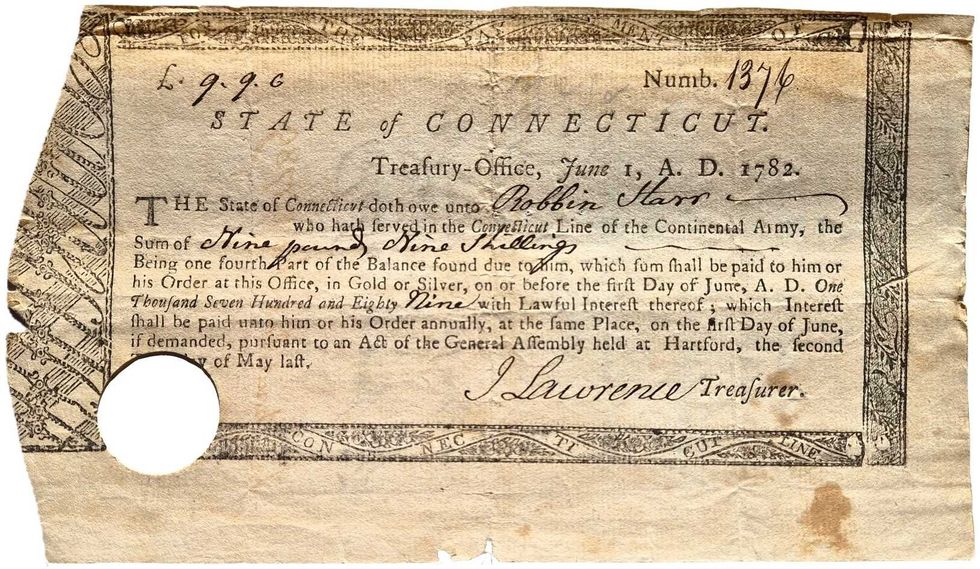 Pay Bill for Robin Starr’s service in the Continental Army.Courtesy the Alex Breanne Corporation
 John Mills speaking at Quinnipiac University.Courtesy the Alex Breanne Corporation
 Stephanie Saetta,with her rescue dog George and Blue (left), a shepherd mix awaiting his forever home.Madi Long
 Blue, a 7 year-old Shepard mix, is waiting for his forever home. Madi Long