TRI-STATE REGION — Hoping to get some decent cash for that old junker in the yard? If it doesn’t run, isn’t registered and doesn’t meet numerous other requirements, forget about it.
A new law, signed by President Barack Obama and effective July 1, is aimed at getting old gas-guzzlers off the road and sparking a surge of automotive sales. Qualifying buyers can get up to $4,500 toward the purchase or long-term lease of a new vehicle. Under the Car Allowance Rebate System (CARS), $1 billion in rebates is available until Nov. 1, or as long as funding lasts. The program has already been dubbed “cash for clunkers,†and has sparked criticism from those quickly discovering it applies to a very narrow field of vehicles.
The funds do not become available until after July 31, but many dealerships are scrambling to get in line now, promising the rebates and getting paperwork started to qualify customers.
Many others are waiting, reasoning that so few buyers will qualify that the $1 billion won’t soon run out.
What they are particularly worried about is the fine print. Congress has until the end of the month to determine the exact rules, and there are skeptics who say the program could end up being unenforceable, with dealerships left without reimbursements for the trade-in credits.
“No dealer should get involved until the rules are settled,†said Fred Perkins, owner of the Brewer Bros. Chrysler, Dodge, Jeep dealership in North Canaan. “I want to see the fine print first, and some rules that are easy to adhere to.â€
The rules start out pretty straight forward. The trade-in vehicle can’t be more than 25 years old. It must be registered and insured to the same owner for at least a year prior to the trade-in. It needs to get 18 miles per gallon or less.
It has to be traded in for a new 2008 or later model from any manufacturer that costs no more than $45,000 and gets better gas mileage. If the new vehicle beats the trade by at least 4 mpg, the rebate is $3,500. If it gets at least 10 mpg more, the rebate is $4,500.
Once a customer is qualified, the dealer will apply the rebate to the final cost of the car, and apply for reimbursement.
Obviously, if the vehicle is worth more in trade than the rebate, it’s not the best deal, because dealers are not going to give both. The goal here is to get people to trade in vehicles with very little value.
Two things remain red flags for Perkins.
Mileage requirements are one. Obviously, the government is not taking anyone’s word for what their individual vehicle actually gets. A revised list of estimated mileage, based on model and year, has been established.
“They’re probably not what most people are actually getting. They are not even the same as what the window stickers say, and the guidelines are not as easy as the government makes them seem. I’ve read them three times and I still can’t explain them to anyone,†Perkins said.
His other issue is that trade-ins must be destroyed.
“The car has to be crushed,†Perkins said. “I want to know who’s going to do that around here. I’m not sure where there’s a salvage yard with a car crusher, or even someone nearby with a portable crusher. But if we’re going to take these trade-ins, we need to be sure they’re being destroyed. I don’t have time to travel to a salvage yard, and if the car shows up three months later on the road, the dealer is in trouble.â€
“Do you think I’m going to do this?†asked dealer John McLean of Millerton’s and Pine Plains’ McLean’s Ford. “I have to take the car to the junkyard, get it smashed, get a certificate from the yard that it’s been smashed, and then I have to get my $4,500 from Obama. All the dealers across the country are gun shy about this.â€
To determine the standardized mileage estimate for a vehicle, go to fueleconomy.gov/feg/sbs.htm.
TV and radio ads are ripe with dealers promising the rebates now. The South Korea-based Hyundai Motor Co. is reportedly advancing money to U.S. dealers to encourage them to start selling cars now to customers who qualify for the rebate. Other dealerships are putting together deals on paper, but holding onto the keys until program guidelines are completed.
The mileage information Web site allows car owners to do side-by-side comparisons of their trade-in vehicle and cars or trucks they would consider buying to see what deal would qualify them for a rebate.
The government’s official Web site for the program is cars.gov.

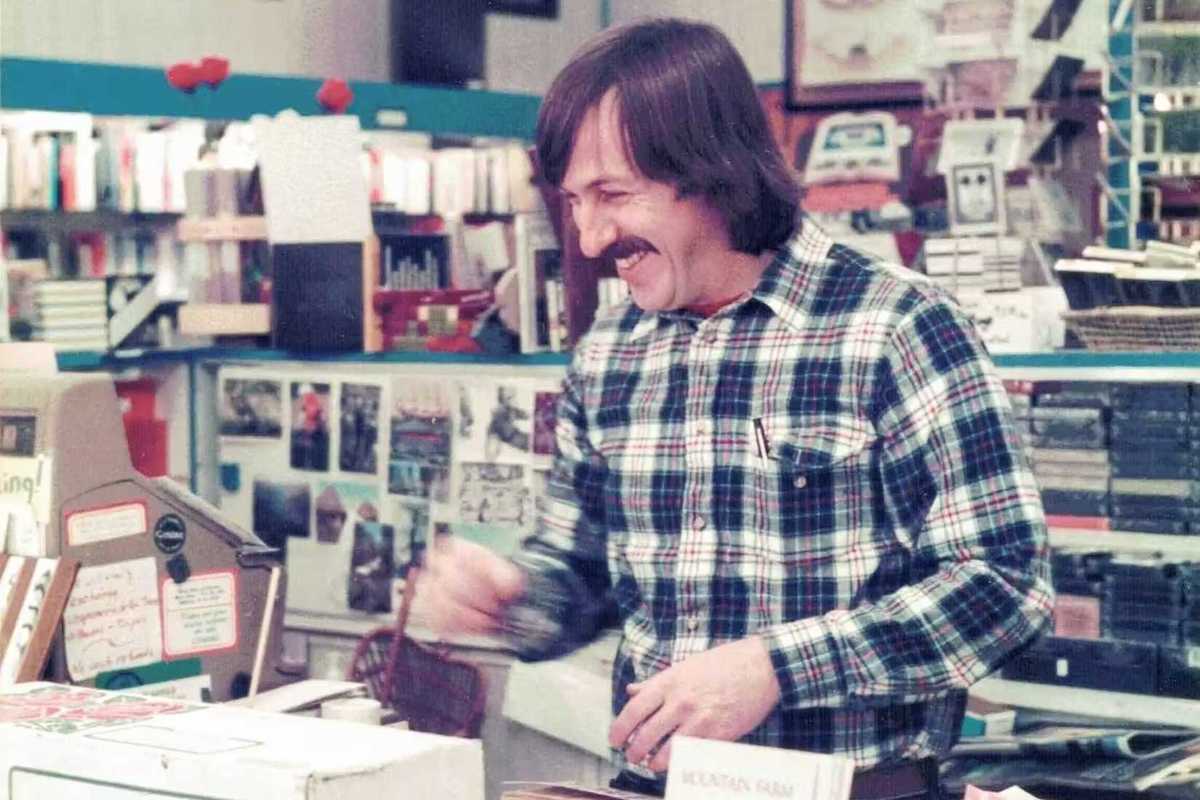
 Dick Hermans in the Oblong Bookstore on Millerton’s Main Street in 1985.Provided



 Fall storage crop harvests amid soil building cover crops at Adamah Farm in Falls Village. Janna Siller