Thank you!
Your support is sustaining the future of local news in our communities.

American Mural Project: Open and Ready for You

American Mural Project: Open and Ready for You
Photo by Peter Brown

Many of us drive through Winsted, Conn., and think about all the interesting things that could be done with the empty former industrial and mill spaces in the center of town.

Some have been converted over the years into apartments and artist studios. Ellen Griesedieck of Sharon, Conn., went one step further and turned a former mill into an art project in and of itself.

A massive space requires a big idea and a lot of time. Such was the case with Griesedieck’s ambitious American Mural Project, which was first conceived in 1999 and has just been completed.

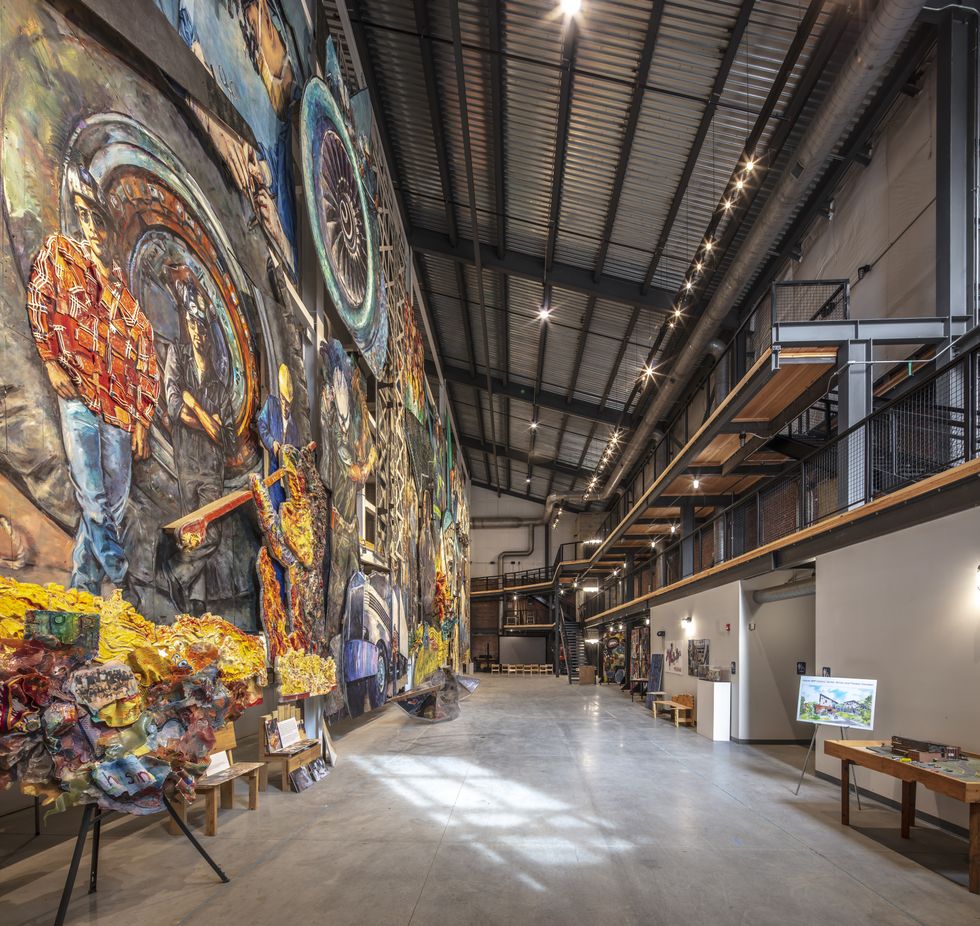
The setting is perfect for the American Mural Project, which is a tribute to American workers. The work began with the grooming of the site itself, including a cleanup of the property with a federal Brownfields grant. The state of Connecticut contributed as well, helping Griesedieck and her team pay for the cost of renovations that included raising the building’s roof 30 feet, to make room for the mural, which extends up five stories.

The mural was a true community effort, not just thanks to the government grants but also with art work contributed to school children from across the country, who were invited to visit and participate in the mural.

Griesedieck describes the mural as “a vivid compilation of three-dimensional sculptural vignettes portraying Americans at work—from heart surgeons to steel workers, firefighters to farmers, school teachers to fabricators of a 747 aircraft, and more. Constructed with unconventional materials including honeycomb aluminum panels, blown glass, clay, reclaimed wood, native indigo, and spackle, the mural offers an optical journey and sensory adventure through the past 100 years of work in America.”

The completed American Mural Project can now be seen at 90 Whiting St. in Winsted every Friday and Saturday from 10 a.m. to 5 p.m. and Sundays from noon to 5 p.m.

Admission is $12 for adults, $10 for seniors and veterans, $5 for students, and free for children 5 and younger. There is also a $25 unlimited access pass, for use during open hours in 2022. Tickets and passes can be purchased at www.americanmuralproject.org or in person.
Latest News

The Lakeville Journal and The Millerton News 2026 interns
Photos by Madi Long

Meet the next generation of community journalists. Eight interns joined The Lakeville Journal and The Millerton News this summer. Below, each shares a brief note on their experiences.


Keep ReadingShow less
‘So Little to Do,’ so much to discover at James Barron Art

Curator Deborah Goodman Davis reads the Emily Dickinson poem “The Grass So Little Has to Do.” Spencer Finch’s “Following Three Bees (Zinnias)” buzzes in the background.

Photo by Natalia Zukerman

“The Grass Has So Little to Do,” on view at James Barron Art in Kent, takes its title from Emily Dickinson’s poem “The Grass So Little Has to Do,” written in 1862:

“The Grass so little has to do—
A Sphere of simple Green—
With only Butterflies to brood
And Bees to entertain—”

Keep ReadingShow less
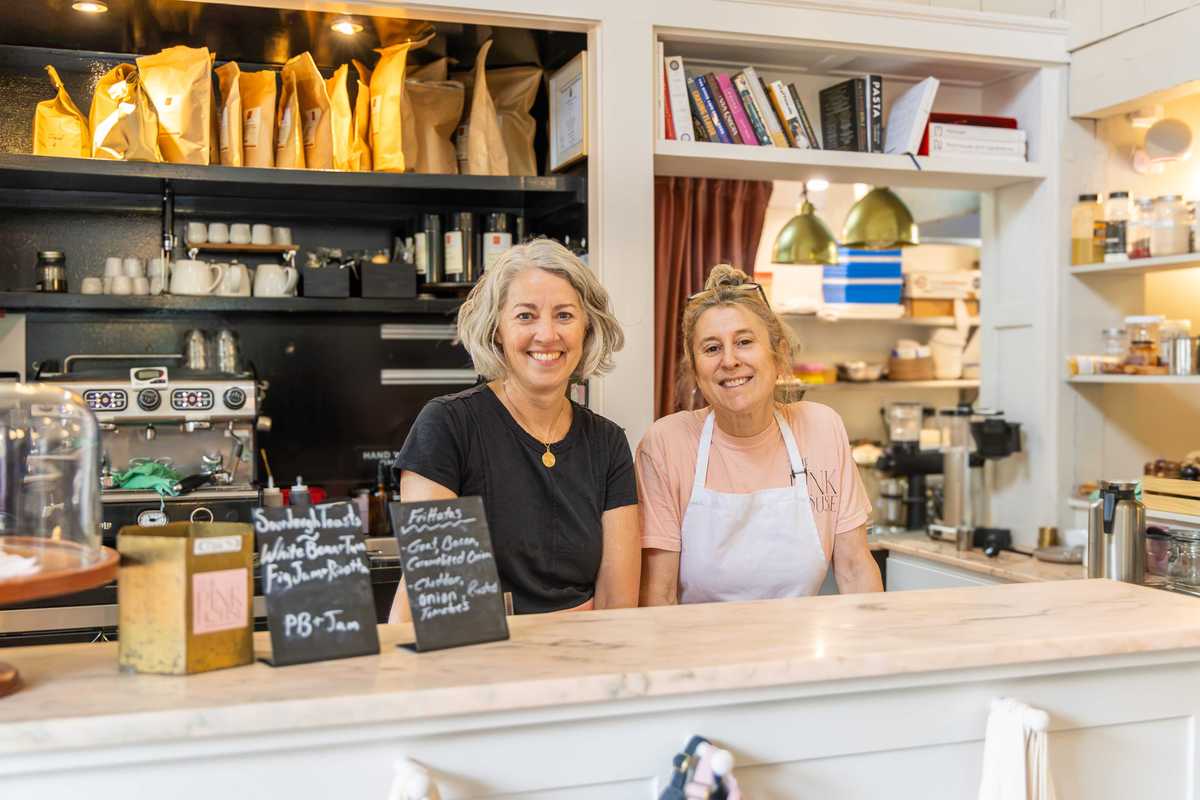
Marina Kotchoubey is taking care of business

Marina Kotchoubey at the Ian Ingersoll Cabinetmakers showroom in West Cornwall.

Photo by D.H. Callahan

After 40-something years navigating the world of custom fine furniture, Ian Ingersoll was getting ready to retire. Starting off with a little dovetail stool that he sold at a shop in West Cornwall in the 1970s, he’d grown his skill and his business into something he — and the whole town — could be proud of. Shutting down that business was not an option.

Ingersoll built Ian Ingersoll Cabinetmakers, which produced mainly classical Shaker furniture, on passion: the passion he had to make a living through creative challenges and the passion of his employees, who all seem deeply in love with their craft.

Keep ReadingShow less
google preferred source

Want more of our stories on Google? Click here to make us a Preferred Source.

A legacy of giving at Norfolk Chamber Music Festival

One hundred and twenty years ago, Carl and Ellen Stoeckel commissioned New York architect E.K. Rossiter to design The Music Shed in Norfolk, Connecticut. After nearly a decade of entertaining their friends and neighbors with the finest music of the day, they built a permanent home for their beloved Litchfield County Choral Union.

The commission and full funding of the construction was not unheard of in an era when great fortunes led to public enrichment. Railroad tycoon John D. Rockefeller was instrumental in funding institutes of higher education. Steel baron Andrew Carnegie was building libraries all over the country, and famously said that a man who dies rich is a disgrace, challenging his peers to give their fortunes back to the people.

Keep ReadingShow less
Two unique exhibitions at Geary Gallery

Henry Klimowicz with his sculpture, “Partial Pillar 1”

Photo by D.H. Callahan

On Saturday, Aug. 1, Geary Gallery opened its doors in Salisbury for two unique shows in its first- and second-floor gallery spaces. Art lovers flooded both floors over the course of the afternoon, giving the events a vibrant feeling that enhanced the importance of the art.

On the first floor is a show by Chicago-born, Colorado-based photographer Summers Moore, titled “Lobitos: Pueblo Fantasma,” or “Lobitos: Ghost Town.” The work centers around her daughter’s current hometown in Peru. Moore herself found a home away from home in Colorado in the mid-1980s and encouraged her children to seek out new places outside of their comfort zones.

Keep ReadingShow less

Writer’s retreat in the woods

Writer’s retreat in the woods

Participants in a 2024 Great Mountain Forest Woodland Academy workshop at Yale Camp.

Photo by Mike Zarfos

Great Mountain Forest (GMF) will host its first Nature Writing Retreat at the historic Yale Camp in Falls Village from Aug. 7-9, 2026. Writers of all levels are invited to draw inspiration from one of New England’s most notable forest landscapes. GMF envisions the retreat becoming an annual event celebrating writing, conservation and the relationship between people and forests.

This immersive three-day retreat reflects on the legacy of Hal Borland, the American writer and New York Times nature columnist whose work was deeply connected to this landscape. The retreat explores how wilderness shapes language, strengthens close observation and fosters environmental consciousness.

Keep ReadingShow less
google preferred source

Want more of our stories on Google? Click here to make us a Preferred Source.

google preferred source

Want more of our stories on Google? Click here to make us a Preferred Source.