In 2013 when painter and sculptor Ellsworth Kelly received the National Medal of Arts from Barack Obama, the former U.S. president described him as “A careful observer of form, color and the natural world, Mr. Kelly has shaped more than half a century of abstraction and remains a vital influence in American art.” Kelly was a New York State-native who lived and painted in Spencertown, in Columbia County, N.Y., from 1970 until his death at 92 in 2015.
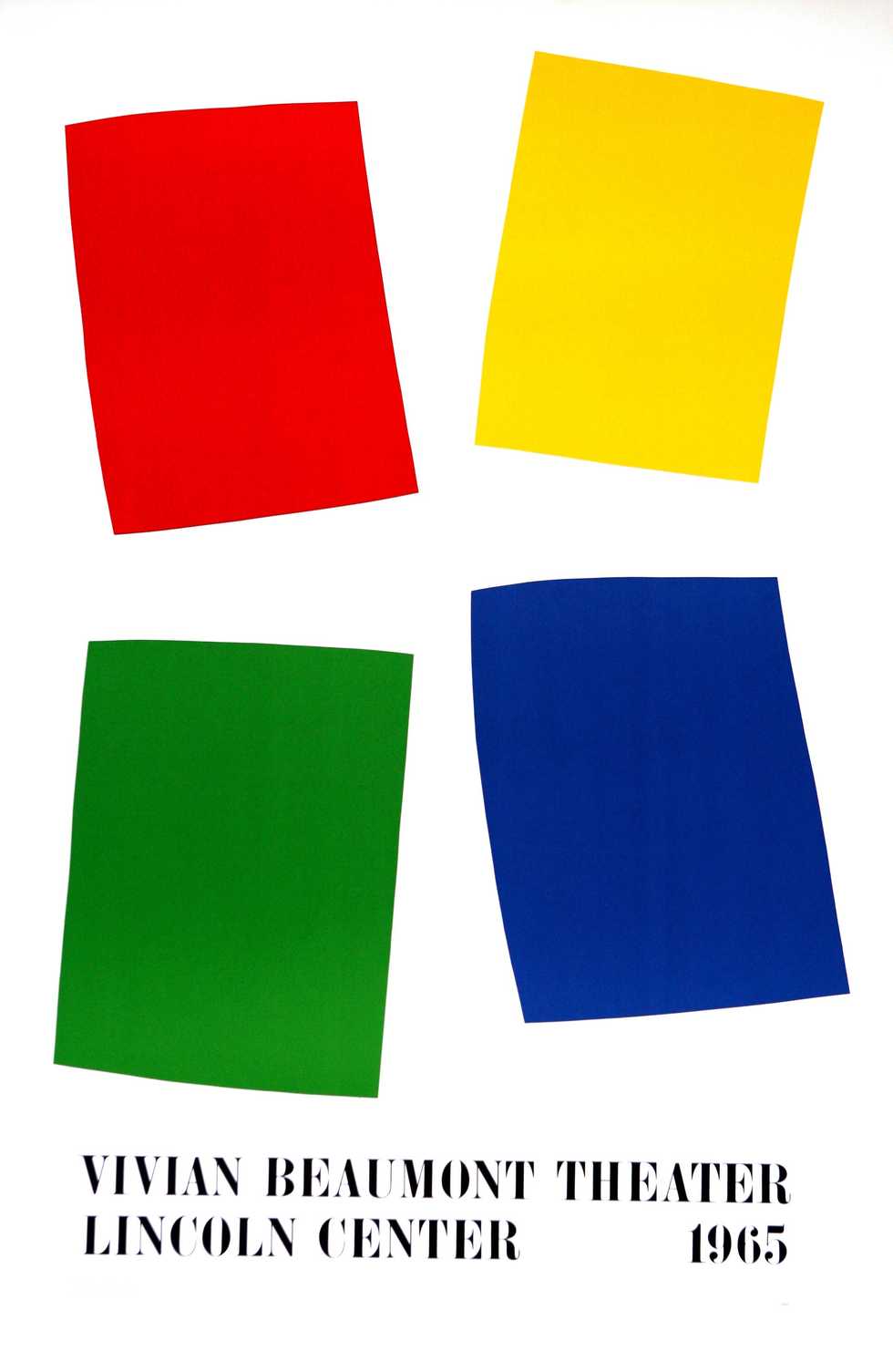
Starting April 29, The Gallery at Spencertown Academy Arts Center will unveil “Ellsworth Kelly Centennial: An Exhibition of Historic Posters” featuring exhibit posters from his seven-decade career as one of the most innovative and influential American working artists. This showcase will tie into a larger, national retrospective of his career, marking what would have been Kelly’s 100th birthday. Glenstone Museum in Potomac, Md., will mount “Ellsworth at 100” a comprehensive installation of his career on display starting in May before the exhibit travels to France where it will be displayed in the spring of 2024 at The Louis Vuitton Foundation, a nonprofit art museum sponsored by LVMH and located in 16th arrondissement of Paris. Currently on view in New York City is “Ellsworth Kelly: A Centennial Celebration” at The Museum of Modern Art through June 11. MoMA’s Kelly collection features the tremendous 1957 piece “Sculpture for a Large Wall,” constructed from 104 anodized aluminum panels reaching 65 feet in length originally commissioned for the lobby of Philadelphia’s Transportation Building. The massive sculpture, which Kelly made when he was 34 years old, and, per a New Yorker write-up at the time, was installed at the Transportation Building for four decades, was last on display in New York at Matthew Marks Gallery in 1998.
Utterly captivating in their bold simplicity, the intensity of his minimalist paintings continues to provoke something primal and pure in the viewer, an overwhelming sensory encounter of how we experience color. In her book, “Ellsworth Kelly: Outside In,” the British art historian Briony Fer wrote that Kelly’s paintings, “with their clearly defined shapes and pristine flat surfaces, are sensual and direct — so much so that is it tempting to assume that we know where they stop, and where the world outside the picture begins.”

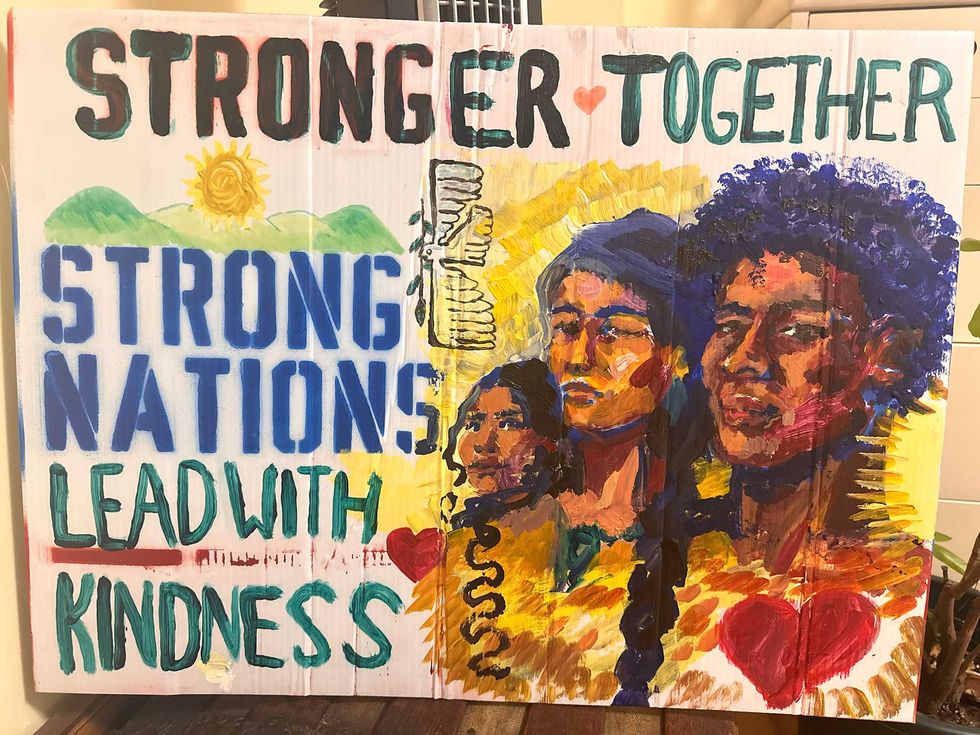 Some residents painted over a Patriot Front sign that had been removed and plan tohang it back up to spread a message of positivity and community.Provided