

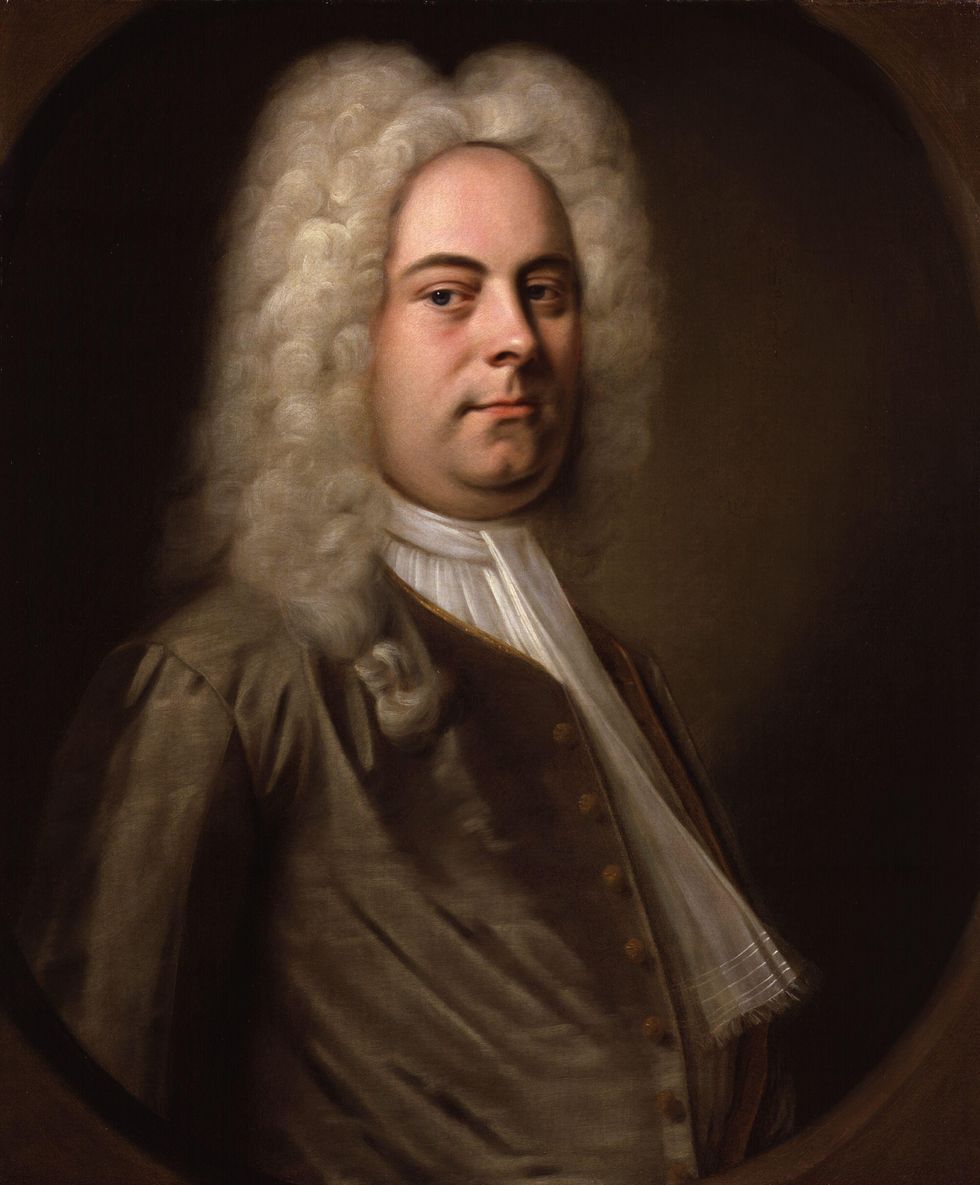
As soon as the Thanksgiving table is cleared, I feel liberated to start singing along to Handel’s epic oratorio, “The Messiah,” and to practice for the annual sing-alongs in Great Barrington, Mass., and Kent, Conn.
It seems unlikely that this year’s public sing-alongs will be held. To fill the void, there will be an online “sing-along Messiah” hosted by the Bardavon Opera House in Poughkeepsie, N.Y., on Saturday, Dec. 19, at 2 p.m.
It features excerpts from the 2019 performance of the Hudson Valley Philharmonic and Cappella Festiva. Lyrics will be streamed on the screen.
I’m not sure how all this will work, and I don’t know which sections of “The Messiah” will be included. It should be fun, however, and it’s free so there’s nothing to lose.
Sing-along essentials
Even though I will not actually be inflicting my voice on other people for this sing-along, this is the year I decided to reach out to several area singing pros to ask for tips. If you want to sound great (at least to yourself) try these out.
My first and favorite tip came from my friend Mary Sullivan, who has suffered through several sing-alongs with my friend Jody and I. Mary is an experienced and lovely choral singer and an active participant in the region’s extraordinary Crescendo program.
At a Messiah sing-along a year or two ago, Mary politely but firmly suggested that Jody and I cleanly break off our syllables instead of letting them trail along and deflate like pricked balloons. It’s a wonderful tip and definitely made us sound better.
These kinds of simple but essential tips, such as the ones that follow, should make your sing-along experience more fun — for yourself, and for anyone else in the room while you sing (and of course these tips can be applied when you’re singing by yourself in the kitchen while you cook).
Alice Maggio is a board member with the Berkshire Children’s Chorus. Her beginner-to-pro suggestions:
First, she said, “Find a comfortable room in your house where you don’t feel self conscious making a lot of noise.
“Set up your computer so that the screen is at a comfortable height for you to look at while standing.
“Wear shoes, not slippers — and make sure you don’t lock your knees when you’re singing.”
Following the score
Randy Orzano (who lives in Sharon, Conn., and bakes wonderful pastries at Sweet William’s in Salisbury, Conn.) is also a sometime singer with Crescendo. When asked for sing-along advice, he said, “I find that the prepared I am, the more fun choral singing can be.”
There are three steps to preparation that he recommends. First, get a copy of the score (which is the lyrics and the music). He suggested this one: scores.ccarh.org/handel/messiah/messiah-fullscore.pdf.
For those of us who can’t read music (and Handel’s music is very layered and complicated), there is a midi file you can download that will help you learn how to put the music and the words together.
“This website that has Midi files for all the choral parts: www.cyberbass.com/Major_Works/Handel_GF/Handel_Messiah.htm,” Orzano said.
Listen to it first, if you like, but, “Before you start singing, warm up your voice. Here’s a warm up I found on YouTube that I liked with a conductor named Katherine FitzGibbon: youtu.be/Narti8eO7Ho.
“Once your voice is warmed up, go to the CyberBass website and choose your vocal part for one of the Messiah movements.”
The CyberBass website is the one with the midi files.
“Sing along while reading the score. If the midi file is too fast, the website allows you to slow it down.
“Once your part is learned, try singing your part against a different part. For instance, if you’re a soprano, play the midi file for, say, the bass part and try singing your soprano line.
“You’ll find that there are sections that need more practice. Mark these sections and go back to practicing while listening to the soprano part.
“If you have a keyboard, go over your part, especially the challenging sections.
“If you want another challenge, find a YouTube video of a performance conducted by John Elliot Gardner (one of Christine’s favorites). Practice your part with their tempos and always check your intonation, phrasing, pronunciation (English is challenging).”
Above all, enjoy yourself
The Christine of whom Randy speaks is Christine Gevert, founder and artistic director of Crescendo, which makes its home at Trinity Church in Lime Rock, Conn. She had some tips of her own to share, although she modestly said she felt that Randy hit the high notes, so to speak.
She agreed that, “Listening to recordings beforehand is really important.”
For those of us who have sung along before but are flummoxed by trying to follow the sheet music, Christine suggests that, “A big part of being able to follow the score is highlighting your lines! It seems so obvious, but a big part of ‘reading’ the score is knowing where to read!
“If you are not a trained musician,” she added, “even looking at notes going up or down, and following with your voice is a big part of being able to sing.”
Here’s a pro tip: “A very helpful general rule: The more black you see, the faster the music goes (note heads and beams). White notes generally are slower.”
Above all, she counseled, have fun.
“Most of all: Go with your heart, your feelings! It is just wonderful to be part of a Messiah performance, and the music will lead you to a happy place — and your voice will follow that.”
The free live stream sing-along Messiah performed by Hudson Valley Philharmonic and Cappella Festiva (and you!) will be on Saturday, Dec. 19, at 2 p.m. For more information on this and other Bardavon Opera House streamed performances, go to www.bardavon.org.

 Pay Bill for Robin Starr’s service in the Continental Army.Courtesy the Alex Breanne Corporation
 John Mills speaking at Quinnipiac University.Courtesy the Alex Breanne Corporation
 Stephanie Saetta,with her rescue dog George and Blue (left), a shepherd mix awaiting his forever home.Madi Long
 Blue, a 7 year-old Shepard mix, is waiting for his forever home. Madi Long









