My name is Emma and I'm the pastry chef at Troutbeck in Amenia, N.Y. In 2013, I went to culinary school in Cambridge, Mass., and turned my passion into a career. Since then, I have worked at The Fearrington House Inn, a Relais & Châteaux property in Pittsboro, N.C., BakeHouse and Carmella’s Kitchen in Charleston, S.C., and The Colony Hotel in Palm Beach, Fla. Now I get to share my recipes with you.
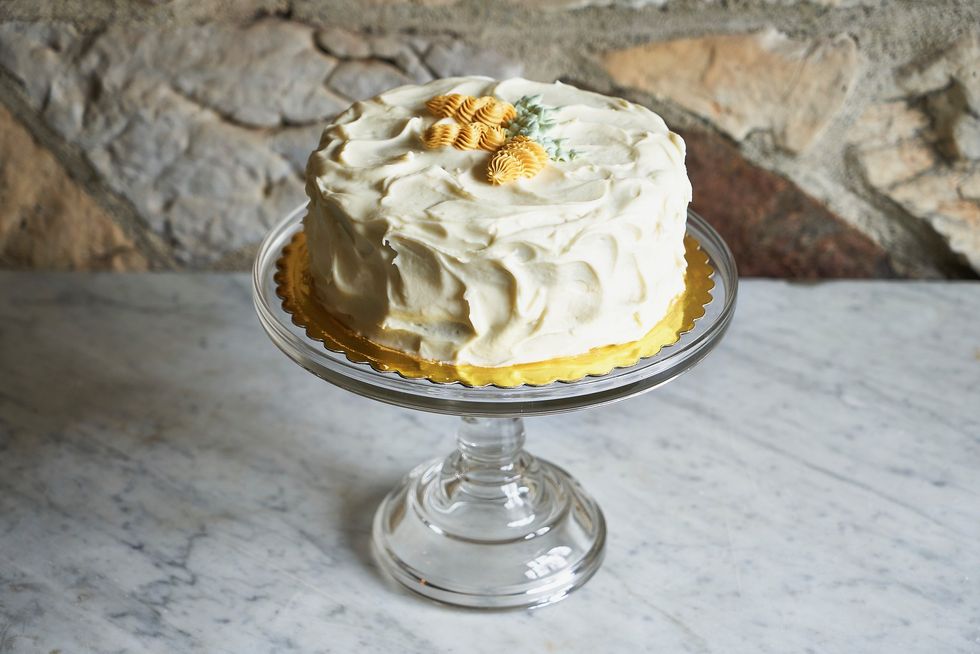
It’s the perfect time of year for that crowd-pleasing carrot cake! Whether you want to impress your in-laws for Easter or just want a tasty dessert (or indulgent breakfast!) to enjoy with a cup of coffee, this carrot cake will not disappoint. Personally, I don’t love overly sweet frosting, but this cream cheese recipe is the exception. The carrot cake is great but, for me, it’s a vehicle for the frosting. A little sweet with a little tang, and a pop of orange, this cream cheese frosting will have you licking your spatula and bowl. Have fun, get messy, and enjoy!
Carrot Cake
Makes one, two-layer carrot cake (8 or 9-inch).
2 cups (250 grams) all purpose flour
1 teaspoon baking powder
1 teaspoon baking soda
1 teaspoon salt
2 teaspoons cinnamon
4 large eggs
1 ¼ cups (240 grams) sugar
1 ¾ cups (385 grams) oil
1 cup (120 grams) walnuts (chopped)
3 cups (330 grams) carrots (pealed and shredded)
Zest of one orange (optional, see notes)
1 teaspoon cardamom (optional, see notes)
Method
1. Preheat your oven to 350F.
2. Lightly grease two 8 or 9 inch cake pans and line the bottom with parchment and set aside.
3. Sift flour, baking powder, baking soda, salt, and cinnamon (cardamom if using) together in a bowl and set aside.
4. Peel and shred your carrots and set aside (should be about 3 large carrots).
5. Chop your nuts into small/medium pieces and add to your shredded carrots.
6. In a large bowl, whisk together your eggs and sugar. Slowly add oil and whisk until combined.
7. Using a spatula, fold carrots and nuts into egg mixture (add orange zest if using).
8. Fold dry ingredients into mixture in three batches. Mix until all dry ingredients are incorporated. Do not over mix.
9. Divide your batter evenly into your greased and parchment lined cake pans.
10. Bake at 350F for about 20 to 35 minutes. Oven times may vary. Cook until a toothpick comes out clean from the center of the cake.
11. Remove from oven and let cool slightly. When cake pans are cool enough to touch, remove cakes from pans and let cool at room temperature completely.
Notes: If you want to jazz up the flavors, add zest of an orange! You can also cut the cinnamon in half and add a teaspoon of cardamom to spice things up.
Cream Cheese Frosting
2 cups (450 grams) cream cheese
8 tablespoons (4 ounces) butter
1 ¾ cups (350 grams) powdered sugar
Zest of half and orange
2 tablespoons sour cream
1 teaspoon vanilla
Method
1. In the bowl of a standing mixer, mix your cream cheese with a paddle attachment until smooth (Pull your cream cheese and butter out a few hours before and let come to room temperature).
2. While cream cheese is mixing, sift your powdered sugar and set it aside in a bowl.
3. When cream cheese is smooth, add room temperature butter and mix until smooth.
4. Add sour cream, vanilla, and orange zest. Mix until incorporated.
5. At speed one, add sifted powdered sugar small amounts at a time. Mix until smooth (For a lighter and fluffier texture, switch to a whisk attachment and whip frosting on medium/high until fluffy.).
6. Use right away or store in the fridge until you a ready to use. Can be frozen for later use.
Notes: Pull your butter and cream cheese out the night before (or a few hours before). It will be smoother and easier to work with.
Assemble
1. When cakes are cool, trim off the domed top of each cake to make them level.
2. Using your spatula, spread about a cup and a half (or as much as you want), on top of the fist layer of carrot cake. Make sure to spread the frosting to the outer edges of the cake.
3. Flip the second layer of cake over and place on top of the frosted first layer.
4. Gently build more cream cheese frosting around the outside and top of the layers to cover the cake completely. In order to get a nice wavy texture, rotate your wrist in quick swooshing movements. Continue around the entire cake.
Enjoy!