I was dumped from my dream job via teleconference.
Instead of packing my plant and personal belongings into a cardboard box, I had to bubble wrap all the company-supplied electronics provided by my employer (computer, smart phone, printer/fax, camera) stuff them into three Volkswagen-size containers and ship them back from whence they came. Talk about insult to injury.
There were no goodbye hugs to my remote coworkers, all 50-plus of whom were also laid off en masse that Bloody Monday in April 2014 when the print magazines division of the global company we worked for shut down. No notice. No closure. Worse of all, no cake!
Just collective gasps and virtual pink slips.
Time, as they say, heals all wounds, and being the eternal optimist, I chalked it up to a learning experience while vowing never to work remotely again.
But never say never.
Fast forward to the 2020 apocalypse, and here I am, once again, yup, working in PJs.
Whereas the first time around I was still able to do what I enjoy most, like meeting up with humans and covering community events, this time around it’s pretty much me in front of my computer, all day long, staring at pixels instead of people.
In just nine months since the pandemic started, this social butterfly has morphed into a reluctant Zoomie (not to be confused with zombie, which does perfectly describe me after about five minutes into a Zoom meeting).
Now, don’t get me wrong. I appreciate being able to work from my home office and out of COVID-19’s cruel path. But there must be a way to stave off the symptoms of a Zoom-induced coma: bleary eyes from staring at the blue screen while trying (unsuccessfully) to maintain eye contact and look interested; permanent deafness from ear-piercing screeches as others grapple with technology; and conversations punctuated with odd background noises.
Who hasn’t been one of those people vying to get a word in edgewise as a select few monopolize the conversation? And what about the never-ending small talk and annoying interruptions from children and pets, which only prolong the agony for those of us praying for a blackout?
So what’s a Zoomie to do? Carpe diem, as the Roman poet Horace would say. Seize the virtual day. With that in mind, I’ve come up with some survival tips to help my fellow Zoomies survive the next virtual encounter:
• Turn yourself into a potato. True story. During a virtual work meeting, a boss accidentally turned herself into a potato using a fancy filter and couldn’t figure out how to fix it. Her colleagues were in stitches for 10 minutes. Now that’s a stress reliever on steroids.
• Take yourself to a tropical island. Find a virtual background that speaks to your interests and personality. (Just keep in mind that sexual harassment prevention training course you were required by the state of Connecticut to take!)
I’ve seen many recent backgrounds that depict stunning locales, both globally and in our own communities. You can even transform your humble kitchen or bedroom work area into a swanky palace (tiara or crown optional).
• Be prepared and remember, the mute button is your friend. Let others be more than just virtual wallpaper. There are plenty of small theaters looking for a few good hams if you really must speak.
• In a reversal of Casual Fridays, dress up for Formal Mondays. Ditch the “new normal” work outfit of baggy sweats, T-shirts snatched from the dirty laundry bin and tattered bunny slippers. Instead, start the first meeting of the week in your Monday finest by dusting the cobwebs off your “old normal” wardrobe (remember button-down shirts and khakis, skirts and heels?) and putting your best face forward.
Of course, there is no guarantee in this day and age of uncertainty that relationships, whether work-related or personal, won’t fall victim to an unexpected virtual parting of ways.
My advice, as someone who has been there, is to keep plenty of cake on hand, just in case.

Author Debra A. Aleksinas has had just about enough of Zoom meetings. Screen capture by Debra A. Aleksinas

Screen capture by Debra A. Aleksinas

Screen capture by Debra A. Aleksinas




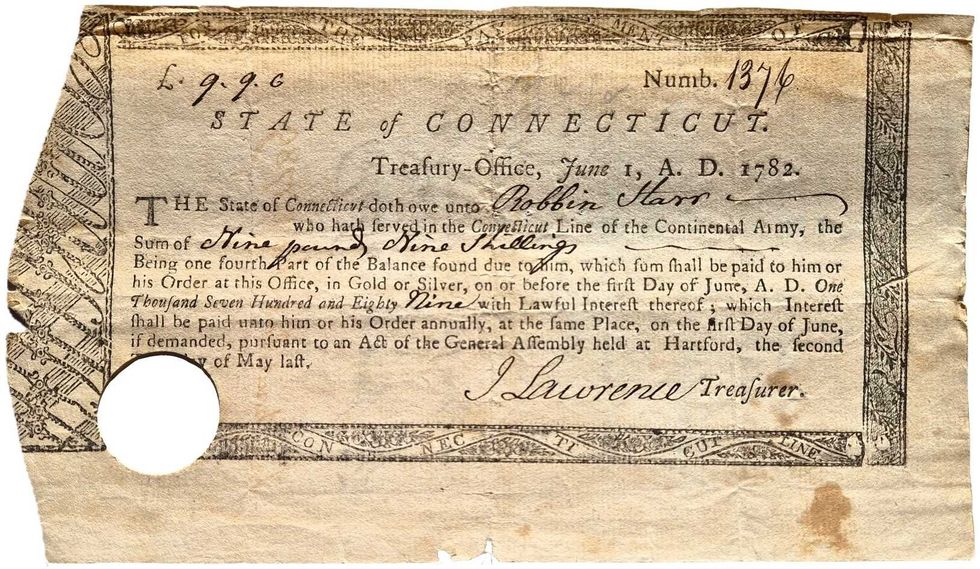 Pay Bill for Robin Starr’s service in the Continental Army.Courtesy the Alex Breanne Corporation
 John Mills speaking at Quinnipiac University.Courtesy the Alex Breanne Corporation
 Stephanie Saetta,with her rescue dog George and Blue (left), a shepherd mix awaiting his forever home.Madi Long
 Blue, a 7 year-old Shepard mix, is waiting for his forever home. Madi Long