Author Simon Winchester, a Berkshire County resident, writes about the Mississippi and how it came to be America’s second largest river system, in a new book of work by photographer David Freese, called “Mississippi River: Headwaters and Heartland to Delta and Gulf,” due out in June.
Winchester will talk about the book and about the river in a Zoom talk hosted by the Scoville Memorial Library of Salisbury, Conn., on Saturday, May 9, at 4 p.m. He will also talk about another new book due this year, on the dams of Louisiana.
The text in both books is cautionary. He researched the almost entirely artificial Mississippi River System construction, and the increasing likelihood and danger of the system failing, and of the river rerouting itself. If that happens, it will likely bypass New Orleans and destroy an immense amount of infrastructure along the way.
“The overall theme I take with this book is that the Mississippi — romanticized, noble and epic — is now for most of its length almost entirely artificial,” Winchester said.
“It used to sort of ooze out of Lake Itasca in Minnesota. Then the Civilian Conservation Corps built a huge dam that channels the water into a stream that comes out of the lake.
“That kind of sets the tone for the whole river: It’s run by the Army Corps of Engineers, which is not necessarily a good thing.”
The photos by Freese remind us of the beauty of the great river system; the photos were taken from a drone at about 500 feet.
Freese lives in Philadelphia, Pa., and had an idea 10 years ago to take photos from an airplane of the West Coast of North America, from the Aleutian Islands to Baja, Calif. His next book was about the East Coast.
Winchester probably won’t show Freese’s photos from this book but might show some from their past projects. Like most of us, he is learning his way around Zoom talks and isn’t quite sure what the structure of his talk will be on May 9.
For details on how to log in, go the library website at www.scovillelibrary.org, click on “events” and then click on the talk on May 9 in the calendar. To learn more about Winchester and his work, go to www.simonwinchester.com.
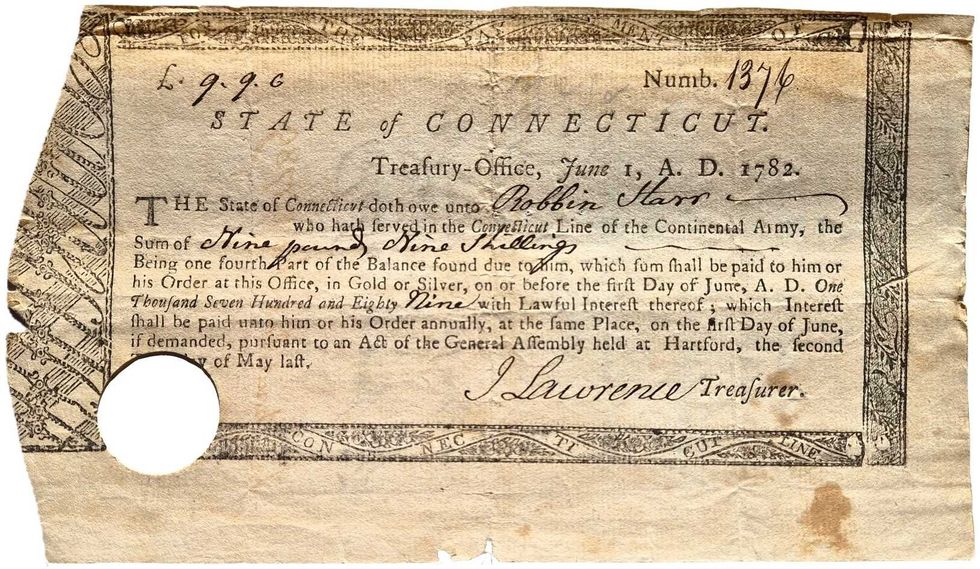 Pay Bill for Robin Starr’s service in the Continental Army.Courtesy the Alex Breanne Corporation
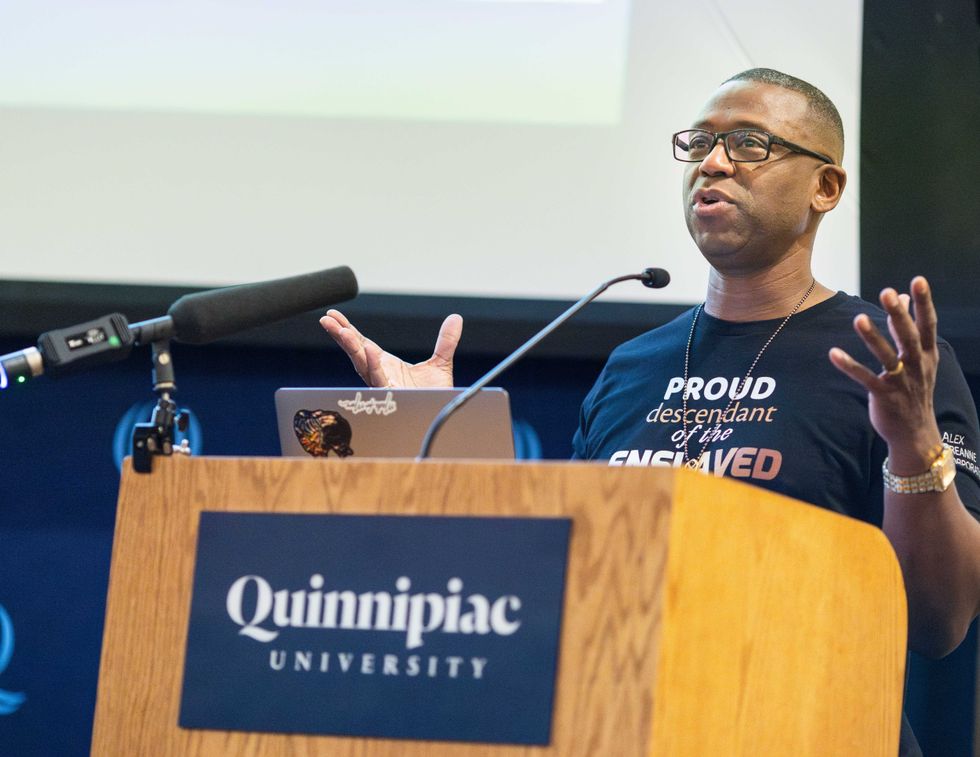 John Mills speaking at Quinnipiac University.Courtesy the Alex Breanne Corporation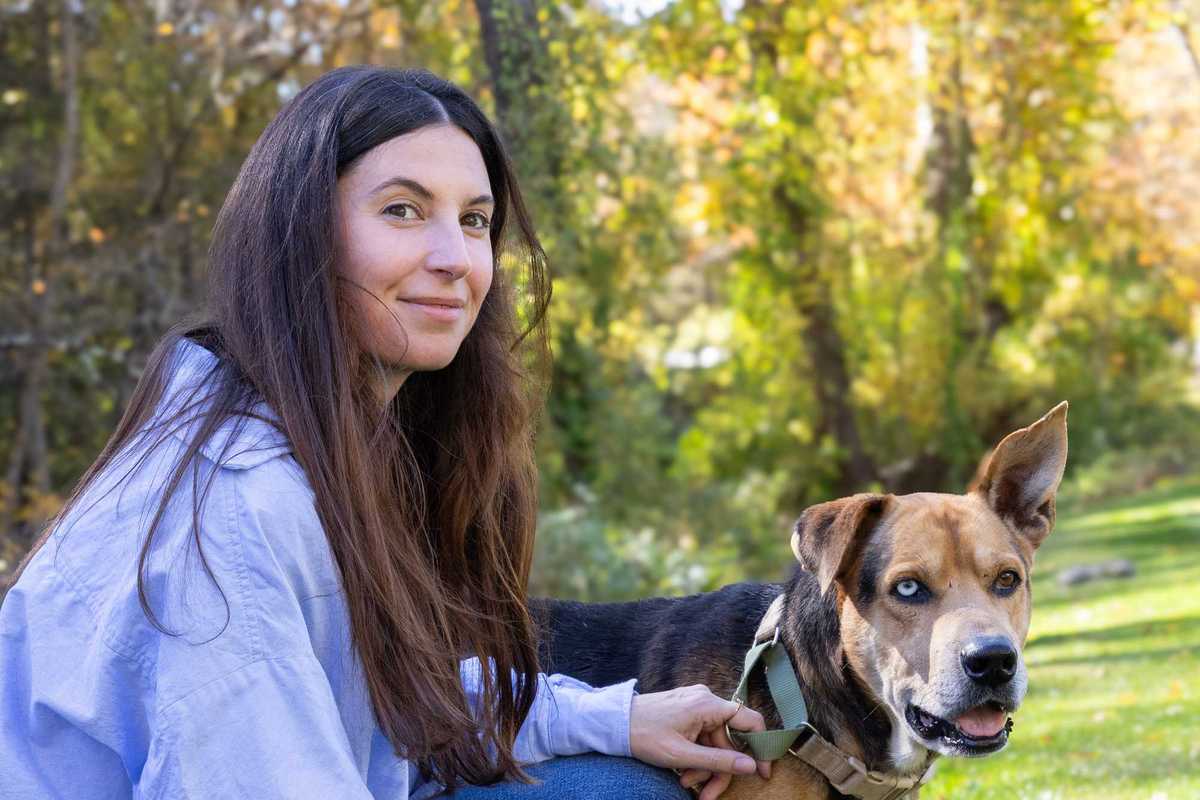
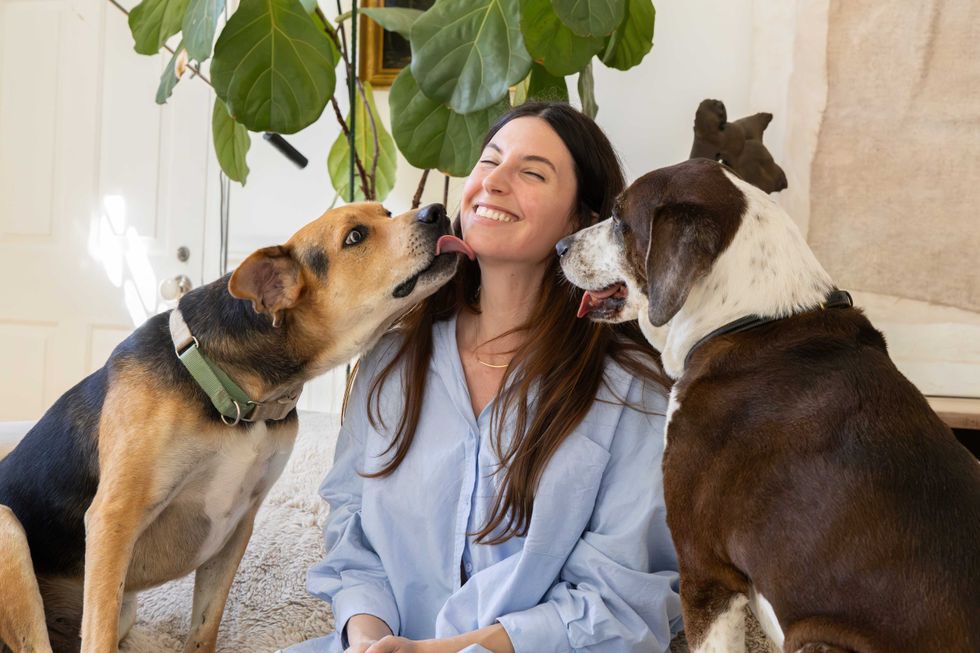 Stephanie Saetta,with her rescue dog George and Blue (left), a shepherd mix awaiting his forever home.Madi Long
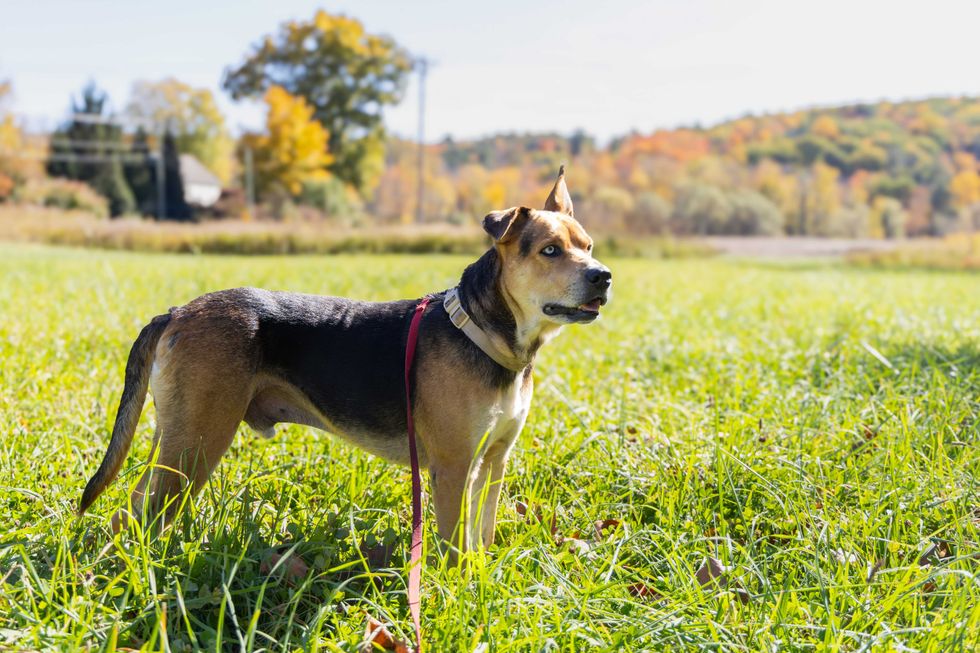 Blue, a 7 year-old Shepard mix, is waiting for his forever home. Madi Long