Exploring Demons and Daemons in New Pullman Novel


Sir Philip Pullman, a master of the fantasy genre, has come into his own this year with the trifecta of a new novel, the debut of an HBO series based on his earlier trilogy, and a knighthood in Britain’s New Years Honours.
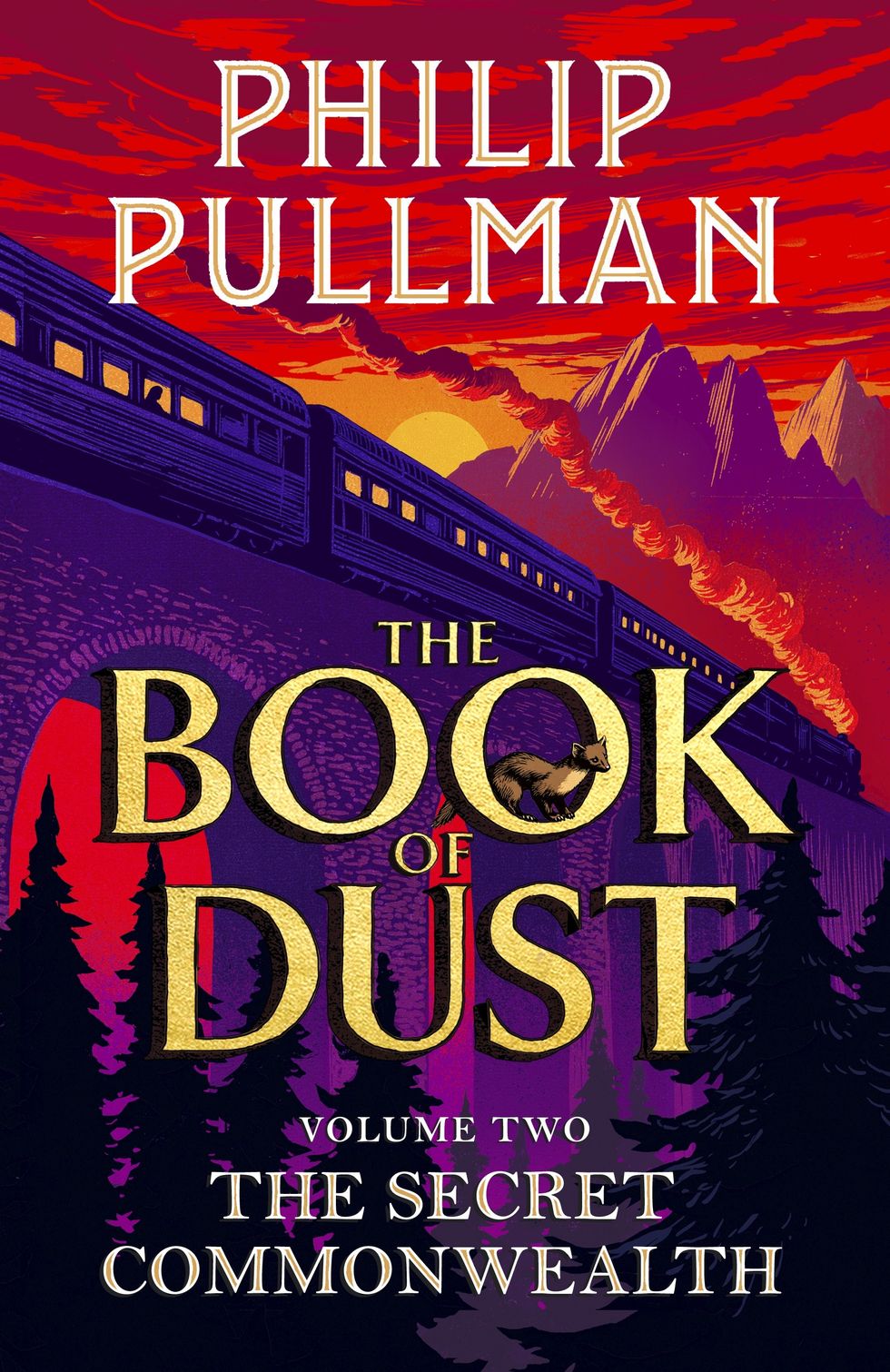
The new book, “The Secret Commonwealth,” is the second installment of a trilogy, “The Book of Dust,” that expands on the characters first established in “His Dark Materials” (which the HBO series adapts).
In the imagined world Pullman creates, every human has a physically embodied spirit animal, called a daemon, as a constant companion akin to a soul.
Daemons express other sides of complex personalities, and often play a good-angel/bad-angel role in dialogue with their humans.
While the novels are adventure stories of epic scope, they also explore concepts of multiple parallel worlds (some with and some without apparent daemons), metaphysics of life and death, and the powerful energy that couples conscience and consciousness.
“The Secret Commonwealth” focuses on a single world in which a few daemons have rebelled against and abandoned their humans. Lyra Silvertongue, an independent-minded, courageous and resourceful character introduced as an adolescent in the earlier trilogy, has become a 20-something student in Oxbridge. Her daemon has gone walkabout, and duplicitous quasi-government agents are searching, using magical devices, to find and arrest Lyra for heresy.
Working with a secret society of anti-authoritarian allies, one member of which has fallen in love with her, Lyra spends much of the book tracking down her daemon. Much as people stigmatized by disfigurement or prejudice in our own world must do, she copes with the profound stigma of being seen by others as daemon-less, all the while eluding capture and confinement.
Pullman’s prose is terse, action-filled and often witty. The settings he evokes are both familiar and otherworldly. Part of the fun for readers is puzzling out unfamiliar words (“anbaric” means electrical) and imagining travel by zeppelin.
Those who have read earlier works by Pullman will have an easier time following the story than first-timers, but it’s hard to put down the book once started, even when you begin in the middle.
“The Secret Commonwealth” is published by Penguin Random House and available at local bookstores.
Rob Buccino is a semi-retired marketing consultant, author, and fiction fan who writes occasionally for The Lakeville Journal.

Patrick L. Sullivan
Officials break ground on the 14-unit Holley Place affordable housing development
LAKEVILLE — Five years after receiving final approval, construction has begun on the Holley Place affordable housing development in Lakeville.
A groundbreaking ceremony was held Tuesday, March 24, at the project site at 14 Holley St.
The three-story building will include 14 rental units — 10 one-bedroom and four two-bedroom apartments — as well as a garage beneath the structure with 22 parking spaces. The development is expected to be completed and ready for occupancy in spring 2027.
The project is being developed by the Salisbury Housing Committee, a private nonprofit organization that owns and operates affordable housing properties in the region.
According to Peter Halle, president of the Salisbury Housing Committee, the development is intended to serve households across a range of income-restricted levels.
Some units will be reserved for applicants earning at or below 50% of the area median income ($40,750 for an individual), while others will be available to those earning up to 80% of the area median income ($65,200 for an individual).
State Housing Commissioner Seila Mosquera-Bruno attended the ceremony and emphasized the importance of collaboration in advancing affordable housing initiatives.
“We can only do this if we all partner and work together,” she said, adding that “having a community that cares makes a difference.”
Halle credited State Rep. Maria Horn (D-64) with helping secure a key funding source.
“Eighteen months ago, when we were evaluating how to finance Holley Place, Maria applied for Urban Act funding, which resulted in a $2 million award,” he said.
Halle further acknowledged the Federal Home Loan Bank of Boston and Torrington Savings Bank for providing financing through a loan and grant, describing their contributions as “an essential piece of the funding puzzle.”
Halle also noted the significant role of private donors.
“The residents of our town have skin in the game,” he said, highlighting the Bates Foundation for its $275,000 contribution.
First Selectman Curtis Rand reflected on the site’s history, noting that approximately 75 years ago it was home to a large residential building in what he described as a more vibrant downtown Lakeville.
“Down the hill to our east was a full-on grocery store, a pharmacy, a bar, several restaurants, a shoe repair shop, two barber shops, and kids like me could even buy vinyl albums in a record store,” Rand said.
The 0.31-acre Holley Street property was donated to the town in 1967 by the Belcher family, with the condition that the town demolish the structure known as the Holley Block, which dated to the 1890s. The building was subsequently torn down, and the site was later transformed into Bicentennial Park before being identified as a location for affordable housing.
While acknowledging that the project faced opposition, Rand said the town is ready to move forward.
“This project met with some resistance, but it is time to turn that page and welcome a new future for people and our town,” he said.
Following a lengthy public hearing process, the Planning and Zoning Commission approved the development in May 2021. Opponents raised concerns about traffic, parking, the scale of the project, and the availability of alternative sites.
A subsequent lawsuit alleging that the commission failed to consider a “feasible and prudent alternative” was dismissed by Superior Court Judge Andrew Roraback in February 2023.
The Salisbury Housing Committee currently owns and operates 50 units of affordable rental housing in Salisbury, including Sarum Village and Lakeview Apartments.
To apply for a unit, prospective tenants are advised to go to salisburycthousing.org
Alec Linden contributed to this article
Alec Linden
Members of Montgomery Lodge No. 13 remove a time capsule that was placed in 1983, which marked the lodge’s 200th anniversary.
LAKEVILLE –History will live on at Bicentennial Park even as the new Holley Place affordable housing development helps usher Lakeville into the future, with two time capsules of Salisbury’s past set to be preserved within the site.
The Bicentennial Park site is now being used for the affordable housing development, where a groundbreaking ceremony took place on Tuesday, March 24.
As part of that ceremony, the two artifacts were removed from the stone walls of the park along Millerton Road, where they had been embedded for nearly half a century. Because the walls will be demolished to make way for the 14-unit building, the capsules — along with several other historic elements — were taken out but will be reintegrated into a small commemorative courtyard at the corner of Holley Place and Millerton Road.
One capsule was interred by the town in 1976 to celebrate the country’s bicentennial, the namesake of the park, while the other was placed by members of Montgomery Lodge No. 13, the local chapter of the Freemasons, in 1983 to commemorate the 200th anniversary of its charter. Both capsules will remain sealed until their stated opening dates in 2076 and 2083.
When the Holley Place project was approved by the Planning and Zoning Commission in 2021, the resolution included a condition that “[provisions] shall be made for the preservation of any time capsule or other features of historical interest that may be discovered during the construction process. These should be relocated into the wall along Holley Street so they are publicly visible.”
That mandate ties directly to the site’s historical significance.
“There’s a big connection between the history of the lodge, the history of the town and Holley Block,” said Gil Ditkoff, a Master Mason of Montgomery No. 13, referring to the building that once stood on the site, which was built in the 1890s and torn down in 1967.
Montgomery No. 13, which met in several locations before settling in its current home in an old schoolhouse in downtown Lakeville, held meetings for more than a decade in the early 20th century in rooms within the Holley Block.
When the lodge celebrated its bicentennial in June 1983, the burial of its capsule was accompanied by a lively procession through town, followed by a dinner and meeting at the Hotchkiss School.
“It was a big, whole day thing,” Ditkoff said. A commemorative write-up of the occasion by lodge members describes a town-wide event with visiting dignitaries, music and speeches.
According to that document, the contents of the Freemasons’ capsule include a complete list of Montgomery Lodge master masons, the bicentennial celebration program, a list of current members, promotional material from The Lakeville Journal, a medal and apron issued for the celebration, and other documents and memorabilia.
Most notably, the capsule contains a picture of the lodge’s original charter, which was signed by Paul Revere. Ditkoff explained that the “No. 13” in the lodge’s title indicates it is the 13th oldest chapter within the Connecticut Grand Lodge of Freemasons.
The second capsule, placed in the wall on July 4, 1976, is being safeguarded by Lou Bucceri of the Salisbury Association. Bucceri said it contains a copy of the town’s 1976 report, a copy of The Lakeville Journal and a bicentennial program guide.
For Montgomery No. 13, Ditkoff is eager for future members to be able to look back and connect with Salisbury’s history.
“We certainly hope that Montgomery Lodge No. 13 will be here and thriving with the next generation of freemasons active in supporting the town of Lakeville and surrounding communities as they have done for 243 years,” he said.
“Fingers crossed, people will be inspired to continue some of these traditions that have served this community well over so many years.”
Salisbury has three additional time capsules, according to Salisbury Town Tidbits: one beneath Town Hall from 1987, another at Indian Mountain School from 1985, and a third from Hotchkiss School’s 1993 centennial.
Ruth Epstein
Canaan Union Station, a historic rail depot dating to 1871, has been sold for $800,000 and will continue to house railroad operations and community tenants.
The Canaan Union Station has been sold for $800,000, marking a new chapter for one of the town’s most recognizable historic landmarks while maintaining its railroad-related uses and existing tenants.
The property was purchased by Canaan Station LLC, an entity associated with the Housatonic Railroad, from the Connecticut Railroad Historical Association, as recorded with the town clerk’s office.
Under the new ownership, the building will continue to serve multiple purposes. Housatonic Railroad plans to consolidate its offices within the station, while the railroad museum, a physical therapy office, and Paul Ramunni’s accordion shop will remain in the building, though the shop will be reduced in size and relocated within the structure.
“We have no substantial plans for change,” said Edward J. Rodriguez, executive vice president and general counsel for Housatonic Railroad (HRRC). “The station is an important part of Canaan’s history and character. We’re bringing it back to its original railroad purpose.”
A landmark
The station has been part of North Canaan since 1871, when competing railroads—including the Housatonic Railroad, which dates to 1841, and the Connecticut Western Railroad—agreed to share a single depot for passenger service at their crossing point. The Connecticut Western Railroad ran east to west between Hartford and Millerton, intersecting with the Housatonic Railroad in North Canaan.
The Victorian-style building was designed with symmetrical wings for each railroad and included a central tower that gave staff visibility in all directions across the rail junction. A restaurant once operated on the second floor during the station’s early years.
Over time, the rail lines changed ownership and eventually came under the control of the New York, New Haven and Hartford Railroad.
The Housatonic Railroad now conducts a freight business.
Fire and restoration
A 2001 arson fire severely damaged the structure, prompting a community-led effort to save it. The Connecticut Railroad Historical Association acquired the remains in 2003 and, with help from local groups and donors, raised more than $3 million to restore the station.
Rebuilding took years and was not completed until 2018. The station is now listed on the National Register of Historic Places.
Financial pressures led to the sale.
The historical association ultimately decided to sell the property due to financial strain.
Douglas Humes Jr., president of the Connecticut Railroad Historical Association, said the group struggled with debt following restoration efforts, particularly after the departure of the Great Falls Brewing Company, which had operated in the station.
“That put us in a bad position,” Humes said. “We had to pay off debts.”
He said the decision reflected practical realities rather than a lack of commitment to preservation.
Terms of the agreement
The sale is a tri-party agreement, including the historical association, the state of Connecticut and the town of North Canaan. No changes may be made to the station before 2030. A 99-year lease with the town to provide public parking at the station’s parking area for $1 will remain in effect.
“The station is the centerpiece of the town,” said Humes, a former first selectman.“The museum was created so people understand the history of the railroad and what it did for Canaan and the surrounding areas. We look forward to working with the new owner to promote railroading in Canaan. Now the station is preserved for future generations.”
The Railroad Museum at the station is open Saturdays from 10 a.m. to 2 p.m.

Want more of our stories on Google? Click here to make us a Preferred Source.
Lakeville Journal
Notice of Decision
Town of Salisbury
Inland Wetlands & Watercourses Commission
Notice is hereby given that the following actions were taken by the Inland Wetlands & Watercourses Commission of the Town of Salisbury, Connecticut on March 23, 2026:
Approved - Application IWWC-26-13 by Patrick R. Hackett, P.E., for exterior work associated with renovation of a three-apartment residence. The property is shown on Salisbury Assessor’s map 49 lot 50 and is known as 37 Bostwick Street, Lakeville. The owner of the property is Salisbury Housing Committee Inc.
Approved subject to a wetland mitigation area, invasive plant management, tree protection, and conditions recommended by the Town Engineer - Application IWWC-25-82 by Dawn Marti for an underground pedestrian tunnel beneath Route 44. The property is shown on Salisbury Assessor’s map 16 lot 05 and is known as 250 Canaan Road, Salisbury. The owner of the property is Salisbury School Inc.
Any aggrieved person may appeal this decision to the Connecticut Superior Court in accordance with the provisions of Connecticut General Statutes §22a-43(a) & §8-8.
Town of Salisbury
Inland Wetlands and Watercourses Commission
Sally Spillane, Secretary
04-02-26
TAX COLLECTOR
TOWN OF
SALISBURY CT
LEGAL NOTICE
Pursuant to Sec. 12-145 of the Connecticut State Statutes, the taxpayers of the Town of Salisbury are hereby notified that the fourth installment on the Grand List of October 1, 2024 is due and payable on April 1, 2026. Payments must be received or postmarked by May 1, 2026. If said Real Estate and Personal Property taxes are not paid on or before May 1, 2026, interest at the rate of one and one half percent (18% per year) will be added for each month or a fraction thereof which elapses from the time when such tax becomes due and payable until the same is paid. Minimum interest charge is $2.00.
Pursuant to Section 12-173 of the Connecticut State Statutes, unpaid Real Estate tax on the Grand List of October 1, 2024 will be LIENED on JUNE 3, 2026. Payment must be received by 12:00 p.m. on June 3, 2026 to avoid a Lien. Tax Office is open Monday, Wednesday 9am-4pm, Friday 9am-3pm. Closed 12:30 pm-1:30 pm.
Taxes can be paid by mail addressed to: Tax Collector, P.O. Box 338, 27 Main Street, Salisbury,
CT 06068. There is a drop box in the vestibule of the Town Hall which is available during normal Town Hall hours as well as a 24-hour drop slot at the rear of the building adjacent to the parking area. The Town is urging taxpayers to mail checks or use the option of paying by credit card or E-Check. Please see the Town website salisburyct.us for additional information. Dated at Town of Salisbury, CT this 6th day of March 2026.
Jean F. Bell, CCMC
Tax Collector
Salisbury CT 06068
03-19-26
04-02-26
04-23-26
Lakeville Journal
EXTRAS After-School and Summer Childcare Program: is looking for summer counselors! Please visit our website for more details and other open positions. www.extrasprogram.com/employment.
Gardeners needed for native plant design business: March 15- December 1st. Must be physically fit and dependable. Call for interview 347-496-5168. Resume and references needed.
Town of Amenia is seeking applications for Part-Time Recreation Leader: Candidates must possess high school diploma or GED certificate and one (1) year of experience which involves conducting, organizing, and leading recreation activities. Salary $21.63, up to 20 hours a week. Letter of Interest may be submitted via email to dmklingner@amenainy.gov or by mail to Town Clerk, 4988 Route 22, Amenia NY 12501. Application deadline: April 13, 2026 at noon.
GARDENING: Spring and Fall Cleanup and Stone Walls. 845-444-4492.
Hector Pacay Landscaping and Construction LLC: Fully insured. Renovation, decking, painting; interior exterior, mowing lawn, garden, stone wall, patio, tree work, clean gutters, mowing fields. 845-636-3212.
PUBLISHER’S NOTICE: Equal Housing Opportunity. All real estate advertised in this newspaper is subject to the Federal Fair Housing Act of 1966 revised March 12, 1989 which makes it illegal to advertise any preference, limitation, or discriminationbased on race, color religion, sex, handicap or familial status or national origin or intention to make any such preference, limitation or discrimination. All residential property advertised in the State of Connecticut General Statutes 46a-64c which prohibit the making, printing or publishing or causing to be made, printed or published any notice, statement or advertisement with respect to the sale or:rental of a dwelling that indicates any preference, limitation or discrimination based on race, creed, color, national origin, ancestry, sex, marital status, age, lawful source of income, familial status, physical or mental disability or an intention to make any such preference, limitation or discrimination.
Millerton, rural, newly renovated house: 2 bedroom, split air heat/a/c system, dishwasher,decks, views, pets considered. $2800 plus utilities. Call 518-567-8277.
Sharon, 2 Bd/ /2bth 1900 sqft home: on private Estate-Gbg, Water, Mow/plow included. utilities addtl. $2300.00. Please call: 860-309-4482.
Dee Salomon
A partially mowed meadow in early spring provides habitat for wildlife while helping to keep invasive plants in check.
Love it or hate it, there is no denying the several blankets of snow this winter were beautiful, especially as they visually muffled some of the damage they caused in the first place.There appears to be tree damage — some minor and some major — in many places, and now that we can move around, the pre-spring cleanup begins. Here, a heavy snow buildup on our sun porch roof crashed onto the shrubs below, snapping off branches and cleaving a boxwood in half, flattening it.
The other area that has been flattened by the snow is the meadow, now heading into its fourth year of post-lawn alterations. A short recap on its genesis: I simply stopped mowing a half-acre of lawn, planted some flowering plants, spread little bluestem seeds and, far less simply, obsessively pluck out invasive plants such as sheep sorrel and stilt grass. And while it’s not exactly enchanting, it is flourishing, so much so that I cannot bring myself to mow.
I have doubts:If I mow in the spring, would I kill all the overwintering insects? If I mow after the first frost, as suggested in a 2017 paper by the esteemed Kim Stoner, Ph.D., on the Connecticut AgriculturalExperiment Station website, would I lose the seed heads of yarrow, rattlesnake master and black-eyed Susan that birds are supposed to feed on in the winter?Paralyzed by indecision, I have not been able to bring myself to do even a partial cut.
I took a poll at a recent party attended by horticulturalists, environmentalists and garden experts. There was a consensus that early spring is indeed the best time to mow — early, before the ground-nesting birds like woodcock start nesting.I then called Mike Nadeau, whom I consider a meadow master of the Northwest Corner, and he concurred, following the Xerces Society meadow-mowing guidelines: mow in early spring when dandelions are in bloom.
“Xerces Society says this is the time most insects have hatched out of hollow stems and is between bird migrations.”
Nadeau’s experience has borne this out.
“I stress not to mow in fall because a dormant meadow is a haven for winter critters of all ilk.Birds use dormant plants for nesting materials, eat seeds, refuge — not to mention the other mammalian life that benefits from a meadow. An argument that has worked for me to discourage fall mowing is to describe a dormant meadow, with its myriad seed heads and foliage, as kinetic sculpture, especially with snowfall.It’s a beauty all its own.”
Nadeau mows a third to a half of a meadow each year, ideally using a flail mower, which chops vegetation into small pieces, helping foliage to resprout. The unmowed portion is left as a refuge for the animals that get evicted from their homes in the mowed area.
Stoner agrees with Mike to divide up the meadow and mowing different sections at different times. And she validates my mowing trepidation.
“There’s no perfect time. Any time you mow, you will be disturbing the habitat of some creature. If you don’t mow, you will have invasive plants creeping in, and eventually you will have trees,” she said.
“Best thing is to think about what your goals are — what creatures do want to encourage in your meadow? Then set the time of mowing to protect and enhance the habitat for those creatures.”
Additionally, Nadeau suggests that mown paths should be rerouted at least every two years to prevent rhizomatous grasses from establishing, which can grow into meadow edges and look unsightly. And the window is short:
“It’s too late to mow when spring birds arrive in earnest and new meadow growth is taller than 6 inches.”
Lights Out!
One of my favorite meadow benefits are the hundreds of fireflies that emerge in June. I am grateful for the lack of artificial light from neighbors (save for one house across the river with a persistent outside night light), so these creatures can shine brightly — and securely.
The organization DarkSky International relays the effect outdoor lights can have on fireflies: an almost 50% decrease in flashes per minute, which affects courtship behavior and mating success, according to two studies they cite on its website,darksky.org.
There, you can also get the lowdown on the devastating effects even one outdoor light can have on birds, amphibians, insects and mammals.The organization provides educational materials that explain the issue, making it easier to bring it up to neighbors and friends — which I will soon try with the house across the river.
Dee Salomon ungardens in Litchfield County.

Want more of our stories on Google? Click here to make us a Preferred Source.

Want more of our stories on Google? Click here to make us a Preferred Source.