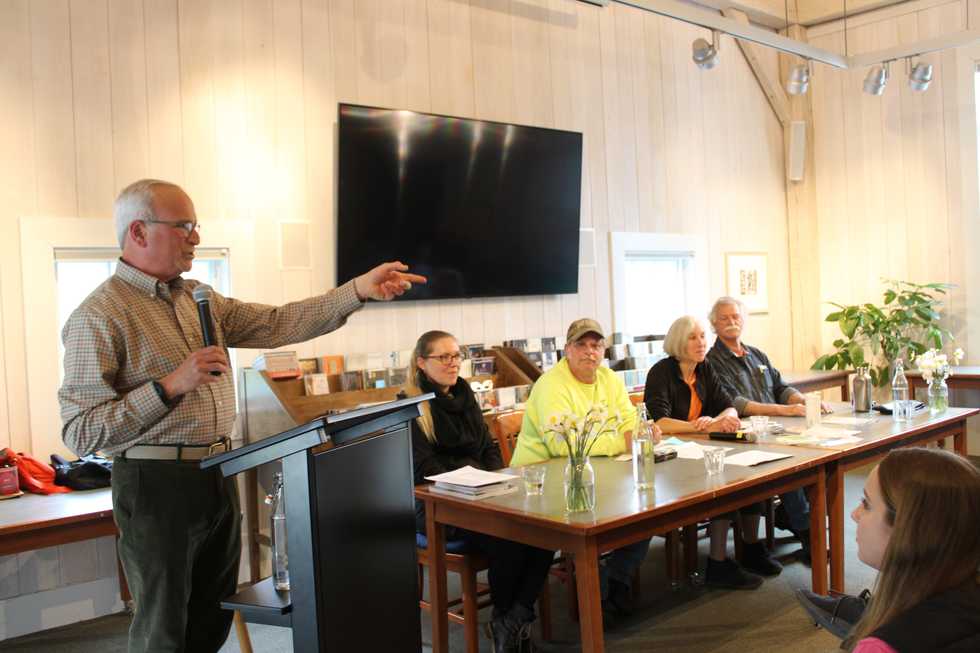
CORNWALL — The Cornwall Garden Club, in conjunction with the Cornwall Conservation Commission and the Cornwall Conservation Trust, hosted a panel discussion Saturday afternoon at the Cornwall Library to commemorate another Earth Day for the books.
Four panelists represented a wide range of perspectives and expertise, but had all come to speak about the same thing: composting.
Ted Larson, manager of the Cornwall Transfer station; Barbara Bettigole, chair of the Salisbury/Sharon Transfer Station Recycling Advisory Committee; scientist Jane Lucas of the Cary Institute of Ecosystem Studies; and the Sharon Energy and Environmental Commission’s Michael Nadeau explained that while it may seem daunting at first, composting is one of the most effective ways to reduce food waste across Connecticut.
When the processing facility in Hartford shut down last year, the future of the state’s refuse was left in limbo. Most of it is now shipped to facilities located all around the country in a process that Richard Schlesinger, a broadcast journalist with CBS who also moderated the panel, said is far from flawless.
“It’s a climate change problem, of course, because all that trash needs a whole lot of fuel to move it. It’s a social justice problem, because the trash ends up in poorer communities, and it’s an economic and financial problem because it’s expensive to move all that stuff,” said Schlesinger. “The good news is, there is something we can do about it.”
About 40 percent of the garbage sent out of the state can be composted, either at facilities like some transfer stations or in a resident’s backyard. This waste, which would otherwise end up in a landfill producing methane gas, can instead be spread over a garden bed or sprinkled into a potted plant.
One of the hardest parts, the panelists agreed, has been getting folks in local communities on board.
“We were trying to get people to understand that their leaves are gold,” Nadeau said, chronicling his endeavors to create compost areas at an organic landshare company he used to own in Fairfield County. “How easy was that to sell? Very difficult.”
Common concerns included the smell of a compost bin, which Larson said is more earthy than unpleasant, if the composting is done correctly, and the potential for a bin to attract some of Connecticut’s wildlife, like bears and bobcats.
“When things get soggy, it smells more, and that’s what normally is attracting most of the animals,” Lucas said. “But if you balance that with a higher amount of dry brown material, odds are you’re going to get less attraction.”
After the panel, Lucas demonstrated the process of composting in a repurposed fish tank. She started with sticks, dead brown leaves and straw — known as the browns, which make up most of a successful compost bin — and then added in the greens: egg shells, coffee grounds, lettuce and assorted food scraps.
She also emphasized that you don’t necessarily need any special tools to get started.
“Composting can be a very cheap thing,” she said. “You don’t need fancy equipment to do it.”
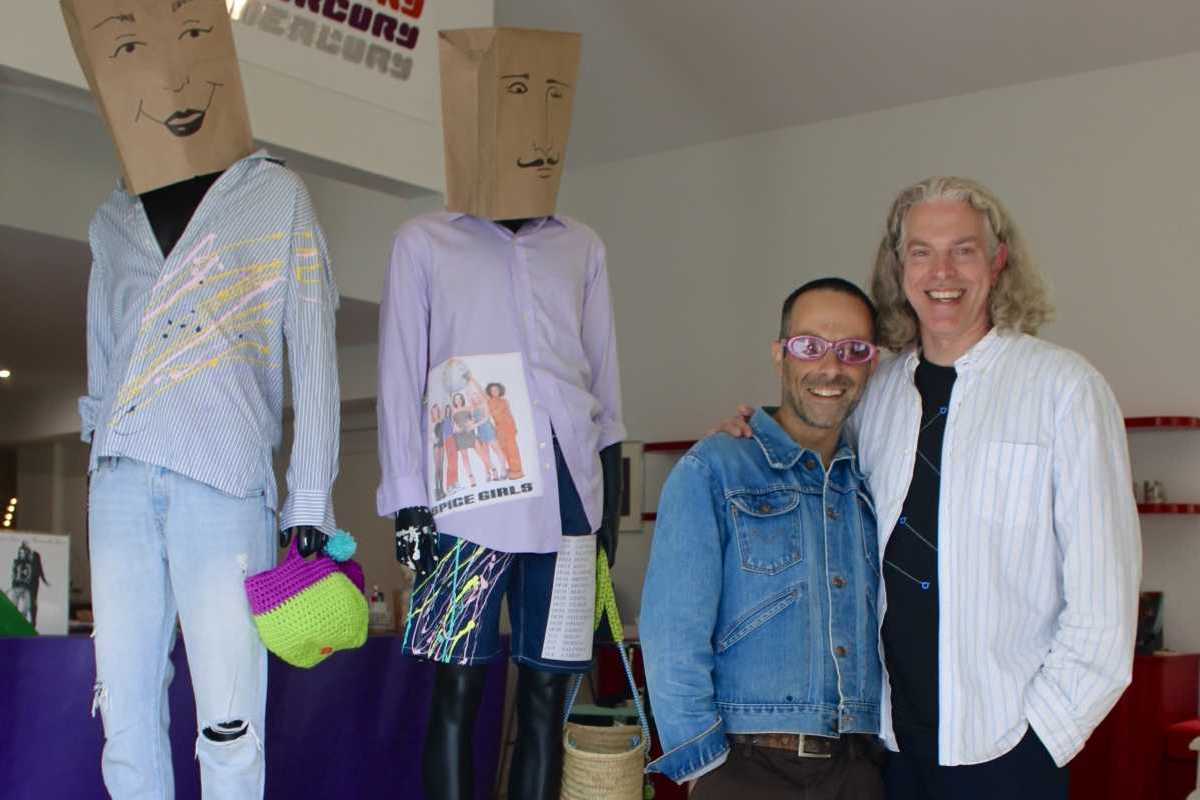
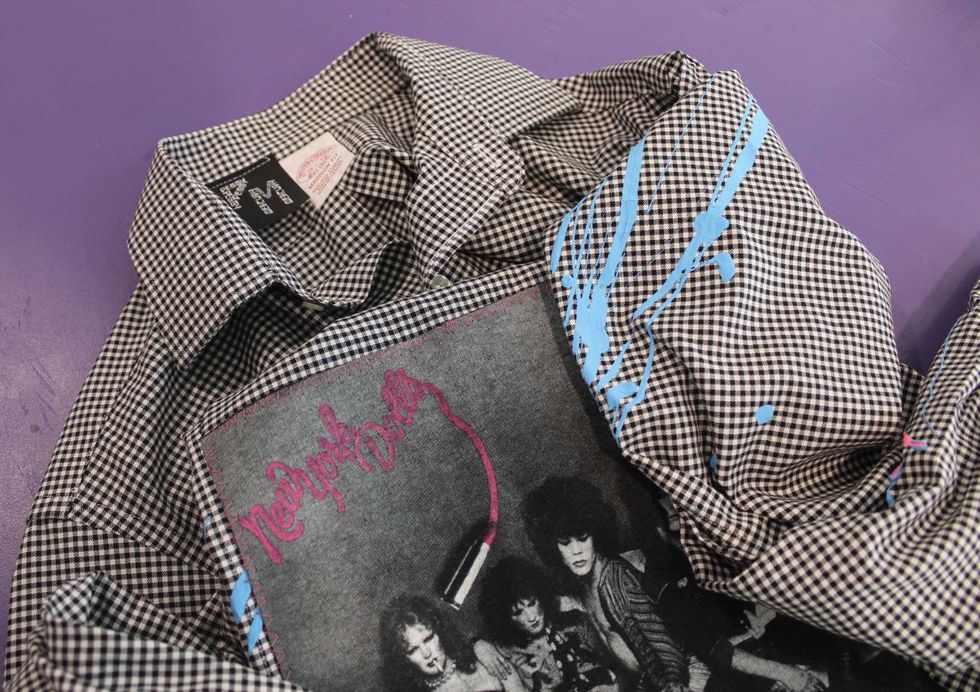 Classic styles, bold colors, and creative concerts make up the “Imaginary Concerts” line at Peggy Mercury.Provided
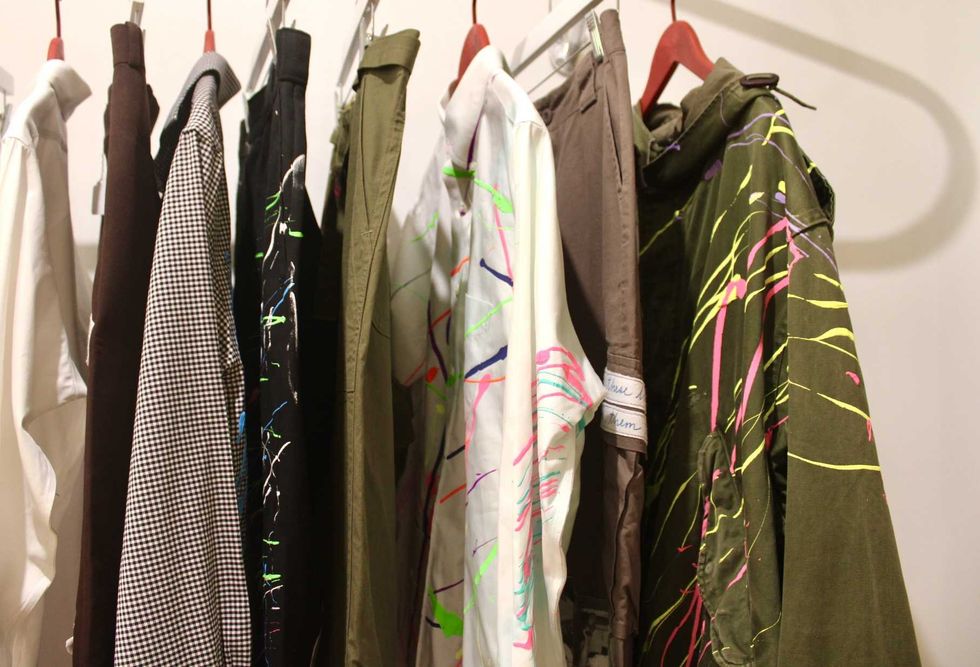 Shirts from Peggy Mercury’s first fashion line, “Imaginary Concerts,” hang on display.Provided