CORNWALL — A phone call to Norman Dorsen’s Town Street home over the New Year’s weekend was returned from Florida, where he and his wife, Harriet, were enjoying a brief respite.
They would soon be on a plane for Washington, D.C., to attend the Jan. 4 annual meeting of the Association of American Law Schools. Dorsen is the recipient of the group’s first award for Lifetime Contributions to the Law and to Legal Education.
Dorsen is particularly pleased that the award distinguishes between the law and legal education. It seems obvious why he is the first recipient: The award was inspired by his dual career.
"I am enormously moved to be the first recipient," Dorsen told The Journal. "I have to admit that, at 76, I didn’t expect to still be doing as much as I am."
His résumé is long and diverse, including general counsel to and, later, president of the American Civil Liberties Union; author and editor of numerous books and publications; leadership in various associations; and 46 years as a law professor at New York University Law School, where he is now legal counsel to the president of the university.
The Dorsens came to the Northwest Corner when they bought a weekend home in Goshen in 1969. They moved to Cornwall in 1981.
In the remarks that he planned to make today in Washington, D.C., upon accepting the award, Dorsen recalls what it was like in a long-ago era to choose to be both a teacher and a litigator.
"When NYU hired me in the fall of 1960 to direct the fledgling Garfield Hays Civil Liberties Program, the leading American legal academics were men — there were almost no women — who were often brilliant and productive scholars and teachers. I admired them greatly. Yet I took a different route.
"In addition to engaging in scholarship and classroom teaching, I regularly participated in litigation, brought the Hays Civil Liberties fellows and other students into public interest careers, and worked to build — from the inside — new and lasting institutions."
The seeds of an interest in civil liberties were planted for Dorsen in 1953, when he was fresh out of Harvard Law School. Men were being drafted to fight in the Korean War.
"I was one of those lucky enough to get into the Judge Advocate General’s Corps," Dorsen recalled. "There were two jobs available in the office of the Secretary of the Army. I got one. Months later, Senator McCarthy began his first investigations, and I worked on what was a very complicated set of issues.
"The hearings were a decisive event that led to the demise of McCarthy. But what really stands out is the television coverage. TVs were just becoming common and for the first time, all over the country, people were tuned in to the same thing. You walked down the streets and the hearings were playing on sets in shop windows."
What stands out in his career?
"I don’t want to sound vain," he begins, "but I know it will be mentioned at the award presentation, and I am very proud of the important effect I had on the NYU Law School. My leadership in the ACLU through a contentious and at times difficult period was a high point. A lot of people didn’t like the fact that we were defending their First Amendment rights."
As general counsel to the ACLU from 1969-76, Dorsen was involved in dozens of Supreme Court cases. Notable is his pioneering work for the rights of children, and advanced abortion rights. He worked on high-profile cases such as the Pentagon Papers, Roe v. Wade and the Nixon tapes.
Dorsen served as ACLU president from 1976 to 1991. He rather reluctantly switched from litigator to manager, but found new ways to make a difference. He has kept his hand in civil law. More recently, he was involved in flag desecration cases.
Currently a member of the Council on Foreign Relations, he keeps abreast of world affairs. He wasn’t available to weigh in with fellow council members on the Saddam Hussein death sentence, but offered his "non-expert" opinion as to the outcome of the Iraqi leader’s death by hanging Dec. 30: "It won’t help us. His supporters will only be rededicated to revenge for what they feel is our revenge on Hussein. It won’t be as organized, but it will be just as messy. The whole situation there is very gruesome and unfortunate."
Dorsen is doing anything but resting on his laurels. His interest in constitutional law extends to other countries and a shrinking world, and he is working on a global law program at NYU. In 1996, he was the founding president of the U.S. Association of Constitutional Law, an affiliate of the international association. He is currently the U.S. member of the first Board of Directors of the International Association of Law Schools.
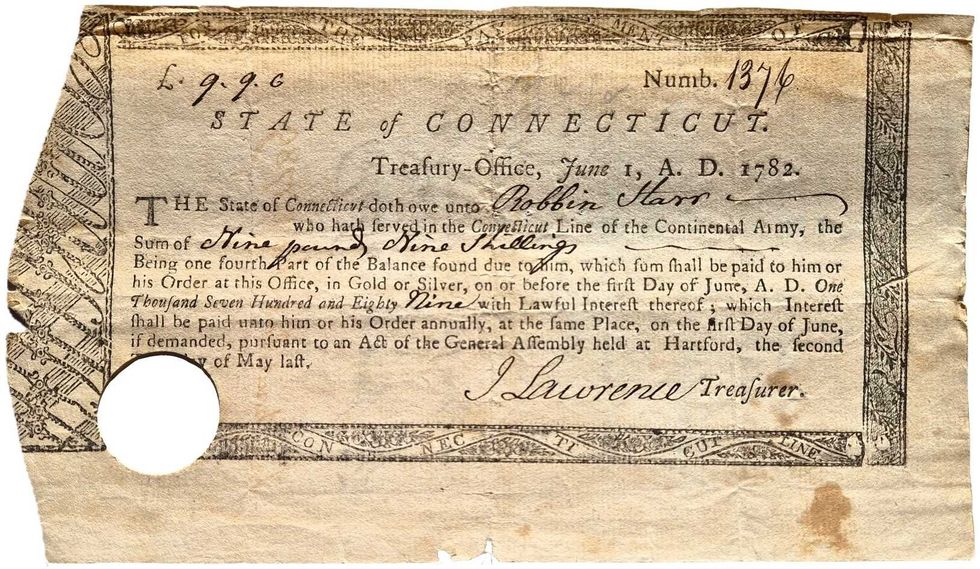 Pay Bill for Robin Starr’s service in the Continental Army.Courtesy the Alex Breanne Corporation
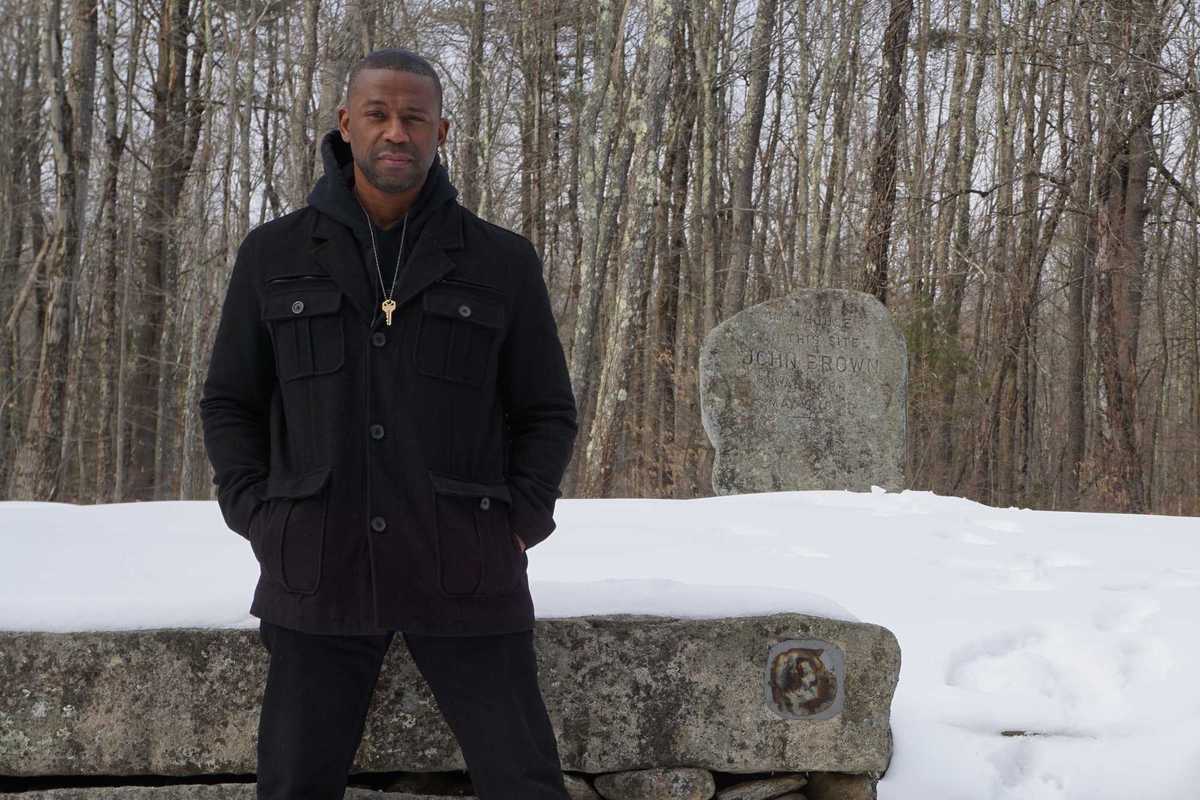
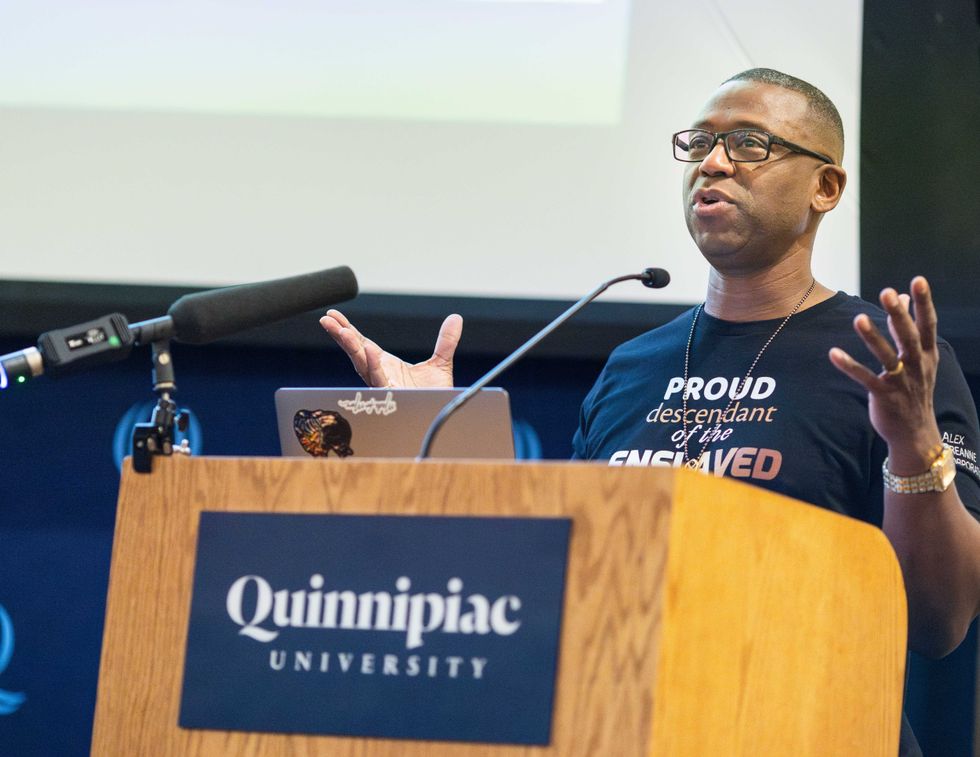 John Mills speaking at Quinnipiac University.Courtesy the Alex Breanne Corporation
 Stephanie Saetta,with her rescue dog George and Blue (left), a shepherd mix awaiting his forever home.Madi Long
 Blue, a 7 year-old Shepard mix, is waiting for his forever home. Madi Long