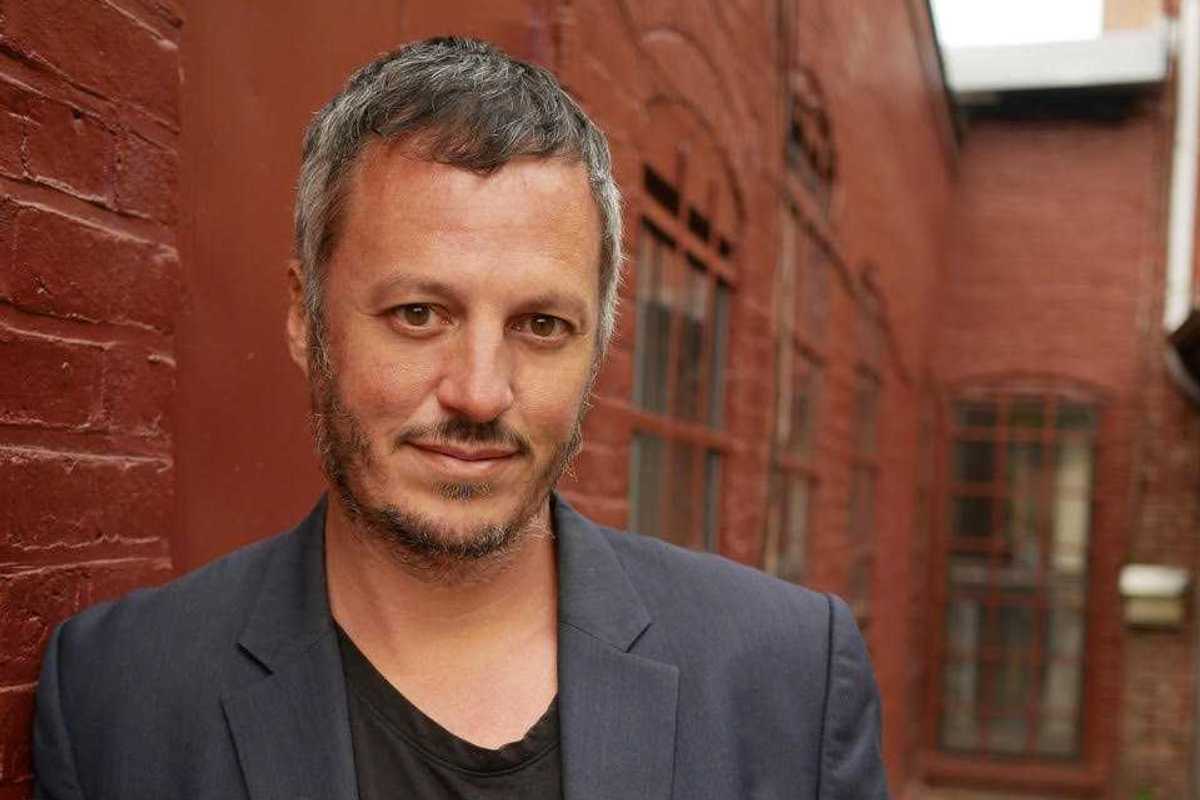
MILLERTON – The first of two candidates to address the public at a set of American Legion talks, was at Post 178 in Millerton on Monday night, Oct. 3. Dutchess County executive candidate Dan French introduced himself and his platform to an intimate group of local residents. His opponent, Marcus Molinaro, will do the same next week at the same location.French is making his first bid for the position, which is being vacated by Dutchess County Executive William Steinhaus after 19 years in office. Steinhaus announced his retirement last year; Molinaro announced his plans to run shortly thereafter. French, currently Beekman town supervisor, declared his intention to run for the seat on April 7.The 30-year-old is already building a steady political career. French was studying history at SUNY Binghamton when the attacks of Sept. 11, 2001, occurred. That changed everything for the Bronx native, he said.“I wanted to give back, so I started to take more political courses,” he said. He then returned to the family home he had known since he was 7, in Beekman, and started to pursue a life in civil service. When his father died following a battle with cancer, French said his path was set. “I wanted to stay in the area and take care of my mother and my sister. I decided to pursue an ad a friend saw in the local paper for candidates.”That ad was for a Beekman councilman. French lost that first election, but it put the fire in his belly to run a year later during a special election after a councilwoman had to leave the area. He won that election, and hasn’t looked back since. He’s served a full five-year term in addition to the special election one-year term, and is currently in his second year serving as Beekman supervisor. He has also worked for the Dutchess County Board of Elections, serving as deputy commissioner of elections. He’s also a member of the Dutchess Community College Board of Trustees.After giving a rundown of his qualifications Monday evening, which include a master’s degree in public administration — something he believes will serve him well as county executive — French spoke about what he considers his strong points. He described himself as a “fiscal conservative” while serving on the Beekman Town Board.“I called for them to stop spending beyond their means,” he said. “In Beekman, they were being negligent: Invoices were coming in that they wouldn’t scrutinize. I revamped their health care and saved nearly $100,000. I also right-sized our budget … I’ve now presented two budgets with a zero percent tax levy.”French then delved into the issues he thinks the county is facing and the need for change in county politics.“I really believe that after 20 years of the same person in office we need a new approach,” he said, adding that Molinaro will be more of the same. “I believe county government is broken and I think there is inefficiency and waste that is not scrutinized.”Number one on his list is the Resource Recover Agency (RRA), a quasi-public agency with co-government responsibilities, as he described it. The RRA oversees waste disposal — it burns garbage, and money, according to French.“The revenues they receive and expenses they have [are exorbitant], and every year they don’t hit their numbers, but they can’t have a deficit, so we are all on the hook for it,” he said. “Over 20 years it’s been $30 million, and the RRA is responsible for its own oversight. We have the fox watching the hen house.”French added that the incinerator technology is getting old, and the RRA is not serving the taxpayers as efficiently as it should. He suggested exporting the waste to an outside landfill.“We could save $60 million in 12 years over what it would cost with the waste incinerator,” he said. “From the environmental perspective, it’s not the best option, but it does provide incentives to recycle, and we could have incentive programs and that could create green jobs, which would be better for the environment. Burning is just bad for the environment and it’s expensive.”His next main issue of concern focused on jails.“We have an overcrowded county jail,” he said. “In New York state, one-third of all prisoners come from Dutchess County, even though there are 62 counties in the state.”He said there needs to be programs to cut recidivism, as it costs $4 million to house out prisoners due to overcrowding.“Bonding it costs $75 to $100 million, and it does nothing to improve our quality of life,” French said. “I think it’s a bad use of our tax dollars.”He mentioned a “rocket docket” system that moves people through the system more efficiently and other programs that have had success throughout the nation. He also said he is not in favor of a larger jail.“If we do need to expand, I think we need more of a regional approach,” he said. “The Mid-Hudson Psychiatric Center is being closed down, perhaps that can be refabbed, and Greenhaven Prison also has a building that is being shut down, maybe that can be refabbed, too.”Resident Bob Cuddeback spoke about the cushy treatment prisoners get these days.“It’s kind of ridiculous how we treat our criminals,” he said. “I think we should put them back on work crews. They’re getting cable TV, with thousands of channels. Now there are laws passed that don’t allow harsh treatment of prisoners. [Some want to] push them through [the system] quicker, that’s not the answer.”The conversation then moved on to property assessments, school taxes and taxes in general.“A lot of people now want to move out of New York state because of how difficult the tax burden is,” said resident Tom Cuddeback.“That’s bad. That’s sad, because New York used to be the Empire State,” French said. “I think we can start a dialogue about how can we do [taxes] equitably and fairly.”He added “it’s scary” to think of losing residents, especially volunteers, who comprise fire departments, EMS crews, as well as police departments, plus nurses and doctors, teachers and other important community members.He also spoke about the downside of county cuts when they strike at important programs, like those that help the senior community.“Meals on Wheels, Friendship Centers, many have been cut,” he said. “Then there are youth programs and nonprofit agencies that have lost funding. It’s very shortsighted to spend money on mismanaged agencies and then cut vital programs.”Cuddeback then asked some pointed questions directly from statements made on French’s glossy card.“What special influence do you think there is?” he asked.“The same builders, architects and engineers [are always used]. I’ve seen it happen,” French said. “It’s too bold a statement to say there are kickbacks, but there’s a system of influence.”While French acknowledged there could be a point in time when he uses those very same companies, he won’t be taking contributions from them and then hire them out, as he believes other politicians have.He was also questioned about how he would handle union negotiations, and seemed to satisfy the crowd with his response. He addressed the MTA payroll, which he described as “corrupt and inequitable.” He had a conversation at the table, led by resident and active duty Amy Command Sgt. Maj. Bob Jenks, about the importance veteran advocates could play in towns and villages. He discussed some of Albany’s problems, especially unfunded mandates, and how he would tackle them. He even took on a question about charter schools.By the end of the event, which ran beyond the 8 p.m. anticipated finish time, those who attended said they learned much about French and his positions on a plethora of issues. French, likewise, said he appreciated hearing from a tight-knit community about what it considers important.The American Legion will host candidate Marcus Molinaro for a similar presentation on Wednesday, Oct. 12, from 6 to 8 p.m.at Post 178. The public is once again encouraged to attend.
Latest News
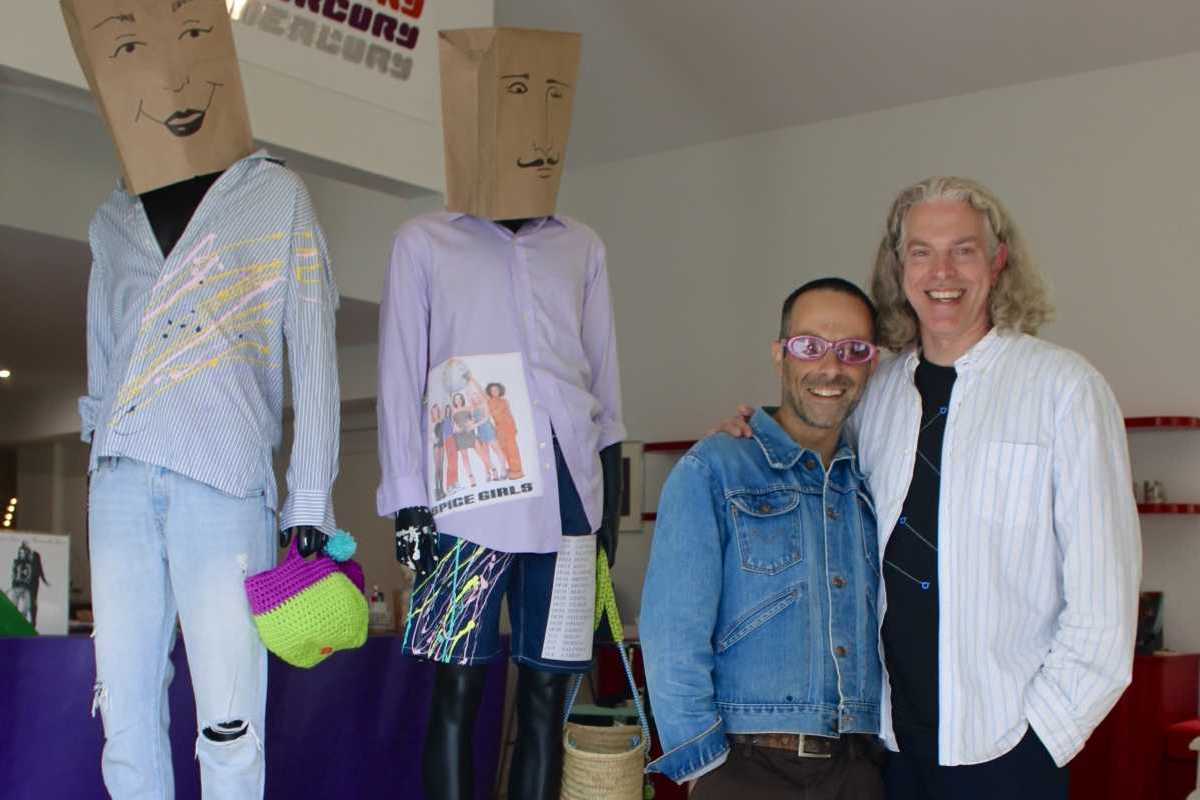
Greg Fricke and James Boehmer, co-owners of Peggy Mercury in Kent, recently launched their first fashion line, “Imaginary Concerts.”
Provided
Fricke and Boehmer are not there to stock their shelves with the same products customers find at standard makeup retailers. They’re there to help customers find what works for them. That usually means asking customers about themselves and learning about their beauty habits, skin, style and the way they like to present themselves. Fricke and Boehmer believe it’s their job to help customers bring out the qualities that suit them and determine what works best for their look.
So much of the Peggy Mercury world is about emboldening people to become more creative, and possibly bolder, versions of themselves. Some of this comes through the store’s creative collaborations with artists, designers and stylists.
It’s part of an ethos that encourages them and their friends to use the shop as a kind of laboratory, trying out new creative experiments without knowing how they might turn out. Whether in fashion, painting, fiber arts or photography, the projects almost always turn out marvelously.
A line of sterling silver charms they sell started as a small project by their friend Nolan Percival. In the beginning, the pieces were for close friends and loved ones. But Boehmer and Fricke encouraged Percival to get a little more serious about the project and create a whole line for the store. Today, it’s one of their top-selling collections.
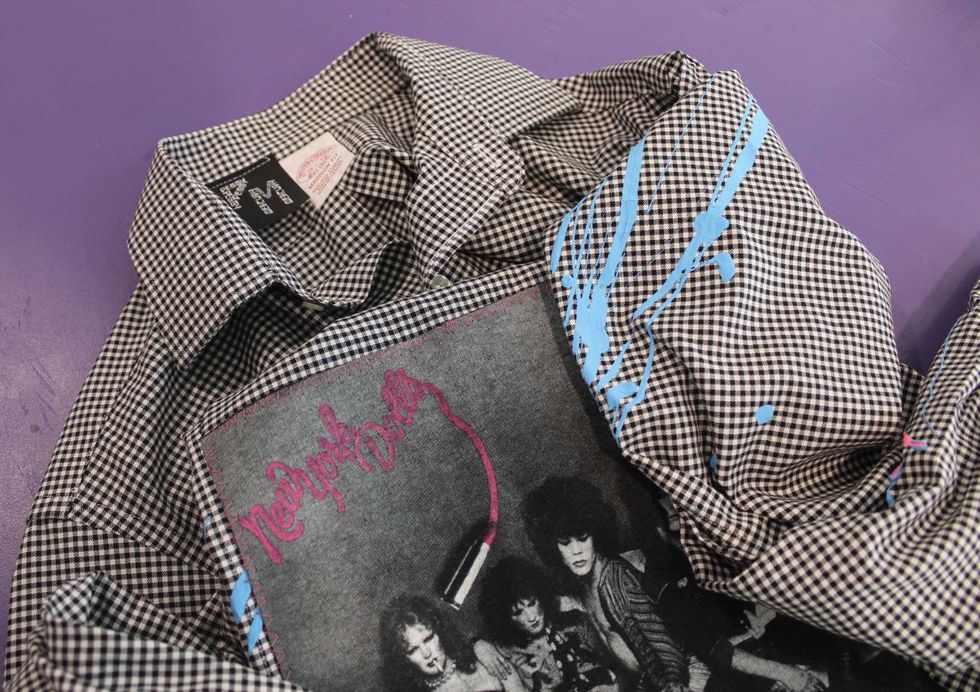 Classic styles, bold colors, and creative concerts make up the “Imaginary Concerts” line at Peggy Mercury.Provided
“Imaginary Concerts” has the duo taking their own advice.
The project started as a way for Boehmer to connect with his mother, who had been diagnosed with Alzheimer’s disease. Taking old concert shirts from his own collection, Boehmer and his mother began cutting out the graphics with the idea that they would make a quilt together. Unfortunately, she died before they could complete the project in 2025. The pieces, which were ready for production, were put on the back burner as Boehmer and Fricke dealt with their loss and the whirlwind of projects that never seemed to cease at Peggy Mercury.
But the harsh winter of 2026 presented an opportunity to take some time and focus on themselves. Part of that meant revisiting and redefining the concert T-shirt project. This time, instead of looking to the warmth and comfort of a quilt, they turned to another passion — fashion.
Taking a page from their own book, they wanted to create something that felt comfortable to them. They took two disparate loves — one rooted in simple preppy style, with clean lines and classic silhouettes, and the other in the nitty gritty worlds of punk rock and pop — and blended them together to create something entirely new. Pulling from the staples of vintage Brooks Brothers and Charvet collections, they applied the graphic elements with bold stitching reminiscent of punk jackets of the ‘70s and ‘80s, but with a much more sophisticated air.
But the remixing isn’t just the pairing of prep and punk. The pieces are not canon. They take liberties with the realities of concert tours, combining one band’s dates with another band’s logos, mixing them all up until the reality is lost and imagination is the only truth.
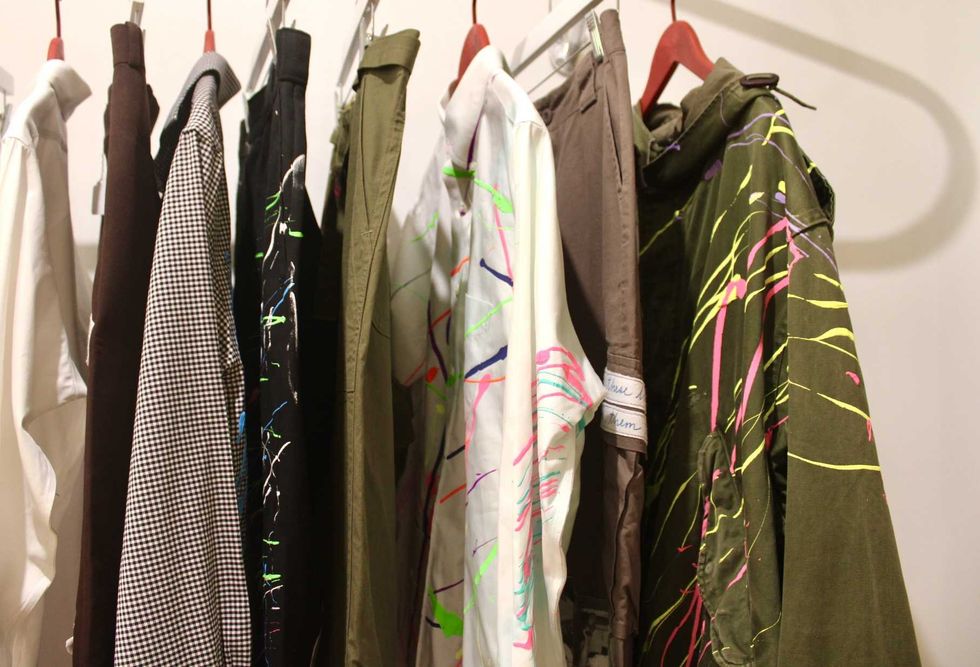 Shirts from Peggy Mercury’s first fashion line, “Imaginary Concerts,” hang on display.Provided
Adding to the mix is an element of perpetual creativity. Art can be messy, both figuratively and literally, and many of Fricke and Boehmer’s artist friends carry evidence of their work on them at all times. As a nod to these tireless creatives, the duo added haphazard splashes of bright color, giving the line an even more distinctive feel.
For them, “Imaginary Concerts” passes the “Peggy Test.” The mythical Peggy Mercury is a fictional figurehead for the company, a character who thrives on creativity and change. The name, much like the clothing line, is a mixture of interests: Mercury is a planet, a deity and an elusive, transformative element, while Peggy is the wonderfully stylish and boundary-pushing Peggy Guggenheim.
Everything Fricke and Boehmer put in their store has to pass this test: Would Peggy Mercury approve? For their first collection, the answer is a resounding yes.
Peggy Mercury is at 9 Maple St., Unit 2, Kent.


Want more of our stories on Google? Click here to make us a Preferred Source.