It comes as something of a surprise to read pronouncements by some conservative gurus in the pages of mainstream newspapers such as the New York Times that “Obamacare is the principal cause of the economic recession and the U.S. debt crisis.” That’s curious. Didn’t the debt problem begin under President George W. Bush in 2001-2008? Didn’t the economic recession begin in late 2007, and didn’t President Obama take office afterward in January 2009?Or try this: “U.S. debts will continue to grow primarily because the new law doesn’t reduce federal spending on health care, especially Medicare.” How dreadful! Should we abolish Medicare to save the nation? Here in fact-free America, we all know that “truth has a well-known liberal bias.” But, I ask you, from where do these pundits and columnists get their facts?Let’s make a quick check of the actual documented facts instead of the guru-imagined facts. What in actual fact are the biggest, the most extreme, contributors to the nearly $9 trillion increase in U.S. debt over the last 10 years from $5.8 trillion in 2001 to more than $14.5 trillion in 2011? There were several contenders for most extreme, but it wasn’t Medicare.Number one, the hands-down winner, is the tax cuts under President George W. Bush coming in at an alarming, staggering $1.6 trillion. Number two is the increase in interest costs due to borrowing from the Chinese and others at a whopping $1.4 trillion. (We borrowed our way into Iraq and Afghanistan.) Oh yes, and then there’s number three, the direct costs of the wars in Iraq and Afghanistan, coming in at $1.3 trillion. Those are the big ones, the most extreme, costing in the trillions.Now let’s shift gears and look at the medium-sized stuff, the ones costing only billions, not trillions. Number four is the Obama economic stimulus package, way down at $800 billion. Then there’s number five, still more tax breaks under Obama, amounting to $400 billion. (Together, tax breaks of $1.6 trillion plus $400 billion equal $2.0 trillion, tilted mainly to favor the super-wealthy in America.)And now at last, way, way down the list, comes number six, the notorious Medicare, notably the Medicare prescription drug plan, at a measly $300 billion. (That’s less than one-sixth the size of the overall tax holiday of $2.0 trillion.) Medicare is down there with number seven, the financial industry bailout at $200 billion. Thus, if there’s one thing that isn’t the principal contributor to the recession and the U.S. debt crisis, it’s Medicare.If cost overruns in Medicare had really been the principal cause of the debt crisis, we’d have to ask ourselves why, after all the hot air, didn’t Congress, in its wisdom, concentrate on the various means, some of them obvious, for reducing the costs of insurance, medical services and pharmaceuticals? Well, let’s not go there right now. Let’s take a more promising, larger, pragmatic approach. Let’s address first what is in fact the single most prominent cause of the economic meltdown and the U.S. debt crisis.The principal culprit, the ultimate cause, of current and future economic recessions and debt crises is the failure of certain Americans, mainly the already super-wealthy, to pay trillions of dollars in fair tax revenues due to questionable tax avoidance practices, unlawful tax evasion, unreported and untaxed securities and dubious financial paper transactions, and the maintenance of fake offices and fat accounts in tax havens abroad for the sole purpose of criminal tax evasion. Each of these issues can be solved directly by firm legislation and executive enforcement action, even before taking up the more arduous, longer-term task of rewriting the entire U.S. Tax Code.You would think that Congress, the media and the American people would look first at the principal problems and their obvious solutions before debating cuts to programs that benefit the citizens and the economy of our nation. They would start by addressing the revenue side of the economic equation. Recognizing that the primary answer to economic recession and national debt is honest, fair and balanced tax policy, they would focus their debates on what that policy should be and how to ensure that all Americans pay their fair share of the tax bill. Instead, Congress has established a Super Committee of 12 to recommend ways to make at least $1.5 trillion in cuts over 10 years. Nothing in the birth announcement requires the Super Committee to even consider revenues or reductions in tax breaks. This is a defect. Six of the appointed members appear ready to consider all options. But the other six are appointed precisely because they are ideologically and flatly opposed to any upward tax reform, even before the committee assumes its work. They will only discuss ways of further reducing tax revenue, not restoring fair and balanced tax revenues.This presages a failure. In November, we’ll be back at square one, addressing the same issues and blocked from dealing with the principal cause of the economic recession and the debt crisis. We’ll be forced to relive the same old sad story. Wouldn’t we avoid a lot of pain and suffering if we just addressed the revenue side of the problem first?First things first. Let’s place America first. Sharon resident Anthony Piel is a former director and general legal counsel of the World Health Organization.
Latest News
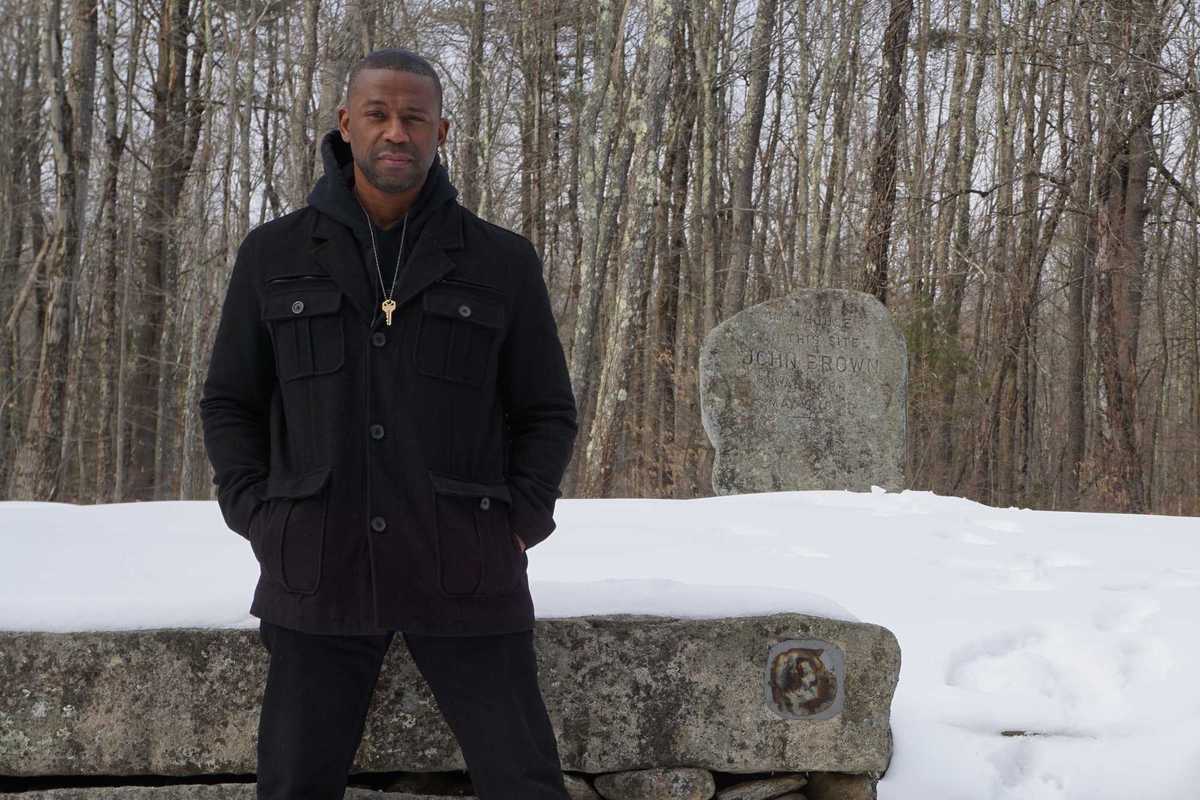
One systemic consequence of slavery is the loss and obscuring of the histories of those who were enslaved. Records were often not kept about where Africans had been stolen from or who they were related to. Families were torn apart, leaving nothing but the faintest traces of the past. The delineation point, where genealogists can no longer trace histories back, is refered to this as the “document wall.”
Today, 250 years after the signing of the Declaration of Independence and more than 160 years since the Emancipation Proclamation, there is a growing effort to restore some of the history stripped from enslaved people and their descendants. Among the leaders of these efforts is Mills, president of the Alex Breanne Corporation, a nonprofit organization that works to identify previously anonymous Black Americans from history and connect them with their living relatives.
The work began with Mills’ sister, who started digging into their family’s past in the 1990’s and introduced him to this emerging world of genealogy. Through that process, the Mills family discovered their great-great-grandfather, Ned Mills, who had been enslaved in Texas. His last name came from his final enslaver and remains the family surname. Through their research, they found that the document wall directly affected their ancestor, who learned of his liberation on June 19, 1865, now commemorated as Juneteenth.
“For the first time,” Mills writes on his website, “American slavery wasn’t something that had happened to anonymous people in a history book. It had happened to my family.”
The discovery gave Mills a familial pride he had been missing for years. That pride fueled his desire to help others find their own history. In 2023, Mills received his certificate in genealogical research from Boston University. He has used his expertise to help descendants of enslaved people uncover histories they never dreamed of learning.
To do this, he uses a process called “reverse genealogy,” identifying a person from the past and working forward to discover their descendants. Along the way, Mills has found some remarkable people who fought for freedom on American soil, some of whom were never freed.
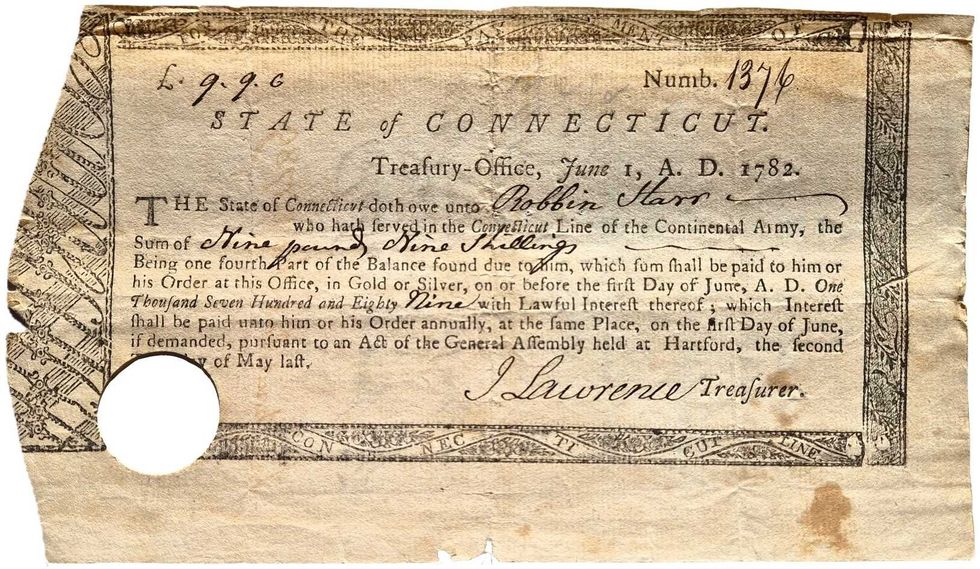 Pay Bill for Robin Starr’s service in the Continental Army.Courtesy the Alex Breanne Corporation
At the Cornwall Historical Society event, Mills will present the stories of four Connecticut families: Job Lathrop of Norwich, the son of Pirmus Armes, about whom Mills has published a book; Prince Mortimer of Middletown, also the subject of a book by Mills;, the three sons of London Wallace of Simsbury; and Robert “Robin” Starr of Danbury, who later lived in Cornwall and Sharon.
A few years ago, Cornwall Consolidated School social studies teacher Will Vincent reached out to Mills for research guidance on a local history project his students were undertaking. Together, they learned about Naomi Freeman of Cornwall. After purchasing an acre of land on Great Hollow Road in 1828, Naomi Freeman became the first Black female landowner in Cornwall.
The students petitioned the town to rename a road after the historic Cornwall resident In April 2025, Great Hollow Road was officially renamed Naomi Freeman Historic Road. U.S. Rep. Jahana Hayes joined Mills and the Cornwall Consildated School students for a presentation of their research.
Since then, Mills has guided the students in their quest to learn more about Starr’s story. Starr was a Revolutionary War soldier who joined the Continental Army to earn enough money to buy his own freedom, receiving the Badge of Merit in the process. The stories of his descendents’ services are equally worthy of their own books.
In recognition of Mills and the students’ work, First Selectman Gordon Ridgway proclaimed Feb. 8 as Robin Starr Day.
Preregistration is required for the event at the Cornwall Historical Society. To learn more about Mills’ work, visit
alexbreanne.org.
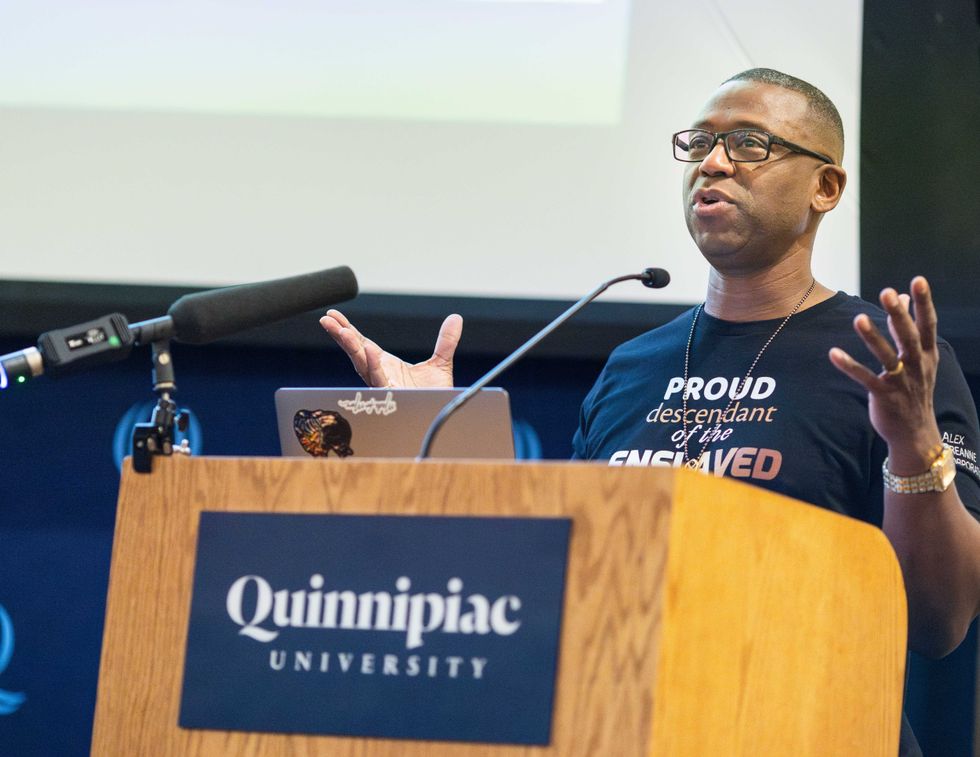 John Mills speaking at Quinnipiac University.Courtesy the Alex Breanne Corporation
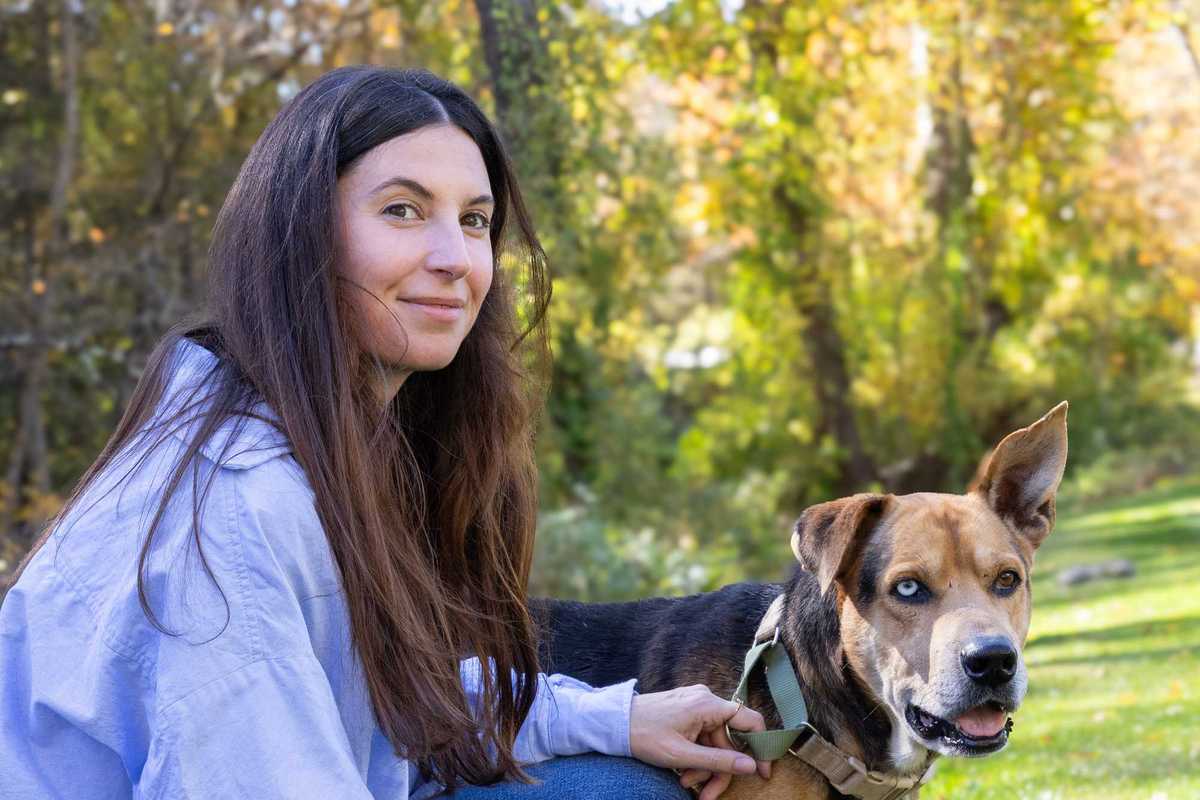
Stephanie Saetta runs Charlie Chicken Bones, a sanctuary in Salisbury.
Dogs have been at the center of Saetta’s life since childhood. She remembers going to the library to research different breeds and trying to convince her parents the family needed a dog. She had her heart set on an Irish Wolfhound, but she was more than happy when her mom brought home a West Highland terrier.
After college, she adopted Charlie as a puppy from a rescue on Long Island. He was a hound-shepherd-Rottweiler mix who suffered from intense seizures. Some veterinarians recommended euthanasia, but Saetta wasn’t ready to give up on him.
When Charlie would have an episode, she would sit with him, nose to nose, talking him through it. She learned to look for the moment he began to come around — when he could smell her again and his tail started to wag.
“You only get one or two of these soul connection dogs, so I do this in his honor,” Saetta said. “I like to think that all the dogs that come through are going to have that person that they connect with just the same.”
Through a network of women working to rescue animals in Texas, she learned about the desperate situations facing many dogs.
With limited space, some public pounds euthanize even healthy animals to make room. Limited access to veterinary care leaves sick dogs or unvaccinated puppies especially vulnerable.
Saetta saw that reality firsthand with a puppy named Gus, a Labrador mix she fostered who has since been adopted. Gus and his sisters had been dumped beside a road, where they were living under an abandoned car. People would leave food for them, but no one would take them to the pound.
“Even the people who rescue animals down there were like, ‘sadly, the best place for them to be is on the side of the road,’” she said. “That’s safer. Someone might actually help them that way.”
Saetta knows that there are far more dogs than any one person can save, but she also knows that helping one dog means one fewer on the street.
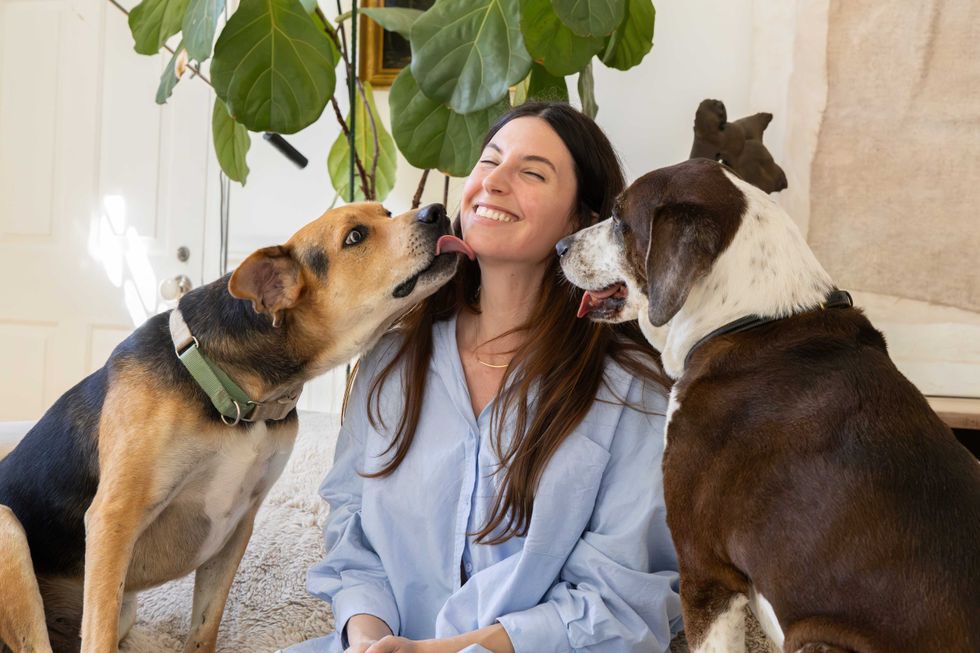 Stephanie Saetta,with her rescue dog George and Blue (left), a shepherd mix awaiting his forever home.Madi Long
Charlie Chicken Bone Sanctuary operates entirely through foster homes, a model that Saetta believes is best for the dogs and the humans hoping to adopt them.
Rather than moving directly from a difficult environment into a permanent home, the dogs have a chance to settle into a quieter setting. They can learn what it’s like to live with a family, sleep somewhere comfortable and receive affection without fighting for attention. Fostering also allows the rescue to really get to know each dog.
“As fosters, we’re honest,” said Saetta. We’ll tell you everything that’s been bad, everything that’s been good. What their temperament is and how they’ve responded to all the things they’ve experienced.”
A successful adoption is not just about finding a dog a home; it’s about finding the right home where the dog and family can thrive together.
Saetta is looking for more people willing to open their homes to foster dogs. She understands that the thought of growing attached and eventually saying goodbye can feel daunting. But she sees that goodbye a little differently.
Fostering means being part of a dog’s journey, even if only for a short time. It gives dogs a safe place to rest, the chance to trust again and the love they have gone without for much of their lives. And when the time comes for them to leave, it is not really a loss. It is the reward of knowing they are moving on to a forever home.
Blue, Saetta’s current foster, is hoping to find his perfect home.
 Blue, a 7 year-old Shepard mix, is waiting for his forever home. Madi Long
Now around 7 years old, Blue spent most of his life wandering the streets of Texas. People sometimes left food out for him, but his mangy, dirty coat kept them from stopping to pet him. Today, he has a chance to experience something different.
Blue is still waiting for his forever home. Saetta believes he would do best as the only dog in a household or alongside another senior dog. He will need someone willing to continue working with him on his training and understand that a dog with his history needs patience.
But what he gives in return is a whole lot of love.
“He’s so enthusiastic, he’s so excited for life, he’s so friendly, and he’s got such a good heart, and he loves to cuddle,” Saetta said. “He’s a good, good, good dog.”
For more information on adopting Blue or how to foster, visit ccbsanctuary.org.

Want more of our stories on Google? Click here to make us a Preferred Source.