“If an aviator had left western Pennsylvania on Sunday morning for Eastport, Maine,†reported The Hartford Courant on May 6, 1930, “he would have seen the smoke of forest fires out of control, from the time of his takeoff until his landing at the Canadian line.â€
It was a terrible fire season. More than 100 wildfires raged that week in Massachusetts, and those in New Jersey burned at a rate of 20,000 acres a day. In Nashua, N.H., flames driven by 40 mph winds destroyed several hundred buildings in the city’s Crown Hill section.
It was unusually dry that spring with rainfall across the Northeast at 50 to 75 percent below normal. Strong winds combined with low humidity and plenty of available fuel made an especially destructive combination.
In our region, a serious fire burned from East Mountain in Wingdale, N.Y., into Kent, and another flared up north of North Canaan near Clayton, a village of New Marlborough, Mass.
“Practically the whole sky was red over Dutchess County last night†read the May 5 edition of the Poughkeepsie Journal, “and stiff winds made fighting the fires difficult and dangerous.â€
The big local fire, though, and the one that people here still recall (though details have faded with the passage of time), was the wildfire that raged between May 4 and 8 across the Taconic Plateau at the border of Connecticut, New York and Massachusetts.
It is remembered as the Mount Riga fire in Connecticut, and the Taconic Park Fire in New York. It was fought on all sides of the mountain with every available resource, from American Legionnaires and drafted onlookers to Boy Scouts and students from area schools including Hotchkiss and Salisbury and from as far away as Wesleyan University in Middletown, Conn.
The fire burned a great swath of forest from Copake and Ancram in New York to Undermountain Road in Salisbury, while advancing on two fronts into Mount Washington, Mass., before the flames died down.
An article in the May 7 Poughkeepsie Journal from that year quoted Copake Fire Chief Howard Wilsey saying that, “Sometimes the blaze shot 40 feet in the air when it hit the pine trees and dead chestnut trees.
“The crackling and snapping of the flames struck terror in the hearts of those congregated to watch the progress of the most awful fire we’ve ever had.
“Rabbits ran from the woods singed and burned. Partridge and quail abandoned their nests in the face of the terrible thing that was happening, almost became tame. They flew down into Copake and accepted without fear the crumbs that were offered to them. They seemed to realize that they were banded together with the humans in a common fight against the fire.â€
The Poughkeepsie Journal also reported that rattlesnakes were driven out of the mountain in great numbers by the fire.
Tracing the fire’s path
Piecing together the chronology of the fire, and even determining its cause and true extent, depends on analysis of newspaper accounts from all three states and benefits from oral history material collected in several affected communities.
Just as the steep and remote terrain challenged firefighting crews in 1930, the tri-state location of the fire means that there is no single, comprehensive account of what happened when the fire was active or during its aftermath.
Most accounts agree that the fire began on Sunday, May 4, in the vicinity of Boston Corner in Ancram. The May 8, 1930, edition of The Lakeville Journal adds that it started “along the Harlem rail track near Weed Mine.†Many suspected the cause was a careless match or cigarette tossed by a fisherman, although it could have been ignited by a passing train. The same northwest wind that burned all those homes in Nashua fed the flames of the Taconic Fire, which spread rapidly into Taconic State Park and up the steep flanks of the mountainside.
Fueling the flames
Wildfire behavior is affected by weather, fuel characteristics and topography. The Connecticut Western News (May 8, 1930) attributed the rapid spread of the fire to “a howling wind that came out of the north … [and] the more resinous growth on the western side of the mountain.â€
The Berkshire Courier (May 8, 1930) reported that the fire “spread rapidly through the undergrowth, took a firm hold in the standing timber, and within a short time had extended far beyond control.â€
There were many dead trees available as fuel as well, killed in the previous decades by the chestnut blight fungus.
The wind blew the flames against the steep sides of the mountains, and carried firebrands great distances to ignite new fires ahead of the advancing blaze.
Edward M. Brazee was among the Salisbury residents who first encountered the fire as it came up over Mount Brace into Connecticut on the evening of May 4. In an unpublished account recorded in 1996 for the Salisbury Association oral history project, Brazee recalled, “The fire was going right through the tops of the trees. That laurel was high too. Laurel burns like the devil when it gets hot. And you can’t move through it. That’s the bad thing…. Those hemlocks, that’s another thing that burned like gasoline … Probably a lot of them it didn’t kill. But a lot weren’t too big and so [for them] the fire was a crown fire, up there at the height of the trees.â€
Salisbury Fire Warden Donald J. Warner told The Lakeville Journal that in 1914 another fire had raged on Mount Riga, but “the present blaze traveled farther and was more destructive in 48 hours than the entire two weeks of the 1914 fire.â€
Once it reached the Riga Plateau, the 1930 fire lost speed but still made steady progress to Bingham Pond and then toward Lion’s Head, Bear Mountain and the eastern escarpment.
All the while, volunteers trailed behind with Indian pumps, shovels and brooms, and lit backfires to protect the camps on Mount Riga and keep the wildfire from reaching the more thickly settled areas below.
“All Monday,†The Lakeville Journal observed, “the smoke covered the countryside like a fog and thousands of autos lined the entire length of Undermountain Road.â€
The fire threatened homes and infrastructure in both Mount Washington and Salisbury, while Copake, N.Y., was virtually under martial law as hundreds of men were dispatched against the fire that was backing against the wind up the slopes of Mount Alander.
State police walked the hose line pumping from Preachy Hollow Brook, to discourage any of the conscripted firefighters who were being paid by the day who might have been tempted to extend their employment through sabotage.
Losses of life, homes
Rumors spread that two Boy Scouts from Thomaston, Conn., had been lost in the fire. While this proved unfounded, there were a number of close calls, as some men had their clothes and shoes burned or got caught in backfires.
Reports that cottages on Plaintain Pond and Mount Riga were burned were unsubstantiated, but along Undermountain Road some outbuildings were lost while firefighters protected primary structures.
The fire extended down Riga Brook toward Salisbury village and was checked by the bridge above Factory Street. Up at High Valley Farm in Copake, with the flames right above on Alander Ridge, a team of draft horses plowed furrows as a firebreak around the main homestead and other buildings.
By May 7, the fire was still raging on Lion’s Head and had moved into Massachusetts from both New York and Connecticut.
“At Sage’s Ravine,†wrote The Lakeville Journal, “the blaze was intense and pine trees blazed like torches. Much of the mountainside was inaccessible, and nothing could be done, only to watch the fire burn itself out.â€
More than 500 men arrived from Torrington and Winsted to fight the fire in Connecticut, and more came from the Berkshires and as far away as Poughkeepsie and Hudson in New York.
The wind dropped, and the fire was finally put out on Alander Mountain the following day.
The aftermath
Contemporary estimates of the extent of the 1930 Taconic fire vary considerably, ranging from 6 to more than 30 square miles.
Analysis of historic records and first-person accounts argue toward a more conservative estimate of 8 to 10 square miles, with the largest portion in Connecticut.
Mount Riga’s holdings burned north and east of Riga Lake, sparing Bald Peak but burning over every other promontory from Lion’s Head to Sage’s Ravine, as well as much of the Scoville ore mine vicinity down toward Undermountain Road.
It never reached Mount Everett Reservation in Mount Washington, though it burned much of what is now Mount Washington State Forest in the southwest part of the town.
There was a concerted effort after the fire at the local and state level to keep sightseers away from the burned areas and prevent the spread of new wildfires.
The woods were closed to trout fishing across all three states and the roads to the Taconic Plateau were barred by state police to all but property holders.
‘Considerable grandeur’
The Lakeville Journal reported: “A number of people visited Bald Peak at the height of the fire and the scene, while appalling, was also one of considerable grandeur.â€
As of this writing, however, no contemporary photograph of the wildfire or its suppression efforts has surfaced — although the 1934 aerial survey of the state conducted by the state of Connecticut does appear to show evidence of the fire.
Fire Warden Warner would write in gratitude to his fellow citizens of Salisbury: “During the trying days last week when the forest fire was raging, there was always one comforting thought and that was the realization of how splendidly our people stood together in the crisis. Men and women, boys and girls, all did voluntarily and ungrudgingly all and more than was asked of them, in many cases they did more than they should have done.â€
Mount Alander fire losses
Not everyone was as sanguine as they counted their losses. The part of the fire that burned over Mount Alander from New York charred more than 2,000 acres in Mount Washington, owned by Frederick K. Miles, that had once been used for charcoal for the Copake Falls iron furnace.
The state of New York leased the summit of Mount Alander for a fire tower, located in Massachusetts and manned by Mervin Whitbeck of MountWashington, who also worked for Miles.
The fire warden’s shack survives today but the tower was ordered taken down by Miles, who canceled the lease shortly after the fire.
It was relocated first to Washburn Mountain across High Valley in Copake, and then to Beebe Hill, farther north in Columbia County, where it remains today.
Impact on forests
Edward Brazee recalled that one could still see the scars of the fire on the big trees in the 1970s.
Curtis Rand, a licensed forester and now Salisbury’s first selectman, notes that there are 80-year-old poplar stands growing on the mountain today in some sections where the fire passed through.
There are fewer pitch pines today on the acidic ridgetops of some of the peaks that were in the path of the fire than on the ones nearby that were spared.
Connecticut does not experience wildfires of the scope and severity of the 1930 Taconic Fire anymore. When the woods were younger and careless smoking put more land at risk of fire, it was not unusual to lose more than 50,000 acres annually to wildfires.
These days, the state averages 1,800 acres burned. When Mount Everett Reservation caught fire in 2004, it burned for six weeks and consumed just 18 acres. However, it also burned underground through thick layers of duff and leaf litter, and it took the mutual aid of more than 20 communities from three states to respond to that fire, echoing the response that was required to combat the 1930 fire.
Tim Abbott is program director of Housatonic Valley Association’s Litchfield Hills Greenprint. His blog is at greensleeves.typepad.com. He writes the Nature’s Notebook column twice a month.

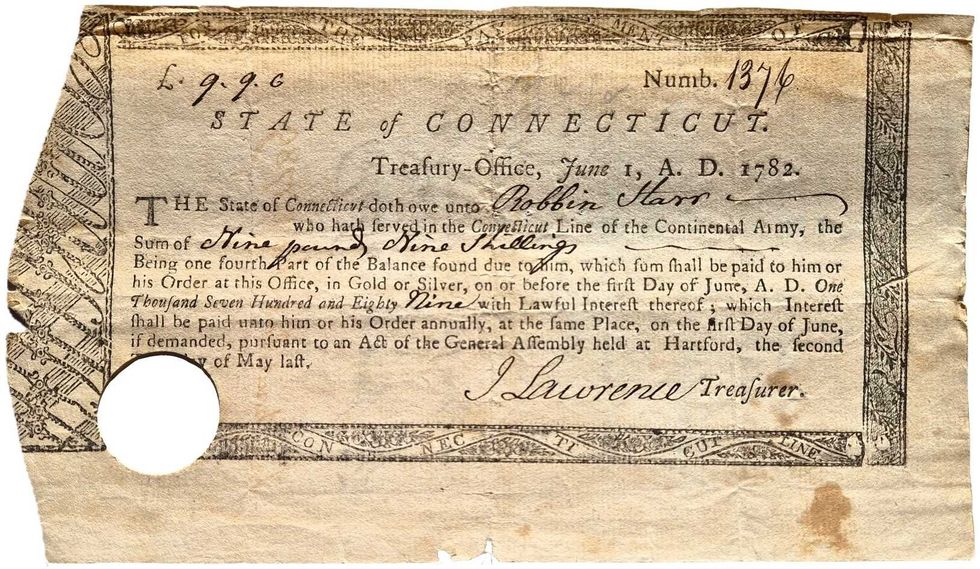 Pay Bill for Robin Starr’s service in the Continental Army.Courtesy the Alex Breanne Corporation
 John Mills speaking at Quinnipiac University.Courtesy the Alex Breanne Corporation
 Stephanie Saetta,with her rescue dog George and Blue (left), a shepherd mix awaiting his forever home.Madi Long
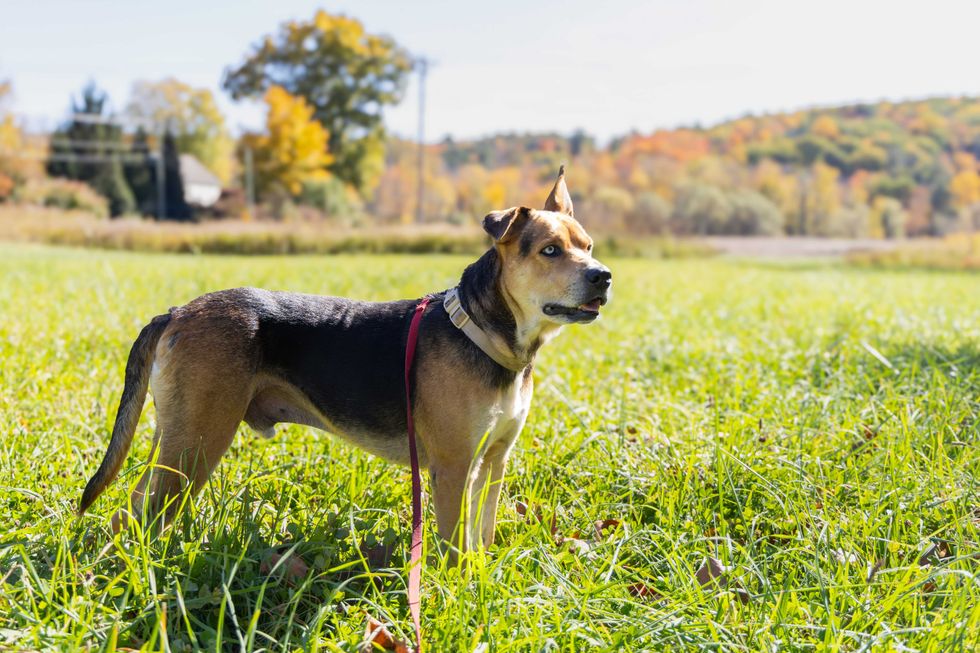 Blue, a 7 year-old Shepard mix, is waiting for his forever home. Madi Long