Latest News

Wyantenuck Country Club is seeking waitstaff. Lunch shifts available for weekdays with flexible shift options for weekends and some dinners as well. Call 413-528-0350 or send resumes to brandon@wyantenuck.org
Simple part-time help needed in Millerton garden, pleasant environment. Must have basic knowledge of plants/weeds. Pays well. Call 518-789-9289.
SERVICES OFFERED
Hector Pacay Landscaping, LLC. Residential & Commercial. Tree service, Painting, Masonry, Stone Walls, Lawn Mowing, Gardens, Construction. 845-636-3212. CT and NY.
LOJA CLEANING AND JANITORIAL Home and Apartment Cleaning. Commercial Janitorial and Maintenance. Offices & Commercial Spaces. Move In/Move Out. Customized Deep Cleaning Projects. Licensed & Insured. 475-746-8621 or 475-529-6484. lojacleaningservices@gmail.com
REAL ESTATE FOR SALE
PUBLISHER'S NOTICE: Equal Housing Opportunity. All real estate advertised in this newspaper is subject to the Federal Fair Housing Act of 1966 revised March 12, 1989 which makes it illegal to advertise any preference, limitation, or discrimination based on race, color religion, sex, handicap or familial status or national origin or intention to make any such preference, limitation or discrimination. All residential property advertised in the State of Connecticut General Statutes 46a-64c which prohibit the making, printing or publishing or causing to be made, printed or published any notice, statement or advertisement with respect to the sale or:rental of a dwelling that indicates any preference, limitation or discrimination based on race, creed, color, national origin, ancestry, sex, marital status, age, lawful source of income, familial status, physical or mental disability or an intention to make any such preference, limitation or discrimination.
HOUSE FOR RENT
1 bdrm cottage for rent in Millerton. W/D, hardwood floors, garden. On a small farm with beautiful views. 15 min. drive to Harlem line. $1750/month plus heat & trash removal. References required. Call or email Shanna 845-337-7173 shannabarney@gmail.com
MT RIGA LAKEFRONT CABIN. Private beach, canoe, kayaks, fishing. $1,275/week. 585-355-5245.
RENTALS WANTED
ISO reasonably priced winter storage for small car and 16' boat within 20 miles of Millerton. Approx. October-May. 252-412.0228.



Want more of our stories on Google? Click here to make us a Preferred Source.
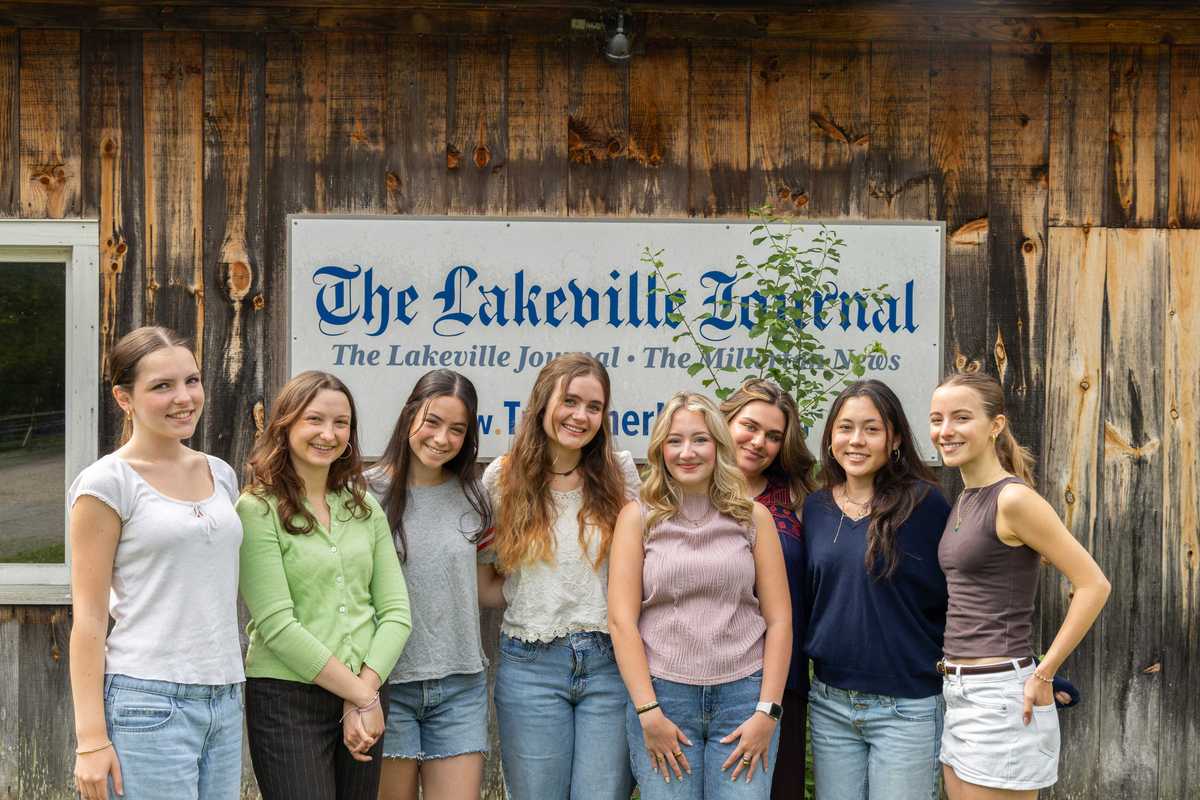
Photos by Madi Long

Mia DiRocco
My name is Mia, and I will be a freshman at Northwestern University this fall, where I will be majoring in journalism. I first began working with The Lakeville Journal through the revival of Housy’s student newspaper, HVRHS Today, last spring. There I first discovered journalism as a career, and The Lakeville Journal’s Summer Internship program. What began as a fun extracurricular has turned into a passion and career path in journalism I can’t wait to pursue.
I am relatively new to this area, having moved here from Long Island five years ago. I feel that writing for The Lakeville Journal helped me really get to know this community. From going hula-hooping at the Hunt Library to discussing how to dispose of 55 gallons of melted ice cream with Grassland’s owner, I’ve learned so much about local journalism and the people that make up this area.
Not only this, but the chance to have articles published opened doors for me that I could never have dreamed of. From a summer academy with the New York Times in the city last summer, and now my dream school to study journalism in Chicago, I’ve found that local journalism has a much farther reaching impact than just this community. The experiences and opportunities I’ve had here were the focus of my senior year capstone project, which won the Pinnacle Award for Capstone Excellence. None of this would have been possible without the skills and values I learned from working at The Lakeville Journal.
I’d like to thank The Lakeville Journal’s staff for all their work with the internship program. Local journalism is incredibly important, and I will always be grateful to have gotten to be a part of this paper.

Allison Gollenberg
My name is Allison Gollenberg, and this fall I’ll be a senior journalism major at the University of Connecticut. There, I’ve written about everything from tick populations to tactical urbanism. I decided to study journalism because I love to learn, and with this kind of job, every day I get to research something new. I get to talk to all sorts of people, to make sense of an eclectic selection of topics each week, and it’s super fulfilling to share what I learn with the world as a writer.
Growing up here in the Northwest Corner it sometimes felt like I was from the sleepiest place on earth. But looking at it with a journalistic eye has made me realize there’s a lot going on everywhere I go. This summer I could be found zipped inside of an inflatable whale, traipsing through a rail yard in the rain, dancing to colonial era music or at board of selectmen meetings where I was the only attendee who wasn’t also a selectman—and I got to do it all in pursuit of a good story. It was a great reminder that you have to keep your eyes wide to the world around you. Once you do, you see there’s a story behind everything.
I’ve spent a long time trying to figure out what exactly I want to do with my life— the only things I’m really able to say about myself are that I get bored easily and I think people are the most fascinating thing we’ve got. In a selfish way, I love this work because it lets me try on a bunch of different hats, to be nosy for a paycheck. In a less selfish way, I love this work because it keeps me in touch with the workings of the world around me, and I get to keep others informed through what I write.

Annie Prinz
Hi, my name is Annie Prinz, and I’ve lived in Lakeville full-time for almost 12 years. This fall, I will be starting my senior year at The Hotchkiss School. Before attending Hotchkiss, I spent my ninth-grade year at Indian Mountain School, after graduating from Salisbury Central School, where I attended middle and elementary school.
From a very young age, I’ve maintained a love for reading. As I’ve gotten older, that love has also translated into an enjoyment of writing. Whether through journaling or more academic forms of writing in my humanities classes, I’ve found that it’s where I feel most engaged and excited. To be honest, apart from watching Rory in Gilmore Girls, I hadn’t thought much about journalism.
However, when I found the information for this program back in the fall, it sparked my interest. I love the town I’ve grown up in, I enjoy writing, and I love meeting new people, so I figured what better way to do all of that than through this program? Six weeks ago, I was intimidated entering a room where I was the one with the least amount of experience, but it ended up being the greatest opportunity for me to grow and learn.
My time at The Lakeville Journal has shown me some of the most important components of what it means to be a journalist, specifically in a smaller community like ours. I can confidently say that I am walking away from this experience feeling so much more connected to the place I call home. Throughout this program, I’ve been able to work on my ability to build connections with strangers, ask important questions, look at a story from a completely different perspective, and so much more.
I know that all of the experiences and conversations I’ve had because of this program are uniquely meaningful, and I feel very grateful for that.

Phoebe Tobin
My name is Phoebe Tobin, and I’m a rising senior at Loomis Chaffee in Windsor, CT, though I live in Lakeville. Prior to Loomis, I attended Indian Mountain School, where I revived the school newspaper, formally discontinued in the 50s, entitled Le Scoop, and served as editor-in-chief. At Loomis, I write for our student-led publication, The Loomis Chaffee Log.
I’ve always been someone who loves writing, though throughout the earlier years of my life I was drawn to creative rather than journalism, writing fantastical stories about creatures of my own invention and journeys through time. At IMS, within my idea and eventual execution for the newspaper, I found the stories that happen on earth with the people around us. A curiosity for the stories of those I saw every day, and seeking out what could count as “newsworthy” solidified my love for journalism and is what brought me to spending my summer with The Lakeville Journal.
Interning at The Lakeville Journal gave me a new insight into the community I thought I understood just by existing around it in a bubble of my own convenience, speaking only to a circle of people I knew and few beyond that. In six weeks, I’ve attended many events I truthfully never would have known about beyond a posted sign, like Sharon’s 4th of July Celebration and the Jane Lloyd Fund Clambake, and experienced the greater depth of my community through the stories of those I talked to. Additionally, showing up at big events alone, bugging total strangers with questions as I practically shoved a recorder in their face is not something that necessarily came naturally. But as I did it more and more, I improved significantly and will take a new confidence from it back to Loomis and beyond.
This internship confirmed for me that journalism is something I hope to keep exploring, no matter what I choose to study down the road, and I’m so grateful for the chance to spend my summer getting to know my community a little better.

Lucia Iandolo
I am a rising senior at Ithaca College studying television, photography and digital media production with a concentration in photography and a minor in journalism. On campus, I have worked with our independent, student-led newspaper, The Ithacan, as a writer, videographer and photo editor. Photography has always been important to me as someone who loves storytelling, and from a young age I knew I loved documenting moments of time through the camera. I find it fascinating that we can show so many perspectives through one series of images. At Ithaca College, I knew I wanted to be involved in something that could further my passion. Joining The Ithacan was one of the best decisions I have made. Being a part of the newspaper not only taught me more about photography, but it introduced me to journalism, where I can hear and share more stories with the local community.
I grew up in Dover Plains, New York, and have truly cherished the opportunity to report on my hometown this summer. While growing up, I did not know much about my town or the news surrounding it. Through this internship program, I have learned so much about my home while talking to people in the community. I was also given the opportunity to write for Compass, where I wrote stories about music performances, art showings and vibrant members of our community.
While being a part of the internship program this summer, I gained so much knowledge from the incredible editors and reporters. My love for storytelling only grew, and I am so grateful to Nathan Miller, Natalia Zukerman, Christian Murray, and everyone at the Lakeville Journal for their support and kindness.

Jacquelyn Drain
I was born and raised in West Hartford and am a rising senior at Marist University. On campus I am a Managing Editor and City/National Section Editor for the Marist Circle. My time at Marist has been essential to my development as a writer and a journalist. However, my connection to Dutchess County is not new. My dad was raised in Poughkeepsie, meaning I grew up making frequent trips to the area to visit my grandparents or my aunt and uncle, who still live in town. When the time came to decide where to attend college, Poughkeepsie felt like a second home and one I knew I could thrive in.
I have always considered myself a writer but was unsure how best to use my skills. I didn’t know much about journalism, let alone consider it a possible career path until my senior year of high school. The part of the job that I didn’t anticipate was the social interaction, though it has quickly become my favorite aspect.
This summer I have had the pleasure of exploring a different side of the area during my time with The Millerton News. I was assigned the Town of North East and Village of Millerton as my coverage area and have since had the privilege of meeting many new people and exploring the beautiful area. From The Moviehouse to zoning board meetings, I have learned so much both about the town and journalism itself.
This internship has taught me so much about the triumphs and tribulations of being a journalist. Learning how to apply what I have learned in classes has been an irreplaceable opportunity. I want to give a huge thank you to the entire Lakeville Journal/Millerton News staff but particularly Nathan Miller and Graham Corrigan for their incredible guidance during this experience.
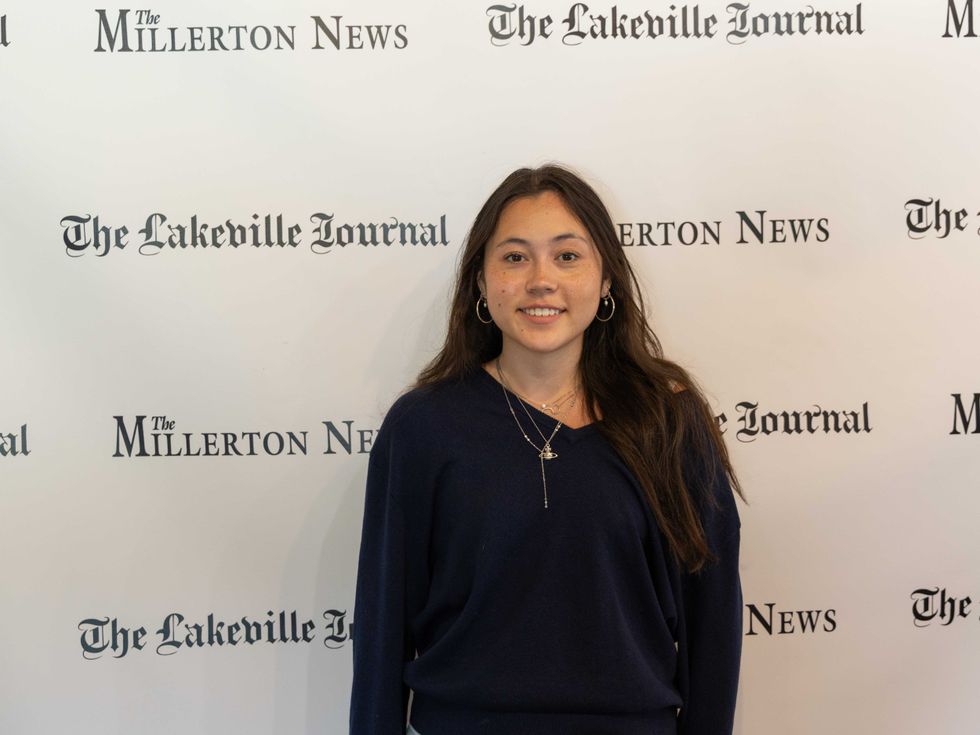
Sophie Gardiner
My name is Sophie Gardiner and I’m from New York City. I’m a rising sophomore at Northwestern University, where I study Journalism, Classics and Political Science. At school, I’m a reporter on the city desk for The Daily Northwestern and a member of the College Democrats. As a person deeply interested in the intersection of communications and politics, I also work on political campaigns in the broader Evanston area.
This summer, I’ve had a great experience diving deeper into journalism, particularly because of how local and community-focused The Millerton News is. I’ve had a strong passion for journalism for as long as I can remember, both because of its purpose as the Fourth Estate and because of my love for writing. Interning with The Millerton News has solidified my conviction in journalism as essential to a thriving community and it’s been really rewarding to gain hands-on experience in such a meaningful way. I’ve also learned a lot about how a newsroom operates, which makes me excited to continue exploring the industry in all its capacities – from social media to publishing and law.
My skills have undoubtedly improved from my time at the paper: always keeping my eyes open for a good story, asking the right questions and more. When I return to Northwestern in the Fall, I’m excited to bring my sharpened skills to the Daily. I’m also excited to join more magazine-style publications, where I’ll focus on the type of long-form feature writing I’ve enjoyed so much here. I’m so grateful for my experience this summer and I cannot thank everyone at The Lakeville Journal and Millerton News enough.
When I’m not in a newsroom or library, you can typically find me curled up with a good book, trying new restaurants with friends or going on long walks with a good playlist.
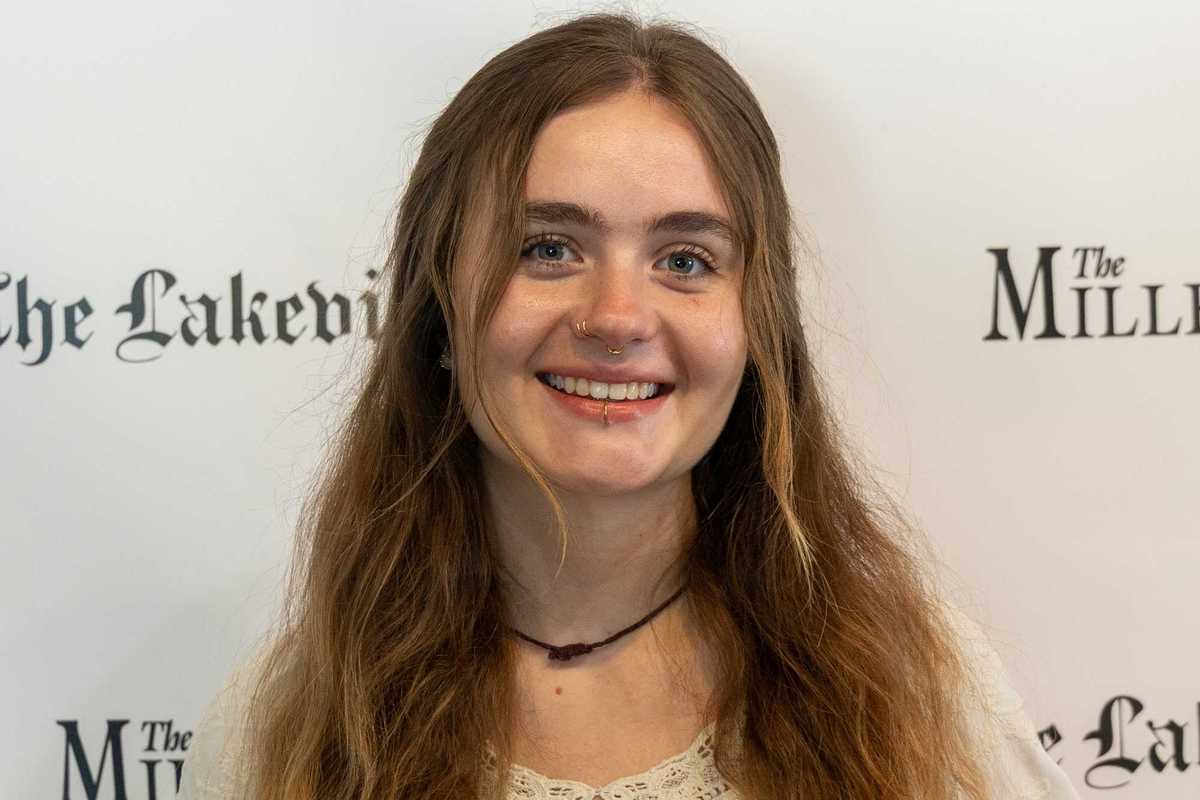
Eloise Pickering
I’m Florida born and raised and a rising senior at Loyola University New Orleans. Salisbury has been a summer destination for me since 2010. Every July for as long as I can remember, we packed our bags and escaped the brutal Florida heat staying with family.
I’ve been studying journalism and working at Loyola’s paper, The Maroon, for three years now. The highlight of my college newsroom has been serving as the paper’s editor-in-chief for the last year. During that year, we were awarded finalist for the Society of Professional Journalist’s Best All-Around Student Newspaper for colleges under 10,000 students. I was thrilled.
When it was time to search for summer internships, my great-aunt and Salisbury resident proposed The Lakeville Journal. So, I applied and kept my fingers crossed. I was elated when the internship offer hit my email.
Being a student journalist in a big city, I was excited to have the opportunity to learn in a small town setting, and I did learn so much. I’ve spent the summer writing for The Millerton News, and working mainly out in Millbrook. Under the guidance of fantastic editors and surrounded by talented student journalists, the educational experiences I’ve gained this summer are immeasurable.
Not only have I learned more about the mechanics of writing, I’ve learned how to be a better listener and reporter. I made real connections. I got to know the owner behind the store, the planning behind the project, and the people behind the community.
If you had told me in March that I’d know more about aerated concrete than the average person, I would have laughed in your face. But, I was fortunate to meet two talented men who taught me about the extremely interesting building material.
I’m excited to bring all the knowledge I’ve learned this summer back to New Orleans, where I’ll finish my final semester of college this fall. I cannot express enough gratitude to this program and all the people involved for giving me the most interesting and educational summer I’ve ever had.
Want more of our stories on Google? Click here to make us a Preferred Source.