As stimulus funds have become available for a range of “shovel-ready� projects, including environmental cleanups, there may be an opportunity for the state to help residents who are under the gun to clean up their properties of leaked oil from underground tanks. While stimulus funds are now targeted for very necessary commercial cleanups, surely the monumental costs facing private homeowners such as Salisbury’s John Fitch should be worthy of the attention of our elected officials in Hartford.
There have been other instances of commercial and residential remediations of oil leaks that have devastated those affected. In Cornwall, for instance, on the commercial side, a family whose shuttered gas station was a focus of state environmental laws could not afford the very costly cleanup. Before their situation was resolved, large amounts of money and time were expended by both the state and the family, and the family suffered tragic consequences as a result.
Surely environmental laws have had positive impact in many ways since their inception in the 1970s, but the detrimental effects on small commercial or private entities are quite different from the effects on large corporate entities. General Electric, for instance, paid millions of dollars in fines only after responding to compliance and cleanup issues by continuously appealing the environmental requirements with batteries of corporate lawyers. The little guys don’t have that option. A private residence such as the one owned by John Fitch presents an especially difficult situation, where spending what seems to be close to $1 million on soil remediation is simply impossible.
What is the answer? With a shortfall in the state budget that still may need the Legislature’s attention in the next months, it’s not likely any additional money could be found in the state budget to help Fitch. Could tapping into stimulus money somehow be a way to help people who are facing such an impossible situation? They are certainly sitting on projects that are shovel-ready. Our legislators should be trying to think creatively to help people like Fitch, who through no fault of their own are left holding the bag in extremely expensive soil cleanup. From John Fitch’s perspective, underground oil tanks were common and legal when he and his late wife, Elizabeth, bought their property. Fitch deserves to have those in power try to find an answer that doesn’t entail leaving him completely on his own.

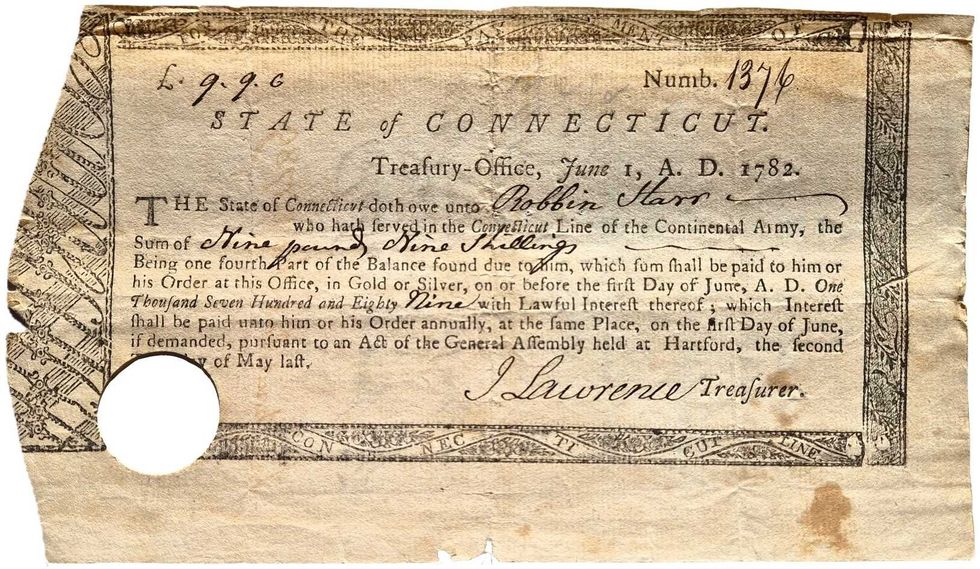 Pay Bill for Robin Starr’s service in the Continental Army.Courtesy the Alex Breanne Corporation
 John Mills speaking at Quinnipiac University.Courtesy the Alex Breanne Corporation
 Stephanie Saetta,with her rescue dog George and Blue (left), a shepherd mix awaiting his forever home.Madi Long
 Blue, a 7 year-old Shepard mix, is waiting for his forever home. Madi Long