EAST — Highway Superintendent Robert Stevens appeared before the Town Board at its business meeting May 14 to give an update about his department’s general welfare and the issues it’s been facing recently.
Truck talk
First up in the report was the status of the town’s one-ton Dodge truck, which needs replacing. Stevens received a quote from the state for a 2010 GMC 4-by-4 diesel with a stainless steel combo body and central hydraulics, which would make up for the loss of the town’s plow truck. According to the highway super, it has the same design as the town’s other two plow trucks and the same dump body.
The contract from the state is good until March 2010, as it was just “re-upped� for one more year. Delivery can take approximately 200 days.
Stevens said for comparison, he spoke with a couple of other dealers and a local vendor came in $5,000 less for just the equipment.
“I should do a financial discussion with the board,� he said, adding that the Dodge the town had was 11,000 pounds while the GMC is almost double at 21,500 pounds. “It will be good for [taking care of] Town Hall, the Rail Trail parking lot, etc. It has a regular cabinet, too.�
“This is a bit beyond a pickup,� said town Councilman Dan Briggs after hearing the description.
“This is beyond the one-ton,� agreed town Councilman Dave McGhee. “There’s also a 4,500-pound, the one in between these... Can you get the specs on a 4,500-pound, so we have it in our hands, so we’re ahead of the game?�
Stevens assented.
Meanwhile, he also got the board’s approval on sandblasting, prepping, priming and painting the nine-year-old dump body of another town truck. That work will be done by Dutchess County Diesel for $4,500.
“It’s going to be good,� he said.
New hours on the horizon
The highway superintendent then raised the issue of his crew working a four-day week versus a five-day week, as has been discussed in the past.
“Four out of five members are interested in doing so,� Stevens said. “From June 1 to Sept. 3, from 6 a.m. to 4:30 p.m. A lot of our jobs in the summer are paving jobs or piping jobs. There are other towns [doing this].�
“If we’re working with other towns [and we sometimes do], it would be nice to be on the same schedule of Monday through Thursday,� said Briggs.
“It won’t affect us negatively at all,� Stevens said.
“If I could do it myself I would,� said town Councilman Carl Stahovec.
A motion was made that the town allow the highway superintendent to schedule his employees to work Monday through Thursday from 6:30 a.m. to 4 p.m. as a trial this year from June 1 to Sept. 3. The motion passed unanimously (Councilman Tim Shaffer was not present).
CHIPs funding
Stevens then informed the Town Board that the town received notice from the state that its CHIPs (Consolidated Highway Improvement Program) funding came through this year. The town was awarded $66,217.23.
“That’s $18 less than last year, but that’s very good compared to what the possibilities were,� he said.
“So we’re able to do what we’ve planned, hopefully?� asked town Supervisor Dave Sherman, referring to town road improvements.
“Yes,� replied Stevens.
“State aid is key to our plans to rebuilding our roads, so we’re good for this year and hopeful that the state will be able to provide aid and assistance next year,� Sherman said.
Rail Trail water woes
Stevens and Sherman also talked about their meeting with representatives from the Department of Environmental Conservation (DEC) and the town’s engineer to take care of some flooding issues along the Rail Trail.
“The end result is we need to take care of this once and for all,� Stevens said, speaking about an issue relating to a specific stretch of trail that crosses some water. “We need to replace that 2-foot box culvert under that railroad bed.�
“We’re trying to screen beavers from packing and blocking [the water from flowing through properly],� Sherman said. “They’ll try, however.�
“The 4-foot board would help but it wouldn’t be the solution. The DEC felt, with the amount of water that comes through there, a box culvert would be the answer,� Stevens said. “It’s a big job there to take the whole thing out and replace it with a 10-foot wide box.�
Sherman said he would like to bring the Department of Public Works (DPW) back into the conversation and have the county include the town in some sort of plan for dealing with the problem. The state of New York owns the Harlem Valley Rail Trail; Dutchess County leases the linear park from the state.
“I look at it as we have plenty to take care of on our own roads,� the supervisor said. “The county and state can take care of their properties.�

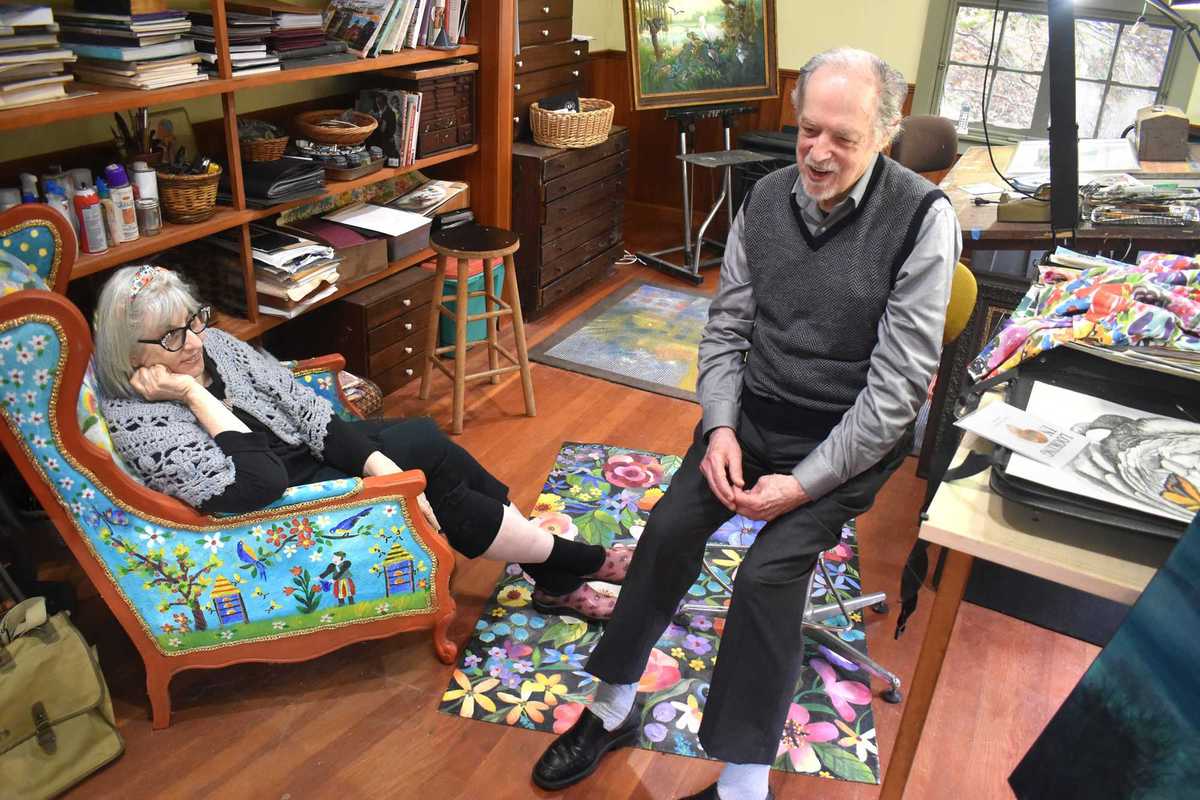
 Justine and Victor Valla in their studio with a painting of Victor’s,”Jonah and the Whale.” Robin Roraback


 A ceramic vase by Kathleen Heidemann.Provided
  Joy Brown’s delightful ceramic sculptures.Provided
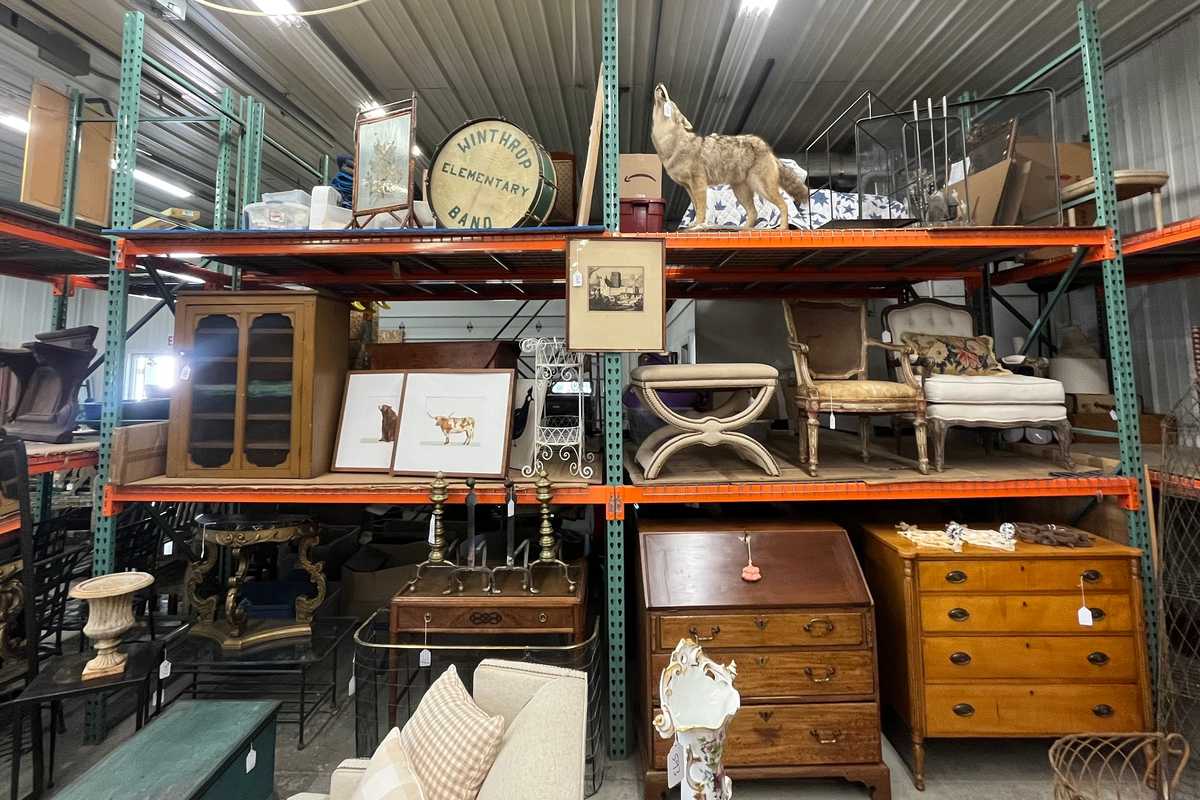
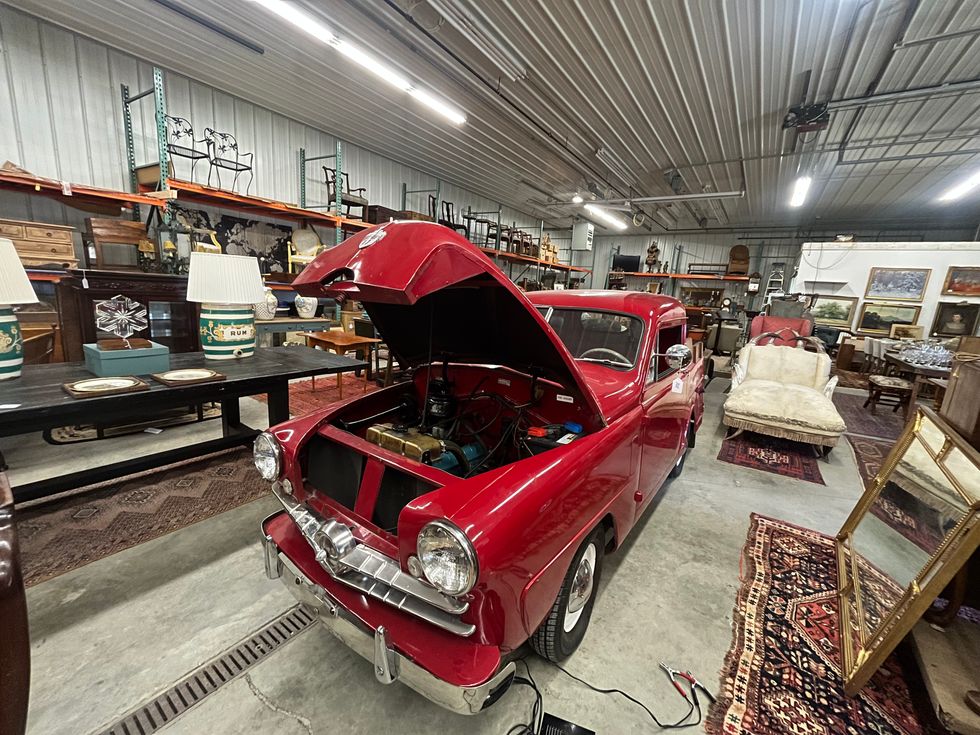 Hundreds of items at Stateline Auctions, including a candy-apple-red Crosley pickup truck.D.H. Callahan