Scrooge, move over. You have a contender for the meanest man in town. Fact is I’m not really a mean man. I believe in helping the poor, the helpless young and the disabled elderly, and folks who find themselves victims of circumstances.
But I am drowning in an avalanche of requests for help. There are “Year End fund drives,� which come on the heels of “Winter fund drives,� which follow “Midsummer fund drives� plus “Spring fund drives;� not to mention “First of the Year fund drives.
The end of the year drives have a sneaky message: “Hurry. Send a donation now and you will be able to deduct it on your 2008 income tax.� Great, but I can wait and send a donation this year and I will be able to deduct it on this year’s income tax. Didn’t take a Madoff or a Ponzi to figure that one out.
So what’s my beef? Everyone who can afford it should help those who are in need. Right? Course right.
But I no longer feel so kindly toward the folks I sincerely feel are in need who sell my name to every one else in the world. The world? Yes, send a donation to an African tribe and a letter pleading for help arrives tout de suite in your mailbox from every suffering kid on the continent.
And the Good Lord knows that many a boy or girl born in Africa is more likely than not to be a member of a family with a single mother, often with as many as seven kids. I’m not a pioneering sociologist so I am going to refrain from arguing that I should try to convince African men to step up to the plate and support the kids they help produce. The UN should be the likely candidate, but its record for achievements is much too scanty. Religious groups come to mind, but then they often don’t want to help unless you adopt their ecclesiastic ways.
u u u
In the matter of native peoples, I do have favorites — and I only wish I could help them more. They are the American Indians.
The real American Indians, not the murderous savages portrayed for so many years by Hollywood as the quintessential bad guys.
They are OUR people and, except for the select few who are enriching themselves in the rather ignoble business of running gambling casinos, they really need help.
Whilst settling this great land we killed as many Indians as we could, herded the rest onto reservations where it was too hot in summer and freezing in the winter and wiped out the buffalo, their source of sustenance. Worried about white folks facing unemployment? The Indians have a 40 percent unemployment rate, high rate of alcoholism and high rates of suicide.
The spectacle of elderly Indians trying to keep warm and eat at least one decent meal a day in a hovel in South Dakota brings tears to my eyes. All other Americans, and particularly the American government, should hang their collective heads in shame. And talk about a Federal agency that should be hung in effigy, I nominate the Bureau of Indian Affairs.
Now we also have the plight of our embattled military in Iraq and Pakistan who need toothbrushes. Toothbrushes! Crikey, do our soldiers, sailors and marines have to depend on donations of toothbrushes from the rest of us. The USO is helping but.... Well, don’t get me started on what we are NOT doing for returning veterans.
Relative newcomers on the “Please send me money every month� are military museums. I’m a veteran of the Second World War so I sent a donation to its new museum in Washington. But there’s a new Pacific War Museum in Hawaii and a Pacific Museum in Texas, the Vietnam Wall needs repair, a Korea museum is about to open and the Civil War Preservation Society wants to save every single battlefield of that great killer of our young men.
They all want my money.
u u u
I am more than just a little surprised at the number of Jewish organizations in New York City that have dunned me these past two months to help out hundreds upon hundreds of hungry Jewish elderly and Jewish children in the great metropolis on the Hudson.
May I respectfully suggest that the New York rabbis band together and form a United Jewish Relief Society, like the United Way, and give me the pleasure of sending one nice annual donation?
Given that, I am in no mood to see the Israelis pushed into the sea `a la the wishes of that nasty president of Iran, I am an annual supporter of Israel, its Hebrew University in Jerusalem, and the world class Shaarey Tzedek Hospital, also in Jerusalem, where I was once treated. I answer the call for disabled Israeli soldiers and I have made annual contributions to the Lubavichers for several years. They have airlifted more than a thousand Jewish children from a town near Chernobyl. Their lives have been threatened with radiation from the explosion that wrecked the giant nuclear plant that was the pride of the Soviets.
u u u
In that vein, I am now being asked to donate money to help American farmers. Hey folks, the farmers have been getting subsidies from the Feds since the Great Depression, sometimes even being paid NOT to grow food.
Finally, like so many of us, I am mostly communicating via email, so why do I need all those return address labels?
Did I forget any deserving institution, agency, religious or medical care groups. Oh yes, education. Wouldn’t you think my alma mater, the University of Michigan, often cited as the nation’s best public university, could get along without my pitiful donations? But no, I get requests from the College of Liberal Arts, the Political Science Department, the Student Publications Building, the Student Union, my Cooperative House and the campus Hillel. Then there are my children’s prep schools and colleges.
Help, Scrooge, I’m drowning in requests.
Freelance writer Barnett Laschever, the curmudgeon of Goshen, has written five children’s books and is co-author of “Connecticut, An Explorer’s Guide.�
Epilogue: Just watched on TV how cultural institutions are taking a big hit during this financial crisis and many are closing. Forget what I said. Give generously to your favorite museum, orchestra, dance company and theater of the arts. Scrooge said he wants to be among the first to help preserve culture. B.L.

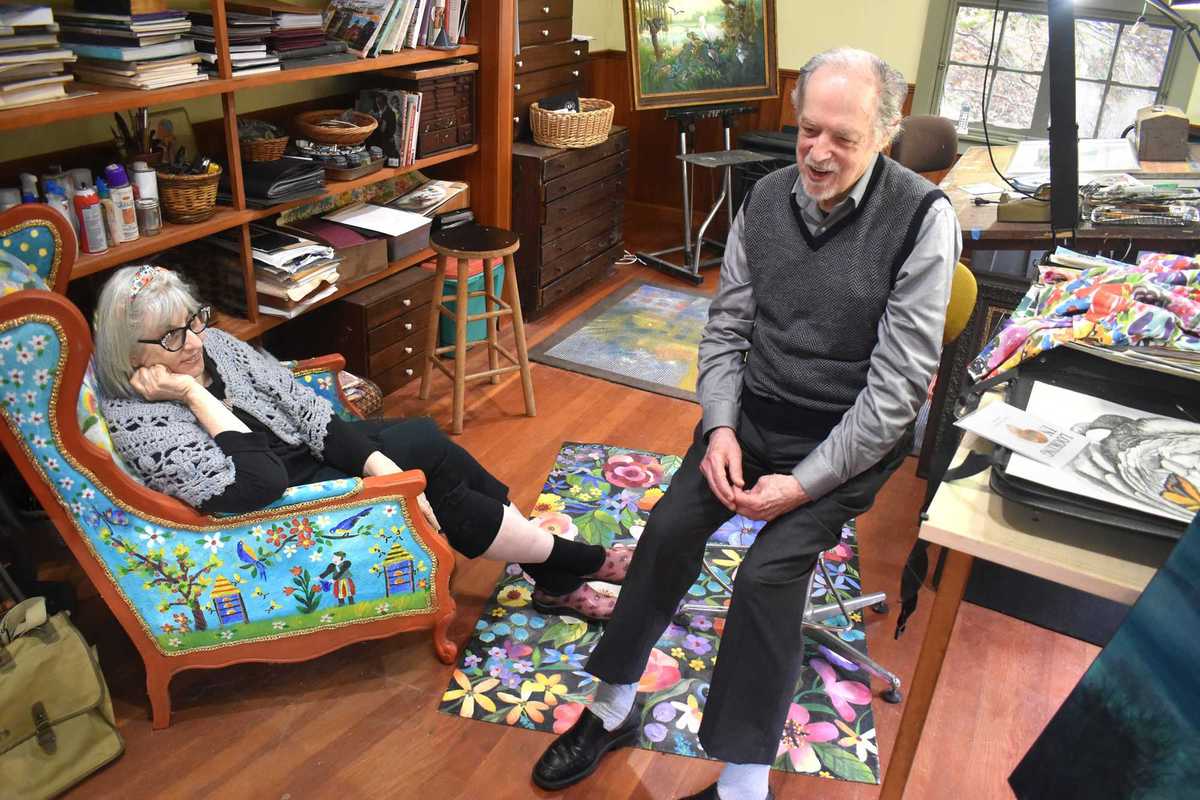
 Justine and Victor Valla in their studio with a painting of Victor’s,”Jonah and the Whale.” Robin Roraback


 A ceramic vase by Kathleen Heidemann.Provided
 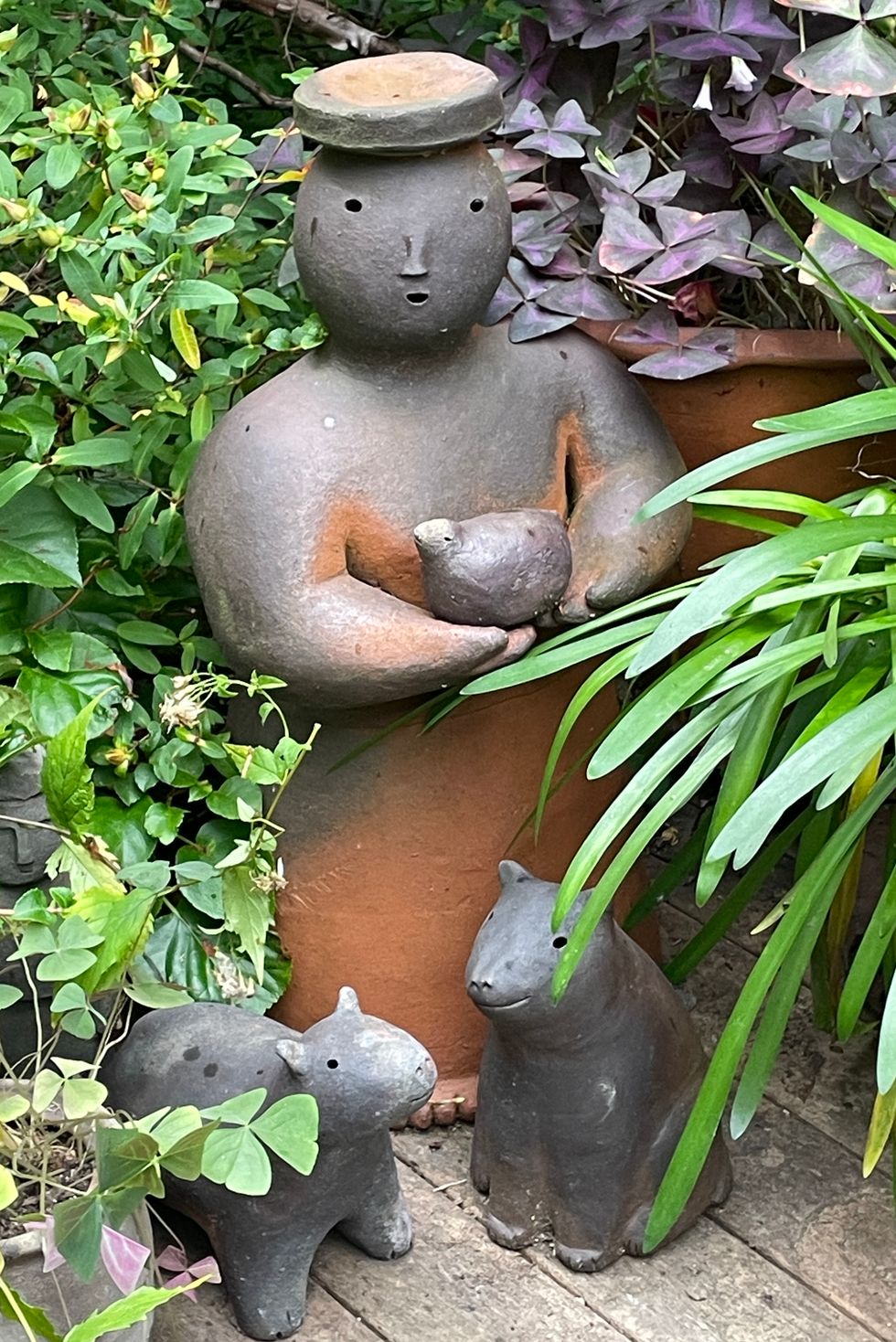 Joy Brown’s delightful ceramic sculptures.Provided
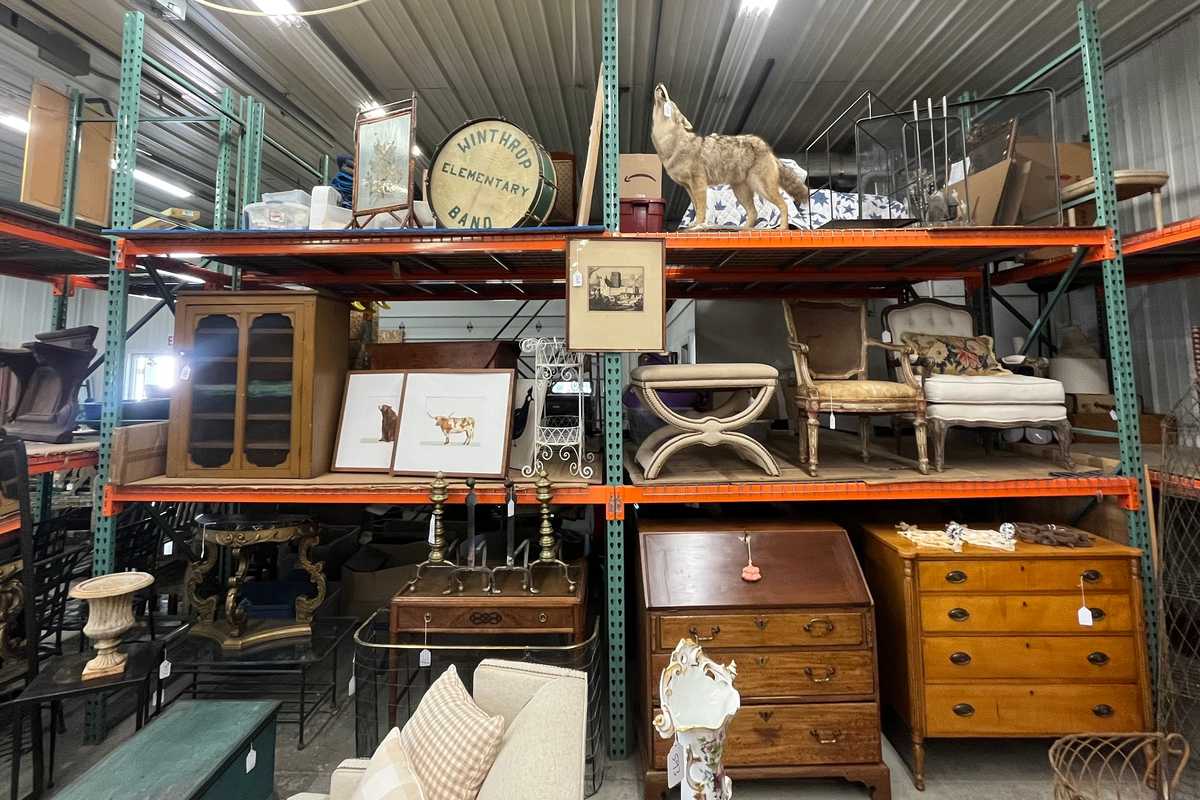
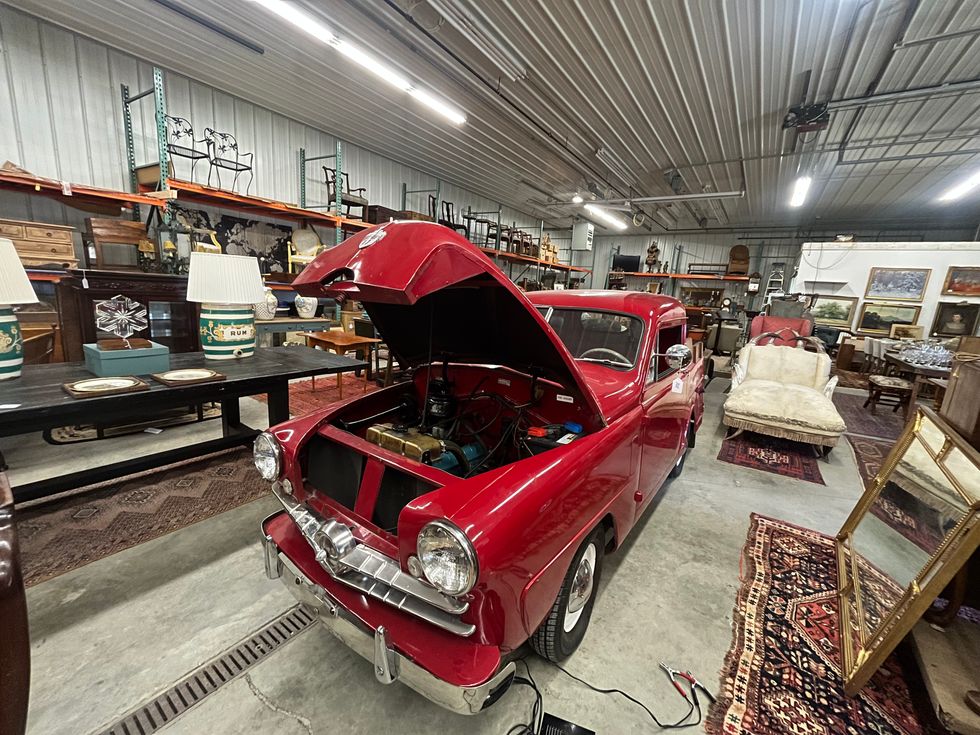 Hundreds of items at Stateline Auctions, including a candy-apple-red Crosley pickup truck.D.H. Callahan