Thank you!
Your support is sustaining the future of local news in our communities.

Insurance companies can be detrimental to your health

Want good health care?

Call your ma;

She’ll say go

To Canada.

The best form of health insurance is no great mystery. The bulk of the developed world has already figured it out and implemented it in one form or another. Even the American public, besieged as it is by propaganda to the contrary, has also  figured it out. And a majority wants it. Yes, even a majority of doctors want it.

Unfortunately, they won’t get it. That’s because the best form of health insurance is run by the government. You know, like Medicare or the VA. But American business has been trashing government since the ink first dried on the Declaration of Independence. Now the health insurance industry spends tens of millions of dollars yearly to scare the public away from any further state intrusion onto its turf, except maybe to force all citizens to buy its policies. It continues to fling charges that are occasionally truthful, but mostly not.

The industry’s most popular whipping boy just now is Britain. Socialized medicine, tsk, tsk. Why, even the doctors over there work for the Crown. But surprisingly the Brits have grown quite huffy, not a big trick for them, about this attack.

“Wait a minute, old boy,� they say. “WE can jolly well make a national pastime of criticizing our health-care system, but YOU blighters can’t. It’s a whole lot better than yours, you know, and cheaper, too.�

On this issue they happen to be right. While their system may be too big a lump for Americans to swallow whole, their key element — government insurance — is so clearly superior that all of the industrialized world (except for the United States) has adopted it.

Take Canada. Unlike Britain, its doctors are private operators just like ours, but coverage is run out of Ottawa. As you’ve heard, everyone up there is indeed covered and their system, like the British one, is also much cheaper.

In fact, everybody else’s system is much cheaper than ours. Word is that the only thing keeping a flood of freezing Canadian immigrants out of the United States is our shaky health care. Otherwise millions of them would flee their frostbite and igloos and be down here in a flash to enjoy our sun and frivolity.

We hardly need to recite the shortcomings of our malevolent insurance companies. Their executives are paid millions, their duplicative approval systems are bankrupting all of us and their customers are viewed as the enemy, always sick and presenting medical bills.

The obvious goal for them is to sign up folks who are healthy and to dump folks who are ill. It’s just good business. That’s the genius of the free market that we hear so much about.

To promote this common-sense business model, insurers hire battle groups of lobbyists, pay fortunes to political campaigns and advertise profligately in the media.

Consequently, the compliant media never interview proponents of government insurance, Congress (and the president) never invites them to the negotiating table and lobbyists heap invective contumely upon them.

Meanwhile, 46.3 million Americans (15 percent of the population) lack coverage, 10,000 a day lose the coverage they once had and 62 percent of bankruptcies are due to health costs, even among those who are covered. Further, most of the uninsured are actually employed but can’t afford insurance, and divorces are piling up just so that at least one member of the family unit can escape impoverishment due to the disastrous illness of the other. There’s a lot more stuff like that, too.

As a result, savvy patients often go abroad. Mexico is the new center for dental work while Thailand, India, South Africa, and other entrepreneurial nations compete for the American medical dollar. At home among the poor, the big losers in all this, free clinics save a lot of lives but life expectancy remains short.

In Washington, Republicans totally oppose reform (no victories for Obama, please) and conservative “Blue Cross� Democrats are with the insurers. Better keep taking our vitamins, Mabel.

Columnist William A. Collins is a former state representative and a former mayor of Norwalk.
Latest News

Doug Tallamy’s work in progress: saving the planet one backyard at a time

Windacre, a 25-acre property in Millerton will be the site of “Work in Progress,” an afternoon with acclaimed entomologist, New York Times bestselling author and Homegrown National Park co-founder Doug Tallamy.

Provided

For nearly three decades, Doug Tallamy, a professor at the University of Delaware and co-founder of Homegrown National Park, has studied the intricate relationships between native plants, insects, birds and the ecosystems that sustain them. His books, including “Bringing Nature Home” and “Nature’s Best Hope,” have helped shift the conversation about conservation from something that happens primarily in parks and preserves to something ordinary people can practice on the land around them.

On Sunday, Oct. 4, Tallamy will bring that conversation to Windacre in Millerton for “Work in Progress: Toward Native Fields,” an outdoor gathering exploring both the possibilities and the complications of restoring private land for biodiversity.

Keep ReadingShow less
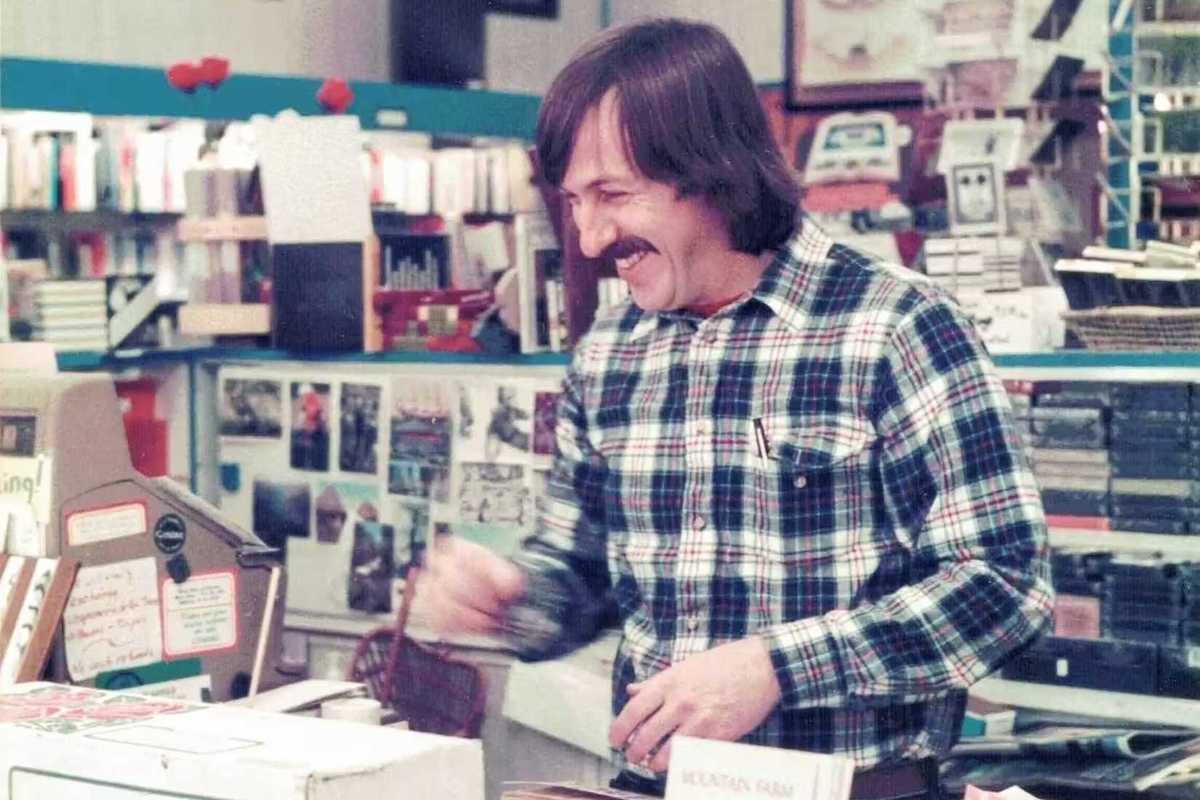
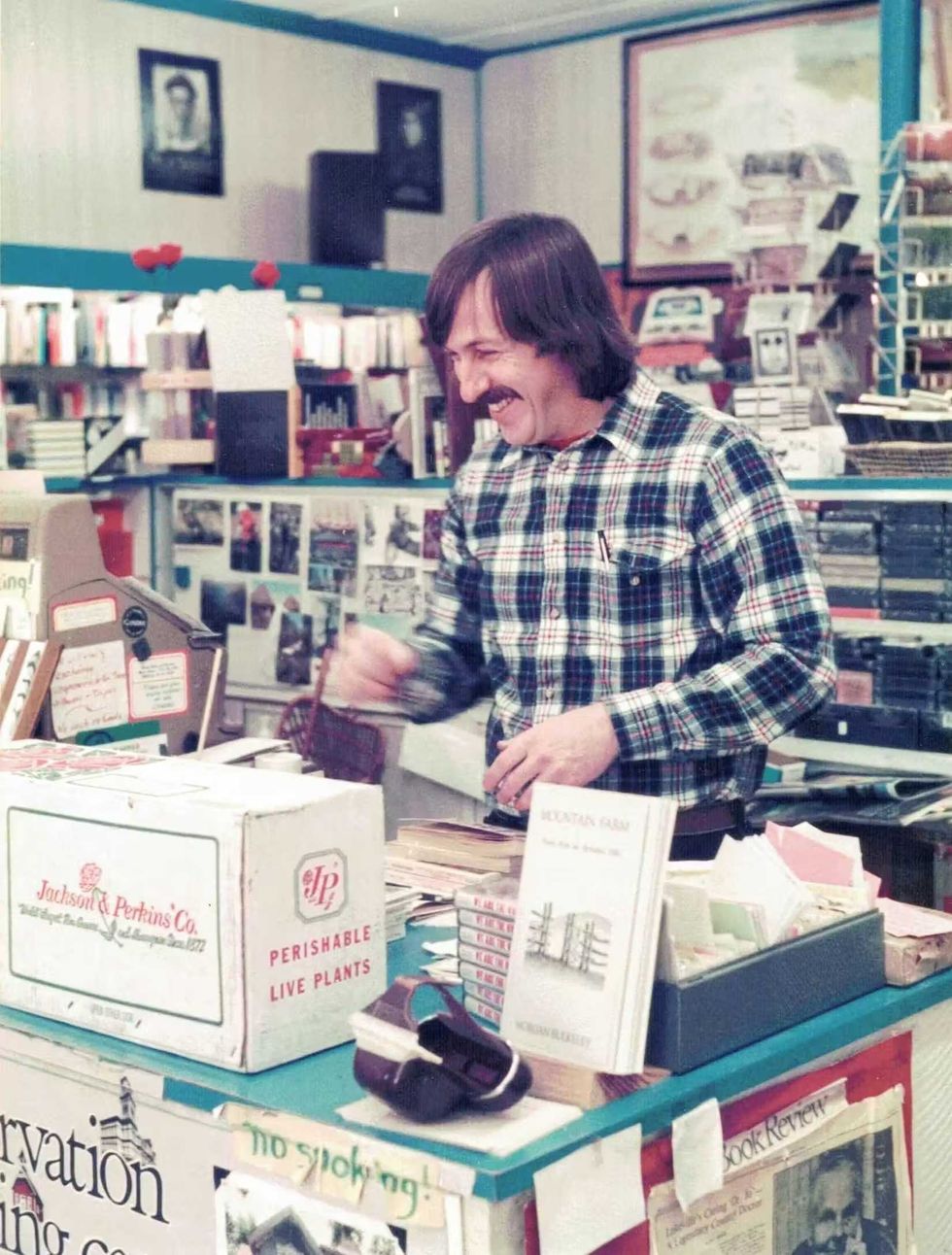
Celebrating Dick Hermans’ life built around community

Dick Hermans in the Oblong Bookstore on Millerton\u2019s Main Street in 1985.

Provided
No matter what I’ve done, I’m trying to be useful to the communities I’m associated with.
— Dick Hermans

When Dick Hermans receives the Estabrook Community Leadership Award on Oct. 11, he will accept it for a lifetime of work that has taken many forms: bookseller, radio host, school board member, advocate for the Harlem Valley Rail Trail, business owner, volunteer and, perhaps most importantly, a person who has consistently looked for ways to be useful to the communities around him.

The Lakeville Journal and The Millerton News will present Hermans with the 2026 award at the annual Jubilee celebration at the Sharon Playhouse. The award honors outstanding leadership in community service and was inspired by Mary Lou and Robert Estabrook, former owners of the newspapers who believed that strengthening a community extended well beyond the work of publishing a newspaper.

Keep ReadingShow less
Tending the Fire: Homelands PowWow brings Mohican culture home to the Berkshires

Members of the Stockbridge-Munsee tribe at Homelands PowWow in 2025.

Joeseph Plante New Media Storytellers
Our goal is to continue building an annual gathering that honors the history, culture and traditions of the Stockbridge-Munsee Band of Mohicans in their original Homelands.


For the Stockbridge-Munsee Mohican people, the Berkshires are not simply a place to visit. They are ancestral homelands.

Keep ReadingShow less
google preferred source

Want more of our stories on Google? Click here to make us a Preferred Source.

Ancram Center’s “A Number” doubles questions of identity
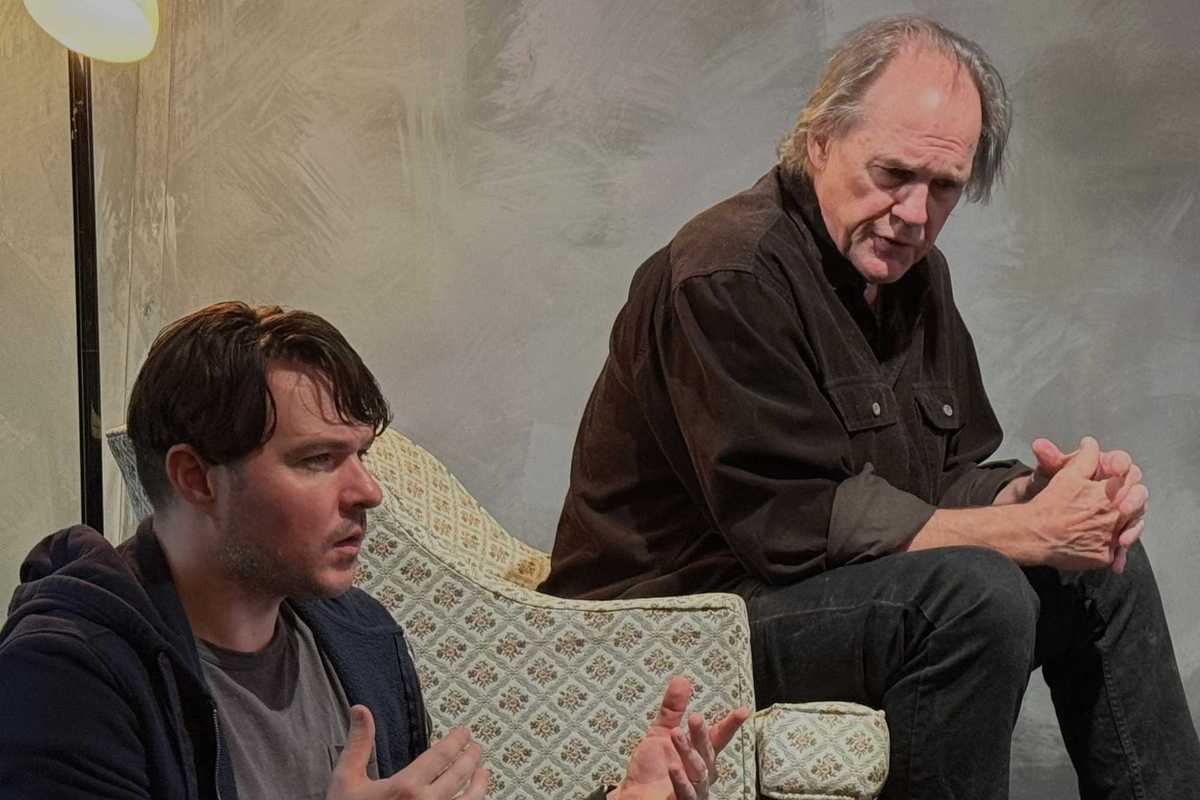
Ledbetter (left) and Wojda (right) on the set of “A Number” at Ancram Center for the Arts.
Jeff Mousseau

How would you feel if you found out you weren’t the only you — if there was an exact replica of you? What if you found out that you’d been cloned? Would you believe that you’re the real you? Would you suspect you might be a copy of the original? How could you be sure anything about your life was real? These are some of the questions posed in Caryl Churchill’s play “A Number,” opening at the Ancram Center for the Artson Oct. 1.

Churchill was born in London in 1938 and has been hailed by the theaterl world as one of the strongest voices of her time to take on sexual politics and feminist themes. Her works garner pointedly considered analysis from the highest levels of theatrical intellectualism. Basically, it’s about as far from “The Lion King” as you can get. While she’s experimented with dance theater in the past, “A Number” is much more stripped down, highlighting Churchill’s chosen themes and the skills of both actors on stage.

Keep ReadingShow less

Dispatches from the Farm

Dispatches from the Farm

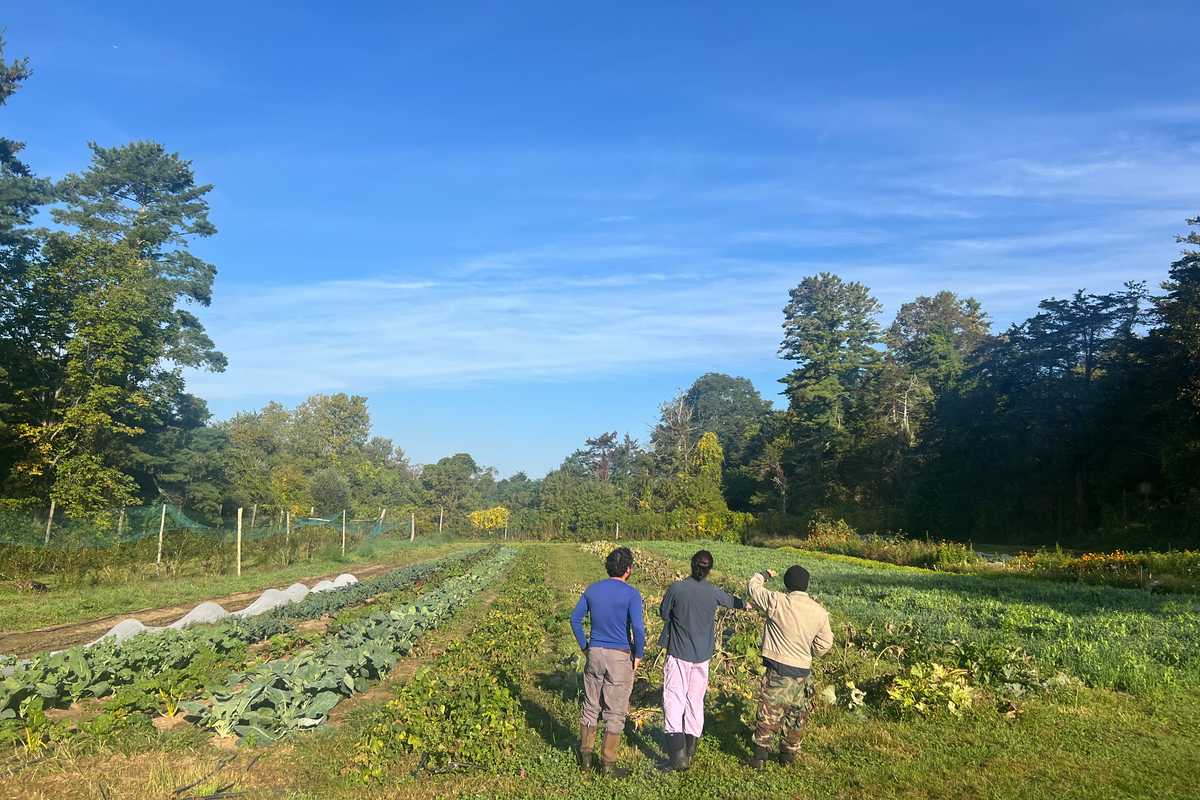
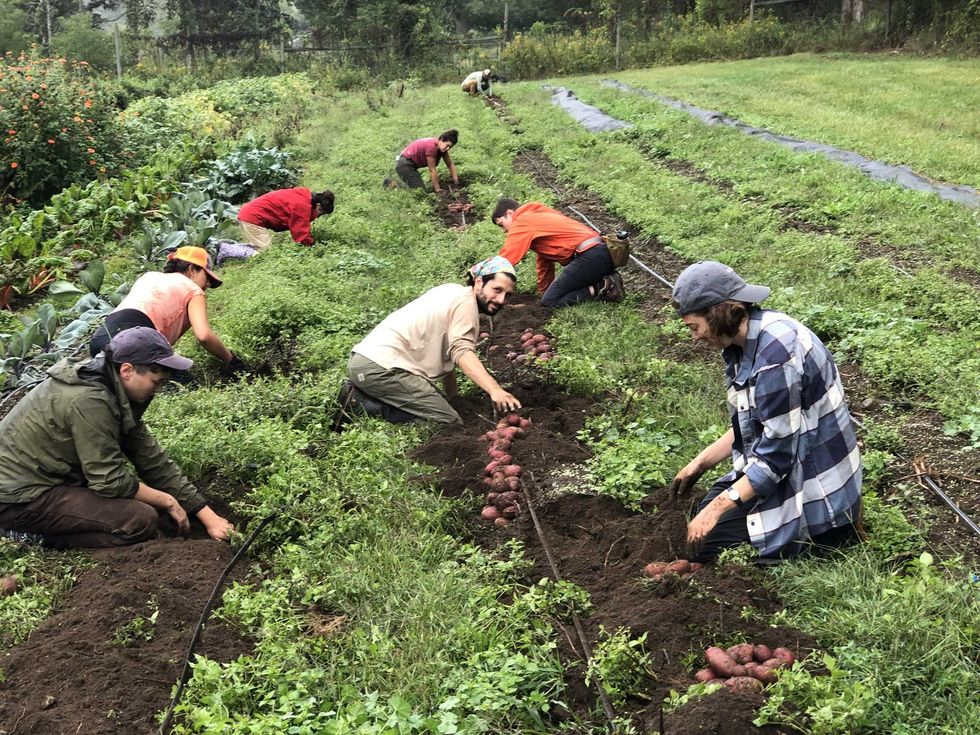
Adamah Farm crew members planning out the day’s tasks on a late September day.

Janna Siller

“Dispatches from the farm” is a new, periodic column offering a firsthand look at the rhythms, challenges and rewards of farming through the eyes of a local farmer.

The thing about plants is that they can’t get up and move. When a storm like last weekend’s nor’easter threatens to roll through, you can’t just round everybody up and settle them safely on the sofa for movie night.

Keep ReadingShow less
Pinchas Zukerman brings an all-Beethoven program to Hotchkiss

Pinchas Zukerman to perform at Hotchkiss Oct. 4

Cheryl Mazak

The passion, drama and energy of Beethoven will fill Katherine M. Elfers Hall at The Hotchkiss School on Oct. 4, when world-renowned violinist Pinchas Zukerman is joined by pianist Shai Wosner for a special recital.

The 4:30 p.m. program at the Esther Eastman Music Center will feature three of Beethoven’s celebrated violin sonatas: Violin Sonata No. 4 in A minor, Op. 23; Violin Sonata No. 5 in F major, Op. 24, “Spring”; and Violin Sonata No. 7 in C minor, Op. 30.

Keep ReadingShow less
google preferred source

Want more of our stories on Google? Click here to make us a Preferred Source.

google preferred source

Want more of our stories on Google? Click here to make us a Preferred Source.