It is no accident that a growing number of senators and congressmen are supporting an end to insider trading among Washington lawmakers. Given the dismal approval ratings of the nation’s politicians, anything that can raise ratings is at least being considered. But don’t count on the passage of this bill called STOCK (Stop Trading on Congressional Knowledge), which is scheduled for a vote in the next few weeks.In a column that ran in The Lakeville Journal last month (“Gordon Gekko should run,” Nov. 17), I pointed out that our nation’s elected officials were not subject to the insider trading law that regulated everyone else. As a result, individual politicians and their cronies have profited substantially year after year from the knowledge they picked up in closed door hearings, subcommittees and the like.This access to insider information has become even more important over the last few years as more and more market-moving events are triggered by governmental actions. Just consider how government pronouncements in the United States and Europe over the last six months have caused huge market swings. Efforts to change this law have been going on for years with scant success. News stories such as the Wall Street Journal articles on the subject last year and last month’s “60 Minutes” report on the scandal have increased public awareness. I suspect that if their approval ratings were not so low (Congress has a historically low 9 percent approval rating) the politicians would simply ignore the heat, as they have done in the past, and continue to profit at taxpayers’ expense.A month ago, only nine congressmen supported the bill that would require elected officials to report all trades over $1,000 within 90 days. After the “60 Minutes” show, that number increased to 180, and more than 20 senators have since jumped on the band wagon.Today, a cozy relationship exists between politicians, political intelligence firms and big players on Wall Street. There is nothing illegal in a congressman or senator divulging sensitive information to a political intelligence firm which in turn sells that information to Wall Street. The more market-sensitive information that is passed on through the pipeline, the more a particular politician can demand in future campaign contributions from the beneficiaries of that information.This bill would make it illegal for individuals and political intelligence firms to continue that practice. It would also require firms and individuals involved in political intelligence to register just like any other federal lobbyist.Call me a cynic, but I doubt this bill will pass. Not only is lawmakers’ potential for using their office for personal gain at stake, but this bill will also jeopardize the pipeline to campaign funds from those special interests we hear so much about.In a different world, all my readers and everyone in America who cares (the 99 percent), will call or email their representatives in Washington and demand he or she vote for this bill when and if it comes up for a vote. It is your chance to change a lot of what is wrong with Wall Street right now. It’s your move, America. Bill Schmick lives in Hillsdale, N.Y. He is registered as an investment advisor representative with Berkshire Money Management. Bill’s forecasts and opinions are purely his own. None of the information presented here should be construed as an endorsement of BMM or a solicitation to become a client of BMM. Direct inquires to Bill at 1-888-232-6072 (toll free) or email him at Bill@afewdollarsmore.com.
Latest News
Big ideas come to Lenox for inaugural field festival
Natalia Zukerman
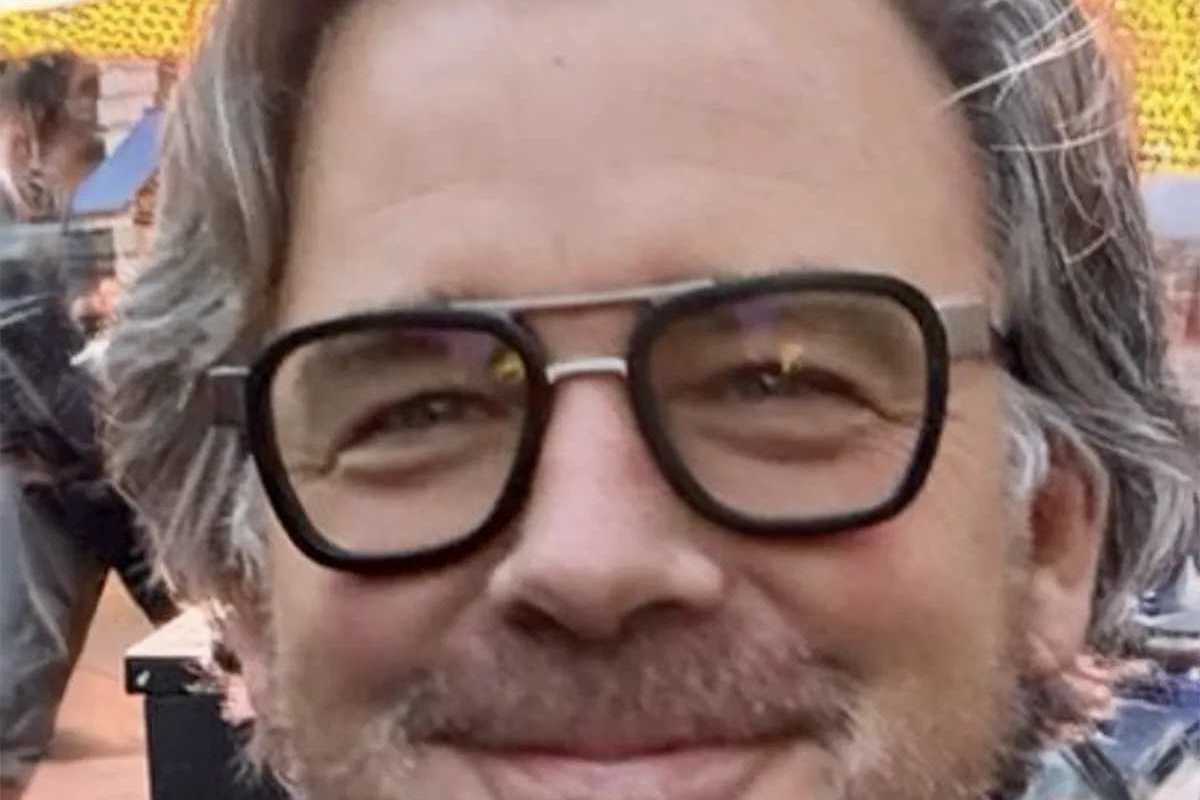
Hunter Runnette, founder and board chair of field, has spent years fostering arts and cultural programming in the Berkshires.
What do joy, gardening, artificial intelligence, the American experiment and the creative process have in common? Quite a lot, as it turns out, at least when some of the world’s most compelling thinkers get together to talk about them.
From Friday, Oct. 23, through Sunday, Oct. 25, Lenox, Massachusetts, will host the inaugural field festival, a three-day gathering of writers, artists, scholars and cultural figures at Shakespeare & Company. Billed as a festival of ideas, entertainment, learning and discovery, field brings together an impressive roster of voices to explore everything from the deeply personal to the profoundly political.
The premise is both simple and increasingly radical: Bring people together, encourage curiosity and make room for thoughtful disagreement. The festival’s guiding principles are to respect other voices, hear opposing perspectives and remain engaged in conversation, even when the subject matter becomes uncomfortable.
Opening the festival Friday evening is celebrated artist and author Maira Kalman, whose whimsical illustrations and paintings have appeared on numerous New Yorker covers. Kalman will discuss her new collection, “Joy,” which explores the small, often overlooked moments of beauty that persist even during difficult times.
Saturday’s programming moves across disciplines and generations. Pioneering psychologist Carol Gilligan, whose groundbreaking 1982 book “In a Different Voice” transformed conversations about gender and moral development, will join psychologist Niobe Way to discuss care, connection and the emotional lives of young people.
Historian Annette Gordon-Reed will sit down with Pulitzer Prize-winning journalist Brent Staples to examine the contradictions between America’s founding ideals and its history of slavery and racial inequality, a particularly resonant subject as the nation marks its 250th anniversary.
In another conversation, acclaimed writers Jamaica Kincaid and Saidiya Hartman will explore gardening as a practice that connects memory, history, beauty and belonging. Moderated by scholar Farah Jasmine Griffin, the discussion promises to reveal how something as seemingly ordinary as tending a garden can become an act of cultural and personal discovery.
The creative process will take center stage when novelist Colm Tóibín joins former New York magazine editor Adam Moss for a live conversation inspired by Moss’ book “The Work of Art: How Something Comes from Nothing.” Together, they’ll examine how artists turn an initial idea into a finished work, including the uncertainty, revision and occasional loss of faith along the way.
The weekend also ventures into medicine and technology, with bioethicists and health care leaders discussing the intersection of artificial intelligence, scientific innovation and equitable care. Other sessions explore grief, spirituality and the ways people make meaning of loss.
On Sunday, British painter and printmaker Tom Hammick will offer an illustrated look at his creative practice, incorporating music, poetry and images of his work to explore art’s capacity to express love, loss and the experience of being alive.
The full festival schedule also includes Pulitzer Prize-winning biographer Kai Bird and Susan Goldmark discussing their new book about Roy Cohn; political analyst Jonathan Alter examining the midterm elections; and trauma researcher Bessel van der Kolk discussing psychedelic-assisted treatment with psychiatrist Ronald D. Siegel.
Field takes place Oct. 23–25 at Shakespeare & Company in Lenox. Weekend passes and individual event tickets are available at fieldlenox.org.
The Pink House AM is serving up community
D.H. Callahan
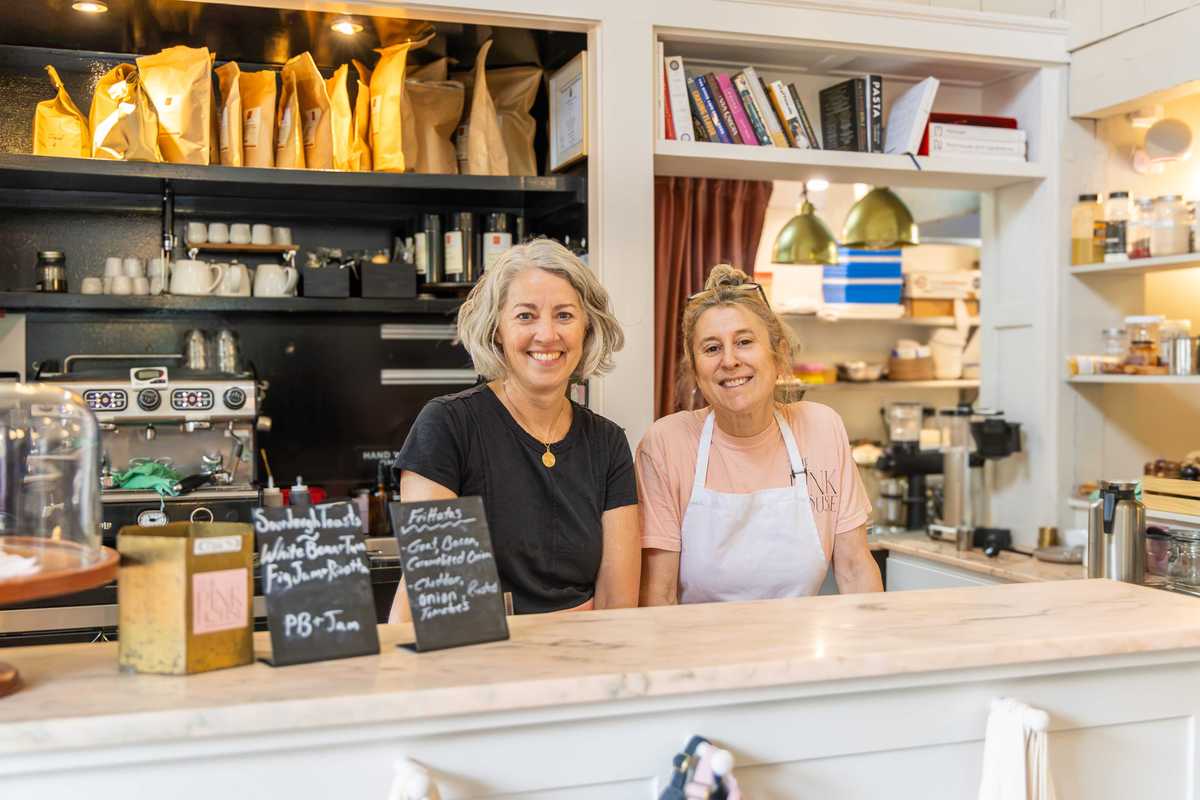
Mare Rubin and Maggie Levine of the Pink House AM.
It all started with a yoga class. Mare Rubin was working on her second act after leaving the Upper West Side, where she’d raised a family and worked in corporate marketing. Newly empty nesters, she and her husband decided to move to the wilds of northwestern Connecticut, where they had spent 15 years as weekenders, to see what life in the woods had in store for them.
Rubin started teaching yoga classes at the Union in West Cornwall, a space designated by the town of Cornwall as a community hub with couches, Wi-Fi, occasional events and a growing yoga class schedule. She was adjusting well but missed one important thing about city life: a casual coffee shop.
She decided to talk to David Ellen, principal owner of the Pink House, West Cornwall’s trendy eatery, which was hitting its stride with a new paint job and some rave reviews. Serving dinner only Thursday through Monday and brunch on weekends, the stylish restaurant sat empty much of the time. The idea was simple. Rubin would use the space to serve coffee and, with a little luck, find somebody who could bake.
Rubin turned to her yoga community to ask if somebody was interested in joining this crazy, if not entirely illogical, idea. That’s when Maggie Levine chimed in. After 25 years as a teacher in Brooklyn Heights, Levine was also looking for life’s next challenge. Though some time had passed since her days working in the pastry world, including a stint in a Wolfgang Puck kitchen, she’d never lost her love for baking. Just like that, a team was born.
Ellen had been interested in making better use of the space for some time and was patient enough with the cafe newcomers to let Rubin take some time to become a barista. Not many people take to the espresso machine for the first time in their 50s, but Rubin was determined to do it right. She knew a good cafe requires a skilled barista, so she spent days driving to No. 6 Roastery in West Stockbridge. There, she learned about the intricacies of the beans, how best to brew them and even took a couple of lessons in latte art, all while giving Levine the chance to refine her baking skills. By the time they opened those morning doors, their tools were sharp and the frittata recipe was perfect.
Though Rubin and Levine might disagree on how crisp they like their toast, the biggest challenges have been practical. The Pink House AM is part of the Pink House business, but the dinner and brunch restaurant has priority for the kitchen and coffee space. That means setting up and breaking down the entire cafe operation every day.
Much of the team’s goal is to provide a space for community. It’s not uncommon to find groups of longtime locals who meet morning after morning to chew the fat and enjoy coffee and pastries. A few enthusiastic customers have become such regular fixtures that they’ve had drinks named after them, including a flat white named after West Cornwall-based photographer Martin Chalk.
The team is also hosting Cedric Gairard of local arts publication Fieldwork to play vinyl records outdoors on Thursdays or Fridays, depending on the weather.
For now, full service is available Monday through Friday until noon, and coffee is available before the Pink House brunch service starts at 11 a.m. on weekends. Though not ready to disclose their future plans, the team has additional offerings in the works. For now, the space is open and ready for the casual laptop user, groups of old friends or even a curious couple to sit, enjoy their coffee and read a copy of The Lakeville Journal.
Follow the Pink House AM on Instagram at @pink
house.am.
Sons of Astro are musicians, friends and bandmates — in that order
D.H. Callahan
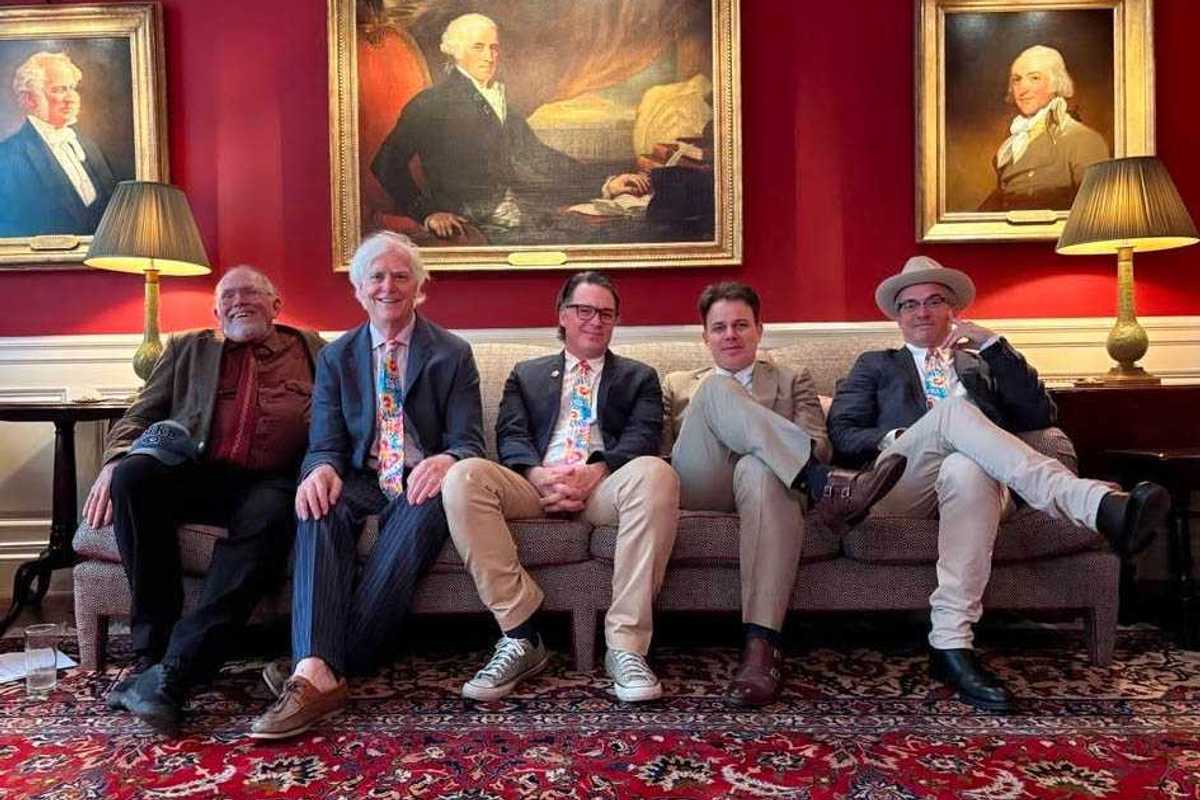
The Sons of Astro will be at the Common Pub in Housatonic on Oct. 24 and the 2nd Home Lounge in Winsted on Nov. 14.
No matter where they are in the world, musicians seem to find other musicians. There’s a shared language, a shared experience of being on stage and performing, and a shared enthusiasm for making those melodies by themselves or together. Such is the case with Norfolk and Brooklyn-based cosmic Americana band Sons of Astro.
That magnetic musicians’ bond drew Brooklyn-based singer-songwriter and multi-instrumentalist Mike Cobb into the orbit of singer-songwriter and multi-instrumentalist Matt Statler. The two neighbors took to each other right away and were soon playing open mics together. As an ethics professor at NYU’s Stern School of Business, Statler made the case that if he sat in for Cobb’s set and Cobb sat in for Statler’s, they could play together and double their stage time. Clearly, these men wanted to make as much music as possible. That became a little harder when Cobb and his family moved up to Norfolk, Connecticut.
All the while, Cobb had also been talking to architect, musician and amateur luthier Ben Herzog. Herzog spent his pandemic downtime teaching himself to build guitar- and bass-like instruments for fun. He also hosted a bluegrass jam session at his architecture office in Brooklyn. Cobb mentioned he had moved to a small town in Connecticut. It turned out, Herzog had a place in Norfolk, too.
Things were starting to come together, but what would really solidify them as a band was a drummer. Cobb called Brooklyn-based drummer Charlie Shaw, who has a collapsible drum kit that he can fold down to suitcase size. For that special X factor, they brought in Rip Westmoorland from Herzog’s jam sessions. Westmoorland has an enviable instrument collection featuring several vintage guitars he was happy to lend to the group, which was now officially a band.
The name Sons of Astro comes from a chance encounter with a couple of cloned dogs, but their music is far from a cold scientific copy. In fact, in a time when AI threatens all forms of art, their music feels remarkably human, and uniquely familiar.
Their debut EP., “Another Day Above the Dirt,” hits Bandcamp and other streaming services Nov. 6. It pulls from influences like the Grateful Dead, Tom Petty and the Byrds, and features timely lyrical themes and hooks you’ll want to sing along to.
You can catch Sons of Astro at the Common Pub in Housatonic on Oct. 24 and at the 2nd Home Lounge in Winsted on Nov. 14.

Want more of our stories on Google? Click here to make us a Preferred Source.
One more weekend to get inside the art at ArtEast
Natalia Zukerman
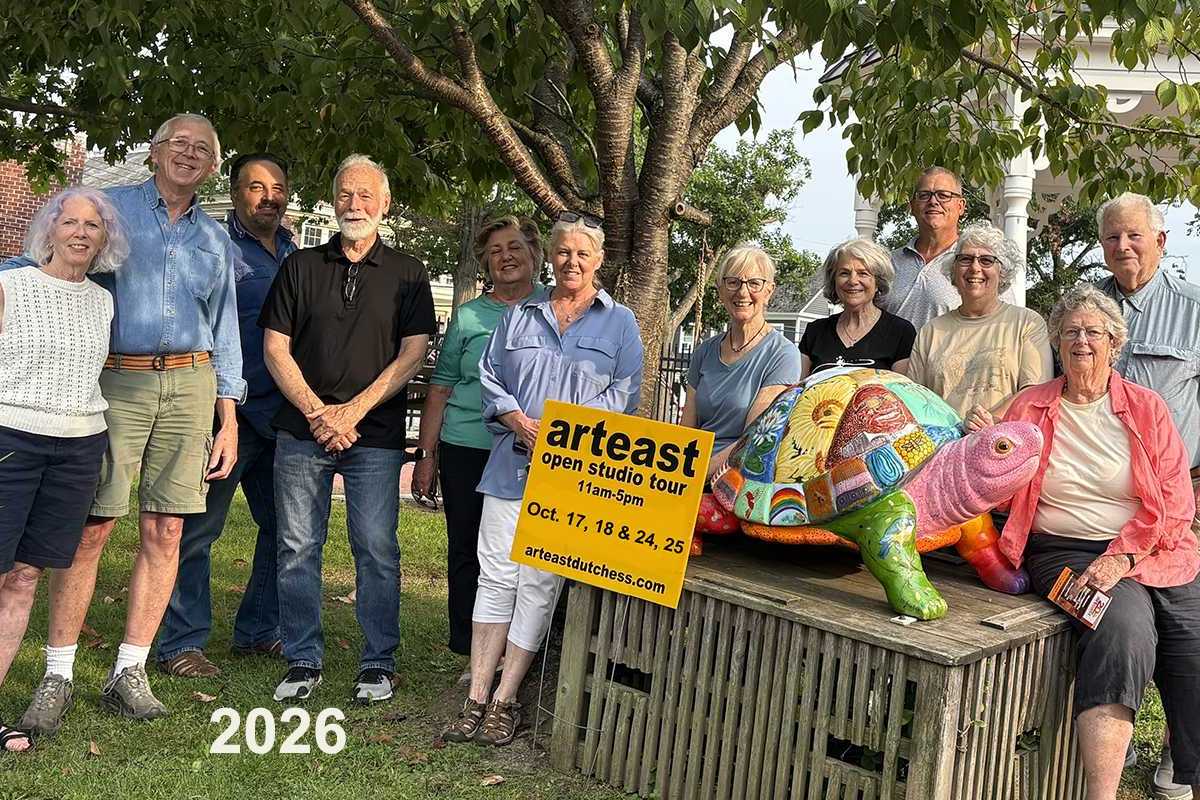
The participating artists in this year’s ArtEast open studios.
ArtEast’s annual October Open Studio Tour is already underway, but there’s still one more weekend to step inside the creative worlds of artists working throughout eastern Dutchess County. On Saturday and Sunday, Oct. 24 and 25, artists will once again open their studio doors, inviting visitors to see where the work happens, meet the people who make it and perhaps discover something worth taking home.
Now in its 21st year, the ArtEast October Open Studio Tour offers a self-guided journey with participating studios in Holmes, LaGrangeville, Hopewell Junction, Pawling, Patterson, Poughquag and Wingdale. Visitors can explore painting, photography, sculpture, mixed media and other artistic practices, and get some leaf-peeping in at the same time.
Unlike a traditional gallery exhibition, the tour offers a chance to see art in the places where it comes to life. There are works in progress, tools of the trade and opportunities to ask artists about their inspirations, techniques and creative processes. It’s an invitation into spaces that are generally private, and a reminder of just how much artistic activity is happening in our own backyard.
Among the participating artists are sculptors Bob and Karen Madden, painter Sharon Nakazato, photographer Lonna Kelly, sculptor Brian Wohrman and mixed-media artist Doreen O’Connor. Their work represents just a portion of the creative talent spread across the region, with studios ranging from intimate home workspaces to larger environments dedicated to making art.
Founded in 2006 to raise awareness of artists working in eastern Dutchess County, ArtEast has grown into a regional arts organization that fosters connections. In addition to its October tour, the organization has expanded its programming to include spring open studios and other opportunities for artists and the public to connect.
The tour is designed to be explored at one’s own pace. Visitors can follow the organization’s online map, choose a handful of studios or make a day of it, traveling between towns and discovering artists along the way.
The final weekend of the ArtEast October Open Studio Tour takes place Saturday and Sunday, Oct. 24 and 25, from 11 a.m. to 5 p.m. Visitors should consult the online map before setting out, as some participating artists were open only during the first weekend, Oct. 17 and 18. For a complete list of artists, studio locations and tour information, visit arteastdutchess.com.
An appetite for life: Tarajia Morrell’s “Desire Feeds the Feast”
Jennifer Almquist
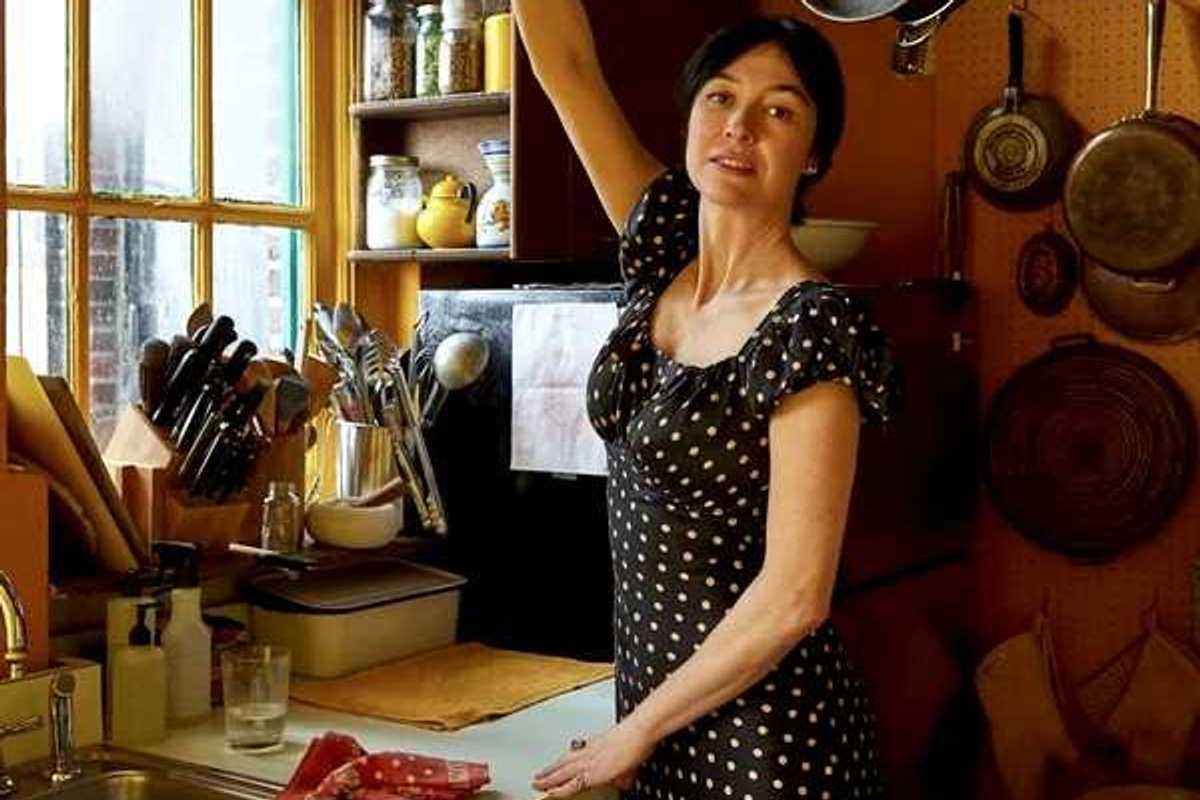
In her new memoir, “Desire Feeds the Feast,” writer Tarajia Morrell traces a life shaped by an appetite for beauty, pleasure and belonging. On Saturday, Oct. 24, Morrell will discuss the book with fellow author Dani Shapiro, whose works include the memoir “Inheritance” and the novel “Signal Fires,” at a prerelease event at Troutbeck in Amenia. Published by Zibby Books, a women-led startup, “Desire Feeds the Feast” will be released Nov. 3.
Described by author Chris Pavone as “a deeply gratifying emotional feast of a memoir: poetic, dramatic, romantic, atmospheric, sensual, evocative, poignant, heartbreaking, heartwarming,” this tale brings readers on a restless journey. Morrell writes of the “electric excess” of the New York City club scene in the late 1990s and the Hollywood tables where she waited on celebrities while pursuing her acting career. Her wanderlust took her to the beaches in Uruguay, where she discovered the “brine and brightness” of ceviche, the splendor of Barcelona’s food markets and, back home, the simple pleasure of a ripe plum eaten by her “graceful mother.”
Her family founded fine wine mecca Morrell & Co., a fine wine destination in New York City. “I grew up in a family where the next meal was an ever shifting, but constant lodestar, where the pleasures of the table were paramount.”
Morrell is currently the communications director for Troutbeck and Litchfield’s Belden House & Mews. She continued, “I’m finally doing what I want - writing about characters through the lenses of food, wine, and travel, and helping specialty hospitality brands and restaurants to grow.”
Morrell explains, “Food is the metronome keeping the rhythm of my days, of my life. It’s the source of pleasure for the people I love most and hold dearest, my family. It is how we show each other love, and how we show love for friends. I find a meditative pleasure in the kitchen.”
Her friend, chef Gabe McMackin once wrote, “Tarajia, it is a privilege to work with you, to have your guidance, your enthusiasm, your thoughtfulness, your imagination and the love you put into all that you do. I feel fortunate to create things with you, but also to have your perspective on the world - to see the light and joy you bring into it as a part of our community and our lives.”
Morrell shares that her greatest pleasure is her daughter. “Just inhaling her, kissing her, making her laugh and sharing her with my parents and friends who help me parent alone. My mother is my absolute muse. She is incredibly strong. Her strength comes from steadiness and consistency. I hope that I’m passing that on to my child. Gathering at a table with the people I love. Love, loss, appetite, motherhood, home, friendship. To me these are the crux of everything.”
Morrell, a native New Yorker, co-authored “Savor: A Chef’s Hunger for More” with Fatima Ali. The book won a James Beard Award and was named one of Oprah’s best books of 2022. She also wrote “Soul of New York: A Guide to 30 Exceptional Experiences.” Her food and wine writing has appeared in publications including WSJ Magazine, Food & Wine, Departures and Cherry Bombe.
Shapiro lives in Litchfield County and has written 11 books. She is the creator of the podcast “Family Secrets.” Her novel “Signal Fires” and memoir “Inheritance” won National Jewish Book Awards. Her work has been published in 14 languages.
For tickets to the book talk on Oct. 24, visit
troutbeck.com.
Berkshire Mountain Distillers is bringing brewery vibes to Sheffield
D.H. Callahan
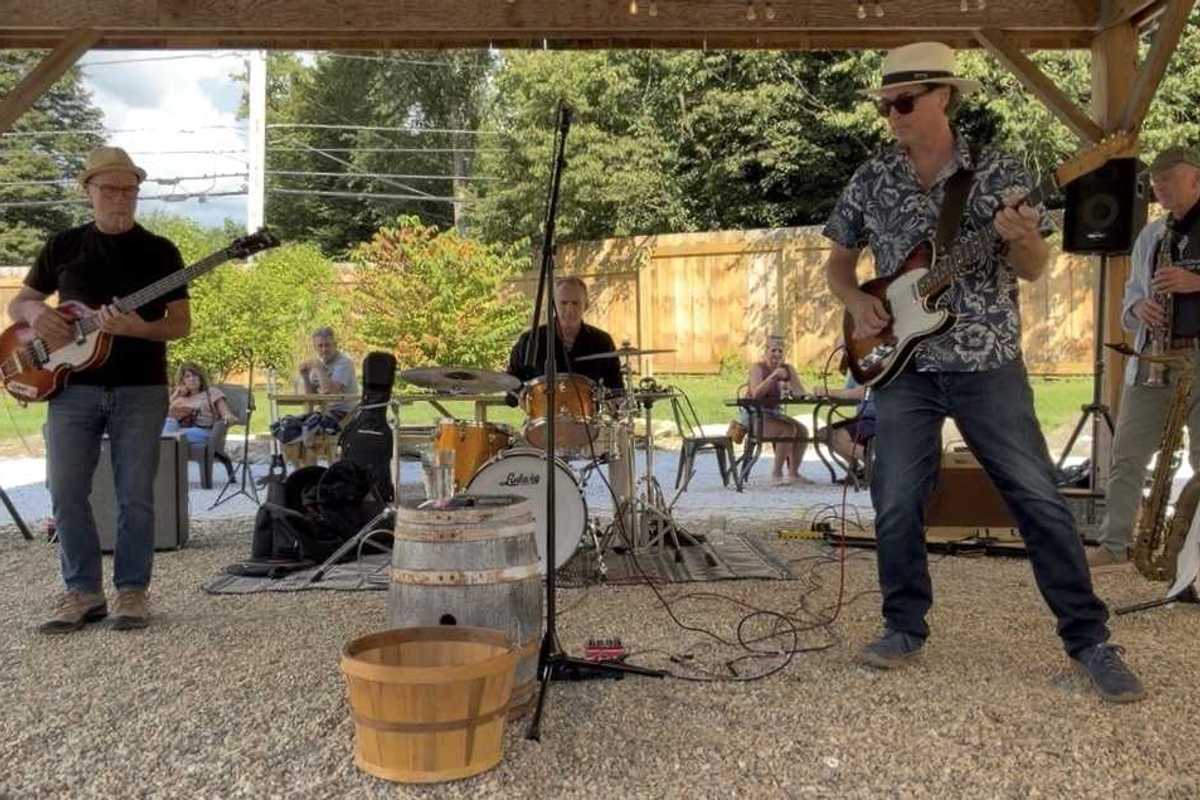
Mike Cobb and the Crevulators at Berkshire Mountain Distillery.
Almost 20 years after Chris Weld first opened Berkshire Mountain Distillers in Sheffield, Massachusetts, he’s expanding his offerings yet again. This time, he’s bringing the beer.
When Weld opened his distillery in April 2007, it was a bit of a risk. Nobody had distilled spirits in the area since Prohibition. Fancy cocktail culture was just emerging in major cities and alternative urban centers. The craft distilling market had not yet matured to its eventual level of popularity.
Nonetheless, the distillery was impressing casual tasters and critics right away. Its fresh granite spring water helped ensure ideal distilling conditions for its bourbon, vodka, gin and rum lines. The distillery won all sorts of awards, and their Greylock Gin was named one of the best craft gins in the country by the New York Times just five years into its run.
Making an exceptional spirit is one thing. Getting the average customer to try it is quite another. Weld estimates that maybe 50 craft distillers operated in the United States when he opened his doors. Today, following a dramatic post-pandemic spike in 2023, the American Craft Spirits Association estimates there are just over 2,000 craft distilleries in the country. That’s a lot of competition.
Berkshire Mountain Distillers (BMD) has done a lot to distinguish itself in an increasingly crowded market. It has released limited runs, like its Smoke and Peat series, in which whiskey and rum are aged a second time in used barrels from Scotland. Its Cultural Cocktails program saw BMD team up with local arts institutions like the Clark Art Institute,, Berkshire Botanical Garden and the Mahaiwe Performing Arts Center to create custom cocktail recipes inspired by the venues.
In 2021, BMD introduced the Craft Brewers Whiskey Project, partnering with regional breweries to distill their beers into whiskeys. The project has seen BMD collaborate with a dozen breweries, including Sam Adams, Two Roads in Stratford, Connecticut, and Big Elm, just down the street from the distillery in Sheffield. That first year, Smoke & Dagger Whiskey, BMD’s collaboration with Massachusetts-based Jack’s Abby Craft Lagers, won a gold medal in the beer-distilled whiskey category at the U.S. Open Whiskey and Spirits National Championship.
Unfortunately, their friends at Big Elm closed down their brewery and beer hall earlier this year, leaving a hole in Sheffield’s social scene. Weld decided to pick up the slack by making the distillery experience more like that of a neighborhood brewery. He brought in games, created a seasonal food menu, added seating to the tasting room and started booking musicians to play free shows on Saturday afternoons. There was only one thing missing: the beer.
After mastering the crafts of distilling and cannabis cultivation — Weld is also co-founder of local cannabis dispensary, The Pass — odds were good that he’d brew a pretty choice beer. But as is frequently the case when navigating regulations surrounding alcohol and cannabis, the seemingly endless and sometimes illogical red tape proved difficult to overcome in the short time Weld had before summer. So he tapped back into his partnerships, asking some of his brewery collaborators to help with his first beer releases.
So far, working with partner breweries, BMD has created three beers: an IPA, a hazy pale ale and a lager, with a hefty brown ale on the way. Many early consumer reviews rank their available varieties above four out of five stars on the beer-rating website Untappd. Until now, the beers have been available only at the distillery, but bottles will soon be available to take home.
Weld is thrilled to send customers home with bottles of his spirits and his beers, but this time, the main goal seems less about setting a brand apart from the competition and more to creating a space for locals, weekenders and, yes, even leaf peepers to gather, enjoy Sheffield and its people, and sample the fruits of Weld’s many labors.
To learn more about Two Lanterns Brewery and Berkshire Mountain Distillers, visit berkshiremountaindistillers.com.
Want more of our stories on Google? Click here to make us a Preferred Source.