Racial friction,
Such a blight;
Still no peace,
Or end in sight.
Well, thank goodness Don Imus is back. Bigotry suffered a nasty blip while he was gone. But Big Radio, well aware that there is money in racism, hastened to reinstall him to spread ethnic animosity around the nation at the speed of sound. Both Joe Lieberman and Chris Dodd are also relieved to see him at his old stand. Their guest spots make plain that they can politic comfortably in the land of the mean. That's a big constituency.
And now stirring further turmoil along the color line, Richard Nisbett, a Michigan professor, has gathered up all the old studies and concluded that the difference in I.Q. between blacks and whites is totally caused by environment. Heredity has nothing to do with it. What an annoying finding! It imposes some unpleasant moral pressure on society to equalize opportunity.
Now that's a tough assignment. It could mean integrating schools. But luckily the Supreme Court has just ruled that we don't have to do that. And the iron laws of economics similarly allow us to keep poor people segregated geographically forever. That limits their access to equal education and to that hallowed, if tainted, goal - middle-class values.
Criminal justice, too, is very useful in keeping minorities out of our hair. Selective enforcement serves to hold a huge portion of them in jail or other related subservience. It similarly limits the chances of their kids in achieving mainstream success, thus reducing competition with our own flesh and blood.
u u u
But in life nothing is simple. Even as we palefaces savor this pleasing system of keeping non-whites in their place, demographics intrude. Those perverse non-whites, especially the Latinos, keep having more babies than we do. The Census Bureau has just reported that in 2006, 10 percent of U.S. counties had acquired non-white majorities. Give me a break! They're taking over our country through the delivery room!
Well, yes. And in case it makes you feel any better, it's happening in Europe, too. While our own white birth rate is just maintaining equilibrium, over there it's dropping.
Plus, ethnic repression is common in Europe, too, striving to restrain everyone to their own proper spot in the social order. Riots, especially in France, sometimes ensue. In the United States we've transcended riots for the moment, allowing the drug trade to serve as our safety valve for upwardly mobile energy.
u u u
Still, despite the care with which we have constructed our segregated society, there are always glitches. Education is a big one. Both Stamford and Norwalk, booming cities these days, have held their overall minority numbers at around 25 percent, but their schools run 50 percent. Plenty of tension over that.
Especially for white parents who, "for the kids' sake" feel pressured to move to the suburbs or to spring for private school. You don't hear much about that stuff in the press, however. No one wants to rock the boat on such a toxic topic.
But what we do hear about the big cities, like Bridgeport, Hartford and New Haven? Their schools are over 90 percent black and Latino. This foments integration lawsuits which the non-white plaintiffs often win, but for which there is no practical remedy.
So in the end segregation is here to stay, both educational and residential. Blacks will continue to be jailed eight times more often than whites, and Jim Crow incidents like Jena, La., will sprout periodically out of all this racist soup. So, too, will Don Imus and his peers continue to pollute life's melting pot, emitting foul smelling commentary. Unfortunately, they won't be skimmed off until the human ingredients of that brew learn to form a more perfect union with one another.
Columnist William A. Collins is a former state representative and a former mayor of Norwalk, Conn.

 Pay Bill for Robin Starr’s service in the Continental Army.Courtesy the Alex Breanne Corporation
 John Mills speaking at Quinnipiac University.Courtesy the Alex Breanne Corporation
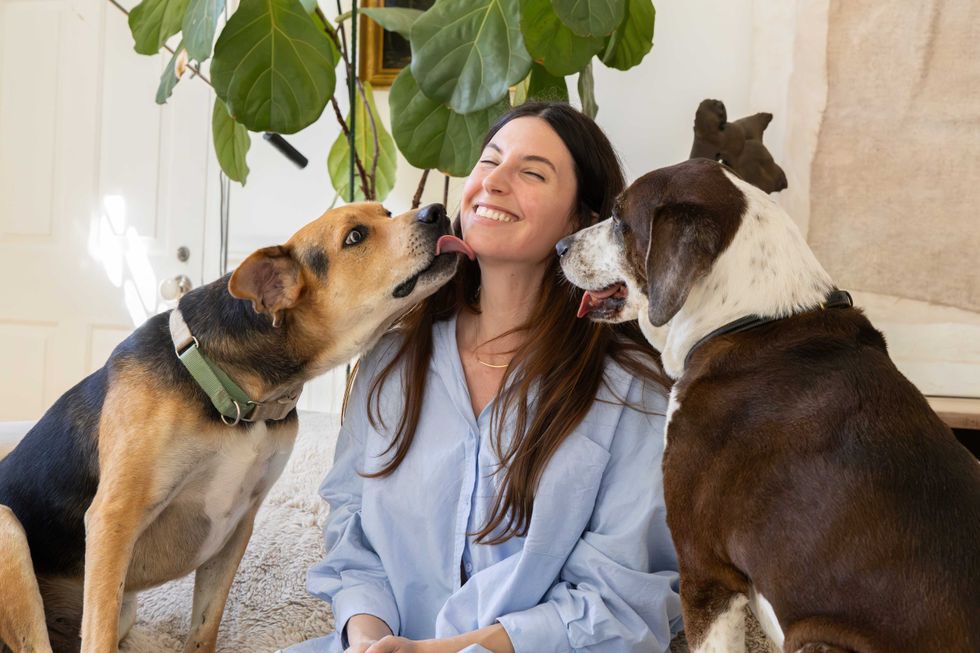 Stephanie Saetta,with her rescue dog George and Blue (left), a shepherd mix awaiting his forever home.Madi Long
 Blue, a 7 year-old Shepard mix, is waiting for his forever home. Madi Long