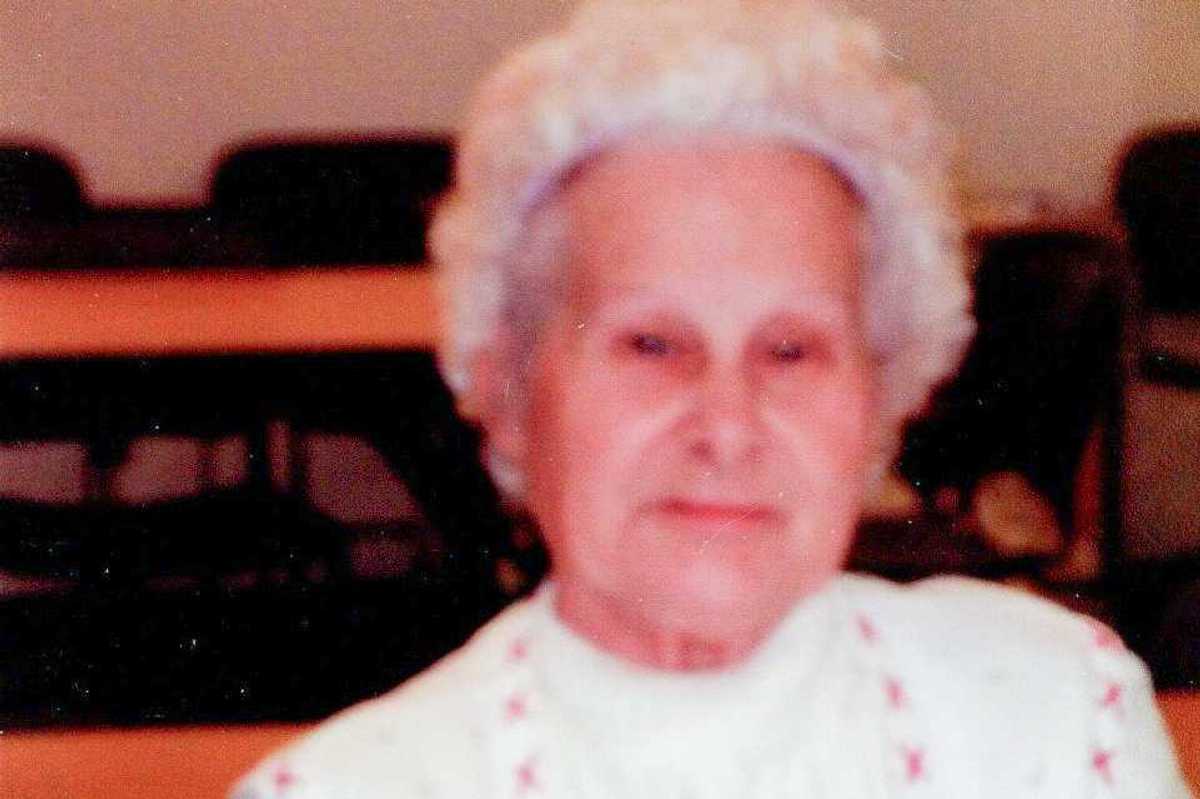
SALISBURY — The Lakeville Journal Co. lost a guiding light and source of constant inspiration with the death of Mary Lou Estabrook on May 3 at the age of 89.
A memorial service will be held Friday, May 28, 1 p.m. at the Salisbury Congregational Church. A full obituary is on page A2.
Mary Lou had been weakened by ailments in the past year but she remained vigorous, feisty and active in spite of it, even attending a broadcast of the Metropolitan Opera at the Mahaiwe Theater this spring, with her devoted husband, Robert Estabrook, steering her along in her wheelchair.
“She and Bob represented the very best of the tradition of community journalism,� said Conn. state Sen. Andrew Roraback (R-30). “Their work informed the public, engaged their readers in the important issues of the day, celebrated the people and places that make northwest Connecticut special and served as a sounding board for people to share ideas and opinions.
“But at its core, The Lakeville Journal was always shaped by the values embodied by the Estabrooks’ integrity, compassion and a commitment to serve the community.�
“We will all miss Mary Lou deeply,� said Lakeville Journal Co. managing partner A. Whitney Ellsworth. “She had spunk, she made her opinions known, she was a perfect partner to Bob and a great photographer.�
“She was a sweet and gentle soul whose photographs captured the spirit of the Northwest Corner,� said William E. Little Jr., chairman of The Lakeville Journal Co. “People had great respect for her and she was a wonderful partner and support for Bob.�
At home, at last,
in Lakeville
A peripatetic traveler, Mary Lou visited all corners of the globe with her husband. But Mary Lou was a small-town girl at heart, who cherished simple but profound treasures: her husband, her children (and their children), music, art and nature.
After Bob retired from a long career at The Washington Post, he brought his bride (as he always referred to her) to the Northwest Corner, where they spent their “retirement� facing the challenges of running small-town papers: The Lakeville Journal and The Millerton News.
Mary Lou was always soft-spoken, kind and gentle but at the same time she expected (and attained) a high level of performance from those around her, in all the many activities that interested her.
An artist’s eye
Anna Mae Kupferer, who has worked for the papers for more than three decades, recalled the meticulous attention Mary Lou would give to shooting images and then selecting just the right one to include in the newspaper, the supplements to the paper and the annual calendars.
“Mary Lou’s photos were painstakingly selected,� Kupferer said. “She shot rolls and rolls of black-and-white film, which she would process in the on-premise darkroom. Hours would be spent selecting just the right photo to accompany each story and making sure each print was perfect.�
As a newspaperwoman in the pre-digital age, of course she most often shot in black and white, which could be quickly developed and printed at the newspaper office and then reproduced on the newsprint pages.
Marsden Epworth, who is editor of the Compass arts and entertainment section and The Journal Co. supplements recalled that, “For many years, Mary Lou was The Journal’s chief photographer, which meant, among other things, teaching people who had never had a camera before how to do the job.
“And one way she did this was by example. She had what every shooter needs: patience and tenacity. For an issue that fell near Father’s Day, back in the 1980s, she brought in a photograph of a dad bundling his offspring into a jacket outside Salisbury’s pharmacy. It was just a tender, tiny moment, but she caught it perfectly. That’s because she had stood on the street for more than an hour, waiting for the moment.�
Scott Heth is director of the Audubon Center in Sharon and, like many other nature lovers in the area, he remembers how minutely attentive Mary Lou was to changes in the landscape.
“My earliest recollection of her was through Audubon,� he said. “She was always carrying a camera and always capturing the wonders of nature on film; and the reports to me of what she had seen around town, where the flowers were blooming and what interesting wildlife she had seen, and encouraging me to let others know too.�
But, he said, “When I really got to know Mary Lou was during the years I was the director of the Salisbury Band. I remember the first rehearsal I conducted, not knowing what to expect and quite nervous. Bob and Mary Lou came through the door all smiles and Mary Lou immediately came over and welcomed me and promptly took her place in the flute section. Rehearsal after rehearsal and performance after performance Bob and Mary Lou, together, shared their talents and passion for music with the Salisbury Band, and consistently supported me and the members of the band with compliments and words of encouragement. This I will never forget.�
No false notes
It wasn’t only the Salisbury Band that benefited from Mary Lou’s involvement. She was also a member for several years of the Salisbury Bell Choir, not only for the music but also because of its complexity.
“She was intrigued by the manner in which bell music is played, since it is so different from reading an orchestral score,� said Mary Davidson. “She was meticulous in marking her music for her assigned notes. On several occasions she accompanied the bell choir with her flute.�
Lee Collins, former director of the Salisbury Band, said that Mary Lou played the piccolo for the local group but played the flute with the Torrington Symphony.
“We alway end our concerts with ‘Stars and Stripes Forever,’ with its famous piccolo obligato,� Collins said. “It’s a demanding piece, a showcase piece. It was Bob who told us that, you know, the Torrington Symphony did ‘Stars and Stripes Forever’ and of course Mary Lou did the obligato.
“I mentioned it to Mary Lou and she commented later that the one the Salisbury Band plays is in B flat and the one that Torrington plays is in A flat. In other words, she had to play the whole thing in a different key. It was a tour de force to be able to play a difficult piece like that in two different keys.
“She was a faithful member and always in good humor and ready for everything.�
No matter what endeavor she was engaged in, she certainly always was ready for anything. And those skills were tested. She and her husband shared an indomitable spirit and a can-do attitude. They traveled often, to distant points of the planet, and coped with whatever circumstances nature and world politics thrust upon them. She and Bob recounted their travels and travails with great modesty, always.
‘A great woman’
Of all the comments that community members shared about Mary Lou this week, perhaps the one that best sums her up are the words Scott Heth uttered when he heard of her passing: “She was a great woman.�
“Obviously, her photography was fantastic but she was also a very careful, thoughtful person, and a real good friend,� said Salisbury resident Carl Williams.
Conn. state Rep. Roberta Willis (D-64) said, “Mary Lou always greeted you with warmth and a welcoming smile. She was a soft-spoken, gentle woman who spoke compellingly through her photographs, revealing her affection for her community.�
Sen. Roraback also commented that, “While diminutive in stature, she was a giant in every other way. With a twinkle in her eye, her warm smile and gentle way accompanied a drive to achieve and contribute to the life of our community and our state.
“Mary Lou’s hallmark remains her love of life, her love of her husband of so many years and her love of learning and exploration. Her curiosity never subsided and she shared freely of the joy she drew from learning. She and Bob were the best example I know of a couple who complemented one another completely.�

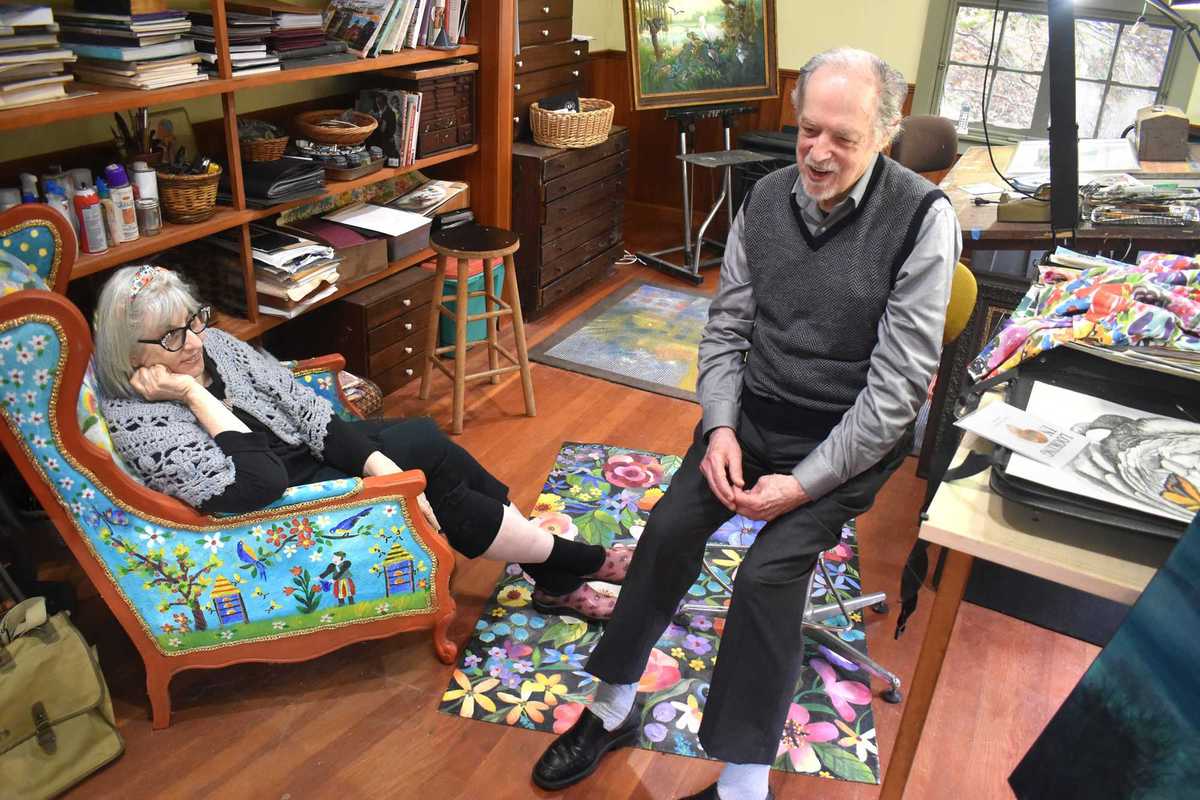
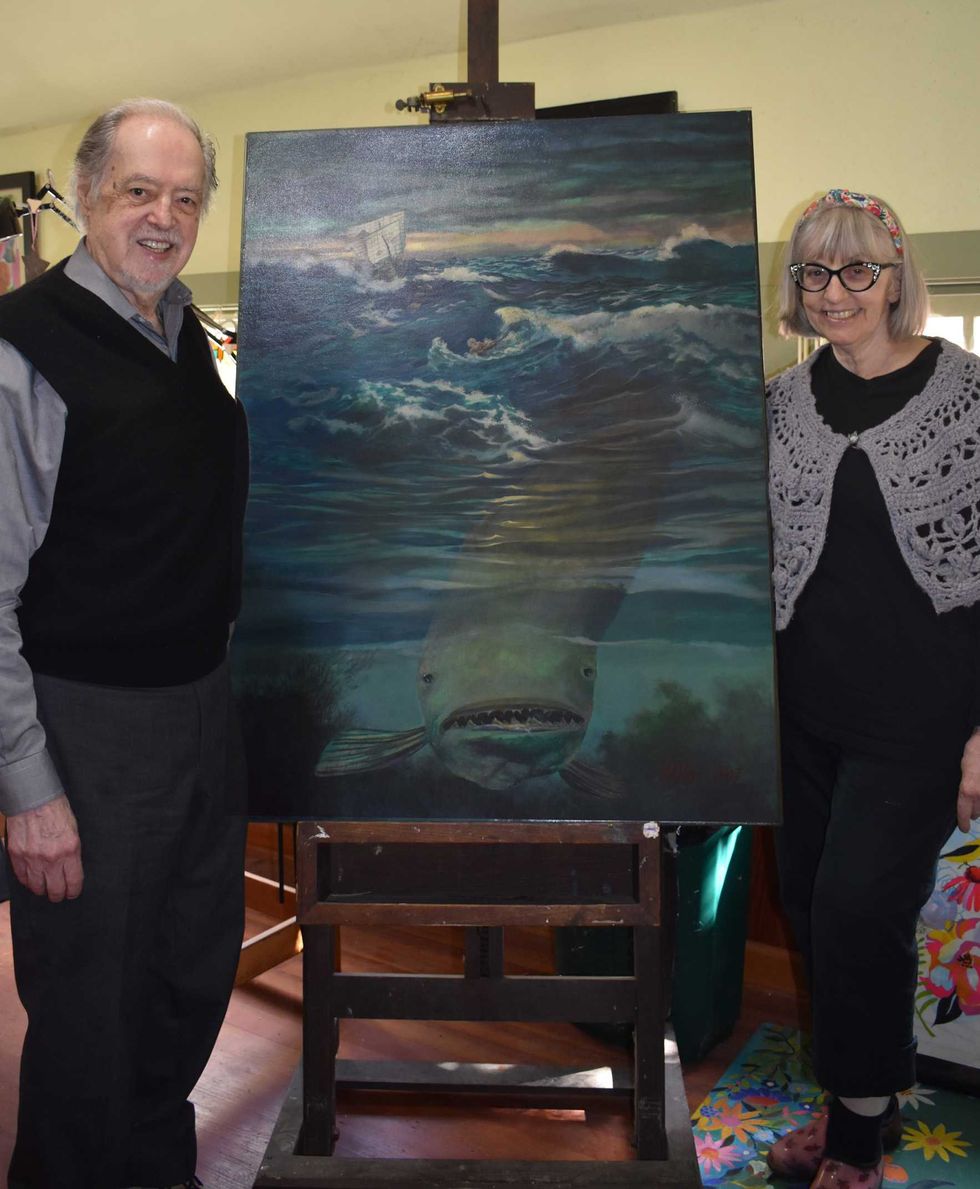 Justine and Victor Valla in their studio with a painting of Victor’s,”Jonah and the Whale.” Robin Roraback


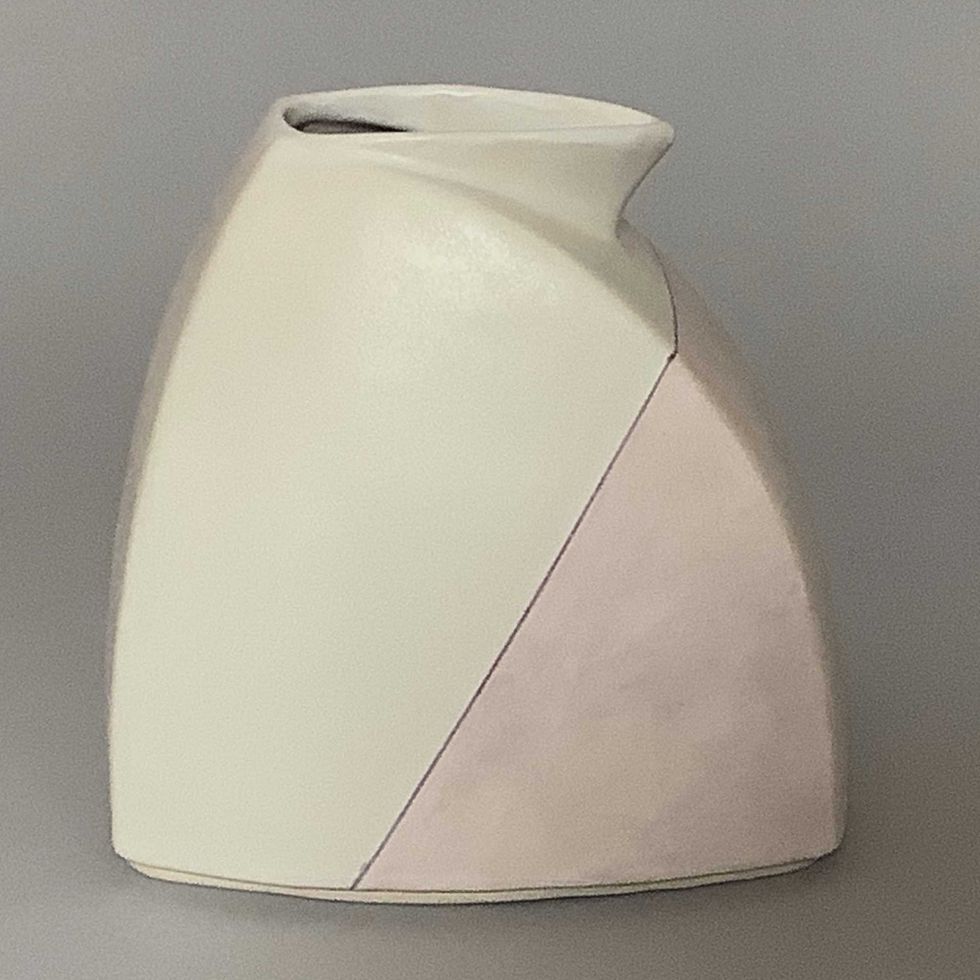 A ceramic vase by Kathleen Heidemann.Provided
 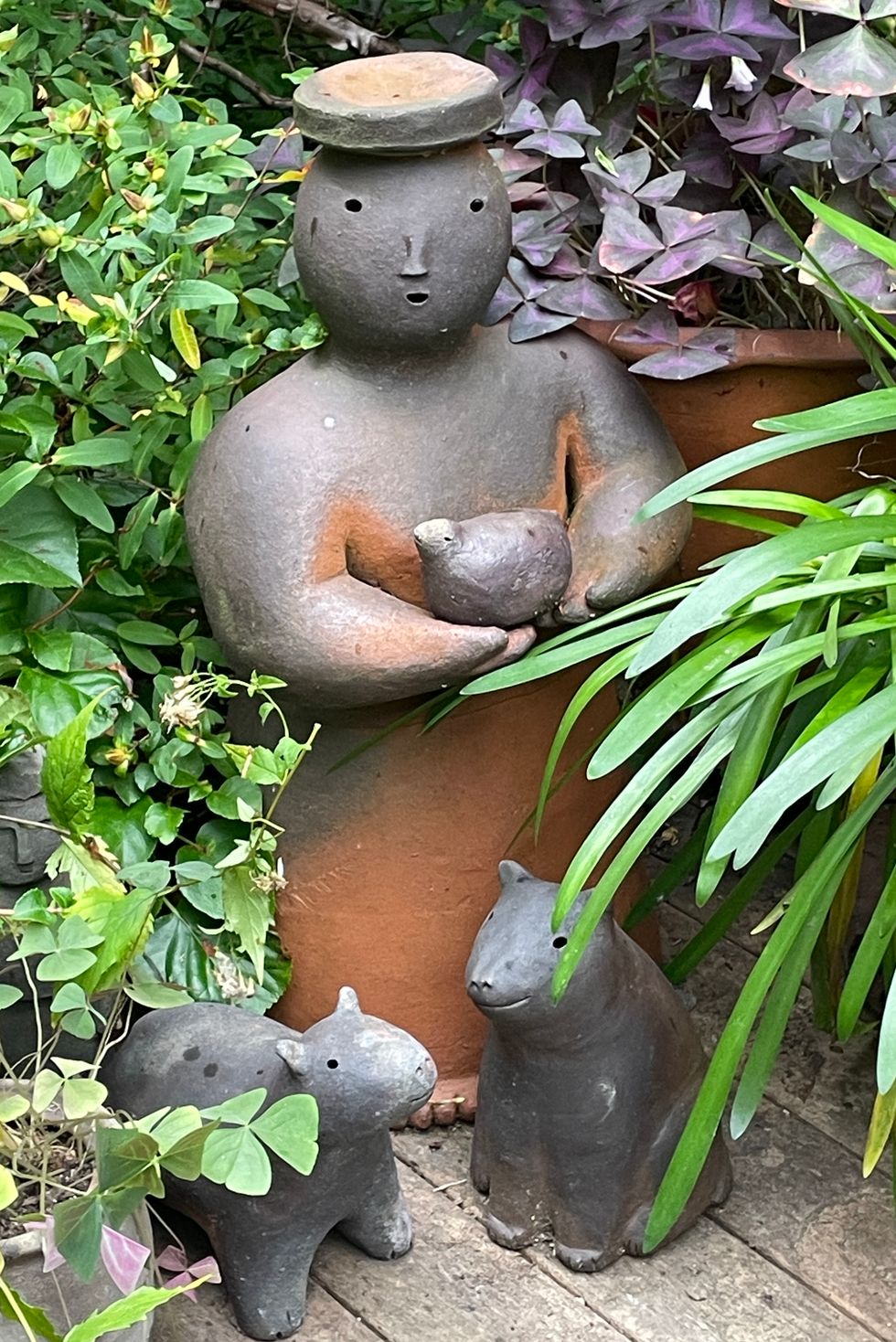 Joy Brown’s delightful ceramic sculptures.Provided