

I’ve always been intrigued by animal communicators. There are lots of things we don’t know about animals, and even if they don’t write novels, they have their own ways of transmitting thoughts and feelings. So when the trainer told me that Katie, my challenging three-months-old puppy, might be intractable, and asked if I’d like to see a communicator who also did reiki, I was in.
I’ll call the communicator Julie. I called, and told her about Katie, adorable but difficult. Adorable, with her bright eyes and curly tail, bounding into the library, my socks in her mouth. Adorable, as she tenderly licked my husband’s face while he dissolved in laughter. Difficult, when she defied commands, when she growled and lunged and snapped. So difficult that the trainer had advised a severe punishment: “bonking,” or hitting her on the head with a rolled-up towel. She said this might save Katie’s life.
I told Julie about Katie’s misbehavior, and sent her a video of her lunging and snapping. Then, nearly in tears, I told her the worst. “She doesn’t love me.”
Julie gave me an appointment. The night before I wondered about Katie’s interior life. Was she really intractable? Was I overreacting? But why didn’t she snuggle? Why didn’t she wag? I knew I was never going to hit her on the head with anything.
Julie lived in a nearby town on a busy road. The traffic frightened Katie, and I had to pull her across the yard. We both arrived in a state of high anxiety, Katie from the cars and I from the fear that Julie, too, would find Katie intractable.
Julie was a calm, pleasant woman in her thirties, with long soft fair hair. She welcomed us into a big open room, sparely furnished but thickly carpeted. Julie sat down on the floor and Katie stretched out beside her. “Lie down” was a command she never obeyed, but now Katie lay flat, eyes open, body still.
Julie began to pass her hands over Katie, not touching her, as though she were stroking her in the air.
“Can you tell me what you’re doing?” I asked.
“Reiki,” she explained. “I’m gathering energy from the atmosphere and passing it into Katie’s body. She’s very receptive.” Julie closed her eyes.
After a moment she said, “I’m getting a big personality here. Very big.”
I knew that, but it was good to hear it.
After a moment Julie smiled and shook her head.
“This is a funny dog,” she said, “very funny.”
I was startled. I knew that, too, but how did Julie know?
Katie had done nothing funny here.
I asked what she’d thought about the video of Katie lunging and snapping. I held my breath: would she say ‘Intractable?’
Julie shook her head dismissively. “Puppiness.”
She stroked the air. Katie, who was never motionless, was motionless.
“She says she’s different from your other dogs,” Julie said.
I knew that, too.
“Why does she snap at me?”
“Excitement,” Julie said. “This is not an aggressive dog. She’s just excitable. Has she ever bitten you?”
“Never,” I said. “She tore my parka, but by mistake. She grabbed my bathrobe. She’s touched me with her teeth, but never bitten.”
“She wants to play.”
“How are you getting the answers?” I asked. “Are you thinking questions in sentences? Do you hear a voice in your mind? Do you see words? Pictures?”
“All three,” Julie said. “Sometimes I’ll get a word. Sometimes a strong feeling. Sometimes an image.”
“What about the coyote?” I told her about the midnight encounter, how frightening it was, how casual Katie had been.
Julie closed her eyes, then laughed.
“What did she say?” I asked.
“‘Oh, he wouldn’t have gotten me! Not with her there!’”
Great, I thought. I have a teenager who thinks she can drink and drive.
Julie stroked the air over Katie’s back.
“What are you telling her?” I asked.
“Don’t bite mom. Don’t bite mom. You can’t bite mom.”
Julie’s eyes were closed again. I waited.
“I’m getting something about singing,” she said. “Do you sing to Katie?”
I was startled. I did sing to her, but only when we were alone. I had never told anyone. In the car on the way to the vet’s or the groomer, I sang to comfort her. “K-K-K-K-Katie.” I sang, “Oh my Katie, oh my Katie,” to the tune of “Darling Clementine.” I sang an old lullabye that my grandmother — Katie — used to sing. I sang her name, over and over.
“I do sing to her,” I said.
“She likes that,” Julie said.
I was silent.
Julie looked at me. “Katie is your dog,” she said gently.
“She’s different from your other dogs, but she’s made for you, and you for her. You’ll learn from each other. She’s yours.”
I thought of the nighttime moment in the woods, when I’d thought of sending her back.
“She knows what you’re thinking, you know,” Julie said. I was mortified.
Finally I asked the most frightening question.
“Does she love me?”
Julie closed her eyes. Then she gave a little snort of laughter.
“What did she say?”
“She’s working on it.”
Katie was different. She had that big personality. She was funny. She liked my singing. And I was head over heels in love with her.
Copyright by Roxana Robinson
Roxana Robinson is the author of ten books, nine works of fiction and the biography of Georgia O’Keeffe. She lives in Cornwall. www.roxanarobinson.com

 Pay Bill for Robin Starr’s service in the Continental Army.Courtesy the Alex Breanne Corporation
 John Mills speaking at Quinnipiac University.Courtesy the Alex Breanne Corporation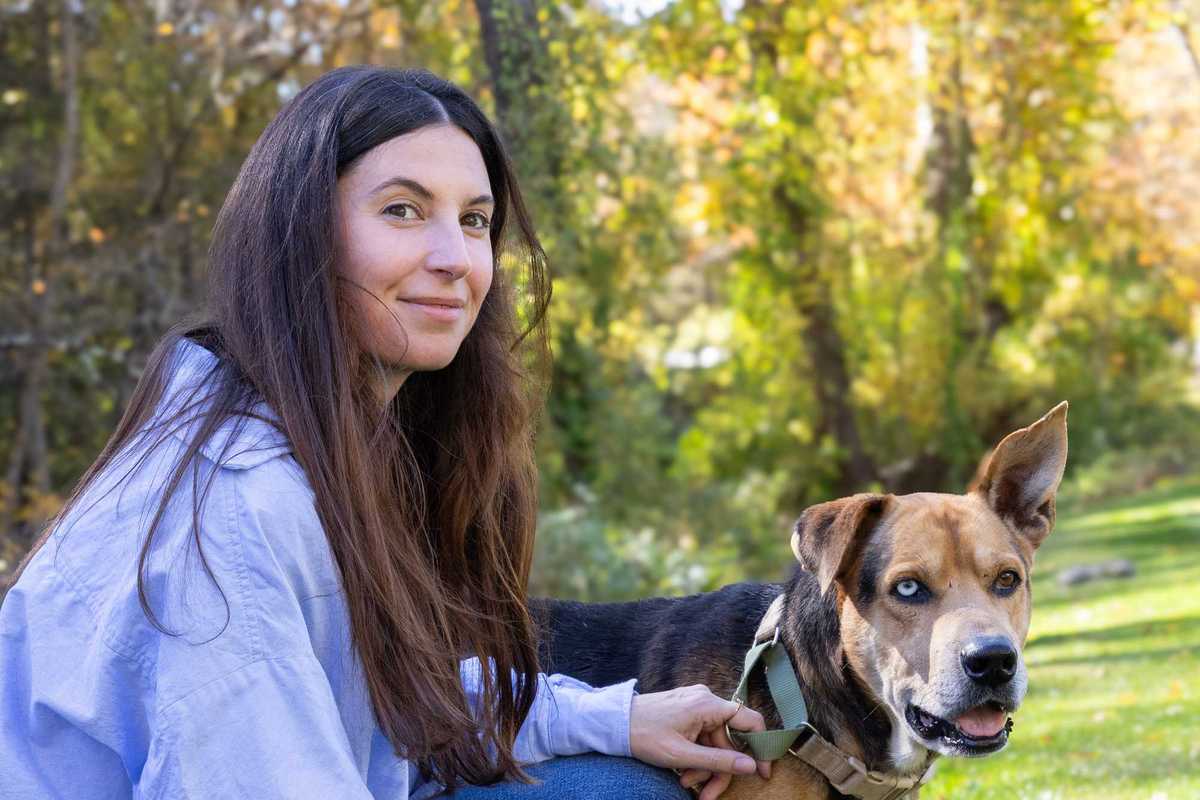
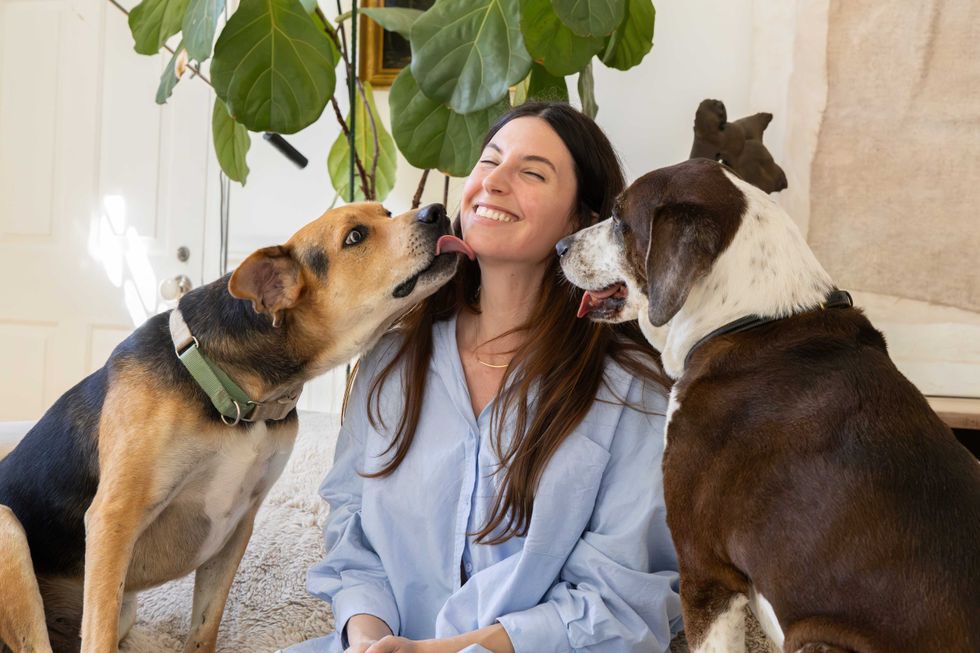 Stephanie Saetta,with her rescue dog George and Blue (left), a shepherd mix awaiting his forever home.Madi Long
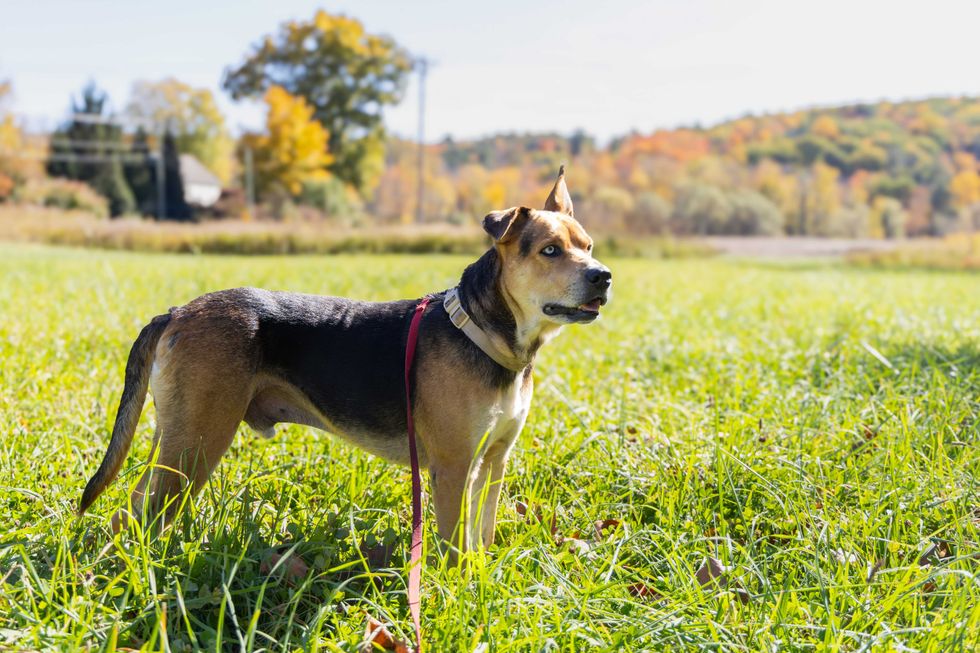 Blue, a 7 year-old Shepard mix, is waiting for his forever home. Madi Long










Communing with Katie
My Dog: Part Four