Article was wrong on easement treatment
The article (“A threat to a protected property,” Dec. 10) suggests that I have ignored the conservation easement on my land on Taconic Road. Nothing could be farther from the truth.
Please paste or type the following link into your internet browser to read my response. Alternatively, you can email me at jjkpcsc@gmail.com and I will email a copy to you.
We all are deeply concerned about the health of the West Lake and surrounding environment. My hope is that we can restore it to its natural condition, as it was 100 years ago before the railroad cut through.
Jeffrey J. Keenan
Salisbury
Stand proudly for the White House
During the War of 1812, British soldiers entered DC, burnt the White House in 1814, moments after Dolly Madison escaped with the famed Washington portrait. It is sometimes claimed that the White House was painted white to cover the fire’s scorch marks. Others say it is white because of the outer limestone seal applied at construction to prevent moisture damage. Regardless, all agree that Teddy Roosevelt colloquialized the fond name White House to distinguish this significant national treasure from numerous other Executive Mansions and the onerous, non-democratic title of Presidential Palace. The White House is also fondly called The People’s House.
“For two hundred years, the White House has stood as a symbol of the Presidency, the United States government, and the American people.” The official White House website proudly proclaims that the White House has a unique and fascinating history — globally recognized and revered. Jefferson invited all from his first inauguration to a White House open house which continued as tradition until Lincoln’s inauguration when crowds became too large to be accommodated. A stately house, the White House is our house of state.
In 2020, the White House has met a sordid fate, a sullying of her proud history. After centuries of extraordinary events and leadership she has been manhandled, defiled, defamed without regard or sufficient outrage. The White House is the pinnacle of American residences, the most recognizable American history museum has become the super spreader center of a ravaging pandemic, she has been commandeered to be a RNC campaign hub. The cherished rose garden dating back to Mrs. Wilson was uprooted to make room for 200 people sitting chair to chair, maskless. A federal property, the White House isn’t covered by DC mandated restrictions of social distancing and masking in public. Privileged outlaws and cash-strapped service personnel bump shoulder to shoulder — the former exhibiting their disdain for laws and public health, the latter making ends meet.
An elaborate public debate, a brouhaha, in May of 2018 took over the news ways, flooded social media as NFL players kneeled during the playing of the National Anthem at start of game. “You have to stand proudly for the national anthem. You shouldn’t be playing. You shouldn’t be here, Maye you shouldn’t be in the country,” Trump said. He said those taking a knee during the national anthem are maybe “deportable.”
What then about those who abuse the White House, who hang massive campaign swags on her honored brow, who convene huge crowds socializing without compliance to public health restrictions as an American dies every 35 seconds of COVID? Of course the White House is a splendid backdrop inside and out for photo ops, speakers, con artists and countless lies from behind the Presidential Seal.
An eviction notice has been issued to the current White House occupant. May the White House, our People’s House, again stand proudly, her honor restored.
Kathy Herald-Marlowe
Sharon
On the stewardship of easements
Residents of Salisbury and adjacent towns are privileged to live in a portion of the state that abounds with extensive areas of protected open space. These areas provide recreational opportunities, tracts of core forest, wildlife habitat, and maintain the pristine rivers, streams and aquifers of our region.
This network of protected open space and farmlands is the result of significant investments at the federal and state levels. Complementing, and adding tremendous value to these core protected areas, are lands that have been gifted, or had easements placed upon them, by individuals committed to the preservation of the natural beauty and ecological integrity of our region.
These easements are held by a variety of not-for-profit entities that serve as grantees including: The Nature Conservancy, Salisbury Land Trust, Housatonic Valley Association, American Farmland Trust, and the Weantinoge Land Trust.
Easements are a sacred, legally binding covenant between the grantor and the grantee. The grantor gives up certain rights, usually the ability to develop land, in exchange for a commitment from the grantee to be a steward of that land in perpetuity.
Often, in addition to the donation of development rights, the grantor provides an endowment to the grantee to offset the long-term costs of monitoring and stewardship of the easement. In some instances, the grantor receives a tax deduction from the Federal government. These deductions mean that the public has also contributed to the protection of these easements.
This morning (Dec. 3) John Harney Jr. was interviewed on Robin Hood Radio concerning the ongoing attempts to scuttle the storied conservation legacy of the late Mary Alice White. Mary Alice was a veritable tour de force, fighting for the protection of Salisbury’s rich and diverse ecosystems.
I take this quite personally, not only as an individual that worked with Mary Alice, but also in my professional capacity as conservation biologist, and as one of many individuals in Salisbury who donated development rights and funded an endowment for the stewardship of the donated easement.
Given these recent events, I am grateful that I chose the Housatonic Valley Association as the grantee, as they enjoy my full confidence that my wishes will be honored in perpetuity.
Sadly, not all grantees see their obligations as inviolate. If a grantee is unable to fulfill their stewardship obligations, the proper legal and ethical course of action is to locate a successor grantee to protect the land as the donor intended.
Michael W. Klemens, PhD
Lakeville
Fateful end for the powerful
Christmas is coming we can’t wait
Do your shopping before it’s too late
The tree is up and trimmed so well
I reached the star and added a bell
It’s a great time of the year
But we all must see clear
Evil lurks this Christmas time
With the powerful committing a crime
And abetted by those that some elected
They all must be corrected
And now we wait for that fateful date
When America plays it straight
And for one prison awaits
Michael Kahler
Lakeville
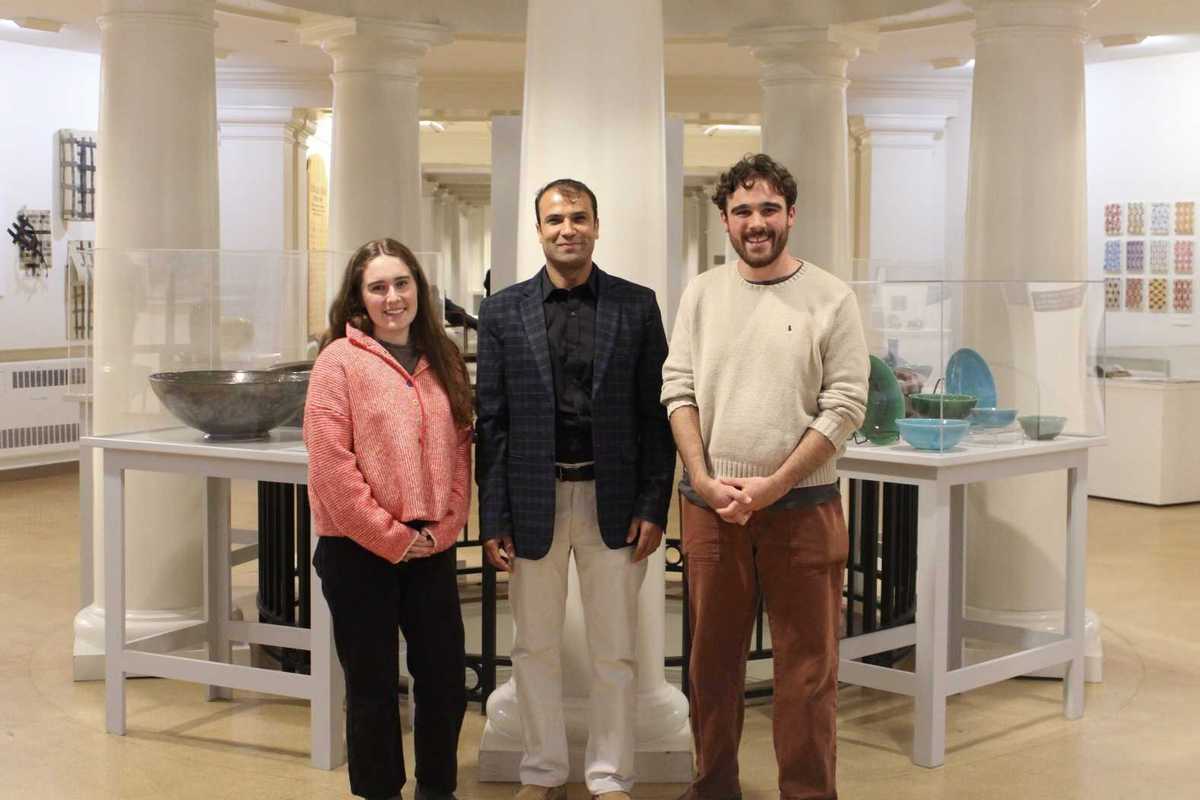

 Meg Sher, executive director of the David M. Hunt Library in Falls Village.L. Tomaino



 Samir LanGusProvided