Some thoughts on the Georgia runoffs
Recently (Carl Hulse , NY Times, Nov. 15) I learned why Georgia has runoffs, should no candidate win a majority in the first round: they were instituted in the 1960s by white Georgians to dilute Democrats’ voting power, because voter turnout is notoriously low in such little publicized by-elections, and especially so in democratic, urban and mostly Black areas.
Georgia did the right thing however, if for suspect motives.
Runoffs are commonplace in democracies and in the U.S. in many, mostly local elections, as well; just, mysteriously, not in our most important ones; in those we continue to use that old “First Past The Post” (FPTP) — a horseracing term - British election system, which is only still used in former British colonies, the U.S. included; it is a stealthy democracy killer, enabling minority government and aspiring autocrats. Not just here: in the UK, the pro-Brexit Conservatives in their “landslide” 2019 victory won only 44 percent of the popular vote, but they took 56 percent of the seats in the House of Commons. Had it been a referendum, or an election with runoffs demanding a majority, not just a plurality, the Brexiteers would have lost. No wonder New Zealand has abandoned FPTP, as have other British-influenced state legislatures, pressured by their fed-up voters; Northern Ireland, Scotland and now Wales as well.
Ranked-Choice-Voting is an instant runoff method, used by Maine since 2018 in congressional and presidential elections. Instant, Ranked-Choice-Voting is of course much cheaper than second-round runoffs Georgia style, and that without the drop in voter turnout.
Runoffs ensure that the candidate acceptable to the majority of voters wins. Runoffs respect the will of all voters, also of minor third- and fourth party voters, whose votes so often have corrupted the outcome of presidential elections, most notably in 1992 when Ross Perot got 18.9 % of the vote but not one Elector; in 2000, when Ralph Nader’s 4% in Florida doomed popular vote winner Gore, and in 2016, when two other vainglorious candidates took just enough swing-state voters away from popular vote winner Clinton to make Trump president.
In the 2020 presidential race we got lucky again. No third party candidate mattered. Without some reform of election procedures we may be in trouble again next time. Reforming the Electoral College — by for instance assigning electors proportionally — or abolishing it altogether may be difficult, but runoffs are totally uncontroversial, can be decided on state by state, without congressional or constitutional approval. Maine and Georgia did it. Kind of a no-brainer.
Fritz Mueller
Sharon
Trestle deserves analysis
In response to the recent letters and articles in The Lakeville Journal we would like to voice our support for Mr. Keenan’s effort to remove the old railroad bed from the lake.
Although Mary Alice White may have had good intentions when she established the property with conservation covenants, we don’t think she’d be happy with what had happened with the lake portion of her property. We have seen the condition of the area around the trestle become completely clogged with vegetation, almost to the point that it is no longer a water body as much as a land mass. In addition to the invasive plant growth, the trestle itself is a physical hazard. Boaters not familiar with the lake have damaged their boats on existing piling and most of us have had our propellers clogged with masses of weeds. But most importantly, the trestle has changed the natural flow of the water in the lake, limiting the natural cleansing and removing of sediment out through the Schenob Brook-Twin Lake ecosystem.
West Twin Homeowners: Nancy and Rudiger Stoer, Sharon and Steve Klein, Kathy Droesch, Al and Rhea Higger, Mary Kay and Kyle Pero and Kate Spaziani and Alex Reid
Taconic
What would Dr. Mary Alice White do?
As a relatively new homeowner on LakeWashinee, I read with considerable interest the articles and letters published in the last two issues of The Journal about the evolving controversy regarding the lake restoration project proposed by Mr. Jeffrey Keenan(who generously has offered to fund the project as well). As in all controversies with potentially significant community impact, successful resolution is greatly enhanced by clarity about what is actually in dispute, be it objectives or ways to achieve those objectives. Just as confusion over means and ends diminishes the likelihood of successful resolution, so does excessive emotion. Cool heads make better decisions. As far as controversies go, we had an inauspicious start. The lead-off article in the December 10th issue incorrectly framed the dispute as “over whether it’s acceptable to ignore a conservation easement” and wrongly claimed that Mr. Keenan had done just that with respect to an easement established 30 years ago by Dr. Mary Alice White. A letter published in the same issue turned up the emotional heat with rhetoric like, “Easements are a sacred, legally binding covenant...” and asserting that there have been “ongoing attempts to scuttle the storied conservation legacy of Mary Alice White.” Fortunately, an expanded article in last week’s Journal corrected these erroneous allegations. Mr. Keenan’s actions to date to maintain his property appear to fall squarely within the easement’s covenants. Furthermore, it would appear that Keenan’s Lake Washinee restoration proposal would, if implemented, enhance and extend Dr. White’s conservation legacy. However, on that point reasonable people may disagree.Was Dr. White’s primary objective to optimize the health of the lake and its immediate ecosystem using means supported by contemporary state-of-the-art environmental science? Or was her goal to leave forever untouched “a manmade structure like a railroad causeway,” as one opinion writer characterized the ostensible object of the controversy in last week’s Journal. We live in hyper-polarized times; it has become all too common to obfuscate controversial issues and to demonize those with whom we disagree. In the coming months, in our small corner of the world, on an issue concerning the best means for achieving an ultimate objective about which there likely is widespread agreement, we have the opportunity to demonstrate respect for facts and civility toward those with whom we may disagree. Let’s not squander that opportunity.
Don Ronchi
Salisbury
West Twin Lake is changing, needs attention
As a 22-year old returning from my junior year abroad, I can remember discovering and exploring West Twin Lake (WTL), where I felt incredibly close to nature. Today, as a 47-year old father, I find myself enjoying the lake with my eight-year-old twin daughters, but it’s changed. Last summer I heard vague details about the proposed intriguing causeway project, reminding me of the narrows below the gazebo showing an increased rate of weed growth, and silt and/or biomass build-up. I’ve not met causeway owner Jeffrey Keenan, but I find the hostility towards him and this project premature and unfair considering his approach appears to have been slow and methodical. Recently I listened to a thoughtful project presentation and read supporting materials. Subject to doing no lasting harm to plant and animal species in adjacent wetlands, I support the project notwithstanding the conservation easement aspect of the project, which would need to be appropriately handled.
The causeway is a pinched bottleneck in the Twin Lakes system from the NE corner of East Twin Lake to the Taconic Road dam. In addition to the low water level, my family, neighbors and I have been concerned by the deterioration in WTL’s health. I’m no limnologist, but I’ve observed WTL plagued with more widespread and thicker weed growth, lily pads and their alligator-like floating root systems, impacting swimming and boating. The TLA and their partners have done admirable work treating and harvesting weeds, but the rate of growth and biomass accumulation appears not to have abated, especially around the narrows. Therefore, I find the opportunity to partially remove the causeway an intriguing opportunity to improve the lake’s health and long-term viability by improving water flow and reducing ‘build-up’. Experts should study this.
I respect the conservation easement, but I believe amendments can narrowly be pursued under certain circumstances, including when no personal gain results. During its construction, this man-made causeway must have violently disturbed adjacent wetlands, so parties should consider the merits of conserving this section of man-made causeway versus partially opening-up this section of WTL. Mr. Keenan’s offer to undertake this project is generous by any measure, and I cannot see any resulting personal gain since he already enjoys wide-open western views of Mt. Washington and expansive lakefront frontage. TNC would also vet this. This has also not been stress-free or inexpensive for Mr. Keenan. I am hopeful there is a way to protect the integrity of the conservation easement and avoid setting bad precedent, while allowing the modification. Ideally the removed causeway acreage would remain protected. Thoughtfully handling the conservation easement would carry a lot of water for those who’ve preliminarily vocally opposed the project. It would also allow community members on both sides to win and come together; important for our small community. Should you be so inclined, now is the time to respectfully and thoughtfully speak-up in favor of the proposed partial removal of the causeway along with any proposed conditions.
Happy holidays.
Eric Stoer
Salisbury and New York, NY
Support your local libraries
Canaan’s Douglas Library website was unable to accept donations for the last few weeks. The site is now fixed and I was able to make a donation in memory of my stepfather yesterday.
I encourage all Northwest Corner residents to use and appreciate their local libraries, especially in these rough winter months. Curbside pick-up is available and librarians are available to help you with selections. My Canaan family is especially grateful to librarian Norma DeMay at Douglas, who makes spot-on book, film, and resource recommendations for a wide range of tastes, and does a great job of affordably sourcing new material for patrons of all ages.
I hope that Journal readers avail themselves of these local treasures and, if they are able, to support them with a donation.
Stay safe, strong, and well-read.
Kristine Anstine
Berkeley, Calif.
Thanks for the support for ambulance purchase
The Sharon Fire Department, Inc./ Ambulance Squad wishes to thank all of the supporters of our “Lights of Love” fundraising event for a new ambulance. We were able to light up 3,000 linear feet of the Sharon Green with approximately 1,200 lights honoring loved ones both past and present.
While the weather presented challenges, the evening was lovely and community members enjoyed walking around the Green as they looked for that special luminaria in recognition of families, friends and community members. Others drove by enjoying the beauty of this event taking in the beautiful tree lights and luminarias from a distance.
Many thanks to Brian Wilcox for his beautiful photos and drone fly over of the luminarias posted on Facebook. An event of this scope is labor intensive and not enough can be said for the residents who assisted our squad members that truly made this fundraising effort a labor of love.
There are far too many to name here, but much gratitude to all that supported and made “Lights of Love” a successful fundraising and meaningful community event for the Sharon Ambulance Squad. With appreciation.
Patricia Chamberlain, Luminaria Chair
Sharon
This is the right answer for Falls Village housing
Yipes, where to start? I read the Colter Rule letter of last week and it’s like déja vu all over again. As a Falls Village property owner and member of the Falls Village Housing Trust (FVHT), I have to respond.
First of all, we now have a zoning permit to construct our 16-unit affordable rental unit housing on River Road. This is a privately owned property, a registered 501(c)3, the town has no stake in this, much as it doesn’t have a stake in your home. We have the permit because we meet all the requirements of the Town of Canaan zoning regulations. This was an arduous task given the constant barrage of specious claims, personal denigration and impugning of reputations all through the process by the opposition. It reminds me of the election: it’s over, right, but some people don’t think so.
Every issue the opposition could think of was thrown at us, or the selectmen or the P&Z and we answered them. For example “Is the Incentive Housing Zone legal?” Yes, it is, nonetheless, like a Trump tweet, alternate facts keep proclaiming it’s not, in the hope that if repeated enough, it somehow becomes true?
This project is a modest attempt at providing affordable rental housing in our community for our community members who are being displaced by the ever increasing socioeconomic disparities that dominate our real estate market. What will our community look like if 85% of home ownership is reserved for weekend residents?
The state of Connecticut through the Dept. of Housing (DOH) is supporting this project with a grant to cover approximately 50% of costs to construct. When was the last time someone in Falls Village secured a grant of that magnitude for a project that will pay real estate taxes? We’re the bad guys?
None of the affordable housing initiatives in northwest Connecticut have access to mass transit or are centrally located unless supported by town sewers, which we don’t have. Should that disqualify us from funding? DOH doesn’t think so.
The FVHT will continue to move forward with this project. We need your help and support, if not financial, then at least in spirit. Look us up online and contribute if you can.
Allen Cockerline
Salisbury
Just the facts on the 18 states’ case
Heartbreaking that anyone would suggest that states leave the Union as retaliation for the nation’s Supreme Court complying with the Constitution — a startling stance being proclaimed by some officials in Texas. Peaceful transition of power, a weight-bearing support to democracy, is American, is so stated in the Constitution. Threatening secession as recourse for not succeeding at overturning votes of citizens of other states is puzzling, perplexing, incomprehensible and downright sad.
Seventeen state AG’S joined Texas in its recent suit regarding the 2020 election – pretty much the same states that joined Texas earlier at the Supreme Court deeming the Affordable Care Act unconstitutional (Texas vs. California).
Who are these 18 states representing 36% of the number of states in the Union with 34% of the U.S. population? If they seceded what might be implications for the U.S.? Of the 18 states supporting the Texas election results filing to the Supreme Court, two, Florida and Texas, are among the top 10 states ranked by their GDP, four more states are in the top 20 for state GDP. Regarding GDP per capita — how productive/wealthy are a state’s citizens? — only Nebraska is among the 10 states with the highest GDP per capita with three others in the top 15.
For geographical positioning, the 18 states when encircled on the US map are mainly dead center — half of the Mississippi River runs through them — up to and including Missouri. Their boundaries incorporate the Gulf of Mexico but no water ways/ports along the Atlantic or Pacific, not a resident Great Lake. Utah, Indiana and West Virginia would be physically adrift among the remaining 32 states that supported the ACA and did not join the SCOTUS case on the 2020 election results. If secession happened, interstate commerce would perhaps have three regions – Western/South Western 11 states, Atlantic Northern 21 states, and the Central 18. One of these 18 Central states would share a border with Mexico and two states would share a border with Canada —neighboring countries forming the U.S.’s largest trade partners.
Sixty-five percent of the top 20 federally dependent states (take in more federal funds than they pay out) are of this cadre of 18 looking to overturn the 2020 Presidential. As for health access, quality and public health, the 18 states were 14 of the lowest 20 rated health care states – 65% of the bottom 20. Only Utah was among the top 20 rated states for health care. Currently eight of the contesting cadre are among the top 20 states in COVID deaths per capita.
Recent political affronts in the US indicate a strong disinclination toward agreement on policies and politicians. Patching the frays in the fabric of the nation seems, on many days, impossible.
Yet Abe Lincoln reminded us:
“America will never be destroyed from the outside. If we falter and lose our freedoms, it will be because we destroyed ourselves.”
“We are not enemies, but friends. We must not be enemies.”
Kathy Herald-Marlowe
Sharon
Listen to people who study these things
“Nothing in all the world is more dangerous than sincere ignorance and conscientious stupidity.” Martin Luther King said this half a century ago.
Once upon a time there was respect for education as opposed to just opinion. So now we have deli owners weighing in on grave matters of public health because, after all, opinions are for the having.
And we have a president spewing forth false claims as to the efficacy of hydroxychloroquine and Clorox instillations because he believes he’s a smart guy who thinks he might just have a talent for medicine on top of his many other skills.
This is the tyranny of the under-informed and over-opinionated. Why would anyone listen to them rather than someone who got eight-plus years of medical education? Don’t!
Marietta Whittlesey
Lakeville
Gallatin, N.Y.
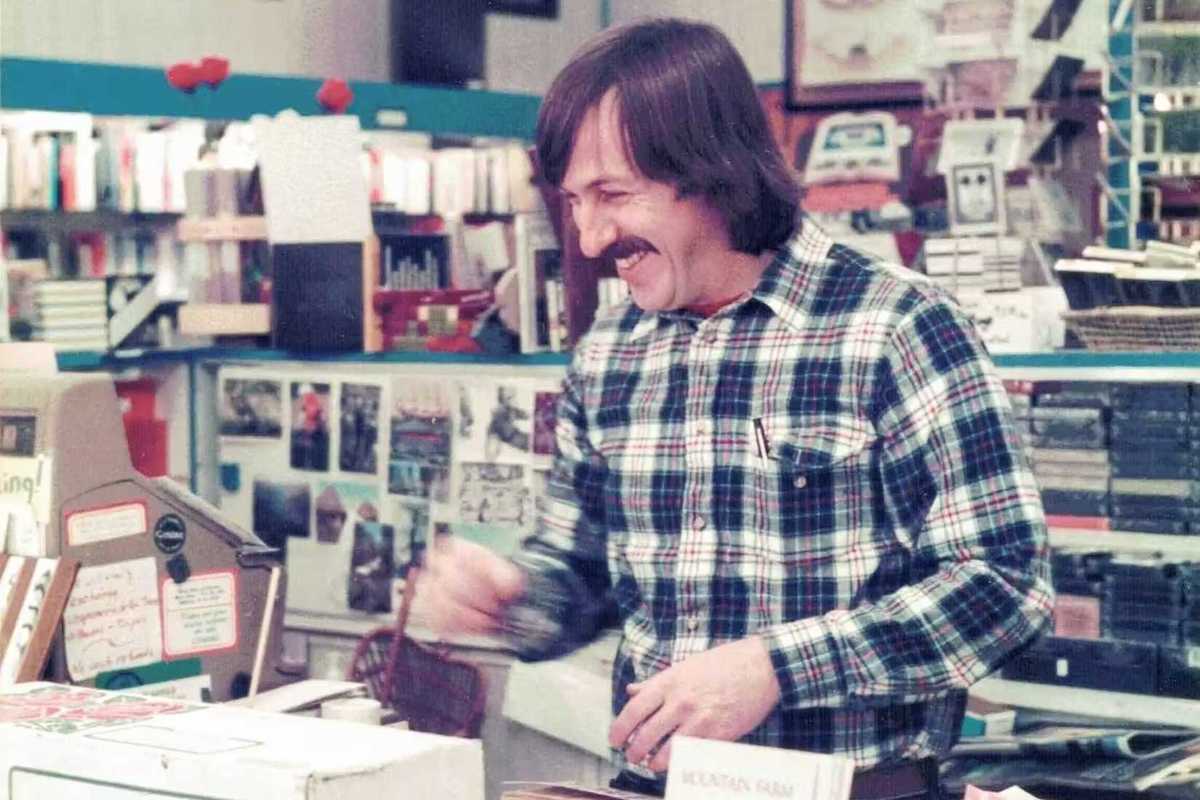
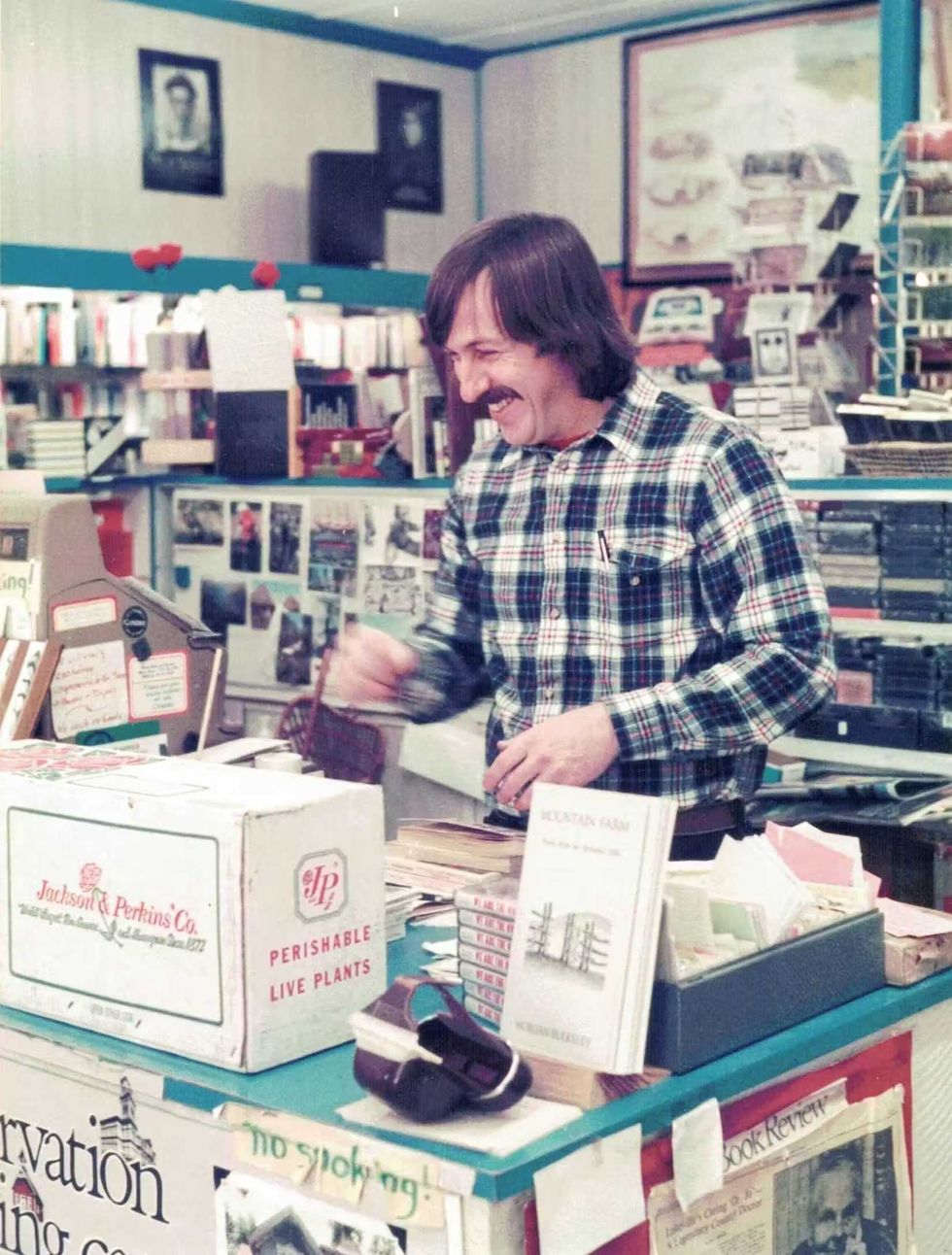 Dick Hermans in the Oblong Bookstore on Millerton’s Main Street in 1985.Provided

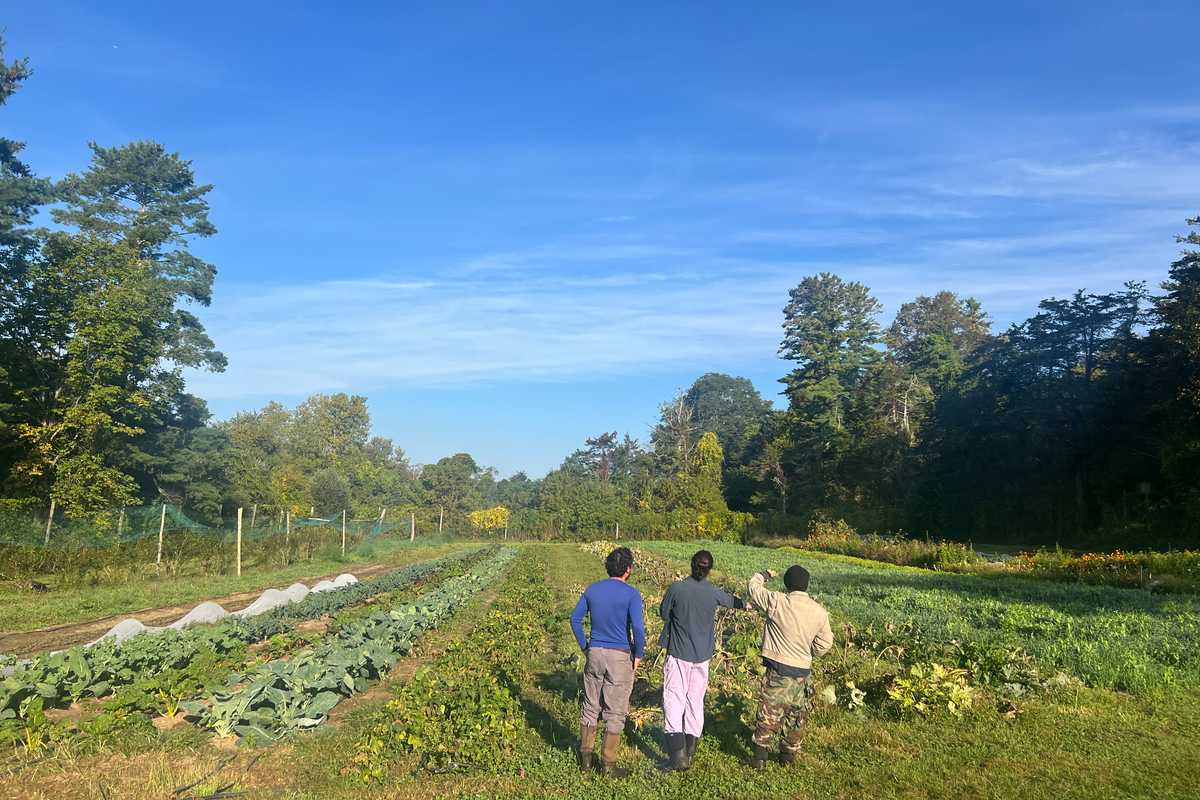
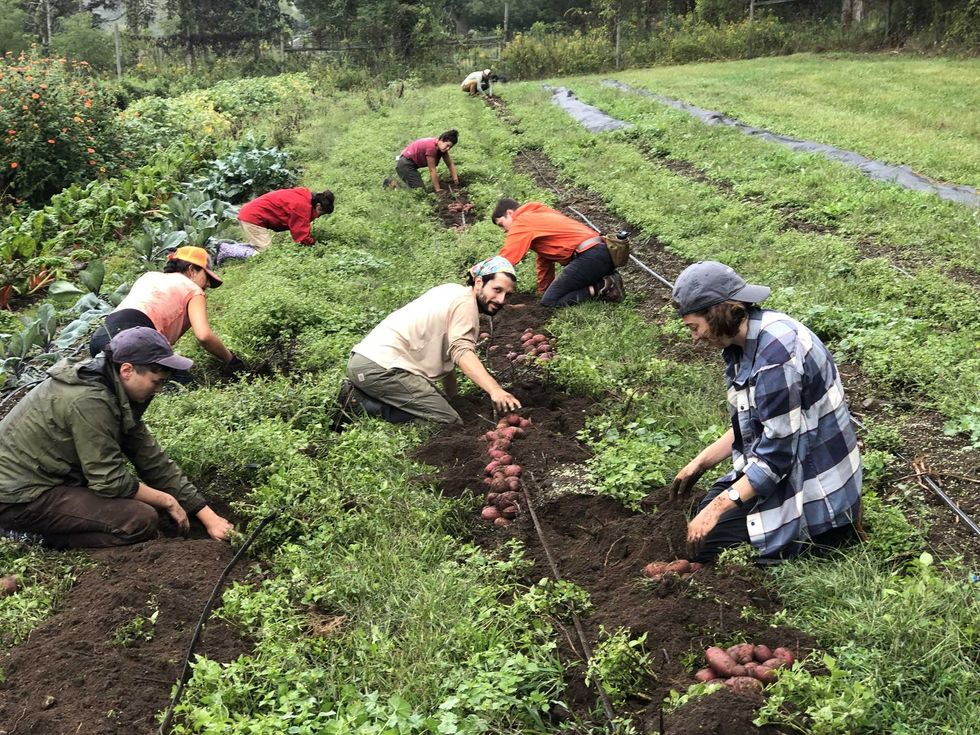 Fall storage crop harvests amid soil building cover crops at Adamah Farm in Falls Village. Janna Siller