More information, and detailed reasoning, on affordable housing
Some of us who have created affordable housing in Connecticut would like to submit the following to correct recent misinformation published in this paper.
Affordable housing is not forced upon a reluctant population by a remote government to relocate a group of outsiders. It is a tool that our home-grown commissions and nonprofit organizations use to keep and attract residents we need and want: our children and parents (or someone else’s) with skills and experience we can use.
The original impetus for affordable housing programs in our region was real estate costs that skyrocketed generations ago, conditions that have persisted and have been exacerbated by COVID-19. The pandemic has generated another property boom, vacuumed up available houses, modest or otherwise, and had a devastating economic effect on those whose jobs can’t be done safely or remotely.
Support: Over the last 20 years local governments, businesses, schools and civic organizations have increasingly supported affordable housing in our towns, recognizing that a diverse citizenry contributes human and economic value to the community.
Oversight: Local volunteers with a stake in the community guide the planning, construction and management of any project. It is they who choose the sites, consultants, and architects. It is they who shepherd projects through town regulatory bodies, hire the builders and management companies. Developers interested in heading off to the Caymans rarely try to create affordable housing; there is not enough profit in it to get them as far as Orlando. The local nonprofit is wholly invested in our towns and interested only in making affordable housing work for its residents and the entire community.
Residents: Applicants are carefully vetted for financial means and responsibility, personal and criminal backgrounds. The majority of new tenants come from the region or are moving closer to family or jobs. They may work in education, essential services or local businesses, or live on pensions or Social Security. Some have lost houses to disability or illness, or may be downsizing from homes they can no longer manage or afford. Once accepted, residents of affordable housing contribute to town life in the same way as any other person: besides holding jobs, they may volunteer on boards and commissions or join emergency services; their children may boost declining school enrollments and the new households add income to the local economy.
The Town Plan of Affordable Housing: A Connecticut statute requires that each municipality have an Affordable Housing Plan. The Town of Salisbury’s plan was among the first in the State. In Cornwall, Falls Village, Goshen, and Norfolk volunteer resident committees are working on these and will seek wide community engagement to ensure that such a Plan reflects a broad base of support. Neither this statute nor the one giving developers an advantage in towns where less than 10% of housing is affordable is driving the bus on this issue: our deeply held belief in the value and rightness of the undertaking keeps us energized. For additional facts on affordable housing in our region, please visit www.nwcthousing.org.
Virginia Bush Suttman, Kent Affordable Housing
Maggie Cooley, Cornwall Housing Corporation
Jim Dresser, Salisbury Affordable Housing Commission
Felicia Jones, Falls Village Housing Trust
Peter Halle, Salisbury Housing Committee
Chris Sanders, Goshen Housing Trust
Northwest Corner
Good solutions need more discussion
To David Berto and Sam Giffin: Thank you for reading my first article on Modern Times in Small New England Towns. Not to put too fine a point on it, you didn’t claim that I am misinformed, or did you? Was that alliterative headline yours?
Please help me understand how I mischaracterized your presentations, set me straight. When I asked you in an email follow up about the appropriate use of charrettes, Mr. Berto, you answered “What you (Daly) indicate about working together is what we do with projects we are involved in, and DOH is generally aware of this.” So, we are good there, Mr. Berto, no mischaracterization?
I want to know where I was off, let’s talk! Oh right, we can’t because when I asked you in my email for a conversation, you responded “I have to decline any discussions with you because of my working with groups in Litchfield County, including Falls Village. I could only talk to you if they arranged it, participated and approved this.”
Now, I can only guess you are referring to Northwest Hills Council of Governments (NHCOG) who hired you to present the webinar we are discussing, am I right? Did they also arrange, participate and approve of your joint letter with Sam Giffin to the editor critiquing my characterization?
I am a member of the Falls Village Affordable Housing Plan (FVAHP), one of three State funded, town authorized programs which I believe paid for your presentations at the webinars. So why can I not talk with the speakers without the NHCOG’s permission and oversight? It’s confusing.
You ask that my readers “think twice before taking what (I) say at face value.” I say amen to that, and to all information about public funding and especially affordable housing. Let us all “think twice” before accepting at face value what we hear or read; like the oft repeated claim that Sec 8-30g requires our small towns to have 10% affordable housing, or that if our towns want smaller projects that the state will not be interested in helping us fund them. I encourage us all to go further than thinking twice; get the facts, and have your authorities put their facts in writing in TLJ for inspection by the community and the fact checkers.
Let me be clear, I think highly of both of your presentations. I encourage my readers to watch them. Just google: NHCOG Canaan Falls Village Planning. That should get you close to the FVAHP page and the webinars are at the bottom. Email me Daly.Reville@gmail.com if you want help.
My next column is in progress and I look forward to your hopefully rich(er) commentary. We have the same goal, gentlemen: good solutions to the challenges of modern times in our small New England towns. Best regards.
Daly Reville
Falls Village
Too much is changing
What has happened to my country? I can no longer have a wonderful breakfast with Aunt Jemima, and the Indian princess from Land O Lakes can’t bring me any more butter.
And now Dr. Seuss is not even allowed to read me a bedtime story. I’m even getting worried about the future of Betsy Ross and Lady Liberty.
If we destroy the past ,we shall have no future. If we don’t stand for something we will fall for anything.
Allen Blagden
Lakeville
Could it be? Deeper look
Some opponents of the Holley Block affordable housing proposal have hired an expensive litigator described proudly on his firm’s website as the “Giant Slayer.”
Could the concern for windows, sidewalks, parking, bus stop, trees, traffic patterns all be “false flags”?
Could it be that the design of the windows or the children waiting for a school bus or having a sidewalk to go to the Grove needed defense from a “Giant Slayer”?
Could it be this is called “elitism” or something far more offensive?
Could it be that the people behind those windows or those children may have darker skin than theirs?
Could it be that they worry that those children would ride the bus or swim at the Grove with their children or grandchildren?
Could it be that the muddy parking lot and old stone wall is truly an important “park” worthy of saving for future generations by means of expensive litigation?
Could it be that some among us would rather live in an exclusive, gated community and close out “the other”?
Could it be that quiet voices of reason and conscience will prevail over the slayer of giants? Could it be? I hope so.
Matthew 25:40 “Truly I tell you, whatever you did for one of the least of these brothers and sisters of mine, you did for me.”
Philip V. Oppenheimer
Lakeville
An absence of thunder
“The thunder, Wing’d with red lightning and impetuous rage, Perhaps hath spent his shafts, and ceases now To bellow through the vast and boundless deep.” — John Milton
Though snow may yet fall and blanket us, Spring with her early, pelting light enters like a lion as 2 million vaccines a day are delivered to American upper arms tattooed or not, in the usual medical places and innovative ones — sports stadiums may never again be so useful.
Amazing how quiet are the wheels, hands, mechanisms and genius that get things done. The loud thrashing of ineptitude has been silenced as people with sincere intent, knowledge and willingness to work take on the troubles of the day. 45, under a fake Presidential seal, begs in two “me” sentences that all remember he is to be credited with the delivered COVID vaccines, which have been advancing in labs for three decades. On the anniversary of a world-wide pandemic, 45 struts his bombastic ignorance– research breakthroughs don’t emerge on his command. Undoubtably Katalin Kariko will receive a Nobel Prize for her research on mRNA begun in Hungary in 1970. The miracles of science are not fast food.
Thanks to bans on deceit in social media, the thunder of lies and blaze of denials have all but disappeared from daily life — is it Mar-Go-Latte where penalties eradicate disloyal GOP politicians and befool the party’s national institutions? Since January 21, the rant, rave and low rhetoric of the highest office has been obscured by ardent language, effort and successful achievements of government officials focused on stopping a pandemic denied for a year while reestablishing an economic foundation for all. Many now sleep nights and welcome days cleared of the sludge and fog of the past four years.
45 is off court, barred from the game, thundering in a social quarantine. Perhaps number 45 will forever be retired on sports jerseys, of all ilk.
The birds are back — they fill the air.
Kathy Herald-Marlowe
Sharon
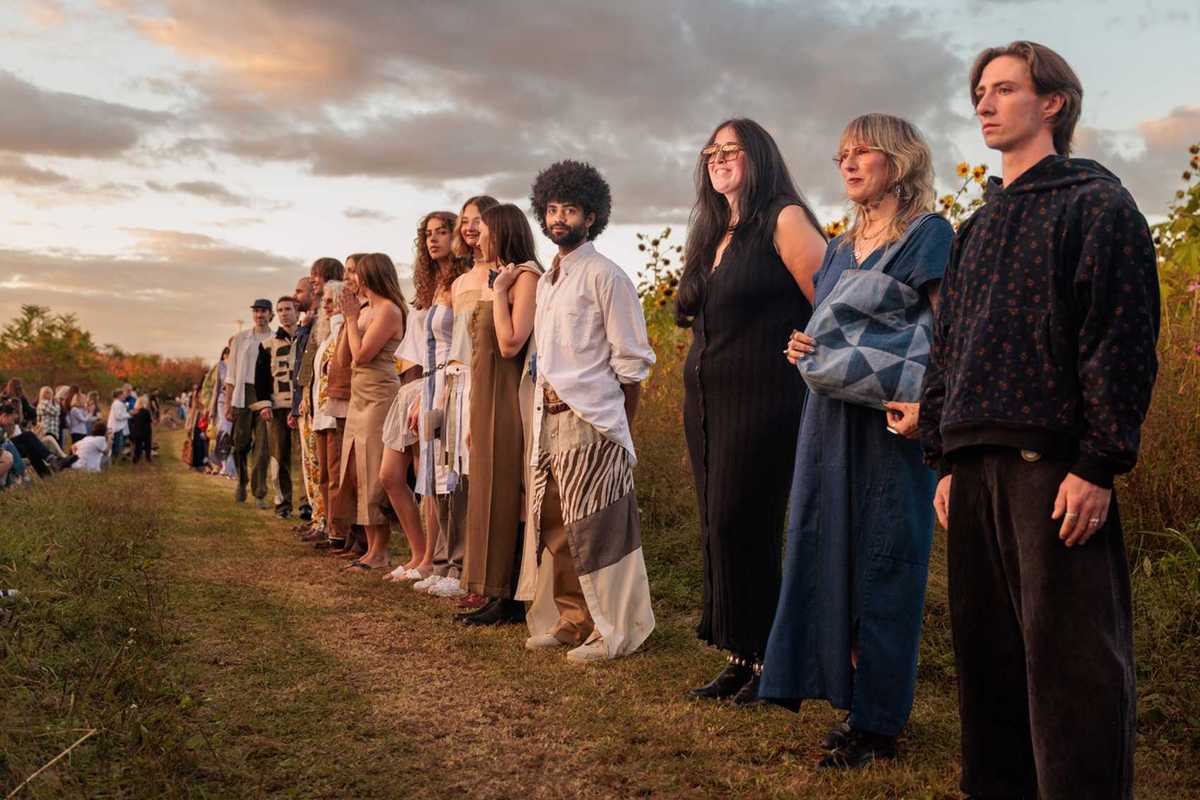
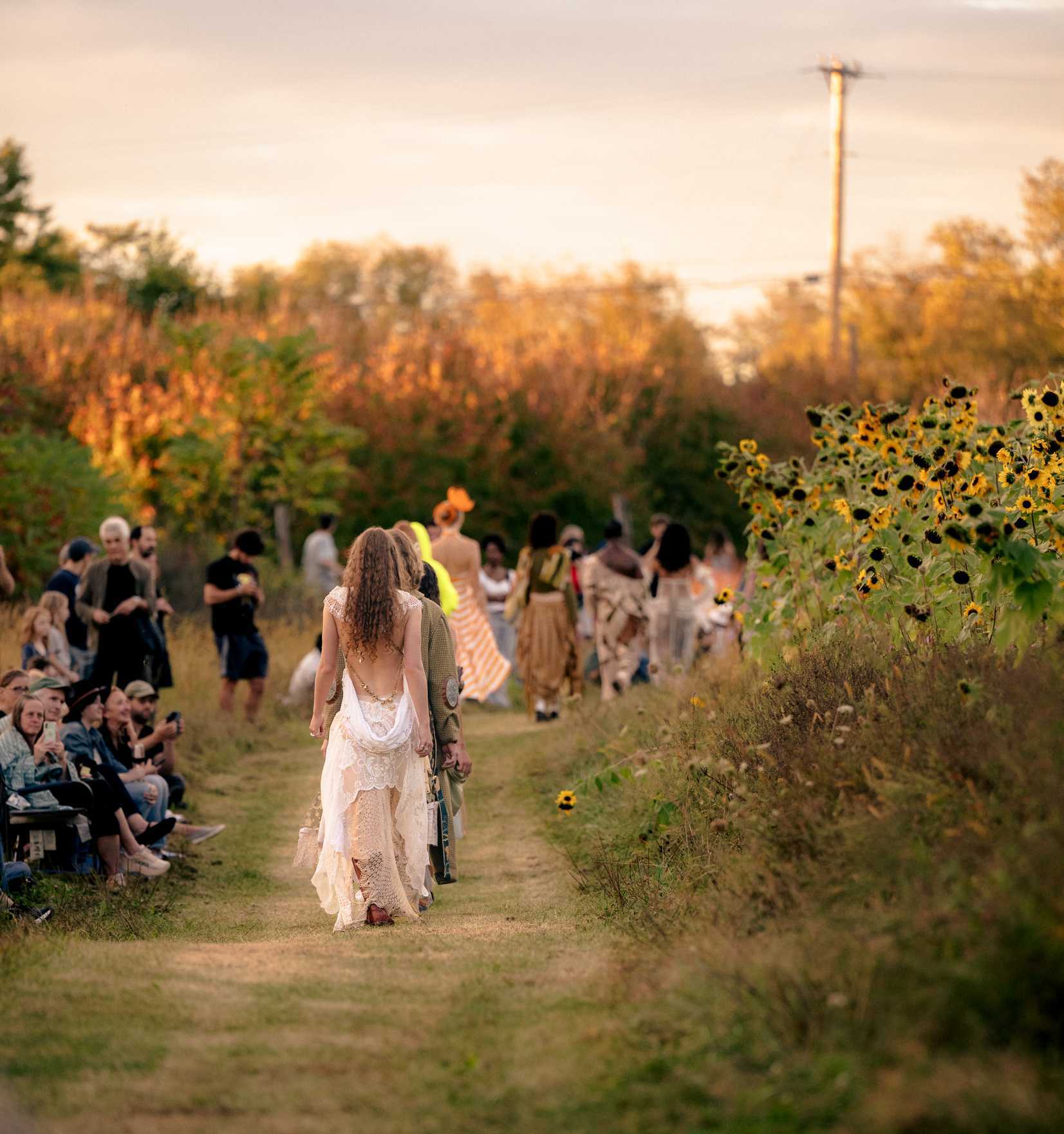 Models walk the organic runway at HVSFW. Ilan Harel
 Susan Schneider, owner of Shandell’s, creates a variety of products with marbleized surfaces in her Ashley Falls studio.L. Tomaino


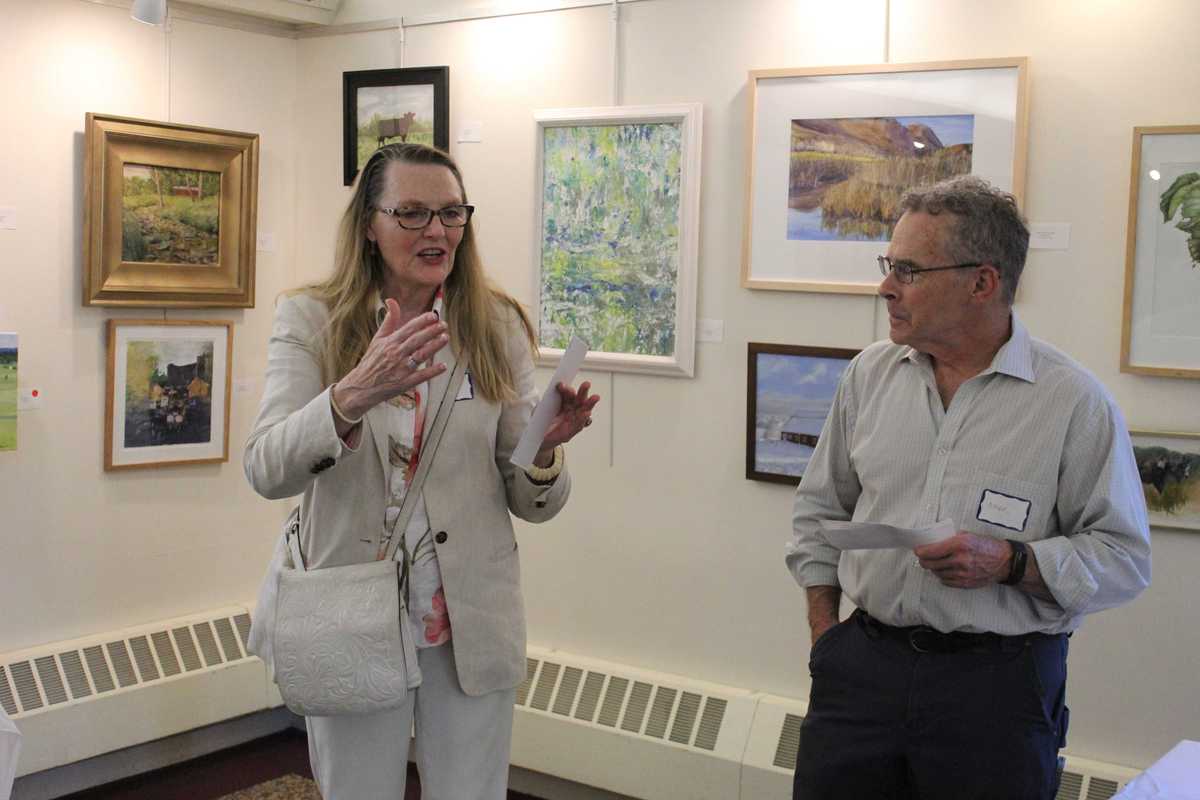
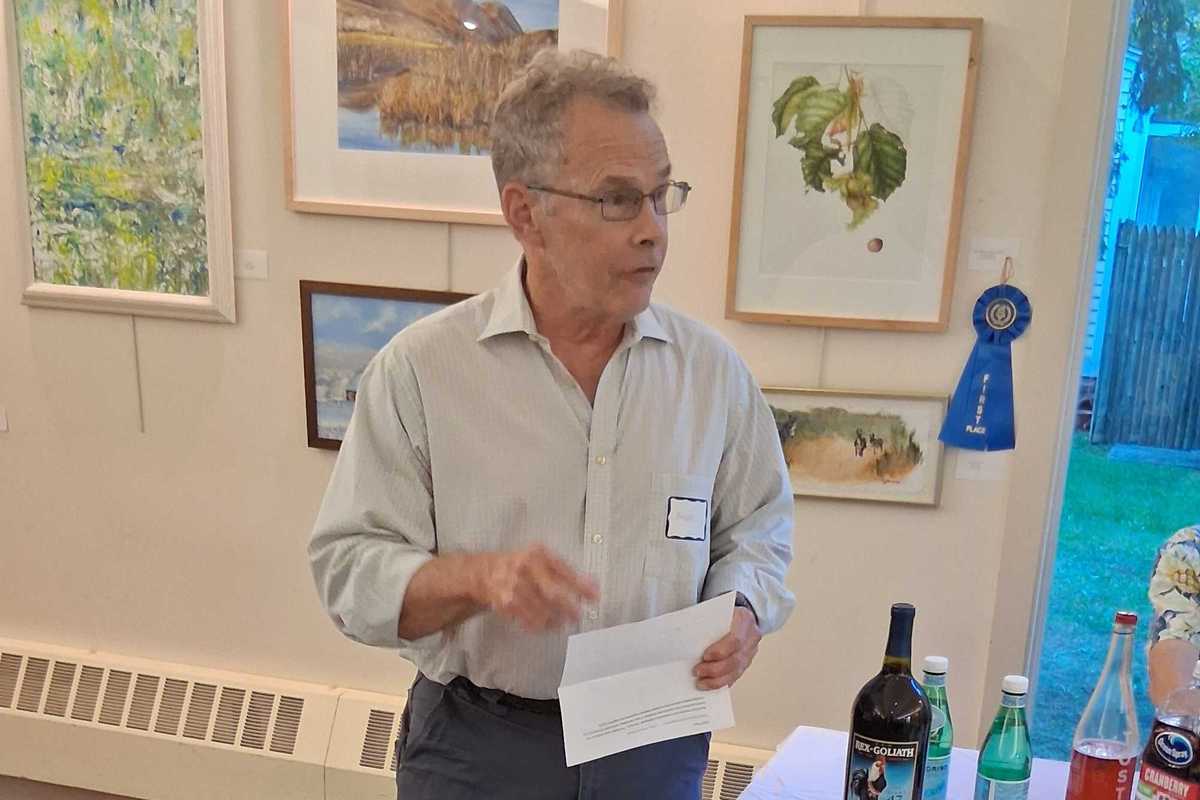 Roger McKee naming the winners with the first place entry over his left shoulder. Patrick L. Sullivan
 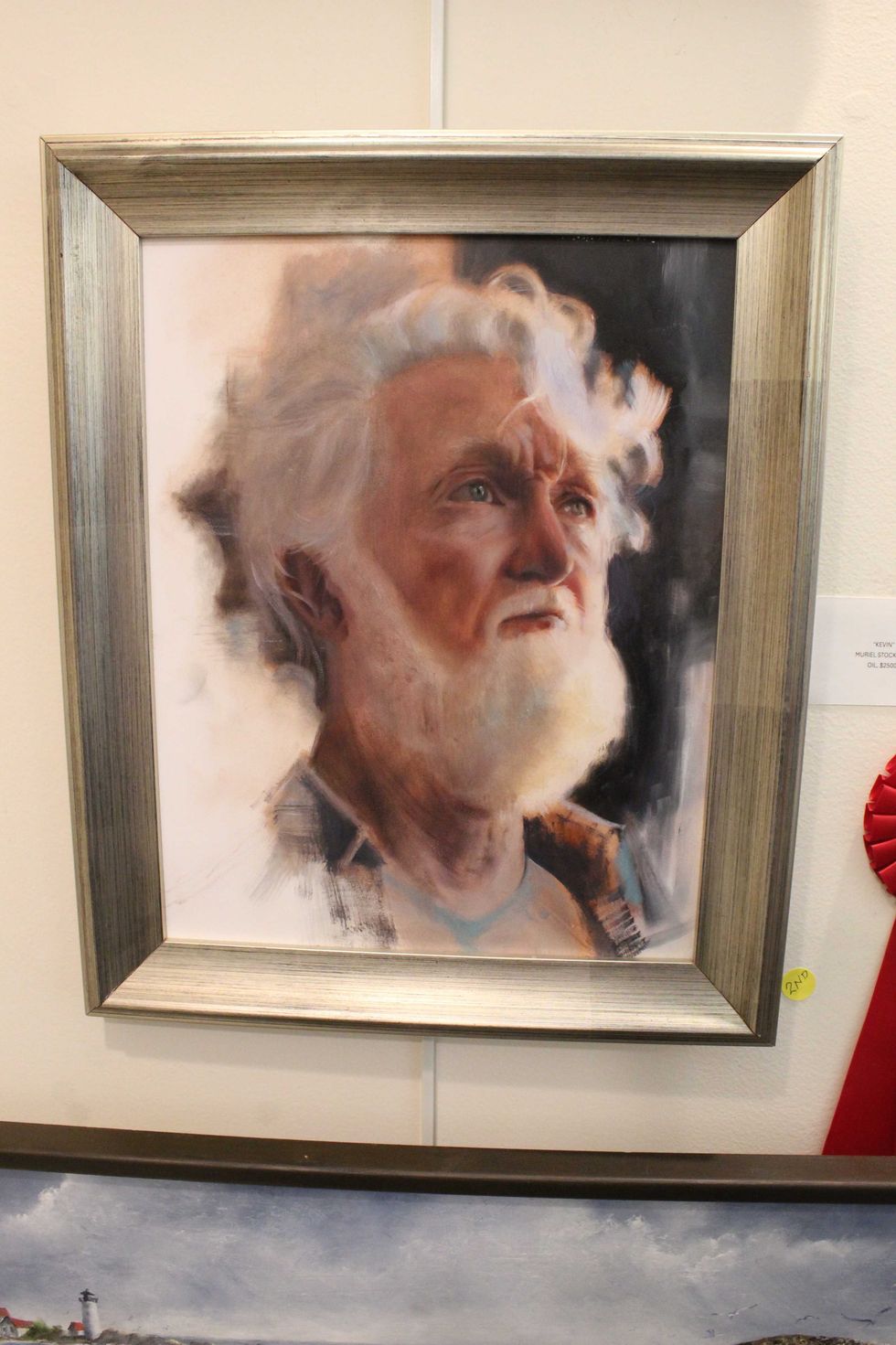 Muriel Stockdale’s “Kevin” took second place in the juried art show at Trinity Episcopal Church.Patrick L. Sullivan