“. . . These Republican leaders have not been content with attacks on me, or my wife, or on my sons. No, not content with that, they now include my little dog, Fala. Well, of course, I don’t resent attacks, and my family don’t resent attacks, but Fala does resent them. . .”
— Franklin Delano Roosevelt
Those who have felt that there has been something amiss at the White House these past four pet-free years may be relieved to know that the Bidens have adhered to tradition and brought animals to reside with them: their two German shepherds, Champ and Major, and possibly a cat in the near future. President Biden has always had big dogs ever since he was a boy. The younger shepherd, Major, two, is the first “shelter dog” ever to live at the White House and the first couple has received much favorable publicity for acquiring an orphan dog
Although Americans have more pet cats than dogs, dogs have always been more popular with our leaders. Dogs, especially, seem to make our leaders and their families easier for people to relate to. But some of our presidents have had other less common pets. Grace and Calvin Coolidge had a pet raccoon named Rebecca, which they liked to walk on a leash down the streets of Washington. Theodore Roosevelt had a veritable menagerie at the White House that included horses, a parrot, a guinea pig, a badger, a rooster and a snake, not to mention a dog.
Some pets have even earned a small place in history. One of the best-known presidential pets was Franklin Delano Roosevelt’s “little dog Fala”, a feisty Scottish terrier immortalized in one of FDR’s best known speeches, who became so well known that a statue of Fala beside Roosevelt is featured in Washington, D.C.’s Franklin Delano Roosevelt Memorial, the only presidential pet so honored.
The Trumans gave away a dog they had owned to a friend when they moved into the White House. But a remark that the president is said to have made has become famous: “If you need a friend in Washington, get a dog!”
One of President Nixon’s most memorable addresses, the “Checkers speech,” was actually delivered while he was running for vice-president, defending a backer’s gift of a cocker spaniel that his daughters named Checkers and that he defiantly refused to give back. His speech appealed to the nationwide audience and to President Eisenhower as well who had been considering dropping Nixon from the ticket; the speech actually saved Nixon’s career. Checkers died before Nixon became president but the speech lives on.
New York Times columnist Gail Collins has reminded us several times a year since 2011 about former presidential aspirant Mitt Romney’s 1983 family vacation trip with their dog, an Irish setter named Seamus, who he strapped to the roof of their station wagon. While the story probably did not cost him the election, were Romney to run once more for the presidency the story would surely be remembered again and again.
Other world leaders have also had notable pets. Over her reign, Queen Elizabeth II has had more than 30 Welsh corgis, each of which she is said to have personally house-trained. Benito Mussolini didn’t have a dog, but had a pet lion, Ras, who rode with him in the front seat of his convertible as he drove around Rome, thereby engendering extra respect for Il Duce from onlooking pedestrians. Adolph Hitler had a pet German Shepherd named Blondie that often slept in his bed with him and that some considered his fondest love (other than his mother). While Hitler did poison Blondie at the end, forcing her to take cyanide, he thought that killing her was preferable to letting her be captured by the Russians.
While growing up, President Trump never had any pets —no dogs, no cats, not even a fish or hamster. Trump was the first president since William McKinley 120 years ago not to have a dog. He said it was because he “didn’t have time.” But a generation ago, his first wife Ivana, reportedly feeling lonely, got herself a dog and soon after Trump divorced her. Not long ago his current wife, Melania, got a dog (a goldendoodle) for the Trump’s youngest son, Barron, that the president named Patton after the saucy World War II general; however, the dog never resided at the White House.
Judging by his friendly rapport with the Belgian Malinois Shepherd who helped the U.S. capture the Isis leader in 2019, some have suggested that Trump has recently mellowed in his feelings toward animals. But we should remember: it’s hard to teach an old dog new tricks.
Architect Mac Gordon lives in Lakeville.
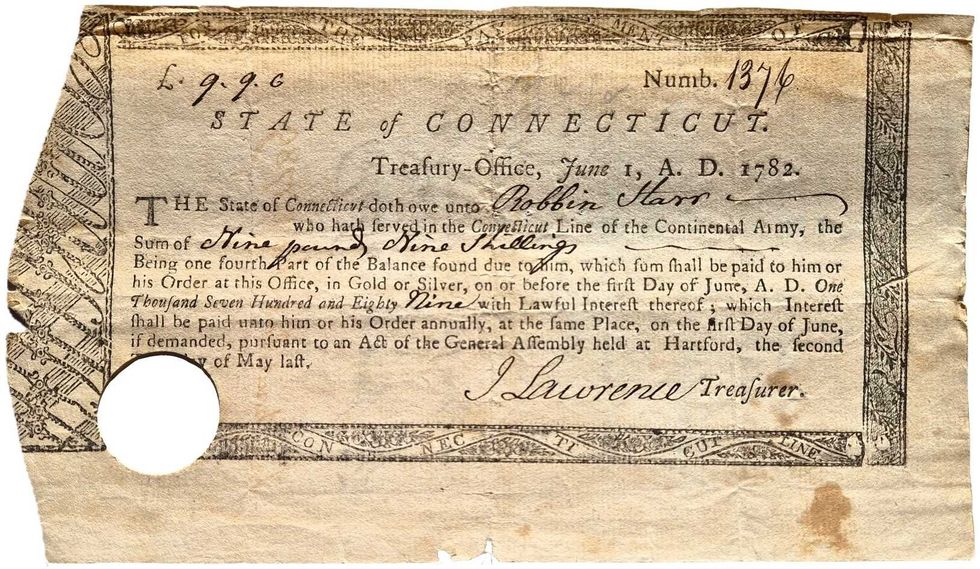 Pay Bill for Robin Starr’s service in the Continental Army.Courtesy the Alex Breanne Corporation
 John Mills speaking at Quinnipiac University.Courtesy the Alex Breanne Corporation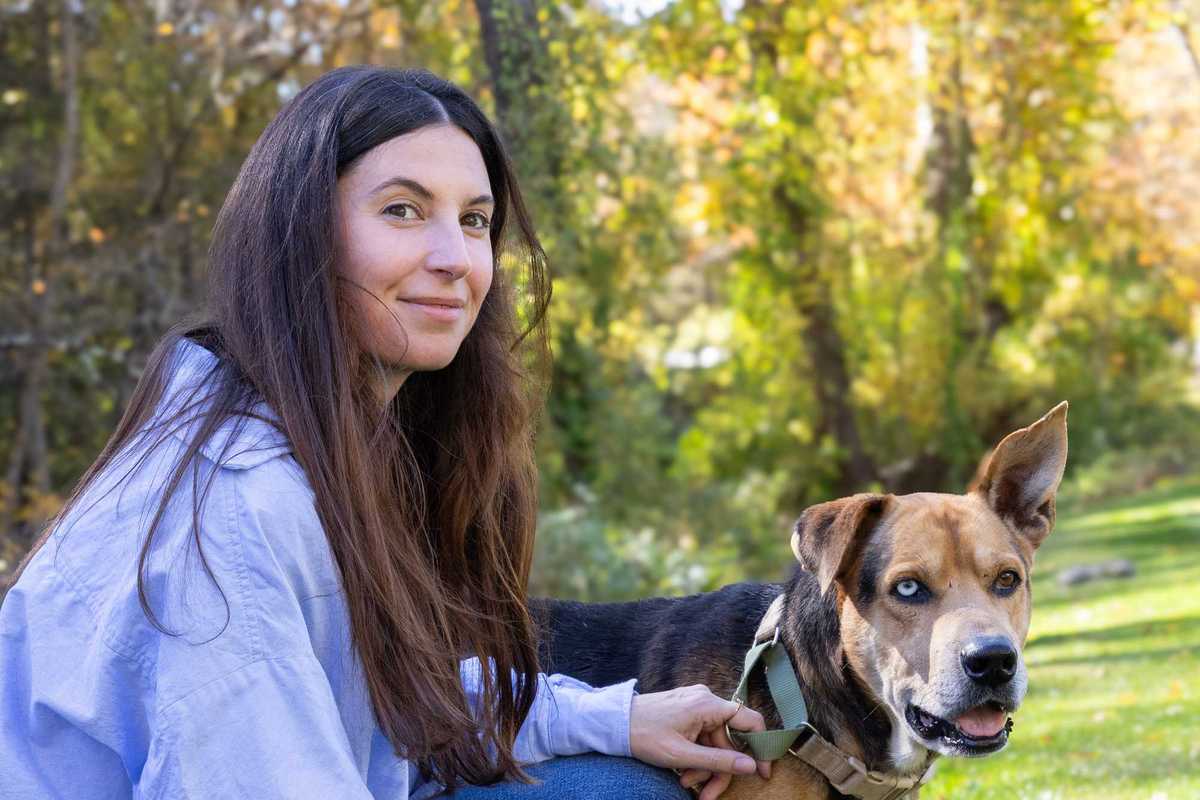
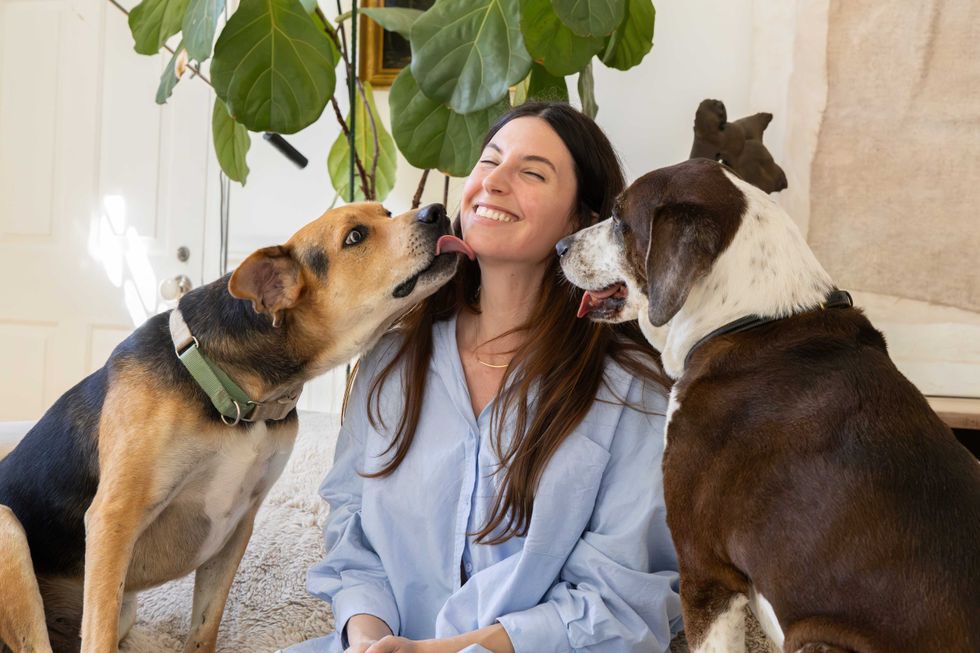 Stephanie Saetta,with her rescue dog George and Blue (left), a shepherd mix awaiting his forever home.Madi Long
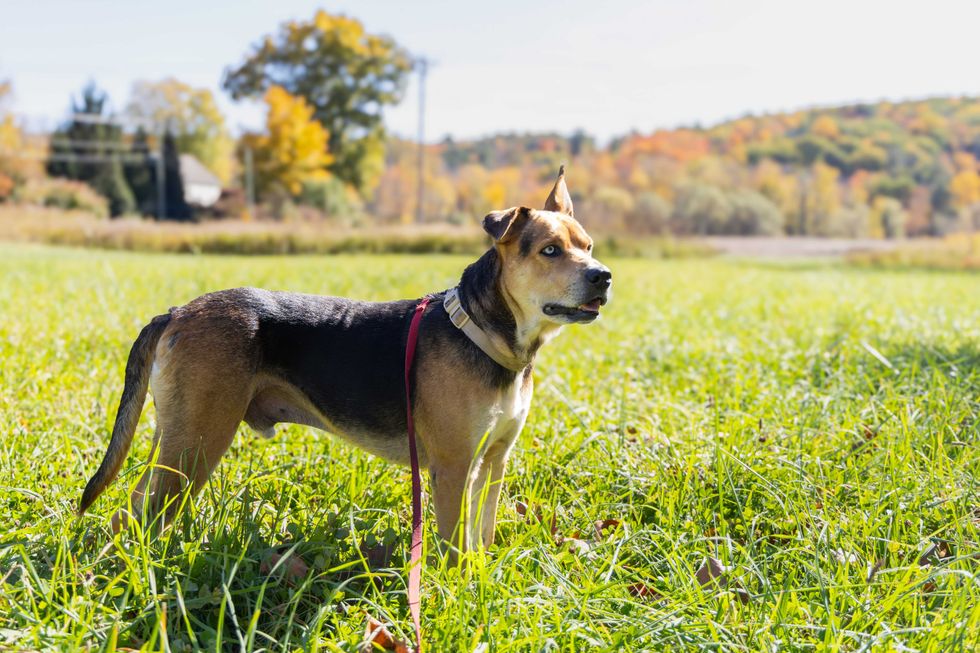 Blue, a 7 year-old Shepard mix, is waiting for his forever home. Madi Long