It was inevitable: A small fraction of fully vaccinated people have contracted COVID-19.
And while the phenomenon known as “vaccine breakthrough” is relatively rare, several cases have been identified in the Northwest Corner.
As of April 14, six of eight COVID-19 positive cases involving residents and staff at Geer Village in North Canaan were reported as breakthrough infections, according to Kevin O’Connell, the facility’s CEO.
In Sharon, Sawyer Thornton, administrator of the 88-bed Sharon Health Care Center, said two patients were recently admitted to the facility’s COVID-19 unit who had contracted the virus after being fully vaccinated.
State and local health officials said breakthrough cases are no surprise and that the three vaccines authorized for use against COVID-19 ( Moderna, Pfizer and Johnson & Johnson) are highly effective at preventing infections, severe illness and death.
The new infections are relatively mild and they are not occurring at what health officials consider an alarming rate.
Nonetheless, state and national officials are trying to understand why the breakthrough infections are occurring.
The Connecticut Department of Public Health (DPH) is monitoring the phenomenon as part of national surveillance efforts by putting out a call for confirmed cases to be reported in instances where 14 days after completion of final dose or doses of a vaccine, a person becomes ill with the virus.
New outbreak was ‘anticipated’
O’Connell said Geer had not had any new cases of COVID-19 on campus since the October 2020 outbreak at the Lodge/Assisted Living facility, and that about 95% of residents and 90% of staff have received both doses of the vaccine.
“For this outbreak” at the nursing center, he said on April 14, “we identified the first staff member with symptoms of COVID on March 24,” who was among the unvaccinated.
“The remaining seven cases were identified over the next week as we completed additional rounds of testing, or they self-reported from home.”
In total, four residents, and four staff were infected, said O’Connell. Of the four residents, one had not been vaccinated at the request of family; of the four staff members, only one declined vaccination, due to concerns it would impact her ability to start a family.
The resident who contracted the virus is believed to have been infected through contact with a member of the community, “and that lead to other residents and staff getting infected,” said the Geer CEO. “People have to remember that even the best vaccine is just 94% effective.
“We anticipated this was going to happen.”
Six of the eight COVID-19 positive cases at Geer “are considered ‘breakthrough,’ but that is it. The outbreak spread no further, even though the census in the building was 85 and dozens of staff work each day. We vaccinated 391 residents and staff,” accounting for 87%, O’Connell explained. “So, a 1.5% breakthrough rate with no serious illness or hospitalizations, I think that’s better than what you see with the flu, so a very good result.”
O’Connell further noted that even if a vaccine fails to prevent infection, it protects against serious illness. “Most important is that everyone who was exposed and contracted COVID-19 had mild symptoms and fully recovered, with no hospitalizations. I think state epidemiologists and state public health officials also agree that the vaccine is doing what it should do to prevent many more possible infections.”
All staff are currently testing for COVID-19 twice a week, and there have been no new cases, said O’Connell, who was optimistic that by Friday (April 16), “this particular outbreak is over and we can open visiting back up.”
Mostly those who aren’t vaccinated
Sawyer Thornton, administrator of Sharon Health Care Center (SHCC), reported on April 15 that although there have been no vaccine breakthrough cases among either staff or residents of the nursing home, two COVID-19 positive individuals who had previously been fully vaccinated have been admitted to the facility’s COVID-19 unit.
Referring to the fairly new phenomenon, “We haven’t seen a lot of it. Just those two residents. The majority of cases coming in involve non-vaccinated individuals.”
To date, said Thornton, 97% of SHCC full-time residents have been vaccinated, and about 75 percent of staff have received the COVID-19 vaccine. Thornton credited Sharon Hospital for stepping in to administer the second dose of Pfizer vaccine to staff, especially since clinics offering the Johnson & Johnson vaccine were halted last week due to concerns about adverse side effects.
A ‘very big game changer’
Dr. Mark Hirko, president of Sharon Hospital, noted that initial clinical trial data revealed that both the Pfizer and Moderna vaccines were “96 to 98% effective in preventing infection,” and that they are “close to 100% in preventing fatal disease or illness that requires hospitalization.
“That’s a very big game changer.”
Still, he said, “There is a 4% breakthrough.”
To put that into perspective, Hirko pointed out that the protection provided by the COVID-19 vaccines is still significantly greater than the approximately 60% to 70% level of effectiveness offered by other vaccines for diseases such as measles, mumps or even the seasonal flu.
According to Hirko, there is no definitive explanation as to why the coronavirus is evading the vaccine-induced immune response. So far, there has been no correlation between breakthrough cases and the emerging COVID-19 variants.
His advice until an answer is found? “Do everything you’ve been doing. Wear a mask, wash your hands, and keep your distance. You can still pick it up; there is still a lot of virus out there.”
Biggest threat is ‘from the outside’
Throughout the pandemic, Noble Horizons in Salisbury has kept the coronavirus off campus, which includes its nursing home and assisted living facility.
Administrator William Pond reported on April 15 that he is “happy to say we have not seen” any cases of vaccine breakthrough among either residents or staff.
Pond said 100% of residents, and 80% of staff have been vaccinated against COVID-19. “From Day One, we have continued to follow guidelines that have taken us this far, even with the vaccines. We know [COVID-19] can always come in, so we try to stay ahead of it.”
As community positive rates rise, infections at nursing homes are declining, said Pond. “It’s flip-flopped.” A recent call with the state DPH on April 14, he said, supported evidence that “nursing homes are now the safest place to be, compared to the community at large.” The biggest threat, he said, “is from the outside.”
Everyone needs to help
As long as COVID-19 is circulating in communities, said Pond, everyone should do what they can to drive down infection numbers — and that includes getting vaccinated.
“While I do not mandate it, we certainly provide copious amounts of education.”
As to the new breakthrough cases reported in the region, the Noble Horizons administrator said while they are “concerning,” he is confident in his staff’s unrelenting commitment to keeping the campus COVID-free.
“From my perspective,” noted Pond, “I am of the mindset that no matter what is out there, this has been proven to work. It’s just a matter of weathering the storm a little bit longer.”

 Pay Bill for Robin Starr’s service in the Continental Army.Courtesy the Alex Breanne Corporation
 John Mills speaking at Quinnipiac University.Courtesy the Alex Breanne Corporation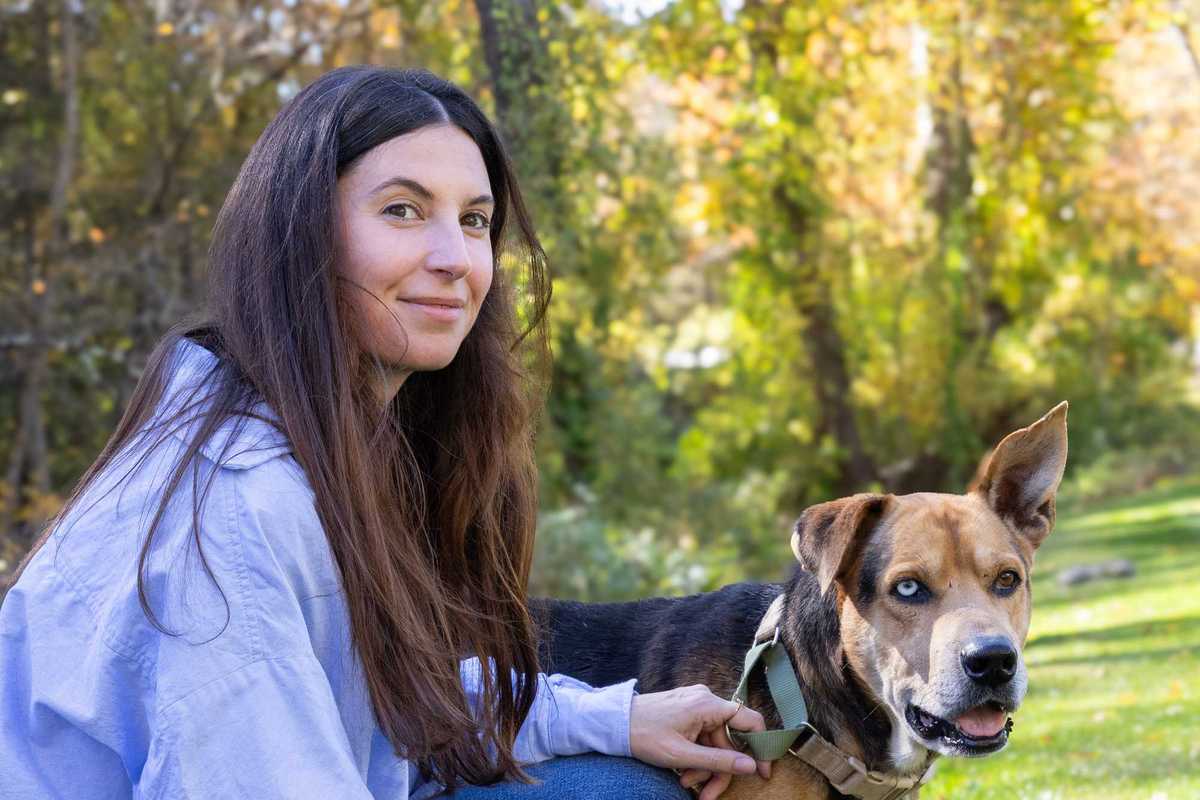
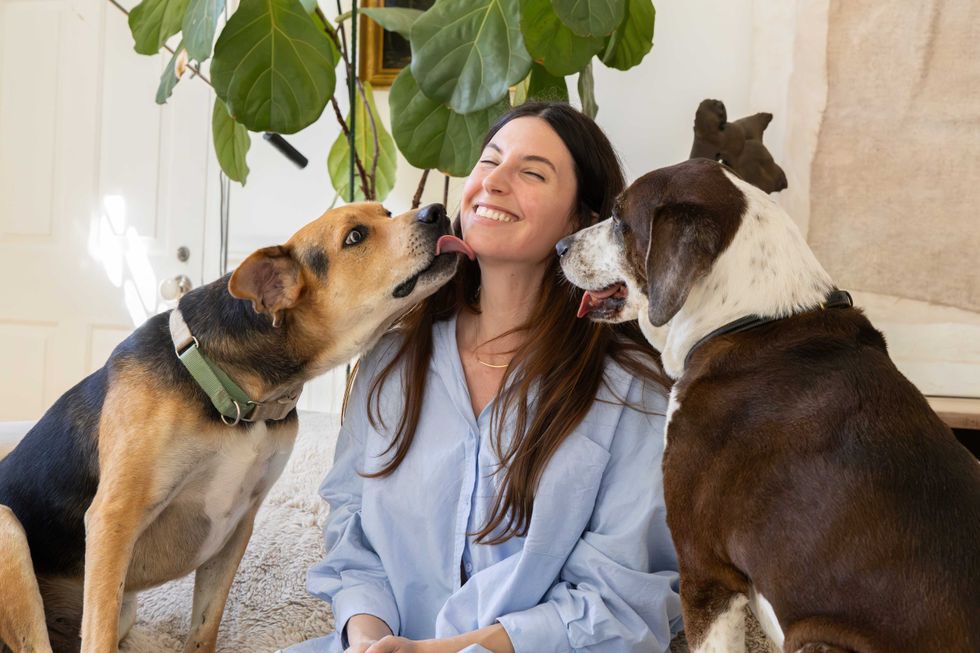 Stephanie Saetta,with her rescue dog George and Blue (left), a shepherd mix awaiting his forever home.Madi Long
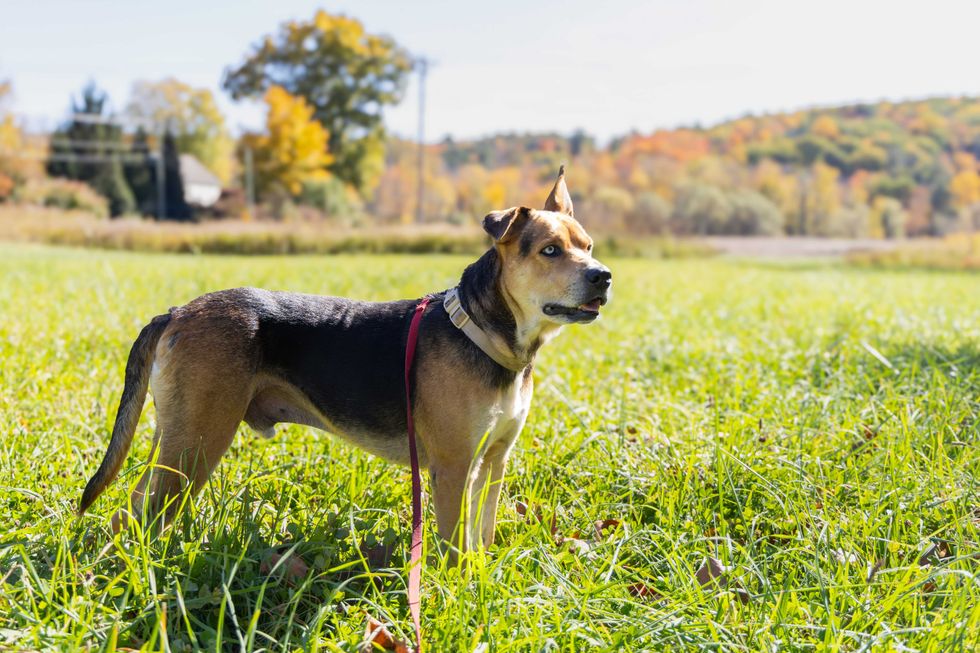 Blue, a 7 year-old Shepard mix, is waiting for his forever home. Madi Long