State legislators from the region expressed some guarded optimism that new Gov. Dannel Malloy and the Connecticut General Assembly will make the difficult decisions needed to address the state’s roughly $3.5 billion deficit.
Rep. Roberta Willis (D-64) said the Legislature “is going be taking its lead from the governor, who has clearly articulated that the buck stops with him. We haven’t had that kind of strong leadership for a while.�
Sen. Andrew Roraback (R-30) said of Malloy (who is a Democrat), “I like what I see so far, and I want him to succeed.
“The challenge for him will be to convince people — not just the Legislature — to take some very bitter medicine.�
When it was suggested that a Democratic governor has a better chance of getting unpopular tax increases and spending cuts through a Democratic-controlled Legislature, Willis agreed.
“I’d even take it a step further. We’ve been punting because the governor and the Legislature couldn’t agree on anything,� with results that satisfied nobody — more stalemate than compromise.
Roraback said, “That hypothesis will surely be tested.�
The governor is scheduled to make his first big budget speech Feb. 16. In the meantime, legislators are organizing their committees and caucuses.
And preparing themselves for making decisions that both Northwest Corner legislators said are overdue.
“The time for taking dramatic steps arrived quite some time ago,� said Roraback. “The deadline is now fast upon us.�
Willis, chairman of the House Higher Education and Employment Advancement Committee, said the committee is “well-positioned to address employment issues.�
She added that historically Connecticut has been attractive to employers because of an educated and skilled work force, but she said she now hears from potential employers that they can’t find workers for many jobs.
“A skilled work force is an important investment,� she said.
She also said the committee will be taking a hard look at administrative costs in the state university system. Willis believes that such costs have increased disproprotionately compared to money being spent on education and academics.
Neither Willis nor Roraback expressed any enthusiasm for further borrowing by the state as a way to make ends meet. Roraback also wondered if “capital markets are going to have any appetite� for additional government debt.
“I don’t think anyone is viewing borrowing as a responsible way to get out of a budget hole,� he said.
Cutting spending: essential
Nonetheless, Roraback said he feels sure that tax hikes are inevitable.
“That’s the easy part,� he said, adding that Republicans would not be willing to discuss raising taxes until “it is demonstrated to us� that the majority Democrats are willing to cut spending. That’s the hard part.
“No one I know believes that reducing spending will not be accompanied by pain,� he added.
Roraback said he felt it important to keep an eye on proposals such as a statewide property tax, “which could have the effect of Northwest Corner towns contributing even more to state government — and receiving even less.�
Willis said that last year the state’s municipalities objected to cuts in state aid, with the result that the funds were borrowed. She doesn’t see that scenario playing out this time around.
“We just can’t maintain the same level [of spending] on every single thing.�
Not just ‘doom and gloom’
Both legislators were anxious not to sound too grim. Asked if the silver lining in the state’s fiscal crisis could be the opportunity to make fundamental structural changes in the way the state does business, Roraback said sure, but it’s too bad it had to come to this.
“It’s our last chance, the way I look at it. I hope the new governor has better luck in bringing the Legislature to its senses.�
And Willis said, “We are being given opportunities to make substantive, positive changes. It shouldn’t be just doom and gloom.�
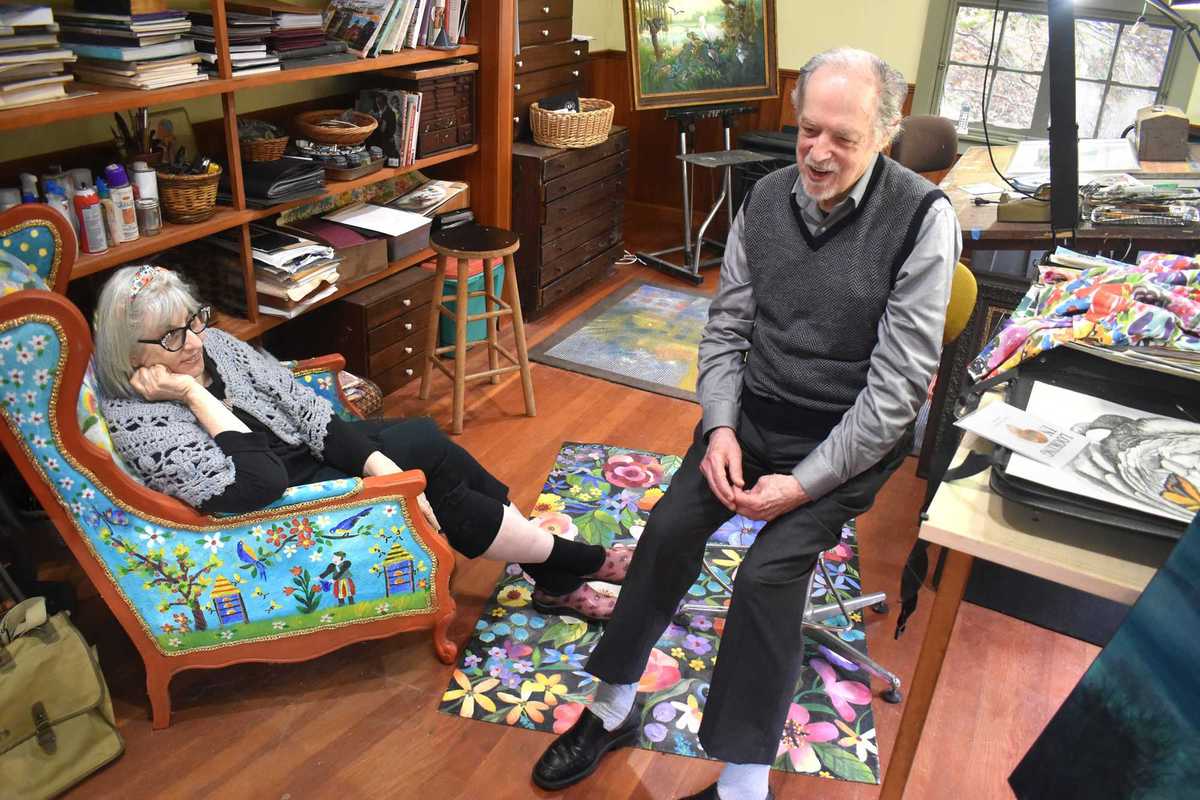
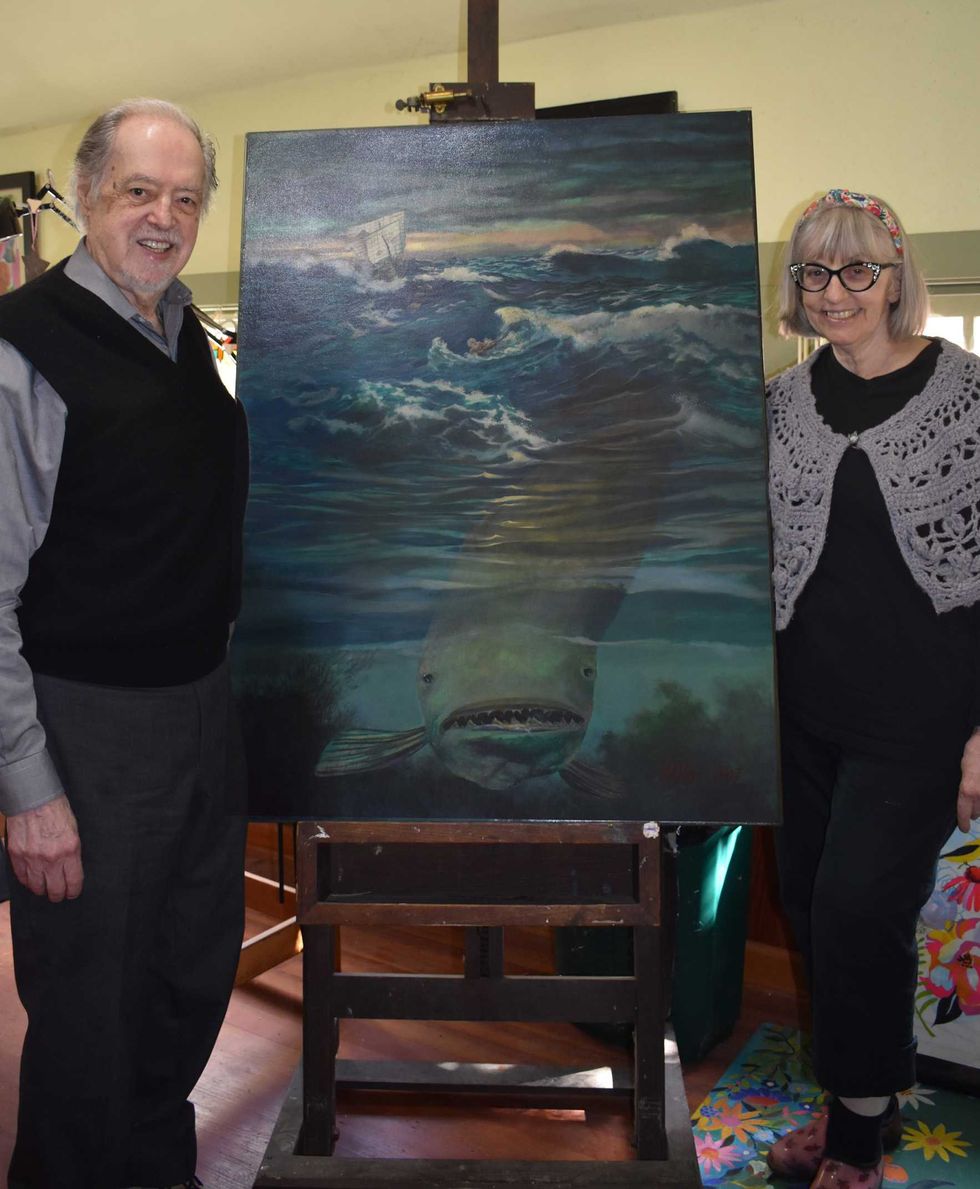 Justine and Victor Valla in their studio with a painting of Victor’s,”Jonah and the Whale.” Robin Roraback

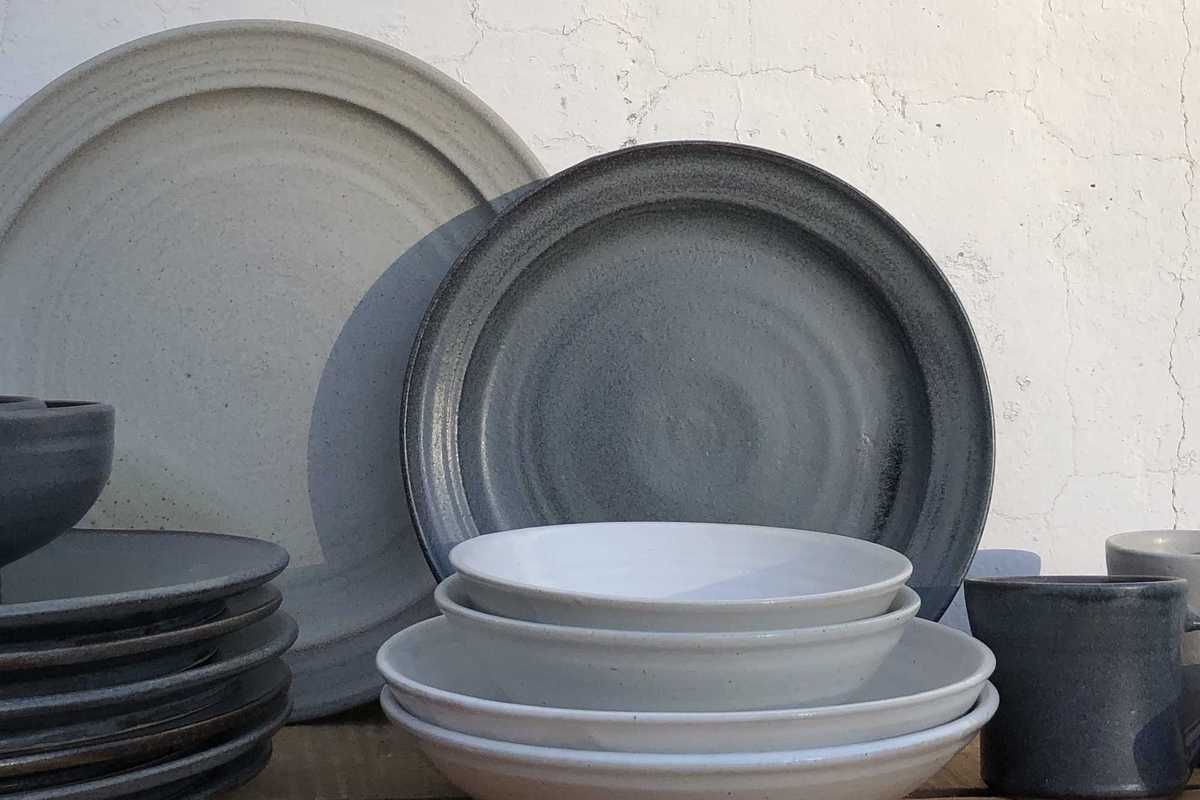
 A ceramic vase by Kathleen Heidemann.Provided
 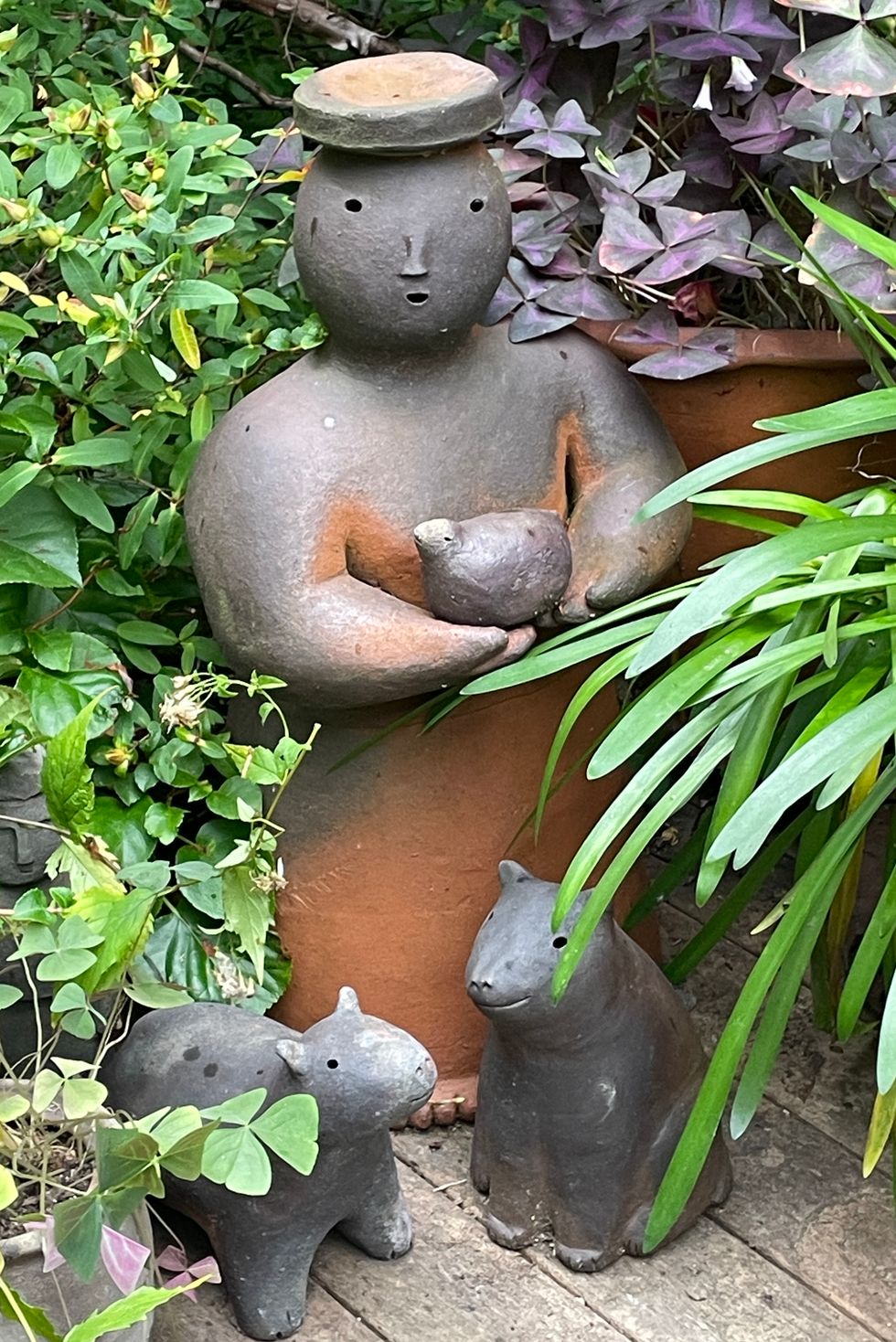 Joy Brown’s delightful ceramic sculptures.Provided
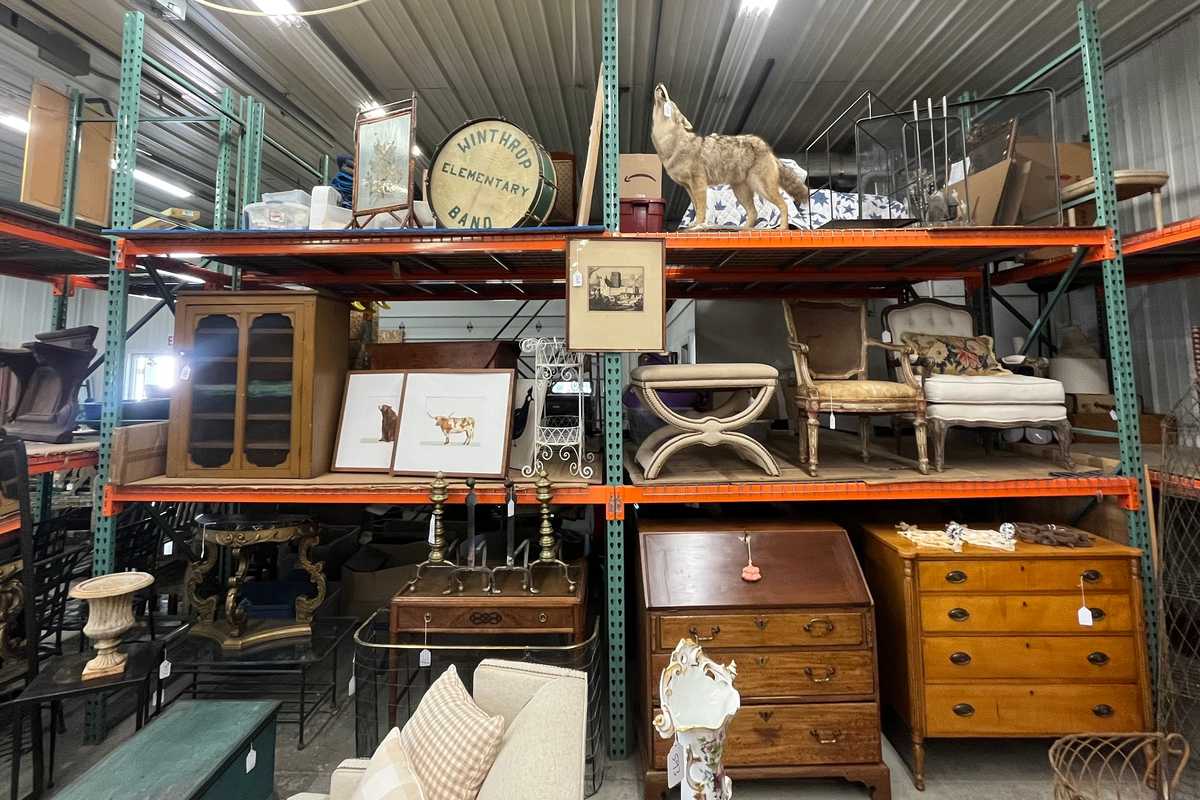
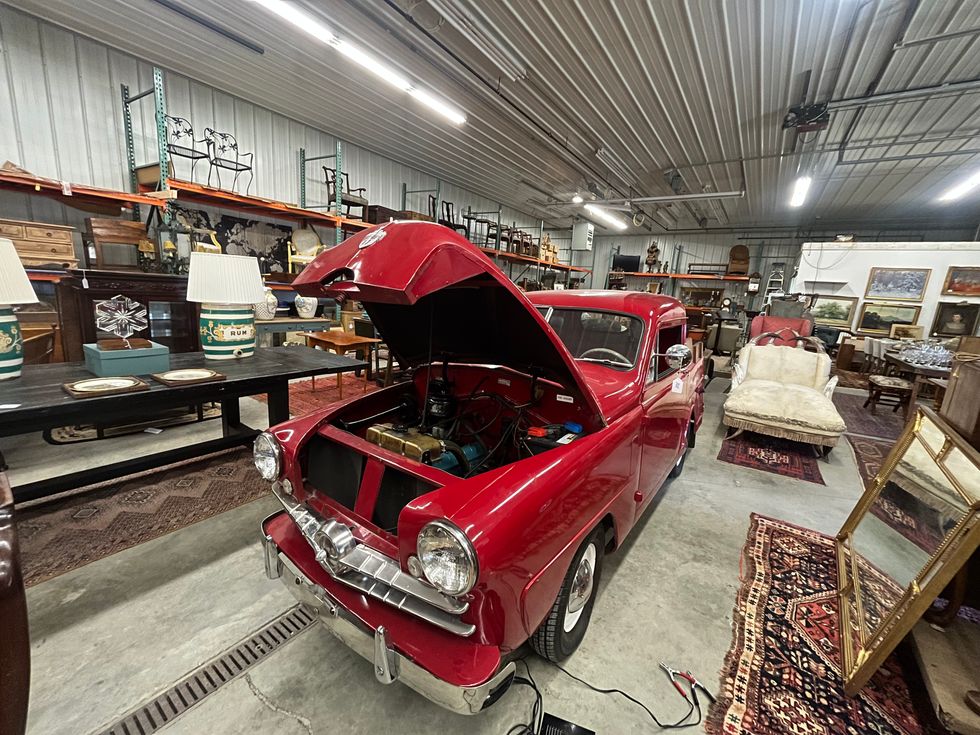 Hundreds of items at Stateline Auctions, including a candy-apple-red Crosley pickup truck.D.H. Callahan