Mike Williams made sense on issues
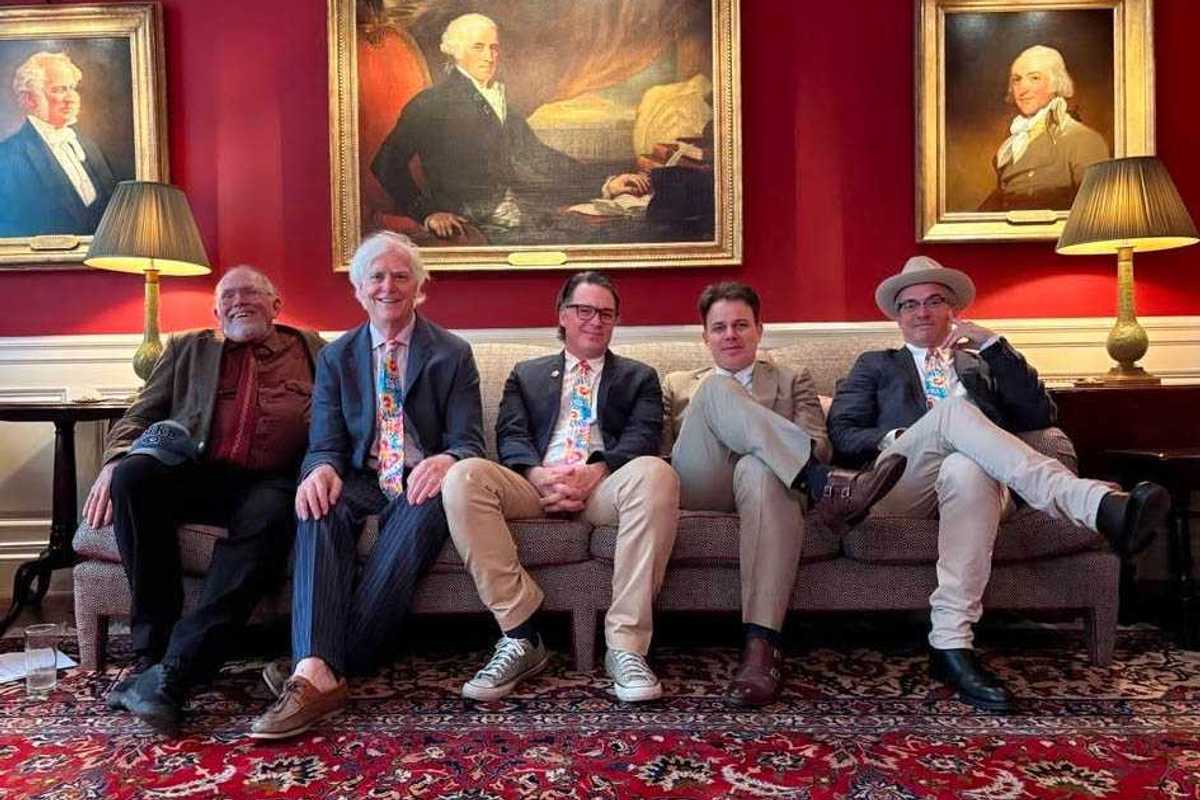
I want to reiterate my profound thanks to Liz and Tony Piel for their gracious hospitality at a meeting on Aug.13, sponsored by the Democratic Coalition of Northwest Connecticut to meet four people who are running for Chris Murphy’s Congressional seat in the 5th District.
One of the candidates, Mike Williams of New Preston, was especially convincing, not only because of his great charisma, but primarily because he offered two specific, concrete suggestions that would appeal to a vast majority of Americans, Republicans as well as Democrats.
He spoke about specific ways to help alleviate our concerns about the economy. I find most politicians, from each party, speak in such generalized terms of their hopes and desires as to leave me sensing they do not have workable, specific ideas.
His first suggestion was to greatly reduce the enormous cost of malpractice insurance. One of my doctors told me he is spending more than $100,000 annually for malpractice insurance. Dr. Malcolm Brown mentioned that for a very long time medical doctors have yearned for some relief to this exorbitant, unnecessary cost of medical care.
This is one step in the right direction, and something I think all voters would applaud. When one remembers the exploitation of the system of malpractice insurance by the lawsuits litigated by John Edwards, their anger should make the case even more appealing, and make this suggestion appealing.
His second suggestion was to use federal legislation to subsidize a vast increase in the use of solar power, here in Connecticut as well as elsewhere. Mr. Williams said such a program in the state of Oregon was working well. The trick will be to encourage private investors to dare to invest in proven technology.
It is my hope that any federal legislation would thoughtfully reduce the risk of investing in renewable energy sources. For instance, creating a floor for fuel oil prices by a sliding scale tax would make alternative sources truly attractive, as Tom Friedman has long advocated. Lower fuel cost, higher tax. Relatively constant cost for fuel.
There are other forms of renewable energy such as hydro power, geothermal power, wind power and photovoltaic power. Less reliance on oil would provide enormous benefits to the country by reducing the transfer of so much American wealth to foreign oil producers. The greatest economic benefit would be the employment of American workers to design, build, install and service alternative electrical generation. Those jobs cannot be sent overseas. And of course there would be enormous advantages by reducing air pollution.
It is my belief that a candidate offering workable positive suggestions will have an advantage over someone spouting hot air about wanting desirable objectives but not offering specifics. I think it is possible to do so without increasing federal spending.
Harry Hall
Sharon
Be careful if you let your cat outdoors
I am writing this to alert cat owners who let their cats out to be careful.
At the East Meadows housing complex, down by the ski jump, four indoor/outdoor cats have gone missing in the past month-and-a-half to month.
I let one of my guys out at about 8 p.m. on Monday, Aug. 8, and have not seen him since. Whenever he spends the night outside, he is always at the door waiting to be let in first things in the morning.
When I went around to other houses in the complex to ask them to keep an eye out, I learned that two other cats had gone missing in the past 30 days or more.
Then, my neighbors told me that they last saw their cat two nights after mine had gone missing.
There has been a fox spotted in some yards and many are convinced that it is causing these strange disappearances.
I don’t know. It’s got to be a very hungry, very nimble and very swift fox. No one has heard any animal fights or other noises. And there are no vultures flying to indicate that there have been deaths in the woods.
The worst part of this is the not knowing. I would feel so much better if I had confirmation that my sweet cat was dead. I hate just having him “missing,” not knowing what might have happened or is happening to him.
Has anyone else heard of an inordinately large amount of cats going missing recently?
PS: As I submitted this letter too late to appear in last week’s issue, I get to add an unfortunate update – since I wrote this initially, I have confirmed four more missing cats and have heard discussion of even more. We need to try to figure out what’s going on. (I still look for Marcel every evening and each morning, although I know he’s gone.)
Marianne Czernin
Salisbury
The need for good leadership
I am writing to support Chris Janelli’s comments in the Aug. 11 issue of The Lakeville Journal regarding the failure of leadership in D.C. Chris is a friend, and my own experience confirms that Chris chose the right Churchill quote to end his letter.
I had the opportunity to visit some of the Soviet Union and its satellites almost 50 years ago, and I have worked in Eastern Europe and the former Soviet Union in recent years. Fifty years ago Prague, Warsaw and Moscow were drab, fear-filled places whose standards of living were awful — unless you worked for the government. We were constantly accompanied by guides who told us how grand life was in the various “workers’ paradises,” but it was easy to see how grand it wasn’t and how stifling it really was.
We did of course see the sites of atrocities — Lidice and Auschwitz. The guides pointed out that these horrors were the result of imperialism, but if you pointed out to a guide that the crimes were committed by National Socialists, you got a long lecture that the Nazis were ever so different from the beneficent leaders of the USSR and its lucky satellites.
In Berlin in 1962, I witnessed the murder of Peter Fechter, shot and left to bleed to death for trying to cross the wall and become free.
The day Berliners tore down the wall was one of the happiest in my life. Freedom had taken a long time.
The difference between the two halves of Berlin should be enough to show anyone the failure of socialism, of a government that intruded on every minute of your life. A government that said, “It’s for your own good; we know best and control everything for your benefit,” was simply lying to survive, and that’s the problem with letting the government have too much control.
The communists of the 19th and 20th centuries began with Utopian dreams and hatred of their tsars and ended by becoming tsars who destroyed their economies. Why? Because they didn’t let their enslaved fellow citizens do anything by themselves, and the party members wanted to keep their power and privileges. Their failure of ideology resulted in leaders who could only stay in power through force. They failed.
As for civility of discourse, ask Trotsky. As for the person who made the obscene comment to Chris, go read Thomas Paine if you want to learn how to make your point without resorting to [deleted].
Tim Knowlton
East Canaan
We need to take a critical look at our schools
number of years ago, I wrote in a newspaper that Housatonic Valley Regional High School had not recognized that it had problems, therefore it had no solutions in hand. Until the New England Association of Schools and Colleges burst our bubble, this had gone on. I also wrote that good teachers don’t need tenure and any less-than-good teachers don’t deserve it.
It was obvious to me, by the clapping of hands, that the tenured teachers feel deserving. A few of the teachers made “feel good speeches,” which might lead one to think we should go on as usual.
The parents and taxpayers of this area have been handed pacifiers for far too long. The newspapers, as well, seldom report anything that shines a bad light on our schools’ performances. Oh, no, we can’t go there. Some criticism might even be healthy.
I also remember when one of the past superintendents said the Falls Village grammar school needed an addition to the school because we were going to have an increased enrollment. Was that a fact? No. If we hadn’t bonded out for that, we would have adequate funds for our new firehouse.
Priscilla Belcher
Falls Village
Deviltry at shopping center
Is there anyone out there who thinks, like I do, that the statue at the entrance to the Kent Green Shopping Center would be more suitable for the entrance gate to Hell? Are we trying to welcome visitors or make them think they’ve entered a satanic cult? What’s up with that?
It’s not like there’s a shortage of real art — and artists — in the area.
Christina Gyorsok
Cornwall

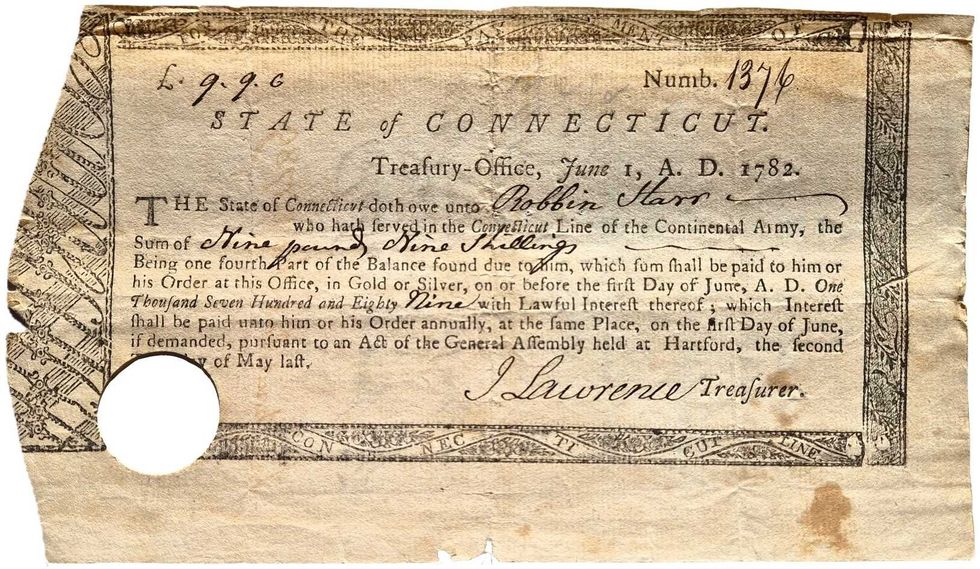 Pay Bill for Robin Starr’s service in the Continental Army.Courtesy the Alex Breanne Corporation
 John Mills speaking at Quinnipiac University.Courtesy the Alex Breanne Corporation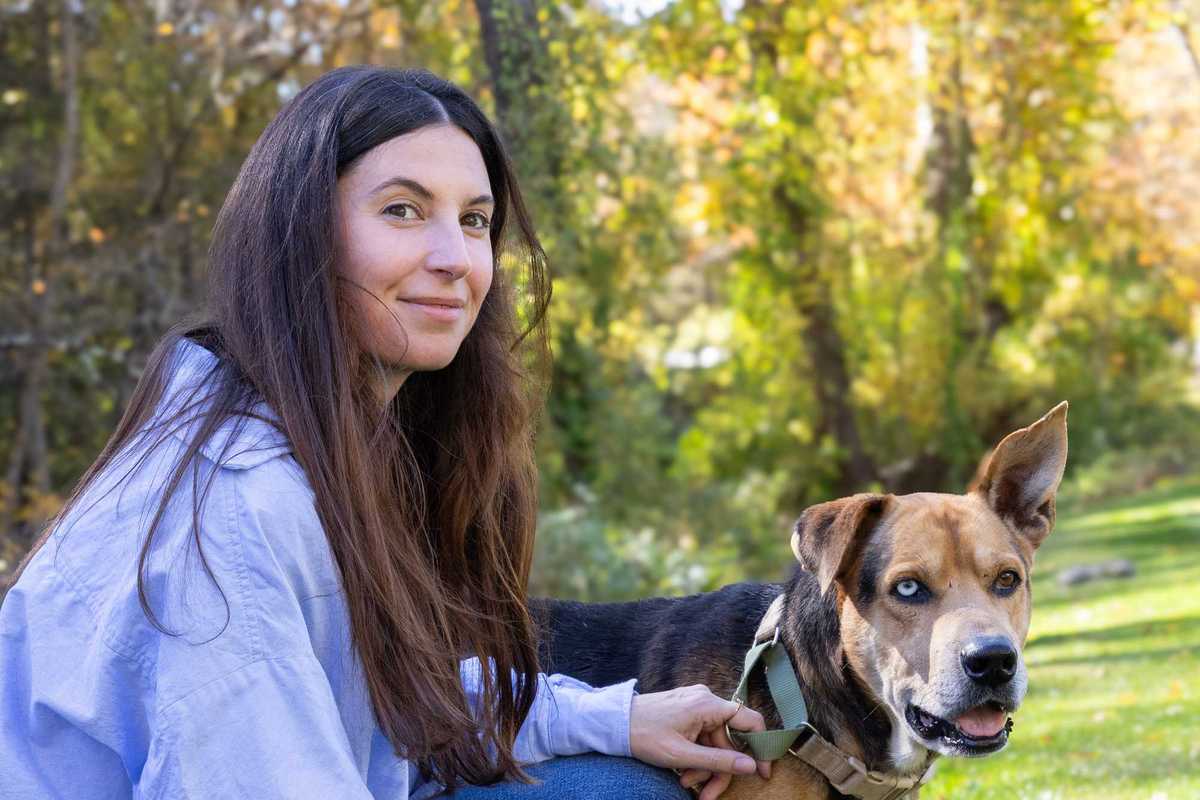
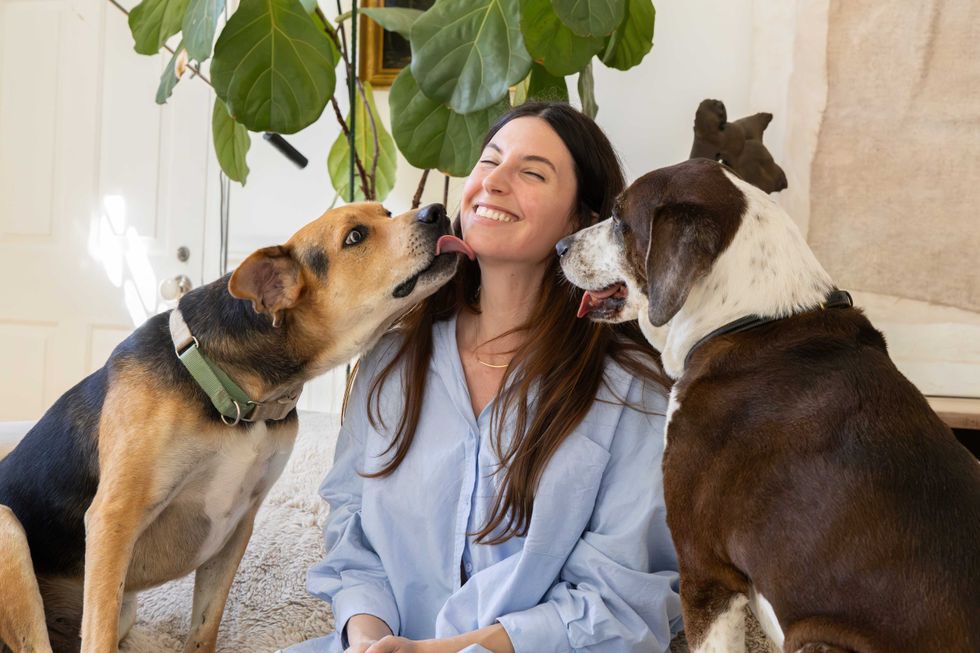 Stephanie Saetta,with her rescue dog George and Blue (left), a shepherd mix awaiting his forever home.Madi Long
 Blue, a 7 year-old Shepard mix, is waiting for his forever home. Madi Long