Letter was an eye-opener
How often does someone read a letter in The Journal that changes one’s life? But that’s what happened to me when I read Kathy Lauretano’s exposé of progressivism in the May 19 Journal.
It hit me most forcefully in her statement about “the educational system’s … teaching [students] contempt for their parents, ancestors, government, religion, history and culture.”
I used to love seeing and hearing the children at Sharon Center School, across the wetland from us, happily at play on breaks. Thanks to Ms. Lauretano, I now detest them for the polluted carriers of degeneration they are.
I used to respect teachers, too, but she has unmasked them as Pied Pipers, tools of progressivism.
Speaking of teachers and other public servants (her term: “dictatorial bureaucrats”) whose work I also used to value, such as road crews and town clerks and the police — she reveals that they are part of “corrupt and incompetent government programs to enslave the population through confiscation of personal property and money [i.e., taxes].” They not only drain our finances while enslaving us, but they retire with defined-benefit pensions — and we have to feed them for as long as they live!
When did this corruption begin? Since the Obama presidency? That’s less than three years old, and the inner decay of America must have taken much longer. Maybe it began during the previous eight under “Dick” Cheney. But I was up here then, too, and don’t recall being set straight by Ms. Lauretano. Why did she wait until now?
When I looked around me here in the Northwest Corner I thought I saw relatively well-fed and contented folks, many of us elderly. OK, naive!
But that broad facade of contentment has got to be tough for progressive puppet-masters to maintain when the reality behind it is, as Ms. Lauretano reports, that we elderly may be euthanized by Planned Parenthood, and, eluding that fate, put into re-education camps by one Bill Ayers, some 25 million of us to be executed if we resist. Retirement under progressivism will be no fun at all.
On that same score, I wonder how the progressive “dictatorial bureaucrats” covered up the fact that (her syntax was a little muddy here) the unions and “our president” (!) have terrorized “independent workers at home and in the workplace by threatening, beating and occasionally killing them.”
I have a minor concern. She is peeved about the idea of the “‘collective’ general welfare”; it does sound communistic (and redundant). But in our Constitution the phrase “general welfare” is a mandate set for our government in the very preamble as well as in Article I, Section 8.1.
And a small correction to Ms. Lauretano’s source list: “The Black Book of Communism” is not “by Harvard College,” but was published by Harvard College. Harvard College is a bunch of buildings and stuff; it is not a person and so it cannot write books. Other than that, Ms. Lauretano’s letter is some piece of work.
Alan Tucker
Sharon
Where do our medications come from, anyway?
Every one of us has taken medication, but have any of us ever wondered where the medicines come from? What about who researches them and how much time goes into that?
Not many of us think about these topics; however, they have become more and more important in the past few years. Most people think that the FDA does a thorough job researching medicines, but some are worried that there is not enough research about some vaccines.
For example, last year there were 32 deaths connected to the Gardasil vaccine. This medicine is used to prevent certain types of human papillomavirus (HPV) — specifically types 16, 18, 6, and 11.
“How could this have happened if the FDA researched it?” some people asked. However, others asked if the deaths were because the girls already had a risk for that disease — a need for that cure. Some think that the deaths may have been “joined” to the case because their parents were most likely looking for a thing to blame, because they lost their child; so they looked to the medicine that they were taking.
In another case, also having to do with children, a first-time father decided not to give his young child his vaccines. When asked why he decided not to do so, he responded with, “I just think that it’s a lot for a growing immune system to deal with.”
But not all people agreed with this. After being asked for her opinion, Dr. Kendall from the University of Connecticut said that she thought that the result would be the opposite and that vaccine rates would be increasing — not decreasing.
There are many different opinions about the ongoing discussion on the safety of child vaccines. Although this is not the only debate that doctors are embroiled in.
Another one, like the type of medicines that are best for people, is one of the most important things that is being analyzed. Many people think that medicines that are “nature derived” are the best for you.
Despite these thoughts, others still think that the “better” type of vaccines are the ones that have active ingredients in them because the cures with nonactive ingredients don’t work “as well” or “as quickly.”
However, all people will forever have different opinions as to which medicines are good for themselves and others around them. It is important for people to learn about what they are putting in their bodies.
For more information on medicines and what is being researched now, go to the PhRMA website at www.phrma.org. Take control of your health by being an informed patient.
Taylor Hurley
Eighth grade, Salisbury Central School
Salisbury
Drilling for gas
Natural gas drilling over the years has played a significant role in our lives, accounting for billions of dollars in our national economy in the form of natural gas production and consumption, as well as in employment.
Natural gas helps us in various ways each and every day: We cook with it, we heat our homes and water with it, and much of our electricity is generated from this resource. Due to its ever growing demand, natural gas is estimated to rise in production and consumption in the next 20 years.
What some don’t realize is that natural gas drilling has negative impacts. Natural gas drilling itself is very dangerous and is possibly at times very bad for the environment. Also, natural gas is a very combustible fluid, so the simplest spark could damage property or even injure or end the lives of people.
Recently in Mississippi, a public safety inspector found more than 800 leaks in the natural gas system that serves the town of Moss Point, nearly half of which are large enough to cause an immediate hazard to life or property.
Over the border from Connecticut in New York state is an area called the Marcellus shale, which is being drilled for its natural gas deposits. Shale gas exists in many other states, from Ohio to West Virginia. Problems like those that have occurred in Mississippi have not yet happened in New York, but it is possibly only a matter of time; the risk of gas leaks and the devastation that could occur are high.
Additionally, natural gas and oil spills in the sea can cause damage to aquatic ecosystems, as well as damage the economy for fishermen and coastal restaurants.
We need to be concerned about our use of our natural gas resource; we need to take steps now to slow down its use. We need to look to alternative solutions; we can use different fuels, and today we are, such as ethanol from corn. We must stop the overuse of natural gas or we may suffer consequences.
Marcus Tygart
Eighth grade
Salisbury Central School
Salisbury
Is it worth it to use animals as test subjects?
Scientists are always looking for new ways to improve health conditions for people. Companies that sell consumer products such as makeup are also looking for ways to expand by creating new products to sell. We are constantly testing new medicines and ways to make us healthier and ways to make our lives more glamorous.
How is this done? How do we test these new anesthetics and consumer products to make sure they are safe for us to use? We test on animals.
Instead of using an actual human to test a product that will be used by humans, we find an alternative. Animals are easy to come by and have many of the same body functions as humans.
So, put the pieces together: If we have no human volunteering to test a product another human will use, we just use an animal. They pretty much have no say in the matter. They can’t talk, so they can’t refuse being used as a test subject.
That is why, every day, animals suffer through grueling tests and vivisection. That is why animals are cut open, forced to take pills and have their eyes burnt by eyeshadow. But it’s all for the benefit of our race. We shouldn’t have to feel bad about causing millions of animals pain if it benefits us, right?
Well, many people, myself included, would disagree. Animals have rights. If they were able to talk, if they were able to stand up for themselves, they would most definitely disagree to being used as test subjects. They are not that different from us. After all, we do use them in testing because they have similarities to us.
We would never want to be put through tests that animals have to be put through. So why should they? Are they really lesser than us?
Certainly we can find an alternative to using animals. With our advancements in technology, we could create simulations of humans to test the medicine or consumer product on.
However, we still keep using animals to test products on. We still make them suffer pain far beyond our comprehension. Is it worth it? Is our health or beauty really worth the lives of millions of innocent animals?
Sarah Miller
Eighth grade
Salisbury Central School
Salisbury
Thanks to all who helped with Kent’s Memorial Day
As the parade marshal and adjutant of American Legion Post No. 153 in Kent, I thank all of the organizations and individuals who made the Kent Memorial Day Parade such a success, including all U.S. military veterans, members of American Legion Hall Jennings Post No. 153, Kent Fire Department, Kent Center School Band (David Poirier, director), William McCann, Rick Osborne, Peter Duncan, Jerry Tobin, Williston B. Case, Donald Gleason and Kent Library Association.
Also First Selectman Bruce Adams, the Rev. Roger White of St. Andrew’s Church, the Rev. Melinda Keck of the First Congregational Church of Kent, the Rev. Thomas Berberich, Sacred Heart Catholic Church, Kent Boy Scouts and Cub Scouts, Kent Girl Scouts and Brownies and Bethany Keck, who sang so beautifully.
Special thanks to Timothy Brown, who along with Richard and Charlotte Lindsey put up the flags on Main Street, and to the Massachusetts National Guard for the outstanding flyover.
I commend and thank the Kent Lions Club for its continued support by handing out more than 800 flags to the spectators, providing refreshments and the school bus that transported the many residents and students back to Kent Center School at the conclusion of the parade.
I also extend my gratitude to the many residents who attended the parade even though some of them may have been discouraged by the threat of the early morning thunderstorms. Thank you one and all for honoring our veterans both living and deceased.
Andrew C. Ocif, Adjutant
Hall-Jennings American
Legion Post No. 153
Kent

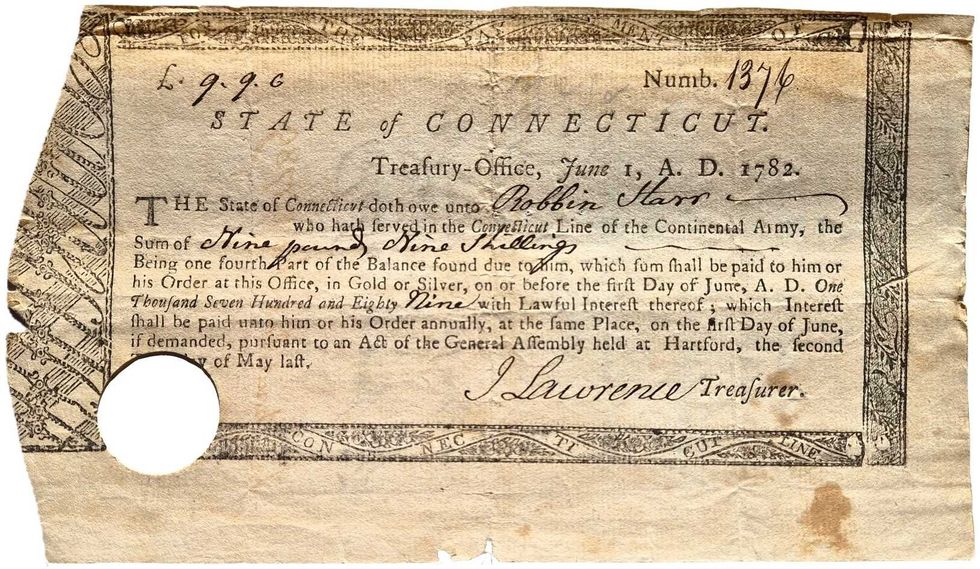 Pay Bill for Robin Starr’s service in the Continental Army.Courtesy the Alex Breanne Corporation
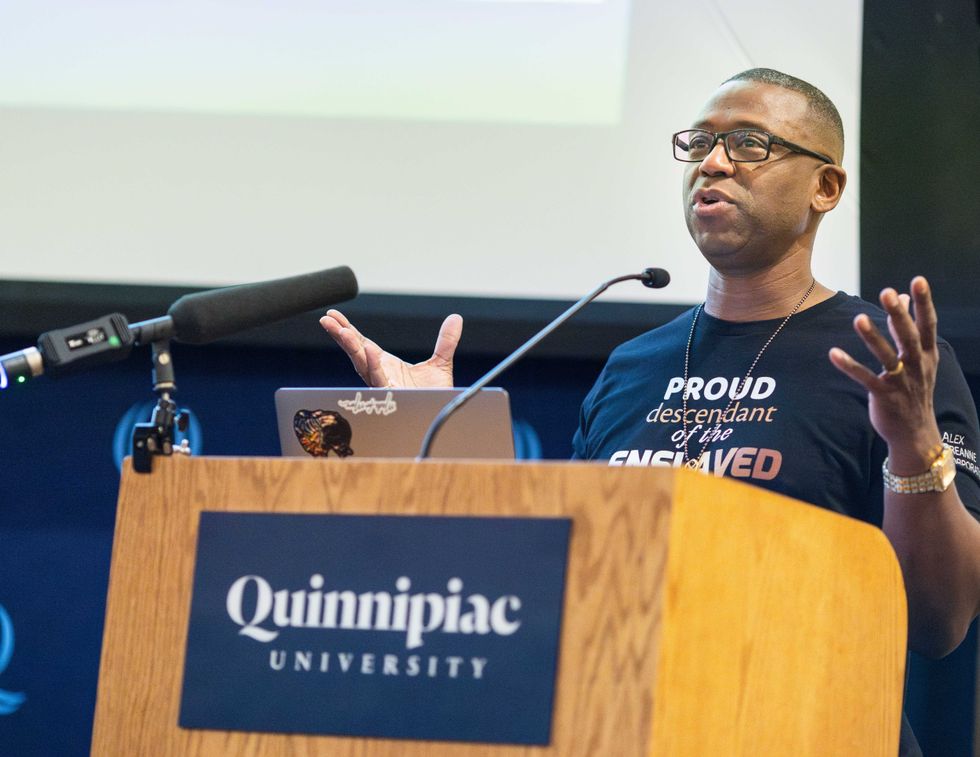 John Mills speaking at Quinnipiac University.Courtesy the Alex Breanne Corporation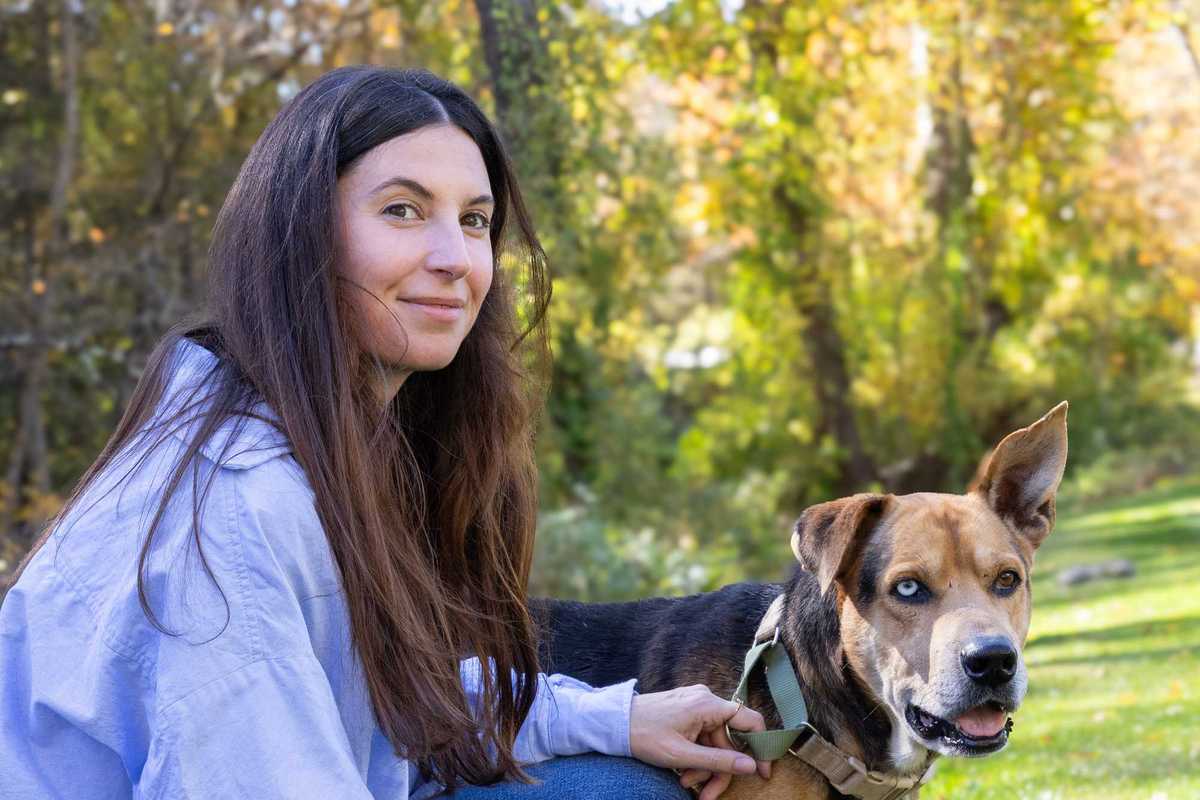
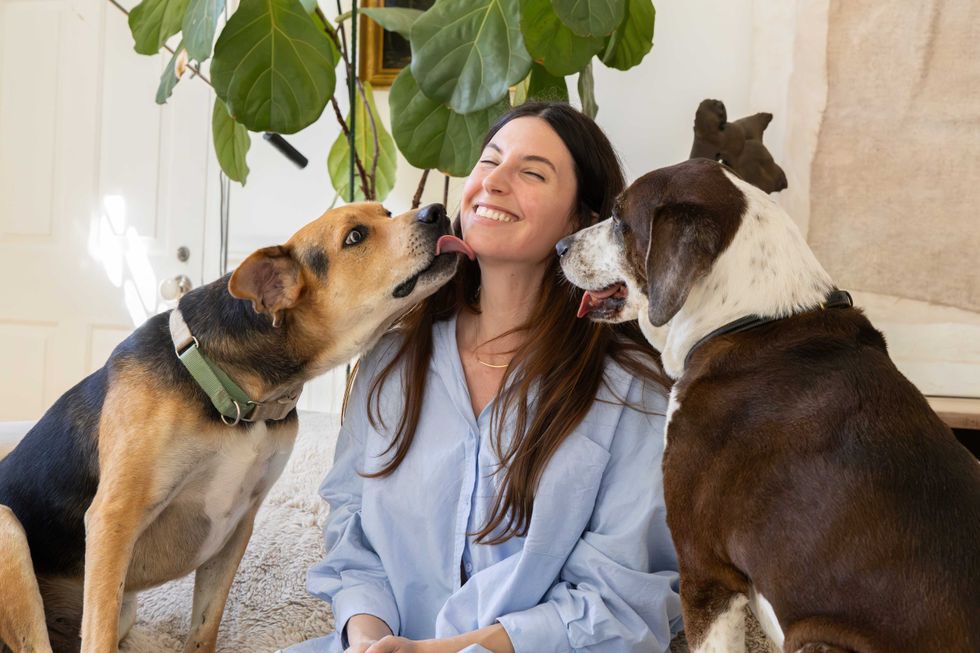 Stephanie Saetta,with her rescue dog George and Blue (left), a shepherd mix awaiting his forever home.Madi Long
 Blue, a 7 year-old Shepard mix, is waiting for his forever home. Madi Long