Hollywood has a grand tradition of making message movies, which seek to bring public attention to important issues. Big movie stars, the thinking goes, will get people to care about something that they would otherwise find too dull, or distasteful, or upsetting, to educate themselves about. Or too confusing, which leads to another aspect of many of these films, especially older ones: They are simple. The issues are black and white, and the little guy is pitted against Big Something — Big Business, usually, but Big Government comes a close second.
In recent years, however, the trend has been to add moral complexity (and lots of quick, confusing editing) by interweaving plots that shed light on all the players — imagine if we followed the owner of that nuclear plant where Karen Silkwood worked as he played catch with his daughter and cared for his aging mom, and learned about painful events in his childhood that led him to put his faith in plutonium.
"Rendition" tries valiantly to blend the tried-and-true message movie formula with the more recent trend of multiple storylines, only the filmmakers missed the memo about moral complexity. Here, Big Government, in the person of CIA honcho Corinne Whitman (an icy Meryl Streep) sends an apparently innocent man, Anwar El-Ibrahimi (Omar Metwally), an Egyptian-born engineer who has lived most of his life in the United States, to be tortured in another country, under an American policy, spawned in the Clinton years but used much more since 9/11, called "extreme rendition."
El-Ibrahimi’s crime is receiving calls placed by a cell phone that may or may not belong to a known terrorist who has been implicated in a suicide bombing. He claims it’s a mistake and that he’s innocent, and here’s where the filmmakers miss a huge opportunity: the audience knows it too. We’ve been tipped off from the very start. So the who-dunnit is not, "is he or isn’t he a terrorist," but, what heroic white American will be the one to bring the truth to light? Will it be his lovely, intrepid and very pregnant spouse, Isabella (Reese Witherspoon, her talent wasted on a paint-by-numbers "good wife" role)? Or Alan Smith (Peter Saarsgard), the ex-boyfriend Isabella tracks down who now, conveniently, works for a senator and is able, with a few well-placed phone calls, to determine El-Ibrahimi’s whereabouts and why he’s been taken? Or will it be Daniel Freeman, (Jake Gyllenhaal), a CIA pencil pusher who spends his off-hours smoking hashish in the unnamed North African country where most of the action takes place, suddenly thrust into the thick of the action by the death of a colleague in the very suicide bombing in which El-Ibrahimi may be complicit.
Of the big-name stars, only Gyllenhaal adds a sense of mystery. At first we don’t know, watching his huge eyes watching the torture in progress, whether he’s so incensed by the death of his colleague that he approves of the waterboarding, electrocution, and utter humiliation Ibrahimi endures. This mystery doesn’t last long, though. He reveals his sympathies with the only funny line in the movie, which I won’t spoil by repeating.
The final story woven into the mix is that of chief of police Abasi Fawal, who impassively conducts the torture (only after we see him cuddling with his small daughter, of course!) and his rebellious older daughter, Fatima, who has run away after falling in love with Khalid, a fellow student who hangs with the wrong crowd.
Although the story of Fatima and Khalid is the most compelling, in large part because of newcomer Zineb Oukach’s subtle performance as a young girl drawn into a world she can barely comprehend, the film ultimately leaves their world behind with barely a backward glance, ending in America, with Witherspoon. All this seems to say that the torture of foreigners by the U.S. government is really only important, at least in Hollywood, insofar as it affects you and me personally.
"Rendition" is rated R for language and violence, including very graphic scenes of torture. It is playing at the Moviehouse in Millerton, NY.



 Tiffany Lemelin, shelter manager, brushing Marsala upon arrival.Provided
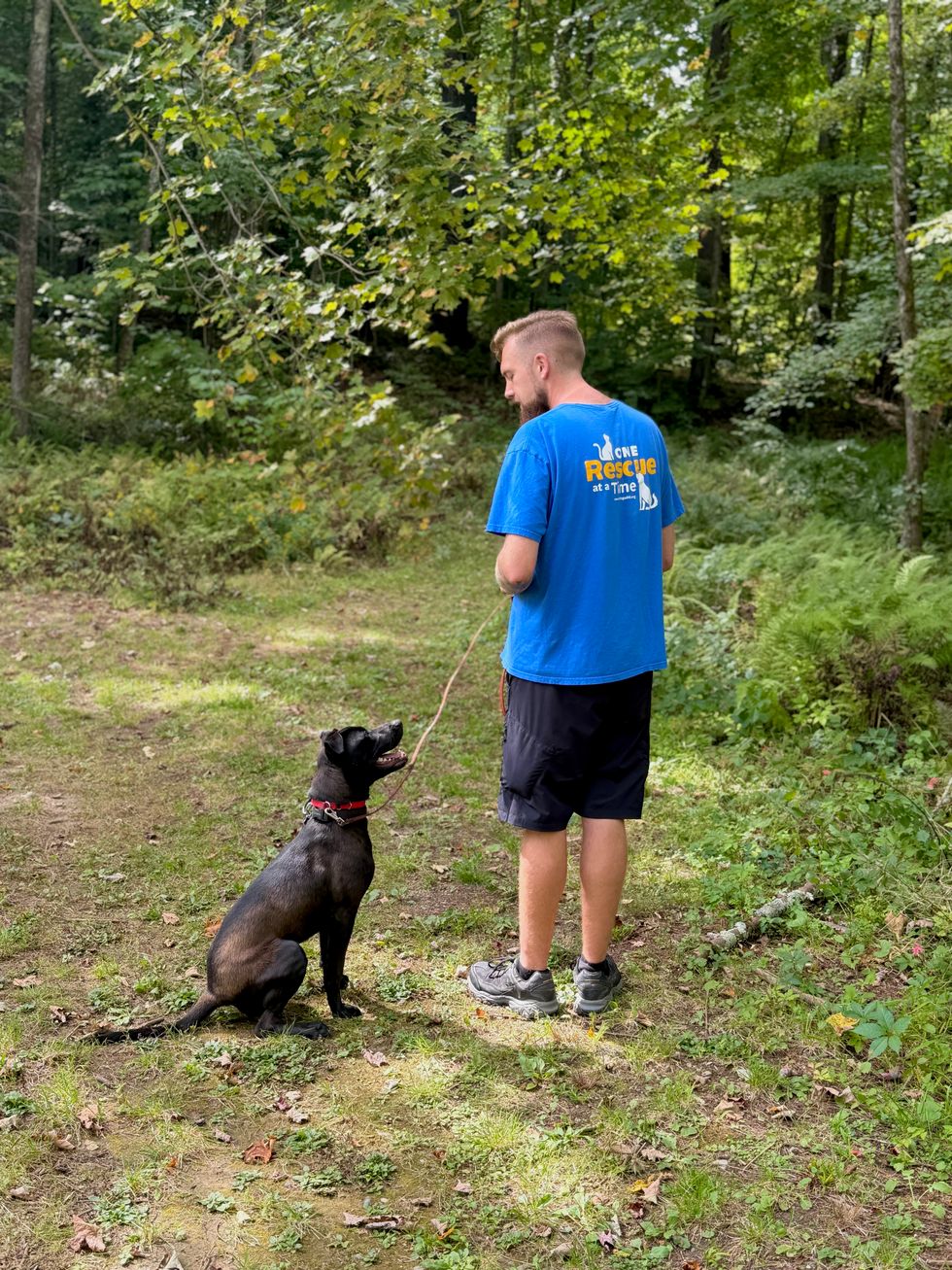 Michael DeBarba, certified dog trainer working with Marsala.Jennifer Almquist
 Marsala wins a heart.Jennifer Almquist

 Sadie, center, a Carolina dog, plays with her friend Negra, a terrier mix. Bella Linda, the small poodle, has since been adopted.L. Tomaino
 Wesley, a young, exuberant mix, is looking for an active home.L. Tomaino
 Bonnie and Clyde, an affectionate terrier pair.L. Tomaino

 Provided