Of course it figures that the one type of mint I really, really want to grow is possibly the only type of mint that is really, really fussy. I’m not talking about your garden-variety spearmint/peppermint/ chocolate mint plants, the kind that can overpower almost any of the weeds in a flowerbed (I use mint as groundcover under my peonies). I’m talking about a distant cousin called perilla, known to fans of Japanese food as the shiso or plum leaf. I’m not clear on why it’s called plum leaf when it’s actually a type of mint. And I’m not sure why it’s a type of mint if it’s so hard to grow.Most types of mint are so vigorous that even I can grow them from a cutting (and that’s saying something). Shiso has proved more difficult. I’ve tried to grow it from seeds and have failed several times (which isn’t all that surprising, since I usually don’t have much success with seeds). This year, I enlisted some help, in the form of my friend and former neighbor, Jimmy Lipton. Jimmy took one look at the seeds I ordered from the Internet and politely filed them away in the trash. He ordered some sturdier seeds from Johnny’s Selected Seeds and, with grow lights, peat pots and lots of tender loving care, he coaxed a dozen little plants to come to life from as many little seeds. I put them in my garden today, and am hoping they will turn into big, healthy plants that will provide me with a sharp-edged green that can enliven my salads (they’re especially good when paired with tomatoes), pep up platters full of asparagus and of course add bite to the wonderful Japanese sushi roll known as umejisho (rice, pickled Japanese plums, soy-sauce enhanced dried Bonito fish and shiso leaf, all wrapped in a nice crisp sheet of black nori seaweed). I love shiso for its flavor, which is almost indescribable, and for the cats-tongue rasp of the surface of the leaves. Shiso also has medicinal qualities and is used in ancient Chinese medicine to stimulate the immune system.Unfortunately, no shiso leaves were available for the photo for this week’s column; and since no one up here sells shiso leaves, it seems unfair to devote the whole column to them. All the other types of mint are now super-abundant, in backyard gardens and at farmstands and markets. Buy a bunch of it to throw in cold drinks. A simple club soda is way better with even a single sprig of mint. If you live in Japan, or are planning a visit there soon, you can sample a shiso-flavored Pepsi. And then of course there are mojitos, which can help you ingest loads and loads of mint (along with a big dose of rum and a fair amount of sugar). Mint has surprisingly significant health benefits, although probably not enough to offset the impact of a sugar-laced cocktail. It is believed to help your digestion. It’s supposed to be a really good antiseptic; not sure if that means you can crush leaves on an open wound when you’re out in the woods, to avoid infection. I think that’s one of the questions whose answer changes depending on whom you ask.Mint is also a diuretic, and can help reduce water retention. But if you do have multiple mojitos over the Memorial Day weekend, be sure to replenish the fluids in your body. Speaking of gardens, as we were, most serious backyard farmers of my acquaintance have planted their peas and are seeing sprouts. Whether or not you’ve planted some peas, do go out and buy some mint plants. By the time peas are at farmstands and markets, or by the time your peas have reached the edible stage, you should have more than enough mint to complete this recipe.Mint, pea and leek soupAdapted from Ina Garten’s “Barefoot Contessa at Home”Serves six2 tablespoons unsalted butter; 2 cups chopped leeks, white and light green parts; 1 cup chopped shallots; 4 cups chicken stock; 5 cups freshly shelled peas or two (10-ounce) packages frozen peas; 2/3 cup chopped fresh mint leaves, loosely packed; 2 teaspoons coarse salt; 1/2 teaspoon freshly ground black pepper; 1/2 cup Greek yogurt Heat the butter in a large saucepan, add the leeks and shallot, and cook over medium-low heat for a few minutes, until the shallots are tender. Add the chicken stock, increase the heat to high and bring to a boil. Add the peas and cook for 3 to 5 minutes, until the peas are tender. (Frozen peas will take only 3 minutes.) Remove from the heat and add the mint, salt and pepper.Place a cup of soup in a blender, secure the lid on top and purée on low speed. With the blender still running, open the venthole in the lid and slowly add more soup until the blender is three-quarters full. Pour the soup into a large bowl. Repeat the blending process until all the soup is puréed. Whisk in the Greek yogurt and taste for seasoning. Serve hot.
Latest News
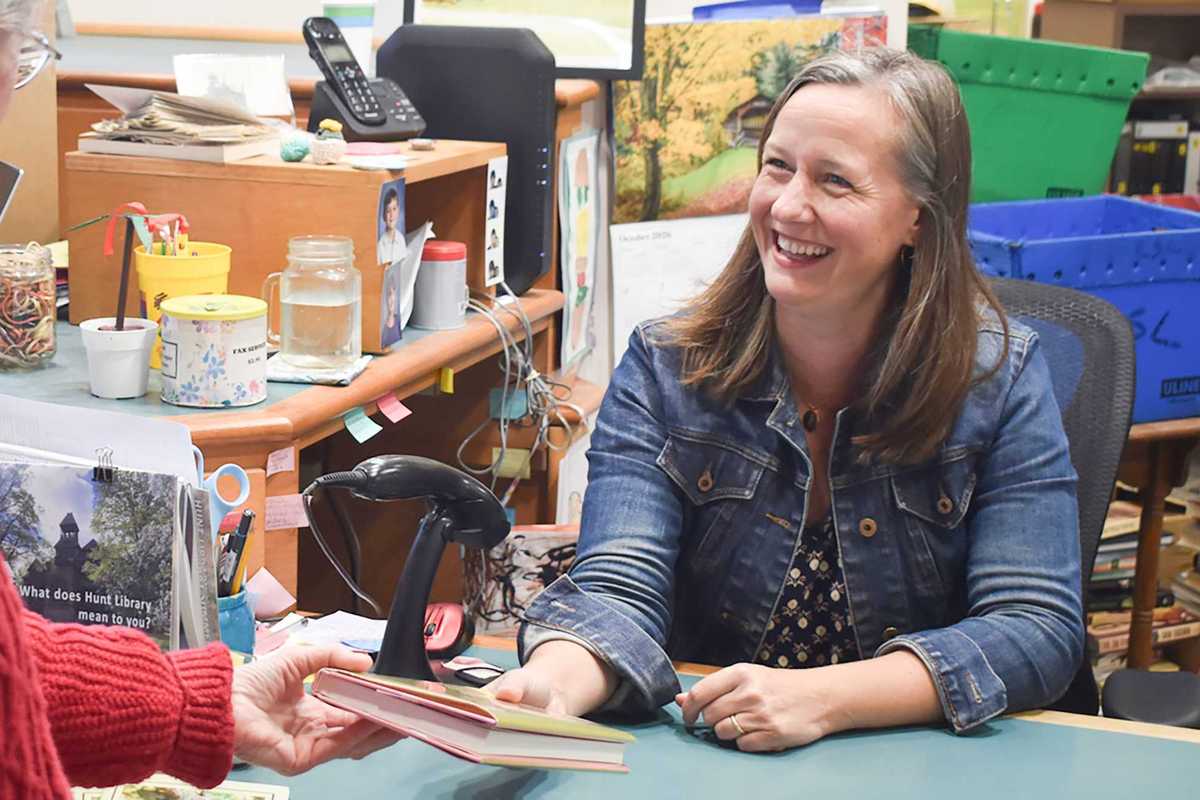
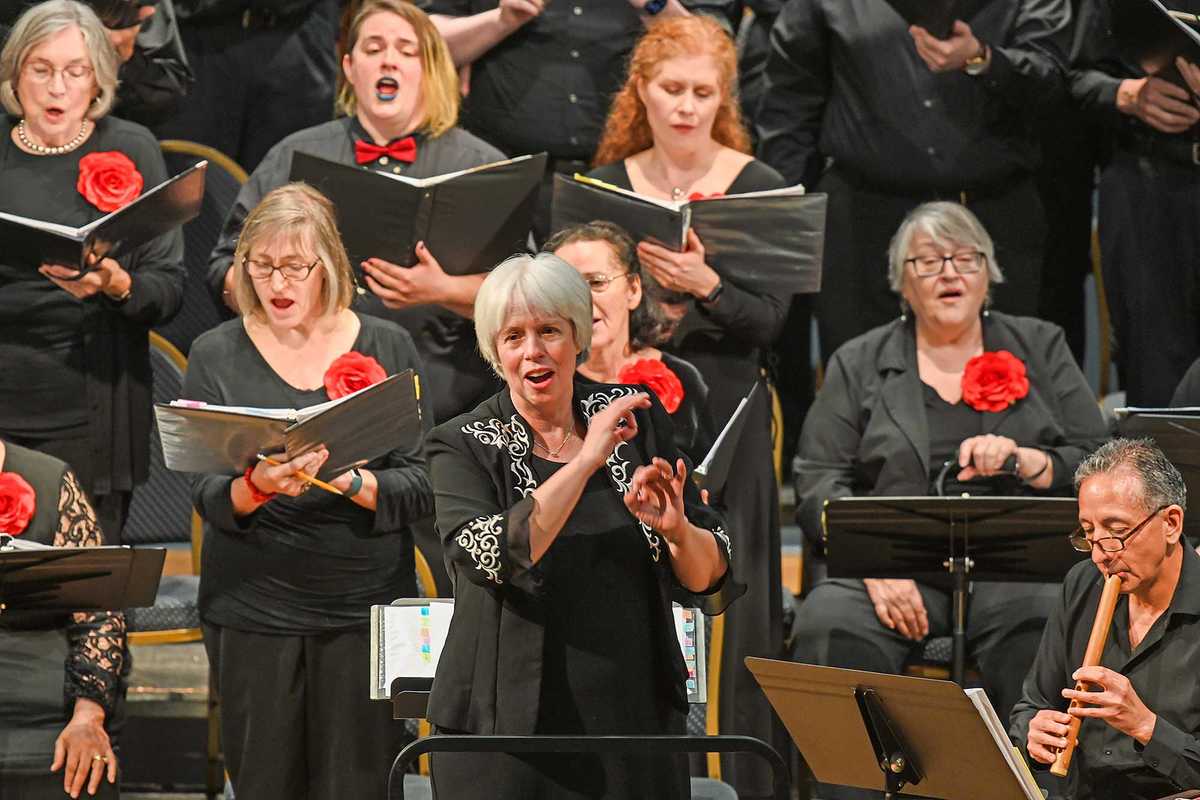
Meg Sher, executive director of the David M. Hunt Library in Falls Village.
“I was a library kid. I walked to the library after school,” she said.
For Sher, the library is as much about the people as it about the books.
“Part of the job I love so much is that running the library is such a community,” she said.
She treasures the relationships she has built, whether recommending books, celebrating accomplishments or helping patrons through difficult times.
“I am thankful that our community is so supportive of the library, unlike what is happening in some other places where librarians are villainized,” Sher said.
Sher takes pride in the Hunt Library’s reputation for being “open and welcoming to everyone. People come in and see things and get pulled into things they weren’t expecting. Our library is seen as a positive force.”
Sher came to Falls Village after being awarded a fellowship at Adamah Farm, then a program of the Isabella Freedman Jewish Retreat Center. She worked at pickling, in the greenhouse and later in the development office. She also worked as a nanny.
At the same time, “I was in the library all the time,” she recalled. “I’m a voracious reader. The library is where I met a lot of my first friends in Falls Village.”
She became assistant librarian at Hunt and worked in that position for almost a decade before becoming the executive director four years ago.
 Meg Sher, executive director of the David M. Hunt Library in Falls Village.L. Tomaino
Sher met her husband, Adam, while working at Adamah. They had their wedding there in 2012. He now emcees many events which she co-organizes with the Falls Village Recreation Commission.
Sher and her family live near the library.
“It’s an easy commute,” she said with a smile. “My kids run back and forth. I can go home to walk the dog if I need to.”
“My kids have grown up here.” Her oldest son, Eli, “loves volunteering. He helps with Augustfest and often helps set up chairs for ArtWall gatherings.” Her younger son, Noah, is often at events and was eager to taste cookies at last year’s holiday cookie swap.
When she is not at the library, Sher likes to hike with her family. Bella, their Portuguese water dog, often accompanies them.
Sher enjoys seeking out people to offer events at the library.
“I do a lot of different community programming. It is one of my favorite parts of the job.”
Augustfest, featuring food, music and an auction, is the library’s biggest fundraiser.
“This summer we had a record 152 attendees, which was pretty incredible.”
Yonah Sadeh, a filmmaker from Falls Village, inaugurated the VideoWall this year, Sher explained.
“I’ve known Yonah since he was two. It’s wonderful to work with him as an adult.”
The VideoWall complements the library’s ArtWall, which showcases a new artist each month. Sher praised the ArtWall committee for its work and highlighted December’s popular “12x12 Show,” featuring works by local artists, each measuring 12 by 12 inches and priced at $150.
Sher added that some of the artists who exhibit at the ArtWall offer workshops to students at Kellogg School, next door to the library. In September, artist Danielle Mailer worked with the children. Vincent Inconiglios taught a class last November.
Being next to the school, said Sher, is a great advantage.
“Kids are coming after school, to see friends, work on projects, find a great book. Kids that love the library end up using the library as grownups.”
This past year, in partnership with Adamah, the library and school created a garden, with excess produce made available at The Center on Main.
This year is Sher’s second year participating in the Troutbeck Symposium in Amenia with James King, director of the library at Salisbury School. The Troutbeck Symposium is “a gathering of a year of student historical inquiry across the region” in which students “uncover stories that have been overlooked, forgotten, or never recorded.”
Last year, Sher and King began a project with a group of students researching Irish immigrants in Falls Village, exploring ancestry and creating small magazines about their findings.
They continued this year, visiting St. Patrick’s Catholic Cemetery on Dublin Road, cleaning seven gravestones and even righting one with the help of stonemason and gravestone restoration expert Karl Munson. Paul Kozeazny, a representative of the Catholic archdiocese, helped secure access to the site.
A film documenting their activities will be shown at the symposium in spring 2027.
A full schedule of programs and events, ranging from tech help to ceramic mug-making, can be found on the library’s website.
Despite spending her days surrounded by books, and a busy schedule of programming, Sher still loves to settle in with a book at home.
For more information on library programs and events, visit huntlibrary.org

Want more of our stories on Google? Click here to make us a Preferred Source.

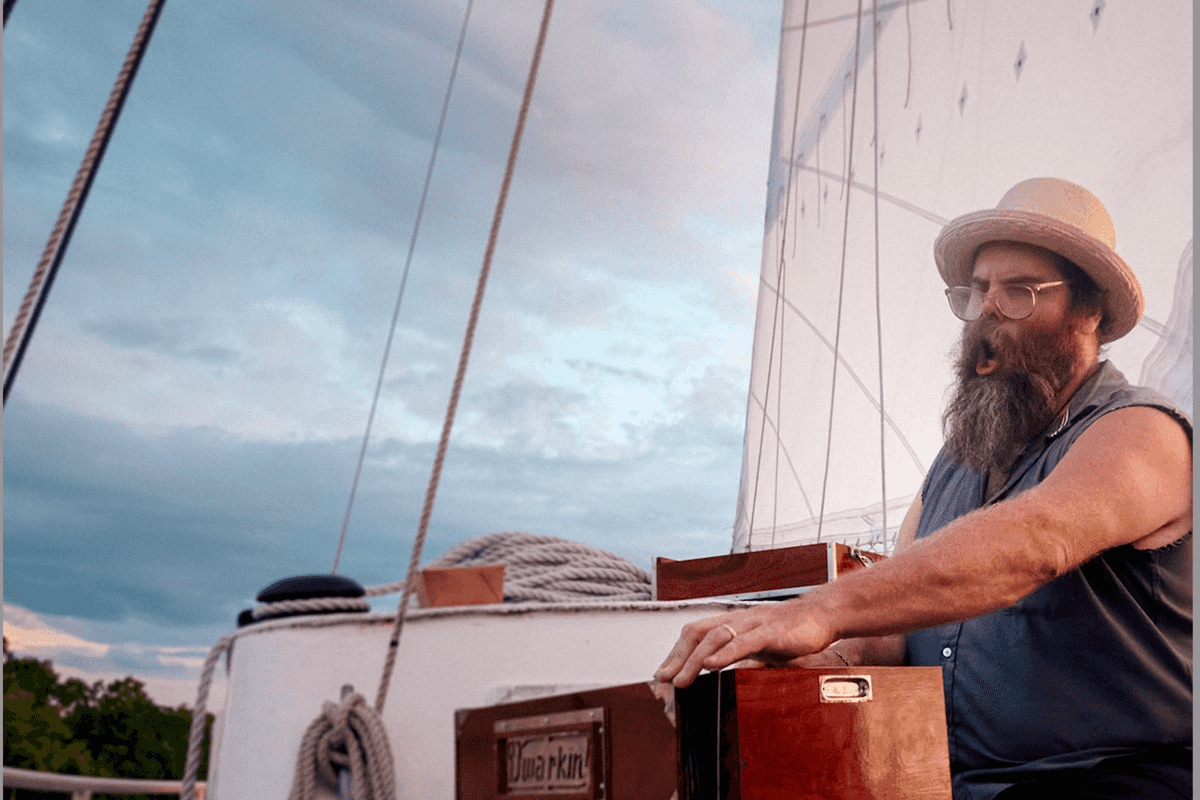

Touré was born in northern Mali in 1981. His father, the renowned guitarist Ali Farka Touré, came from a family of soldiers and wanted his son to join the army. The younger Touré studied drums and the calabash and practiced guitar in secret. He earned his father’s blessing to pursue music shortly before Ali died in 2006, and they played two tracks together on Vieux’s debut album.
Touré is known for his deft, polyrhythmic playing, and his songs grow out of riffs that repeat and layer to hypnotic effect. He draws on rock, blues, Latin music and various African traditions. This distinctive blend builds on his father’s work adapting the sonic traditions of Mali’s arid north to the guitar.
Vieux’s album “Mon Pays” (“My Country,” 2013) honored Mali’s culture after Tuareg separatists and extremist groups seized the north in 2012. “Samba” (2017) was recorded before about 50 listeners in Woodstock, New York. In 2022 came “Les Racines” (“The Roots”), a return to his father’s desert blues, and “Ali,” on which he and the trio Khruangbin reworked eight of the elder Touré’s songs.
Touré leads the Ali Farka Touré Foundation, which focuses on cultural and educational work in Mali. Around the anniversary of Ali’s death, it holds a festival in Bamako, Mali’s capital. Bamako has been under blockade for much of the past year, besieged by JNIM, an al-Qaeda affiliate. Against this backdrop, Touré continues to carry the music of Mali to audiences abroad.
At the Nov. 5 concert, Touré’s desert blues will share the bill with Gnawa, the music LanGus plays, which developed in Morocco among West Africans who were brought north across the desert as enslaved people. Gnawa is religious music traditionally performed at all-night healing ceremonies called lila, intended to carry participants into trance.
 Samir LanGusProvided
LanGus was born and raised outside Agadir, Morocco, and began learning Gnawa from its masters at age 8. He plays the sintir, a three-stringed bass lute made of wood and camel skin. The player strikes a low string with the thumb to create a deep, resonant pulse. Iron castanets clatter over the sintir’s bass line, and vocalists trade call-and-response refrains.
LanGus infuses the tradition with jazz and improvisation. In New York, he founded the ensemble Innov Gnawa. His first solo album, “Gnawa Love,” came out in February.
Touré and LanGus’s Nov. 5 concert is one of the last public events at Race Brook Lodge, which is for sale and ended full-service operations at the end of 2025. The lodge’s final scheduled event, on Nov. 6, is an evening of Rumi’s poetry with translator and vocalist Haleh Liza Gafori, cellist Isabel Castellvi and ceremonial bard James Bird.
For tickets, visit rblodge.com.
James FitzGerald is a student at Yale Law School, where he focuses on ecological restoration and international environmental cooperation. He splits his time between Lakeville and New Haven.
Want more of our stories on Google? Click here to make us a Preferred Source.