SHARON — It takes a certain kind of person to balance three careers successfully. Peter Steiner of Sharon seems to have figured out the trick.
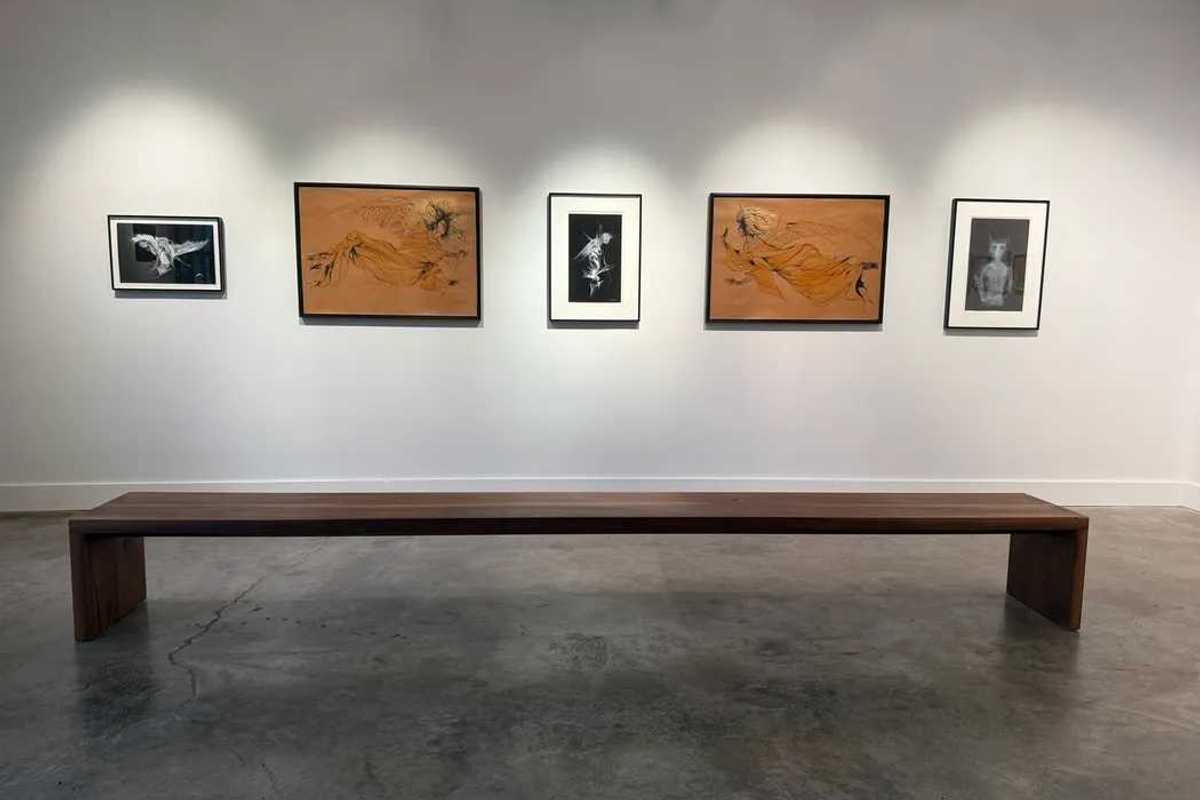
Steiner is probably best known as a New Yorker magazine cartoonist. He began submitting cartoons in 1977 and, over the past 30 years, the magazine has published more than 400 of them. But he is also a painter and an artist. He had a show of portraits in Roxbury last January and will have a show at the Hotchkiss Library in Sharon in December.
To complete the trifecta, he is also a successful novelist and has just released the third in a series of thrillers set in the south of France. It’s called “The Terrorist,� and it follows the first two books: “Le Crime� and “L’Assassin.�
He will sign copies at Darren Winston Bookseller in Sharon on July 17 and at the Hotchkiss Library of Sharon on Aug. 6. And he will speak at the NorthEast-Millerton Library Annex, 28 Century Blvd., on Saturday, June 26, at 3 p.m.
Perhaps it is appropriate that this career, which combines words and images, began with cartooning, a mix of, well, words and images.
“I’ve been cartooning for as long as I can remember,� Steiner said. “I started in junior high school, maybe even before that. I was good at it. It was one of the few things I was good at, at the time.�
After he left the Army, Steiner went to graduate school and earned a degree in German literature, which he taught at Dickinson College in Pennsylvania.
“I burned out there and decided I’d try being an artist,� he said. “I was painting and cartooning at the same time. Cartooning caught on first. I started getting paid for cartoons, so I went in that direction.�
Steiner said he first sold cartoons to newspapers in Georgia and Virginia before The New Yorker began to buy his work.
But he didn’t move north until his wife, Jane Cook, retired from her job in Virginia. With three grown stepchildren and a very flexible job, Steiner realized they didn’t need to stay where they were; they could live anywhere.
“We drew a circle around New York City, and this is where we landed,� he said.
Steiner and Cook moved to Sharon in 2003.
“It’s so beautiful. The whole area is just spectacular. And we found a nice house.�
They also own a home about 150 miles southwest of Paris, in a little town on the river Deme, called Beaumont-Sur-Deme. Steiner said they travel to France about twice a year, spending a total of two-and-a-half to three months there.
Steiner’s three novels are set in France, inspired by his stays there.
“I love France,� he said. “I love writing about the landscape and the walking and the cooking and friends meeting at the cafe.�
Steiner said his venture into writing is a more recent endeavor, sparked by the experience of sitting with his father as he was dying.
“When my father was ill, I started keeping a journal,� he said. “Well, it wasn’t really a journal. It was more ruminations about our relationship and death and illness. At some point it seemed kind of unfocused, so I decided to turn it into a piece of fiction, and it ended up a novel. It seemed pretty good to me, so I thought I would try to get it published.�
The book was published as “A French Country Murder� in 2003 (the title was changed to “Le Crime� when it was reprinted in paperback) and follows the exploits of a former CIA agent who retires to France. He is thrown back into the world of espionage when a dead body is dumped on his doorstep.
Steiner laughed when asked if his father was ex-CIA.
“The closest I ever came to the CIA was when I was in Virginia,� he said. “But you can make stuff up. You read enough in the paper to know kinda how they’re doing. You can write fiction in such a way that it seems you know more than you actually do.�
The mystery was successful enough that it spawned two more books following the same character, “L’Assassin� and the recently published “The Terrorist.�
“He’s sort of an alter ego,� Steiner said of Louis Morgon, his CIA agent. “I like the situation.�
And, he added, “It’s a way to fantasize about living in France.�
Steiner said his forays into painting and writing have been a treat for him and that he has been doing less cartooning lately.
“I do a lot of painting,� he said. “Several years ago I did portraits of people I knew, and a lot of self-portraits of myself making funny faces. And I really like writing. When I was cartooning, I was trying to make a living. This is different. There’s no pressure. I don’t have to do anything, so I just do it the way I want to do it.�
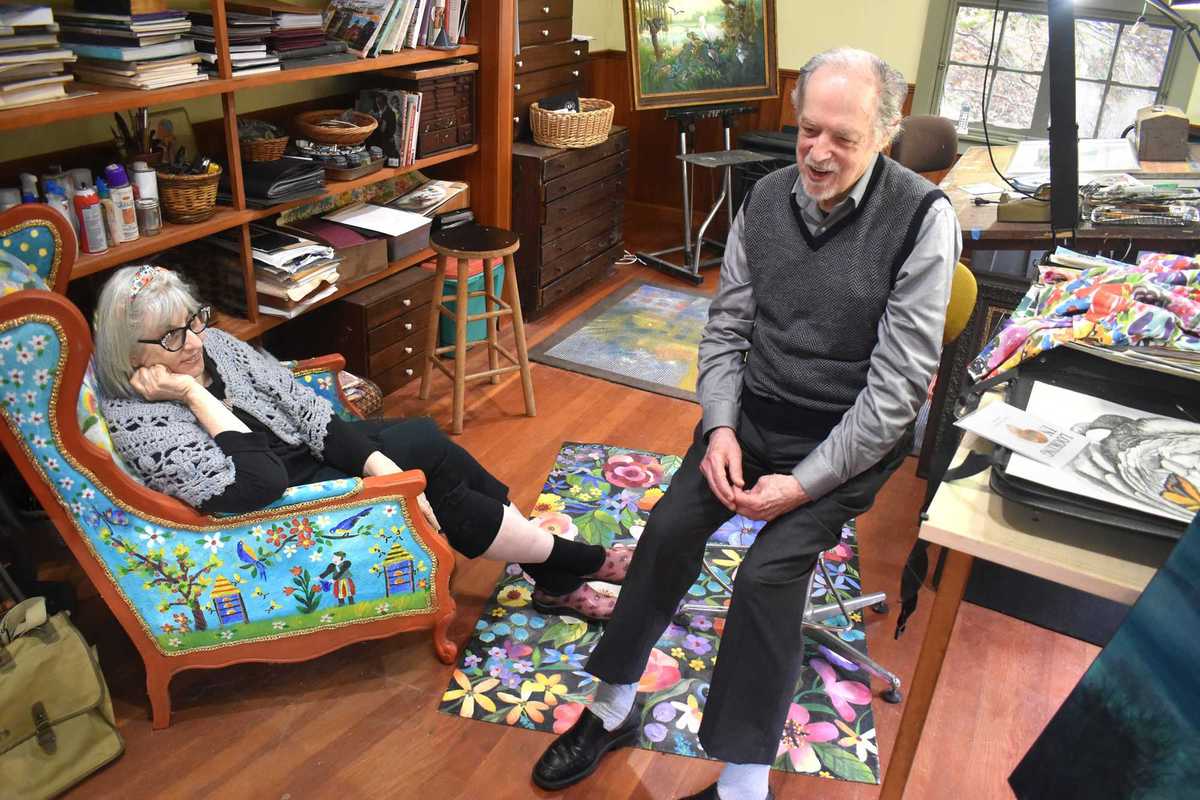
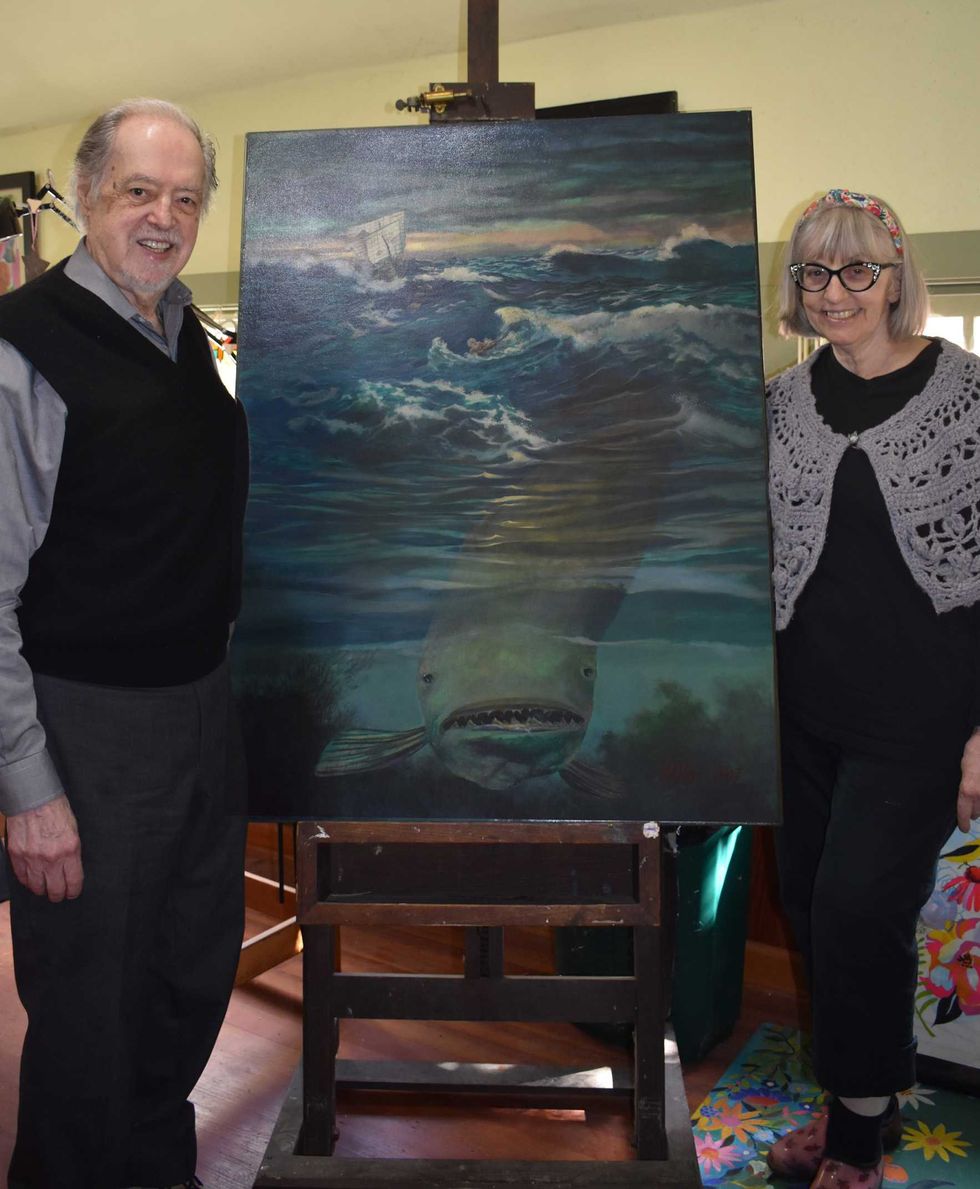 Justine and Victor Valla in their studio with a painting of Victor’s,”Jonah and the Whale.” Robin Roraback

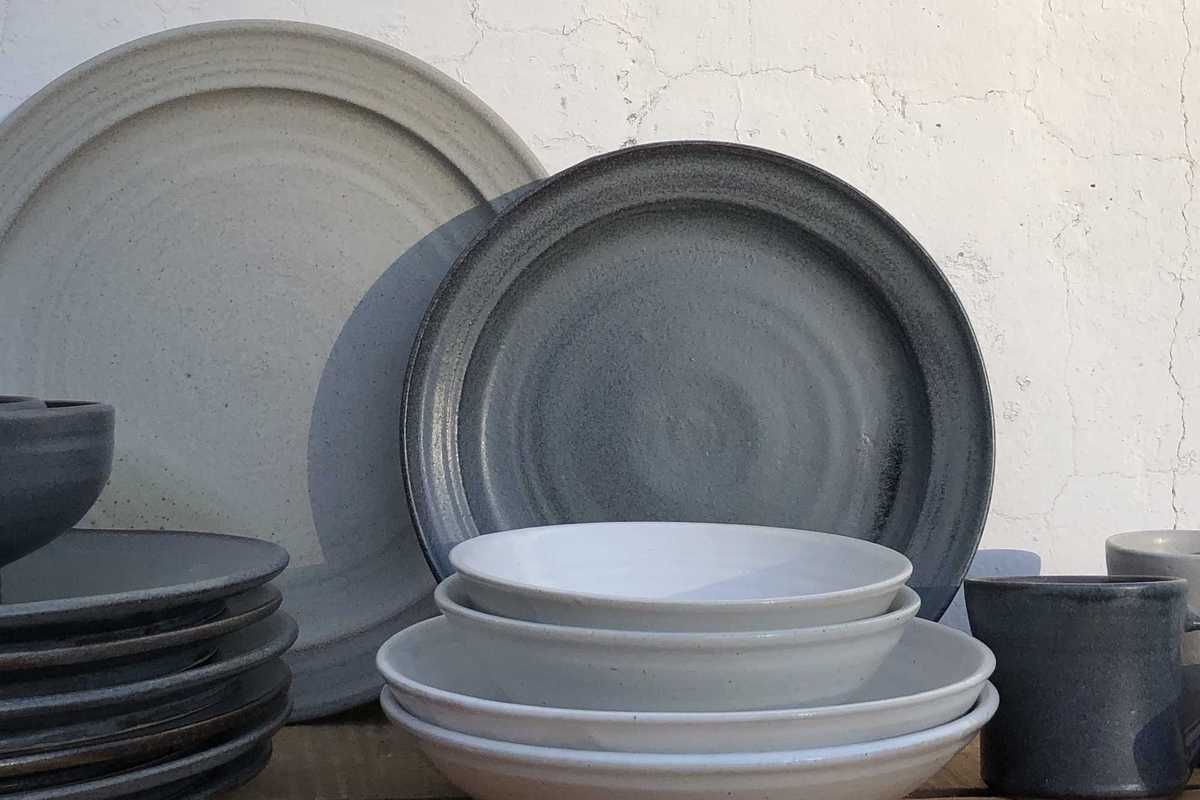
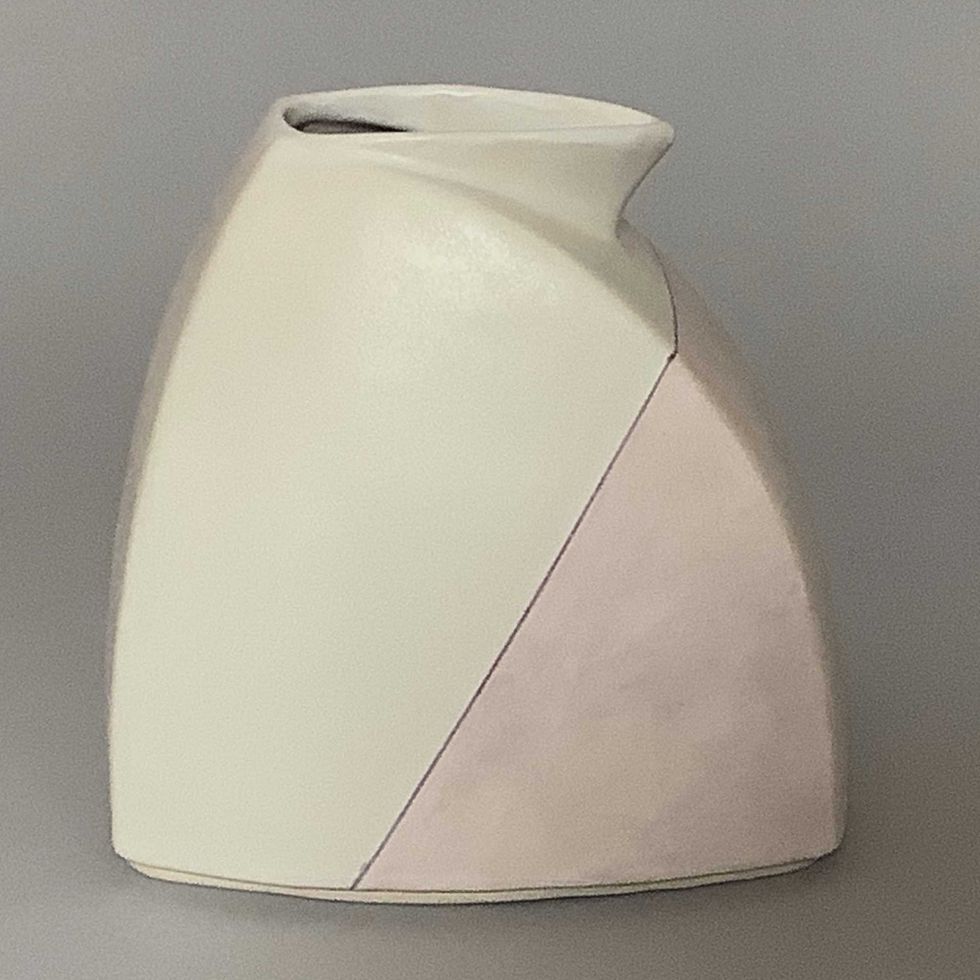 A ceramic vase by Kathleen Heidemann.Provided
 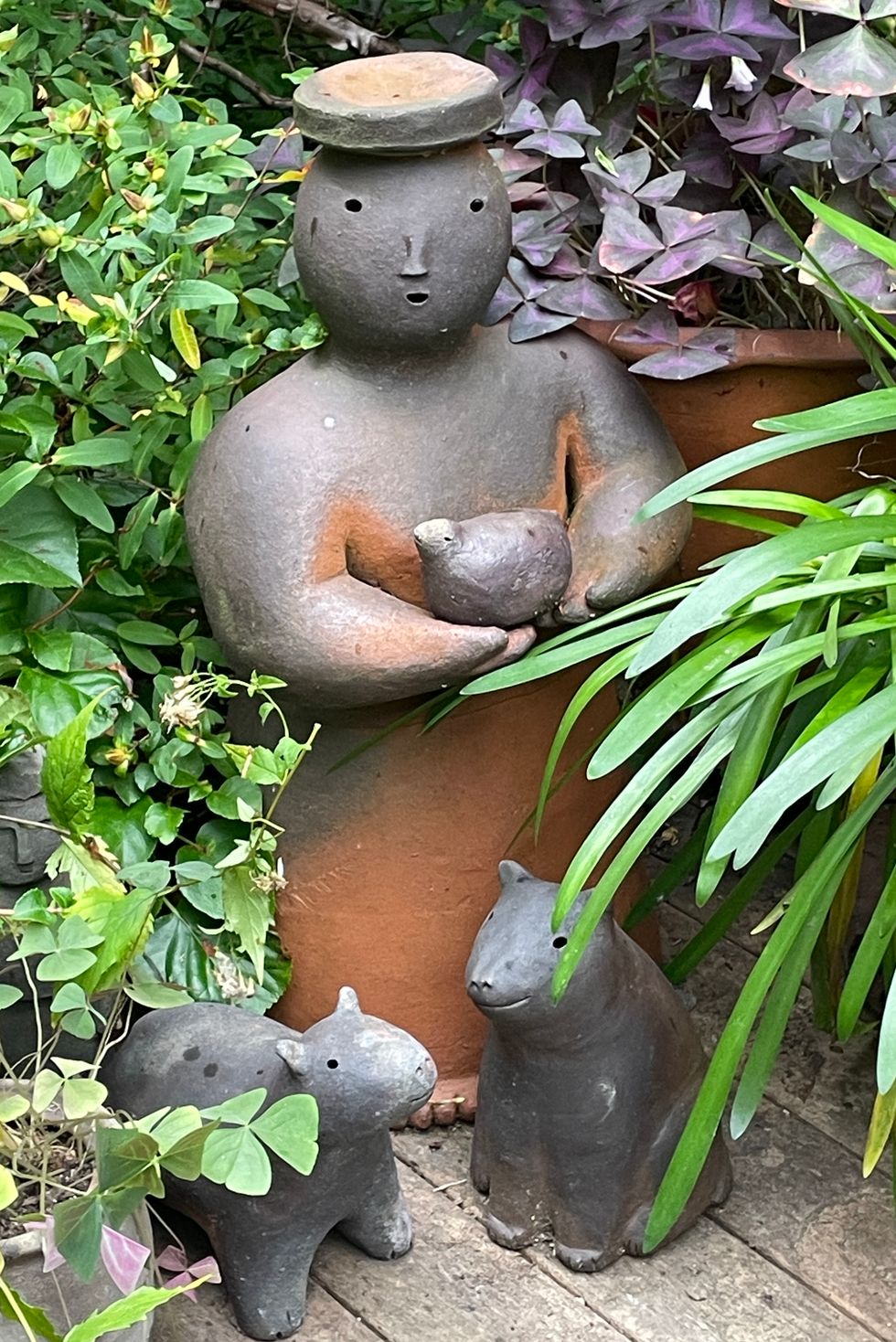 Joy Brown’s delightful ceramic sculptures.Provided