Thank you!
Your support is sustaining the future of local news in our communities.

No picnic is complete without a bowl of jello

After 50 years of living in America, I am finally an American: Today I made (and ate) a jello salad with carrots in it. It was the Saturday of a holiday weekend, and someone suggested that we do jello salad as the recipe this week. I had to test and adapt the recipe before I could put it on the page, so....  

Apparently, salads that have carrot and pineapple suspended in them are as American as, I don’t know, Crisco pie crusts and Chevy trucks and are an important addition to picnic table meals across the nation.

So, here’s the health angle: Traditional jello salads are made with Jell-O brand products, which have sugar and chemicals and preservatives in them. If for some reason you are a modern healthy person but still want to put a jello salad on the table, then you’ll want to use Knox Gelatine mixed with fruit juice as the base.

Let me emphasize that this is not a dessert. It’s a side dish. This was explained to me by the grandmother of our lovely and talented Lakeville Journal intern, Gwen Craig. Gwen swore to me that her grandmother is an expert at jello salads, that these salads always have carrot in them and that they are in fact delicious.

“Everyone likes them,” Doris Grauel said, when I called her at her home in Monroe last week. “I always have to double the recipe.”

The recipe that Grauel uses is from the Betty Crocker cookbook and uses Jell-O brand gelatin. I adapted it,  using the instructions on the Knox Gelatine package. The concept here is that Knox is a completely chemical- and sugar-free product. There’s only one ingredient listed on the box: gelatin.

Carrot and pineapple salad

Two 1-ounce packets of unflavored Knox Gelatine;  1/2 cup cold orange juice;  1 1/2 cups orange juice heated to boiling;   1/4 teaspoon salt;   1/4 cup finely grated carrot;   1/4 cup pineapple chopped into small pieces

Sprinkle the gelatin over the cold juice in a large bowl and let it stand for one minute. Add the hot juice and salt and stir until the gelatin is completely dissolved (it seems like the gelatin dissolves immediately, but the Knox package recommends stirring for a full five minutes; bring a book or your iPod if you get bored easily). Refrigerate for 30 to 45 minutes, until the gelatin is thick but not set.

Stir in the carrot and pineapple (sometimes fresh pineapple can keep the gelatin from setting; I didn’t have that problem but if you want to be ultra-safe, use canned pineapple).

At this point, you can spoon the whole thing into a decorative mold (if you’re keenly interested in how to do this, go online to www.jellomoldmistress.com, which is actually a great cooking website even if it is devoted exclusively to jello).

Keep it in the ’fridge for another two hours. Knox Gelatine gets very firm when set, so you can actually let it sit on a picnic table for a couple of hours and it won’t melt.

Panna cotta is an Italian version of jello — a sweet, creamy dessert gelatin. Basic panna cotta is flavored with vanilla, which makes it an excellent base for any kind of sliced fruit combinations; such as mango and pineapple, or mixed berries to offset the creamy custard.

Panna cotta

Adapted from “The All New Good Housekeeping Cookbook”

Makes eight servings

1 envelope unflavored gelatin;   1 cup milk;   1 1/2 teaspoons vanilla extract;  1 3/4 cups heavy cream;   1/4 cup sugar; 1 cinnamon stick

Evenly sprinkle the gelatin over the milk and let it stand for two minutes.

In a deep saucepan, combine the cream, sugar, cinnamon stick; heat to boiling over high heat, stirring occasionally.

Reduce heat and simmer, stirring occasionally, 5 minutes. Stir in the milk and gelatin. Cook over low heat, stirring frequently, until the gelatin has completely dissolved, 2 to 3 minutes.

Discard the cinnamon stick and stir in the vanilla extract.

Pour the cream mixture into a medium bowl set in a large bowl of ice water. With a rubber spatula, stir the mixture until it just begins to set, 10 to 12 minutes.

Pour into eight 4-ounce ramekins. Cover and refrigerate them until they are well chilled and set, four hours or overnight.

To unmold the panna cotta, run the tip of a knife around the edges. Tap the side of each ramekin sharply to break the seal. Invert onto individual serving plates and serve with fresh fruit and a sprig of mint.
Latest News

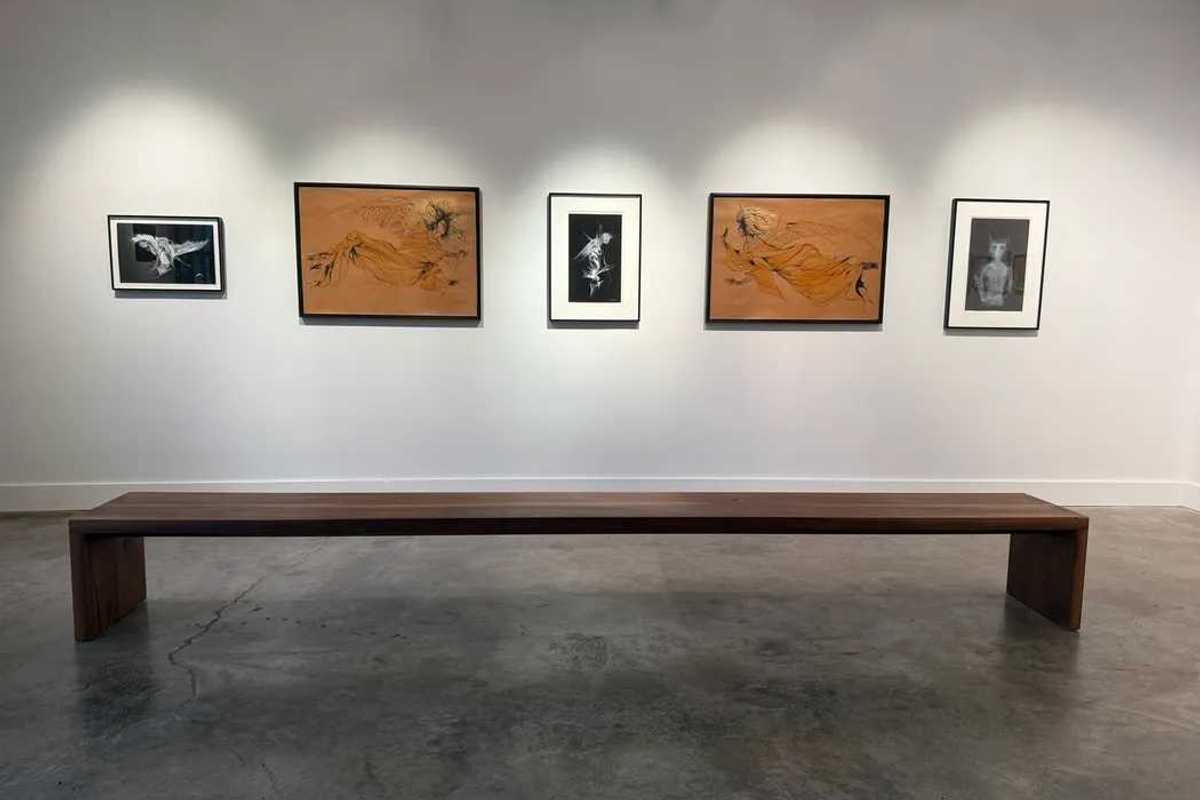
‘So Little to Do,’ so much to discover at James Barron Art

Curator Deborah Goodman Davis reads the Emily Dickinson poem “The Grass So Little Has to Do.” Spencer Finch’s “Following Three Bees (Zinnias)” buzzes in the background.

Photo by Natalia Zukerman

“The Grass Has So Little to Do,” on view at James Barron Art in Kent, takes its title from Emily Dickinson’s poem “The Grass So Little Has to Do,” written in 1862:

“The Grass so little has to do—
A Sphere of simple Green—
With only Butterflies to brood
And Bees to entertain—”

Keep ReadingShow less

Marina Kotchoubey is not a woodworker

Marina Kotchoubey is not a woodworker

Marina Kotchoubey at the Ian Ingersoll Cabinetmakers showroom in West Cornwall.

Photo by D.H. Callahan

After 40-something years navigating the world of custom fine furniture, Ian Ingersoll was getting ready to retire. Starting off with a little dovetail stool that he sold at a shop in West Cornwall in the 1970s, he’d grown his skill and his business into something he — and the whole town — could be proud of. Shutting down that business was not an option.

Ingersoll built Ian Ingersoll Cabinetmakers, which produced mainly classical Shaker furniture, on passion: the passion he had to make a living through creative challenges and the passion of his employees, who all seem deeply in love with their craft.

Keep ReadingShow less
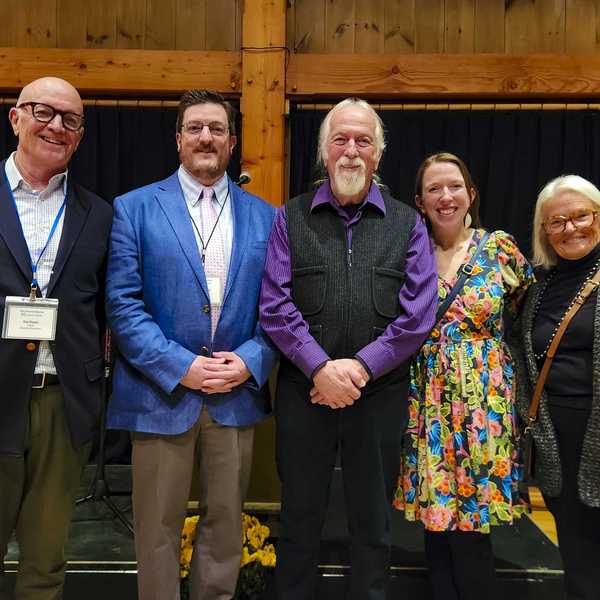
A legacy of giving at Norfolk Chamber Music Festival

One hundred and twenty years ago, Carl and Ellen Stoeckel commissioned New York architect E.K. Rossiter to design The Music Shed in Norfolk, Connecticut. After nearly a decade of entertaining their friends and neighbors with the finest music of the day, they built a permanent home for their beloved Litchfield County Choral Union.

The commission and full funding of the construction was not unheard of in an era when great fortunes led to public enrichment. Railroad tycoon John D. Rockefeller was instrumental in funding institutes of higher education. Steel baron Andrew Carnegie was building libraries all over the country, and famously said that a man who dies rich is a disgrace, challenging his peers to give their fortunes back to the people.

Keep ReadingShow less
google preferred source

Want more of our stories on Google? Click here to make us a Preferred Source.

Two unique exhibitions at Geary Gallery

Henry Klimowicz with his sculpture, “Partial Pillar 1”

Photo by D.H. Callahan

On Saturday, Aug. 1, Geary Gallery opened its doors in Salisbury for two unique shows in its first- and second-floor gallery spaces. Art lovers flooded both floors over the course of the afternoon, giving the events a vibrant feeling that enhanced the importance of the art.

On the first floor is a show by Chicago-born, Colorado-based photographer Summers Moore, titled “Lobitos: Pueblo Fantasma,” or “Lobitos: Ghost Town.” The work centers around her daughter’s current hometown in Peru. Moore herself found a home away from home in Colorado in the mid-1980s and encouraged her children to seek out new places outside of their comfort zones.

Keep ReadingShow less

Writer’s retreat in the woods

Writer’s retreat in the woods

Participants in a 2024 Great Mountain Forest Woodland Academy workshop at Yale Camp.

Photo by Mike Zarfos

Great Mountain Forest (GMF) will host its first Nature Writing Retreat at the historic Yale Camp in Falls Village from Aug. 7-9, 2026. Writers of all levels are invited to draw inspiration from one of New England’s most notable forest landscapes. GMF envisions the retreat becoming an annual event celebrating writing, conservation and the relationship between people and forests.

This immersive three-day retreat reflects on the legacy of Hal Borland, the American writer and New York Times nature columnist whose work was deeply connected to this landscape. The retreat explores how wilderness shapes language, strengthens close observation and fosters environmental consciousness.

Keep ReadingShow less
From Cornwall to Rome, Adam Van Doren at Berkshire Botanical Garden

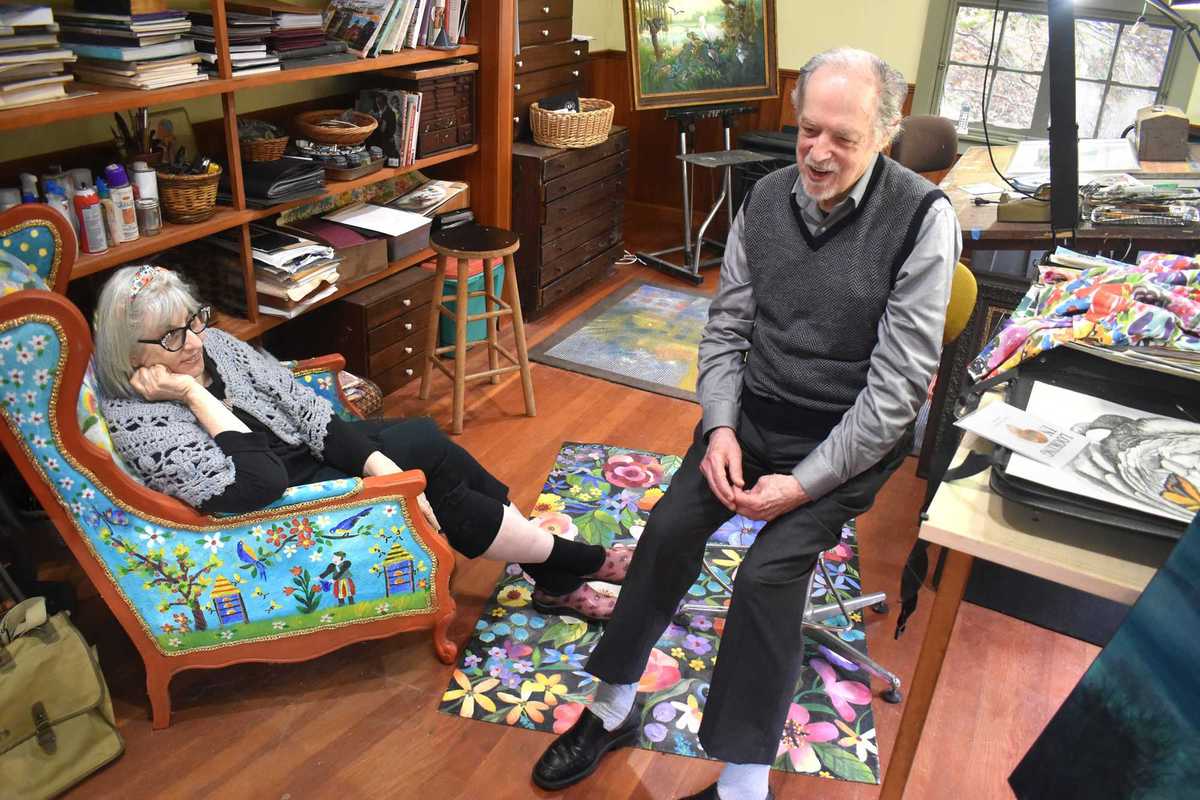
Artist Adam Van Doren and curator Donna Hassler talk to a group of visitors at the Berkshire Botanical Garden. A Stephen Proctor vessel sits to their left.

Photo by Natalia Zukerman

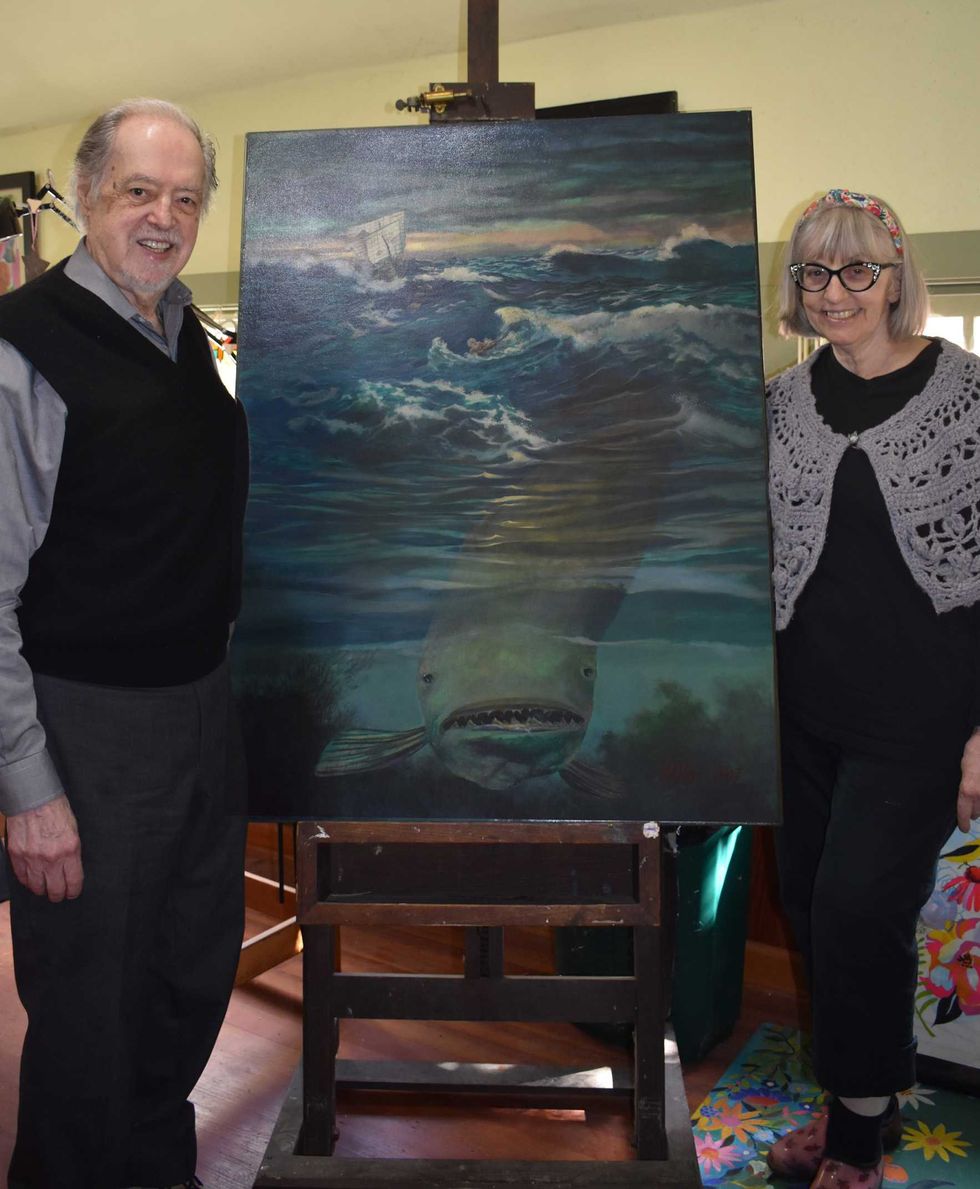
This summer, the Berkshire Botanical Garden in Stockbridge has hosted “Grounded in Nature: Paintings by Adam Van Doren,” an exhibition exploring the intimate relationship between architecture and the natural world.

On view for only a few more weeks in the Leonhardt Galleries, the exhibition features more than 35 watercolor and oil paintings by the New York-based artist, architect, author and Yale professor, curated by art historian Donna Hassler, director emerita of Chesterwood. The works span three distinct places that have shaped Van Doren’s artistic practice: New York City, Cornwall, Connecticut, and his travels throughout Europe.

Keep ReadingShow less
google preferred source

Want more of our stories on Google? Click here to make us a Preferred Source.

google preferred source

Want more of our stories on Google? Click here to make us a Preferred Source.