NORFOLK — A kaleidoscopic explosion of color and light filtered into the dimly lit Battell Chapel at Church of Christ Congregational in Norfolk on a recent early spring Sunday. Those who entered the sacred space were illuminated by the ethereal beauty, literally and figuratively, of three towering stained glass windows.
The scenario is repeated at several public spaces in this tight-knit, rural community, which has been blessed with a veritable treasure trove of stained glass windows, courtesy of generous community benefactors.
In addition to Battell Chapel (which was commissioned in 1888), the Church of the Transfiguration, St. Martin of Tours Parish/Immaculate Conception Church and the Norfolk Public Library all feature historic windows created by world renowned glass artists including D. Maitland Armstrong and Louis Comfort Tiffany.
Regeneration and hope
The themes many of these rare gems convey are particularly fitting at this time of year, as they symbolize spring, hope, solace, new life and the Resurrection.
“You could look at these and think that they are simply secular,” said the Rev. Erick Olsen, pastor of Church of Christ, as he pointed to five arched windows depicting the changing seasons in the chapel’s parlor.
The opalescent scenes were designed by Tiffany at the request of resident Ellen Battell Stoeckel in 1927.
The center panel, with its glorious sunrise among tall pines and a babbling mountain stream, can also be taken figuratively, he said.
“It is lighting up the glory of new life and Resurrection, and the idea that there will be light after darkness, no matter what we are going through.”
Of particular note, said Olsen, is that the center Tiffany panel in the parlor, titled “Sun of Righteousness,” connects with the chapel’s center altar window scripture designed by Armstrong a half century earlier. It reads: “Unto them that fear my name shall the sun of righteousness arise with healing in his wings.”
Another set of stained glass windows was erected over the pulpit at Christ Church’s meeting house, where services are held. Known as the Eldridge Memorial Windows and dating back to around 1880, the tall windows are made with royal Bavarian stained glass manufactured in Munich, Germany, said Marie Civco, long-time church parishioner.
Those windows feature an intertwining foliage design of red roses, grape vines, Easter lilies and a peace dove.
The play of light
“These are all community treasures,” said Civco of the church’s extensive collection. Many of the pieces were representative at the time of a new, American form of opalescent glasswork and layering techniques, giving them a realistic, three-dimensional effect.
Stained glass is never static. As the sunlight moves across the sky, it orchestrates the play of colors that dance across walls and floors. Just ask Richard Byrne, town historian and longtime parishioner of St. Martin of Tours Parish/Immaculate Conception Church.
“You notice different details depending on how the light is filtering through them,” said Byrne as he toured his church’s stained glass windows, which show dozens of narrative scenes depicting the life of Christ or Old Testament stories. All were created in 1923 by the Franz Mayer Co. of Munich, Germany. As if on cue, as he spoke a burst of sunshine turned the imposing Immaculate Conception scene over the altar into an exploding rainbow of rich jewel tones.
The windows, said Byrne, have the ability to absorb the viewer both emotionally and spiritually. He recalls watching a young child during Mass staring up at them in wonderment.
“I wish I knew what he was thinking.”
Commenting on the intricately painted details, Byrne noted that the flowers are so well rendered that their botanical identity is possible. “That’s not always the case with stained glass.”
At the Church of the Transfiguration, which is devoted to summer worship and is known as the Chapel of Ease, a three-panel stained glass window near the front of the chapel’s sanctuary was dedicated to the memory of Olivia Clemens, wife of Samuel Clemens. The slender, arched windows feature white lilies in the two side panels and a cross with a jeweled crown in the center panel.
Honoring friends, family
The Great Transfiguration window above the Episcopal church’s altar was dedicated to the memory of Francis Skiddy Marden Jr., a Harvard freshman, by his parents.
Another window, in the rear of the sanctuary, is dedicated in memory of innkeeper Edward Stevens. It depicts an innkeeper welcoming the Good Samaritan. It recalls the church’s early beginnings, said Bea Tirrell, whose great-grandparents were among the Norfolk church’s founders.
“It was a gift by Sarah L. Stevens memorializing Edward Clark Stevens,” she explained.
Additional works by Maitland Armstrong & Co., including a circular rose window, are found at the Norfolk Public Library’s Great Hall and Harden Reference room.
Reflecting on the impressive concentration of valuable stained glass in Norfolk, Byrne said it is significant not only in that many of windows were created by the greatest artists of their time, but even more important that they were made possible only through the sheer volume of benefactors who gifted these treasures to the town.
“It’s community cohesion. Not just the key benefactors, but also the support of everyone else. They were all part of the community.”
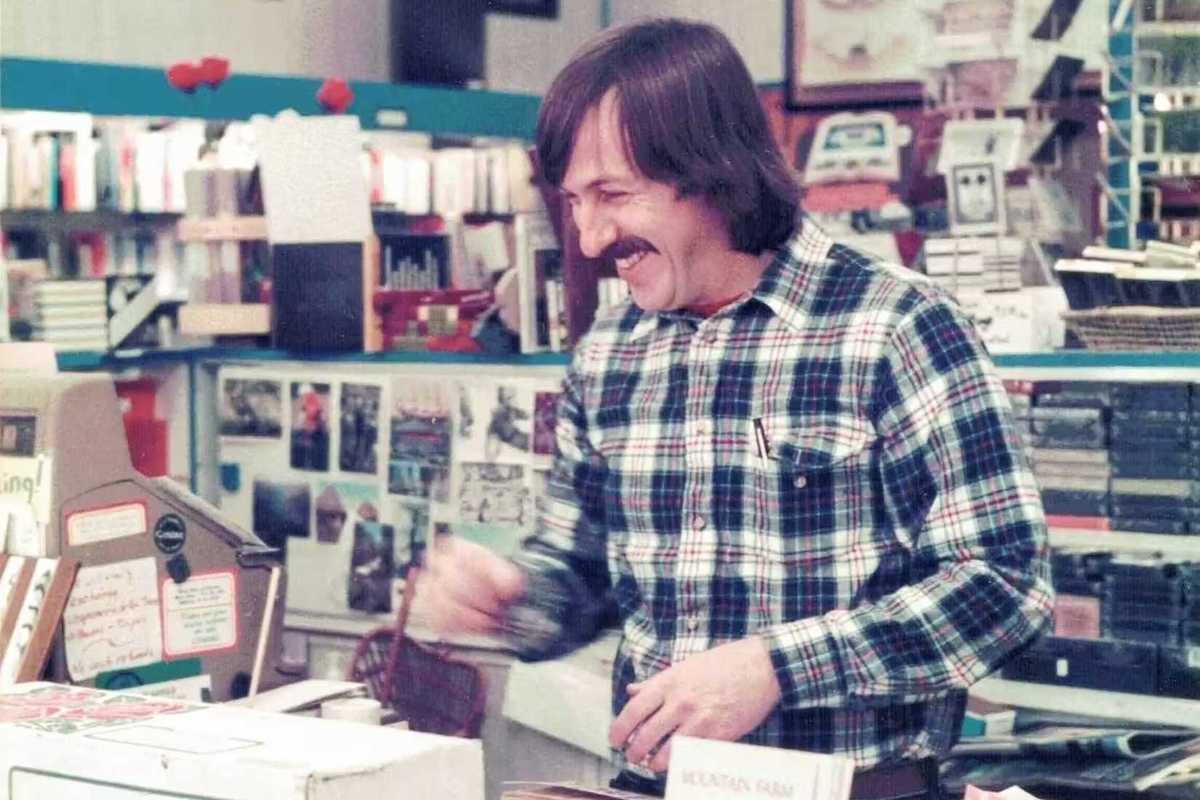
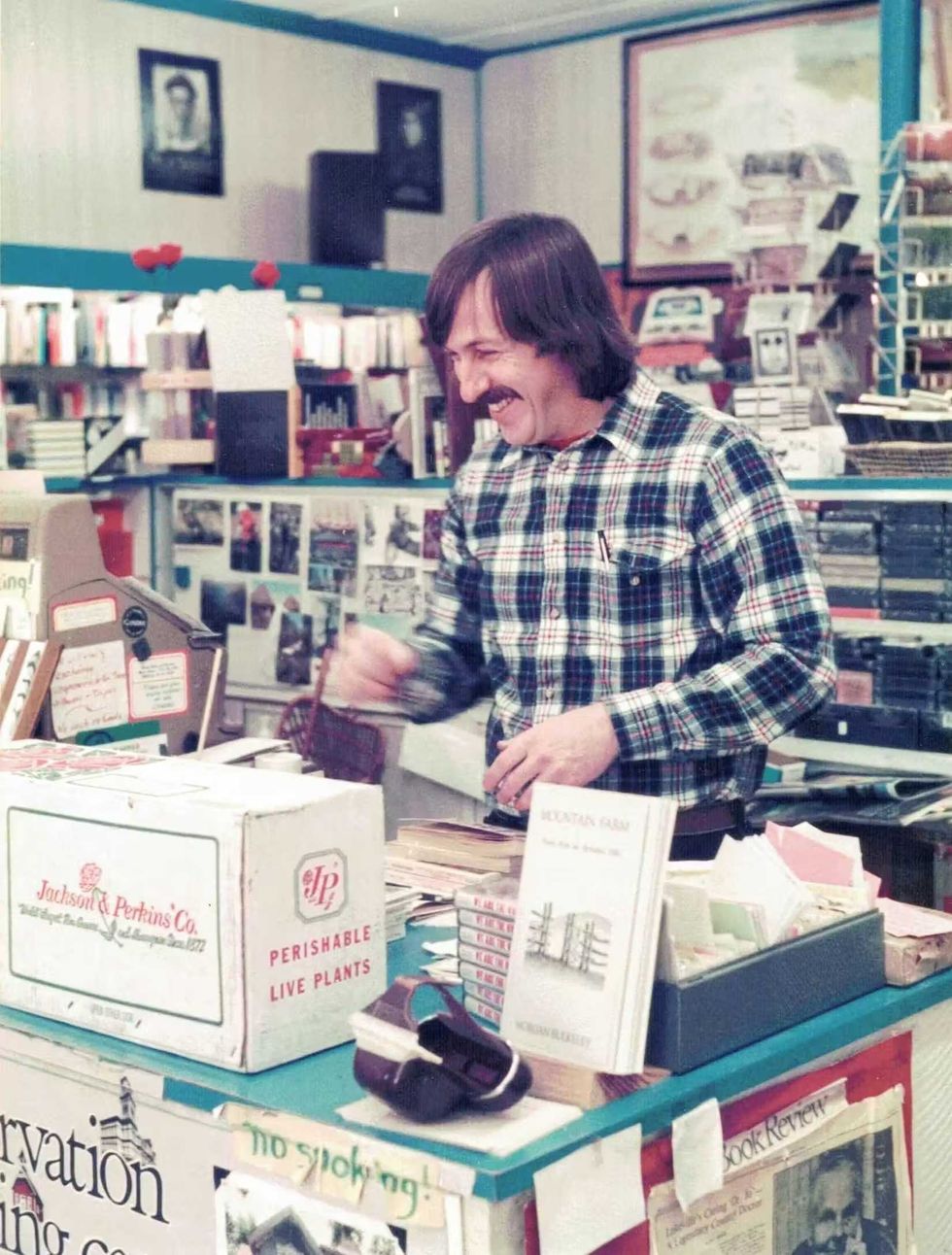 Dick Hermans in the Oblong Bookstore on Millerton’s Main Street in 1985.Provided


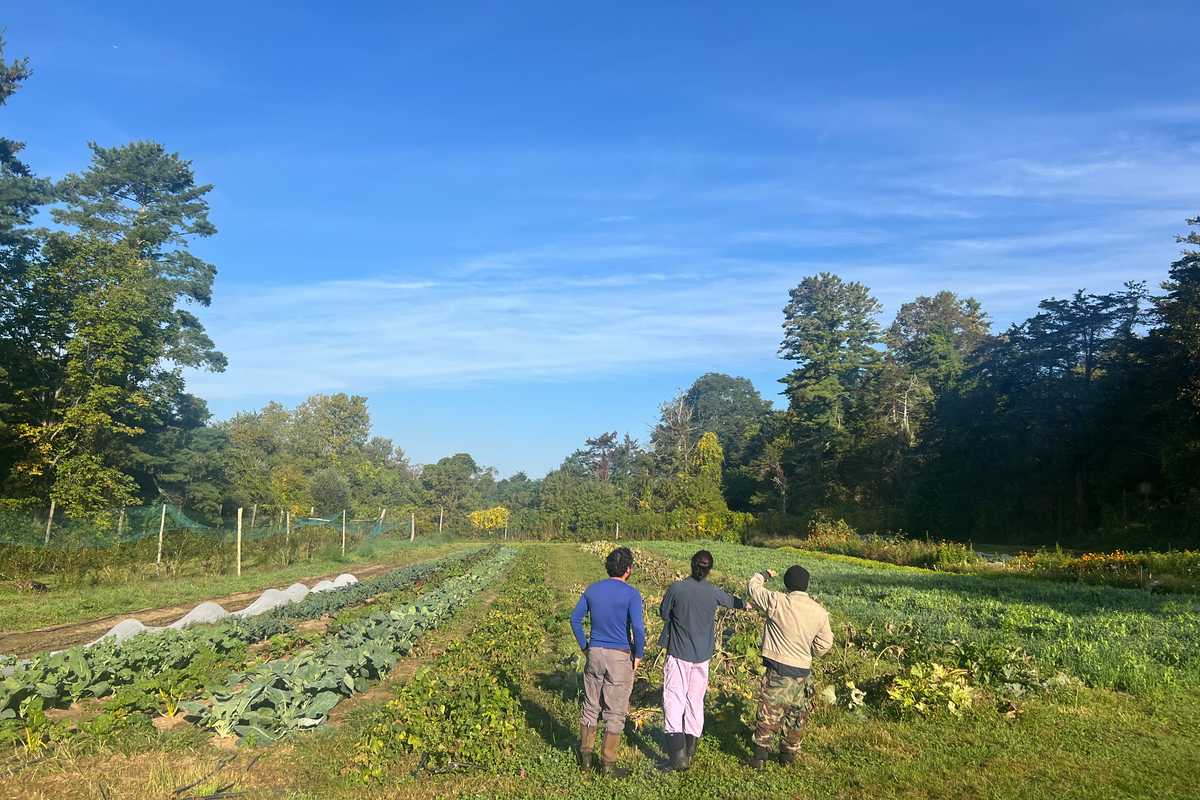
 Fall storage crop harvests amid soil building cover crops at Adamah Farm in Falls Village. Janna Siller