Just when you’ve reached the age when you should be contented with your life, along comes news that you could have been a champ if steroids had been available to athletes in 1941.
I hadn’t given it a thought until the news leaked out recently that my beloved Red Sox finally won the World Series, not once but twice, because their two best players had used steroids.
Back in the late ’30s I was a 6-foot-1-inch, skinny, post-teenager who weighed in at 160 pounds. I was so thin doctors didn’t have to X-ray my chest, they could just examine my ribs when I lifted my jersey underwear.
If anyone needed muscle-enhancing drugs, it was me. I joined the cross-country team at Weaver High School. We ran 2.2 miles up and down hill and dale in Keney Park in Hartford’s northwest corner. I always came in last, but I persevered and always made it to the finish line when the front-runners were already in the locker room taking their showers. The girls who had crowded the finish line to cheer on the winners had already left. It was just me, and another loser, and an impatient official who closed the track in the park for the night.
I thought basketball might be a sport I could handle, but when I ran up and down the court a few times chasing the ball, I had to stop and catch my breath. Basketball was out of my reach.
We didn’t have a swimming pool, so I didn’t have the opportunity of splashing out of that sport.
u u u
So for the winter, I gave up school sports. But, quite inadvertently, I was exercising and doing some good for my legs and my apparently middling-size lungs: I walked a mile-and-a-half every day each way up and back to school from our house on the Bloomfield town line. Or I rode a bicycle. My father was working at his little drugstore downtown. He drove Chevies and Plymouths. But he was never able to ferry us to school. And unlike the recent and present crop of high school students, it was a rare bird who had his own car.
When spring arrived, my best friend, Kiki, who nearly always came in first in cross-country, convinced me to go out for the track team. Football was never on the agenda. I would have been knocked silly on the first play if an opposing lineman had managed to punch his helmeted head into my abdomen.
But if I had only been able to take steroids — no, wait, I am getting ahead of myself.
So I went out for track, as in track and field, and found that the 100-yard dash was for dashers and 400 yards was a killer. Now it was time to turn to the “field� part of track and field.
As you know, I’m sure, this involves practicing athletics with various apparatus such as the javelin, discus and shot put, pit jumping, high jumping et al. I chose throwing the javelin and the discus. Both were introduced as sports by the ancient Greeks, who enjoyed throwing javelins and hurling the discus at Persians who just couldn’t take a defeat for an answer to their imperial ambitions — until the critical Battle of Salamis, when the Athenians sank their fleet.
u u u
I threw the javelin without impinging on my pulmonary assets, but I never threw it far enough to make the first team. Ditto the discus. That’s when I came a cropper. To hurl the discus you cup it in your hand and twirl round and round until you have, hopefully, reached enough speed to let it go and it will fly away and permanently knock a Persian soldier on his tush.
While all this was going on I became enamored with a coed in my class with flowing blonde hair and cute dimples in her cheeks. To my surprise, she agreed to go the big school dance with me. Now, you will remember that I didn’t have an automobile. And taking my special date on the trolley car was out of the question.
My wonderful father agreed to close the drugstore early that night and drive us to the dance in his reliable but not very trendy 1936 Chevy. But then it happened. After school I was practicing hurling my discus. I was whirling around and around, getting up speed, when in the middle of a twirl I sprained my ankle.
It hurt so much there was not a ghost of a chance that I was going to be able to dance with my coed admirer. I called and told her the bad news. She cried.
u u u
Time passed and after graduation, I was off to the University of Michigan, a football powerhouse. For me, football was a spectator sport. I went out for the cross-country team. On the first day of practice the coach had us running, not walking, up and down the steps of the university’s huge football stadium.
I retired from cross-country. But every freshman had to take a sport. I chose fencing and became fairly proficient, but no threat to Douglas Fairbanks or Errol Flynn.
Think of what I could have done for the honor of Michigan if I had been able to take steroids. On second thought, fahgetaboutit.
Freelance writer Barnett Laschever, the curmudgeon of Goshen, eventually found a sport he could manage. He loved to play tennis until he developed tennis elbow. He never took steroids and doesn’t recommend it.

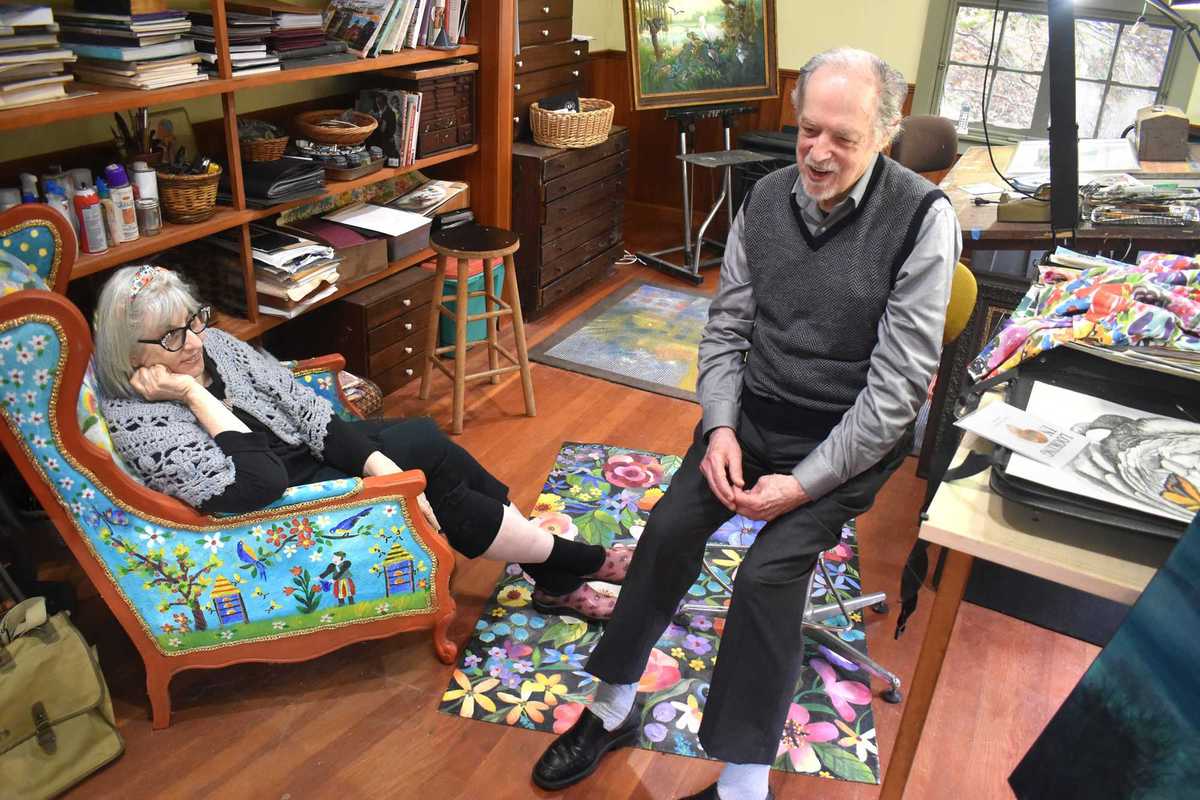
 Justine and Victor Valla in their studio with a painting of Victor’s,”Jonah and the Whale.” Robin Roraback


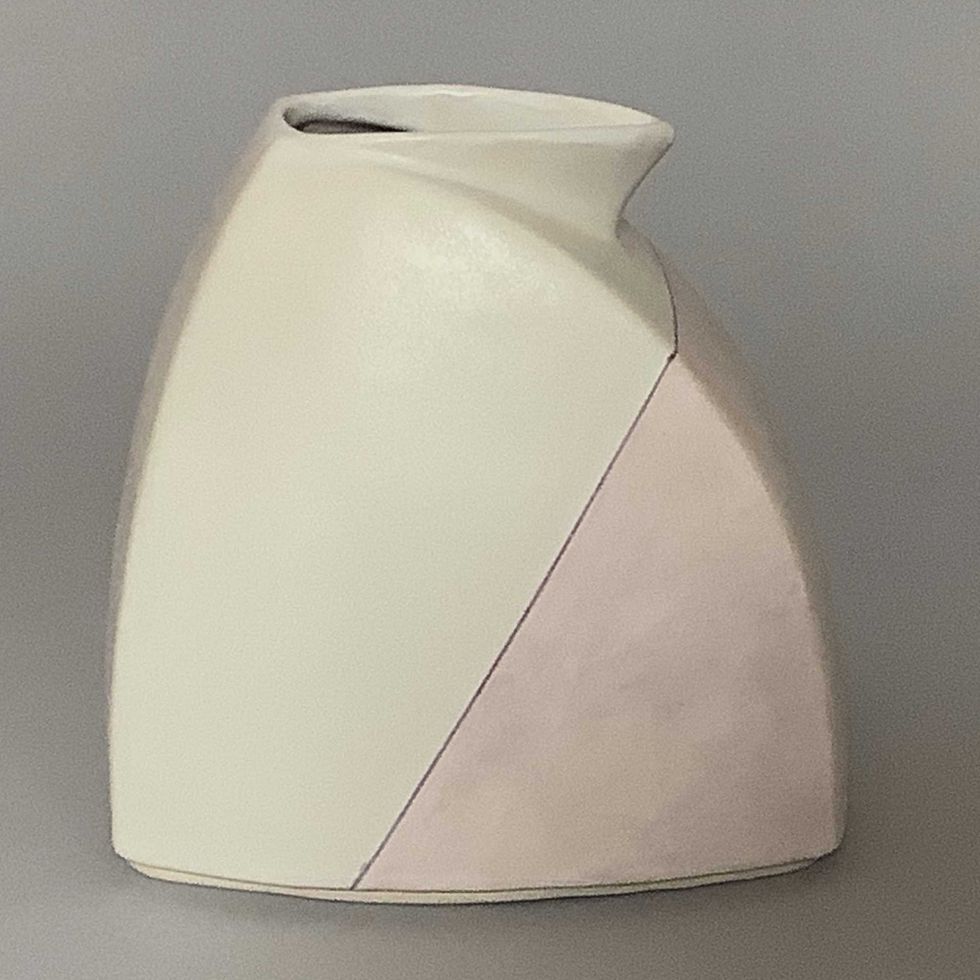 A ceramic vase by Kathleen Heidemann.Provided
 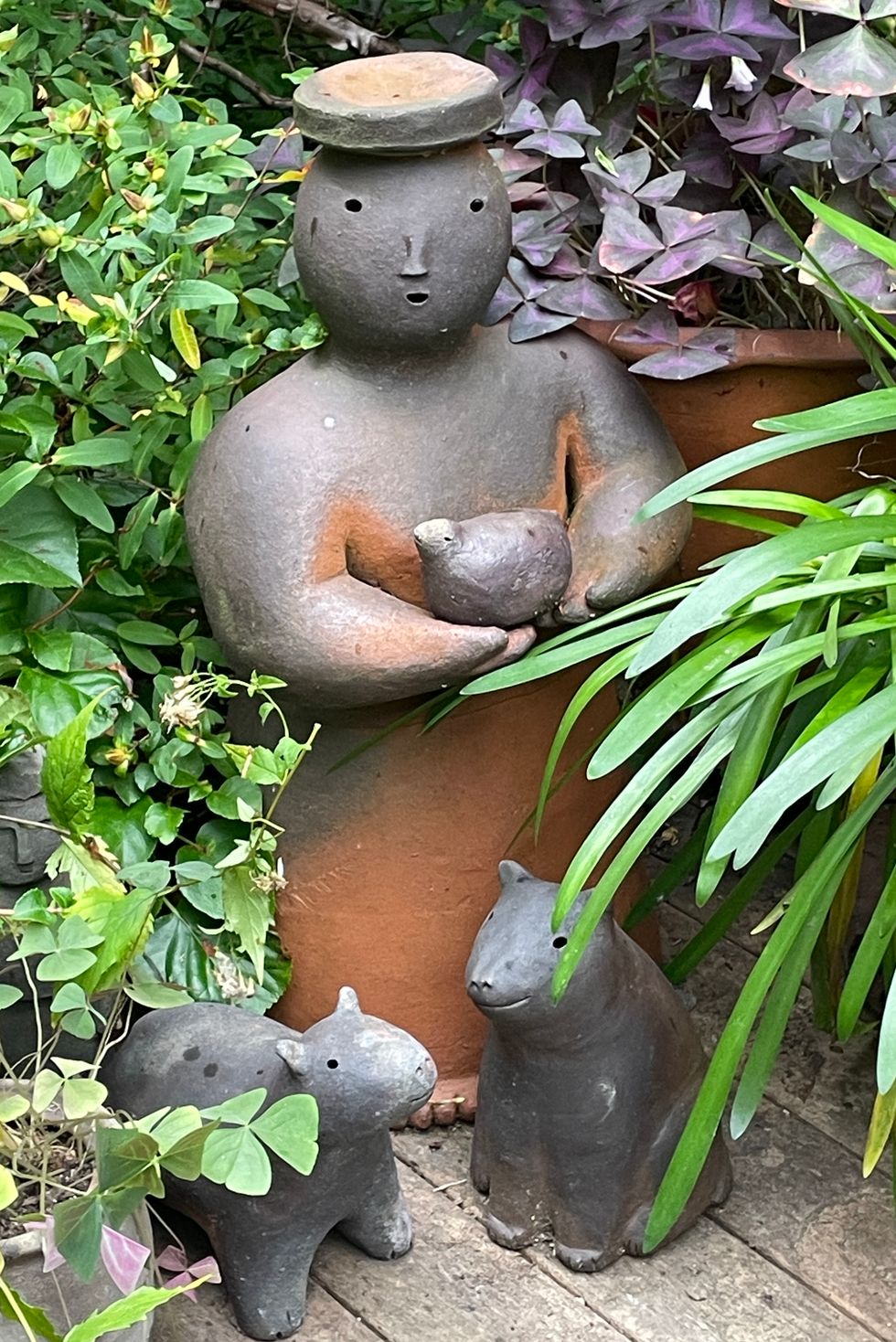 Joy Brown’s delightful ceramic sculptures.Provided