
Thank you!
Your support is sustaining the future of local news in our communities.

Peter Montgomery dreams of juicy heirloom apples

WARREN — Some people collect stamps, or coins, or vintage cars or majolica. Peter Montgomery collects apple trees, the older the better, although he’s been known to show affection to younger trees, such as the dozen or so newbies that he planted in his yard last summer. They were only in roughly their second year of life but they did fit the theme, as they are heirloom varieties that he got from a nursery in Virginia.

One might wonder why he had to venture as far south as Virginia to find old New York and New England apples, with names that clearly mark their northern provenance (Esopus Spitzenberg? Roxbury Russet?).

“Connecticut is really behind on the heirloom apple movement,” he said during a tour last week of his mini orchard, which is behind his house on Route 341 in Warren, a village that shares a border with Kent. You’ll know it when you see it; it’s the one with a sign that says, “Apple trees for sale.”

“It’s ironic, when you consider that back in the early 1800s, Connecticut was producing 700,000 gallons of apple brandy from 8 million bushels of fruit grown on between 30,000 and 50,000 acres of orchards.”

‘Goofy’ about old apples

Montgomery loves to share apple lore and history. He’s the embodiment of a saying that Kent garden writer and photographer Karen Bussolini likes to use: Horticulture is culture.

So while Peter Montgomery does really love the horticulture of apples (especially old, knobby ones that look weird and sometimes taste nasty), he also loves the tangents that shoot out in all directions (like those tiny branches that burst from apple tree limbs, looking like the fingers of Edward Scissorhands). 

Apples, in Montgomery’s hands, are truly a portal to culture of all kinds. They are a way to learn about and see the world (someday soon he will travel to Normandy to learn about making Calvados, the famous apple brandy). They are a way to make friends, a source of sustenance, an excuse to go hiking in forests and fields, the centerpiece of enjoyable autumn cider-making parties.

In a tiny apple, Montgomery learns about the history of the United States, the history of apples themselves, the history of the temperance movement, the history of a particular Northwest Corner neighborhood. He gets excited about it. He overflows with the urgent need to talk to strangers about the exciting things he’s learned in his quest to find every heirloom apple tree from here to Rhode Island.  

He wants other people to share in the fun with him. That’s why he’s not only selling heirloom apple trees in his yard ($100 each and it comes with a free subscription to hearing Montgomery talk about his favorite subject, which is genuinely fun), he’s also teaching classes on apple orchard maintenance, helping people uncover their own backyard heirloom apples and even planting new/old orchards, such as the one he recently installed at the Eric Sloane Museum in Kent on Route 7. 

“I’m goofy about apples,” he confesses, a little sheepishly, after a particularly passionate outburst about the joys of finding a unique apple tree in the fields or woods or along a road.

The mythic nashi

Montgomery has a mythic love of the apple and, like all mythic characters, he has an origin story. Most of his life he worked in sales, most recently as a national account manager for Siemens, the telecommunications company (which is ironic, as he has no cellphone and is disdainful of the internet). He spent two years in San Jose, Calif., with Siemens before returning to home base in Westport, Conn. And then the telecommunications industry tanked and it was time to retire from business. 

He moved north, to Warren, about 11 years ago and decided he really liked gardening and yardwork. He worked at White Flower Farm in Litchfield for a while, and then he started doing yardwork and mowing. He was content in Connecticut, but he did find that he missed one thing about California: the abundance of the excellent Asian pears known as nashi. He decided to plant some trees in his yard. 

Like many New Englanders, he also found that, in late summer and early autumn, it was fun to collect apples from friends and neighbors. 

The turning point was about two years ago, when he was on a hike organized by the Kent Land Trust on its new Camp Francis property. 

“I was walking along and I saw two apple trees, just standard height, about 30 to 40 feet tall,” he recalled. “There were red and yellow apples and I picked some of them.”

Around the same time, he had to take his car to the shop for some repairs and decided to walk home. 

“As I walked, I started noticing the apple trees along the road,” he said. “There were about a hundred of them.”

Bad apples make good cider

He started collecting apples and soon had six or seven bushels and he decided that when life gives you apples, you should make cider. He ordered a press from Vermont and  made another interesting discovery: When you make cider, it doesn’t really matter if your apples are ugly or even if they are so tannic that they make you pucker. 

In fact, he said, the tannins and acids in an apple often hide an abundance of sugar.

“Those astringent apples often have more sugar than a dessert apple,” he said. 

This knowledge helps explain, in part, how Montgomery can be so enthusiastic about apples that many people would walk away from, because of the way they taste or the way they look. Cider is the great equalizer.

“We tend to gravitate toward things that are beautiful, or our impression of what’s beautiful,” Montgomery said, demonstrating that apples are also a portal to art and philosophy. “We should look at other qualities: Flavor. Storage. Whether they’re easy to bake, whether they’re easy to grow.”

And if they’re not beautiful, but knobby and gross?

“Then let’s make cider!” 

Apples for Montgomery are also a social portal. He wants to share all he’s learned with other people — including his neighbor.

“My neighbor realized he has a number of old apple trees on his property and he’s just giddy that he’s found someone who shares his interest in those apples,” Montgomery said. “We’re thinking about putting together a consortium of people to press cider in the fall.”

Want to join? Of course you can. Montgomery is happy to share his knowledge (and his cider press) with strangers — or with people who begin as strangers but find themselves drawn into the slipstream of his apple passion. 

Cider season is a long way off, though, and anyone who wants entry into the sprawling web of knowledge that grows from heirloom apples can attend an apple care workshop that Montgomery will teach on June 18 from 11 a.m. to 1 p.m. in Kent. Come to the Eric Sloane Museum on Route 7 and look for the heirloom apple orchard, which is one of the only ones in the United States, and which is known as the Noah Blake Orchard (from a character in one of Sloane’s books).

Montgomery will also teach a class in the care of fruit trees this fall at Housatonic Valley Regional High School, as part of the Education Connection adult and continuing education evening program. Catalogs with specific course information will arrive in area mailboxes later this summer. 

He can be reached by email at petersgardens@optonline.net. Don’t be shy to contact him — especially if you know where to find some old, forgotten apple trees hiding in a yard, by a roadside or in an overgrown farm field. He’ll definitely want to talk to you about that.


Latest News

‘So Little to Do,’ so much to discover at James Barron Art

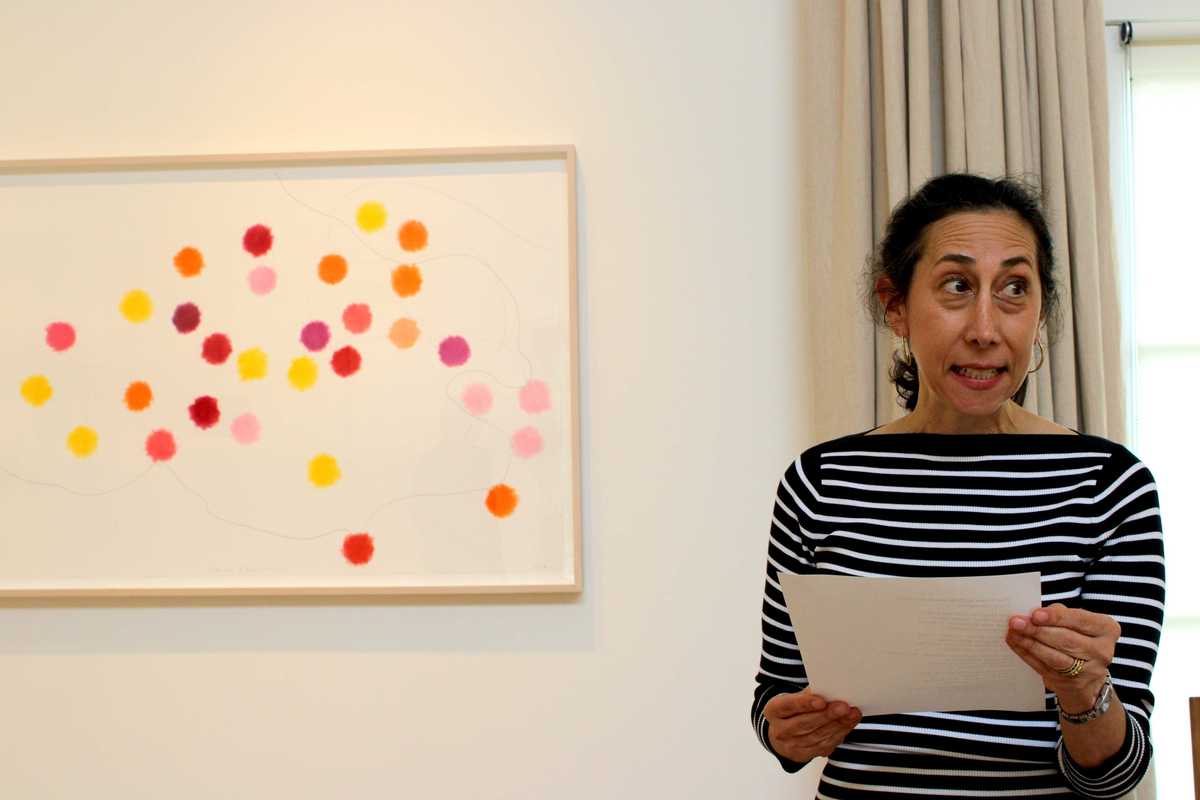
Curator Deborah Goodman Davis reads the Emily Dickinson poem “The Grass So Little Has to Do.” Spencer Finch’s “Following Three Bees (Zinnias)” buzzes in the background.

Photo by Natalia Zukerman

“The Grass Has So Little to Do,” on view at James Barron Art in Kent, takes its title from Emily Dickinson’s poem “The Grass So Little Has to Do,” written in 1862:

“The Grass so little has to do—
A Sphere of simple Green—
With only Butterflies to brood
And Bees to entertain—”

Keep ReadingShow less

Marina Kotchoubey is not a woodworker

Marina Kotchoubey is not a woodworker

Marina Kotchoubey at the Ian Ingersoll Cabinetmakers showroom in West Cornwall.

Photo by D.H. Callahan

After 40-something years navigating the world of custom fine furniture, Ian Ingersoll was getting ready to retire. Starting off with a little dovetail stool that he sold at a shop in West Cornwall in the 1970s, he’d grown his skill and his business into something he — and the whole town — could be proud of. Shutting down that business was not an option.

Ingersoll built Ian Ingersoll Cabinetmakers, which produced mainly classical Shaker furniture, on passion: the passion he had to make a living through creative challenges and the passion of his employees, who all seem deeply in love with their craft.

Keep ReadingShow less
A legacy of giving at Norfolk Chamber Music Festival

One hundred and twenty years ago, Carl and Ellen Stoeckel commissioned New York architect E.K. Rossiter to design The Music Shed in Norfolk, Connecticut. After nearly a decade of entertaining their friends and neighbors with the finest music of the day, they built a permanent home for their beloved Litchfield County Choral Union.

The commission and full funding of the construction was not unheard of in an era when great fortunes led to public enrichment. Railroad tycoon John D. Rockefeller was instrumental in funding institutes of higher education. Steel baron Andrew Carnegie was building libraries all over the country, and famously said that a man who dies rich is a disgrace, challenging his peers to give their fortunes back to the people.

Keep ReadingShow less
google preferred source

Want more of our stories on Google? Click here to make us a Preferred Source.
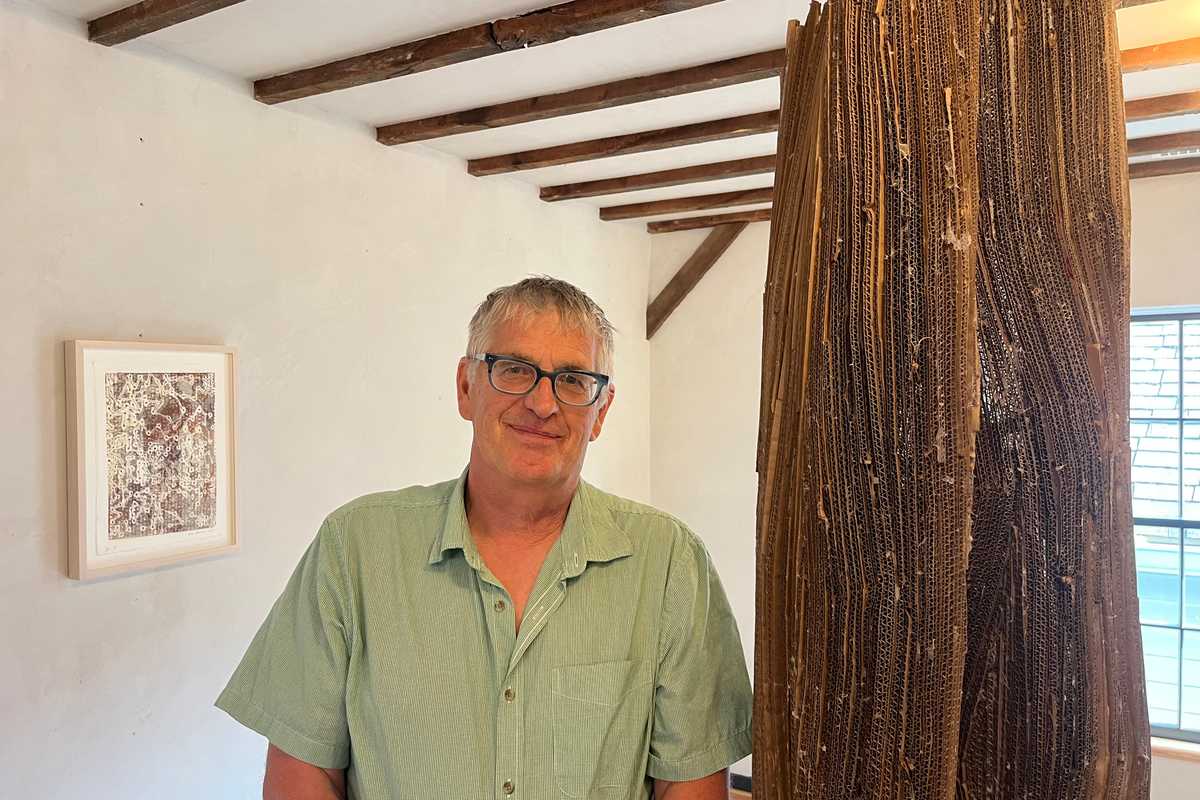
Two unique exhibitions at Geary Gallery

Henry Klimowicz with his sculpture, “Partial Pillar 1”

Photo by D.H. Callahan

On Saturday, Aug. 1, Geary Gallery opened its doors in Salisbury for two unique shows in its first- and second-floor gallery spaces. Art lovers flooded both floors over the course of the afternoon, giving the events a vibrant feeling that enhanced the importance of the art.

On the first floor is a show by Chicago-born, Colorado-based photographer Summers Moore, titled “Lobitos: Pueblo Fantasma,” or “Lobitos: Ghost Town.” The work centers around her daughter’s current hometown in Peru. Moore herself found a home away from home in Colorado in the mid-1980s and encouraged her children to seek out new places outside of their comfort zones.

Keep ReadingShow less

Writer’s retreat in the woods

Writer’s retreat in the woods

Participants in a 2024 Great Mountain Forest Woodland Academy workshop at Yale Camp.

Photo by Mike Zarfos

Great Mountain Forest (GMF) will host its first Nature Writing Retreat at the historic Yale Camp in Falls Village from Aug. 7-9, 2026. Writers of all levels are invited to draw inspiration from one of New England’s most notable forest landscapes. GMF envisions the retreat becoming an annual event celebrating writing, conservation and the relationship between people and forests.

This immersive three-day retreat reflects on the legacy of Hal Borland, the American writer and New York Times nature columnist whose work was deeply connected to this landscape. The retreat explores how wilderness shapes language, strengthens close observation and fosters environmental consciousness.

Keep ReadingShow less
From Cornwall to Rome, Adam Van Doren at Berkshire Botanical Garden

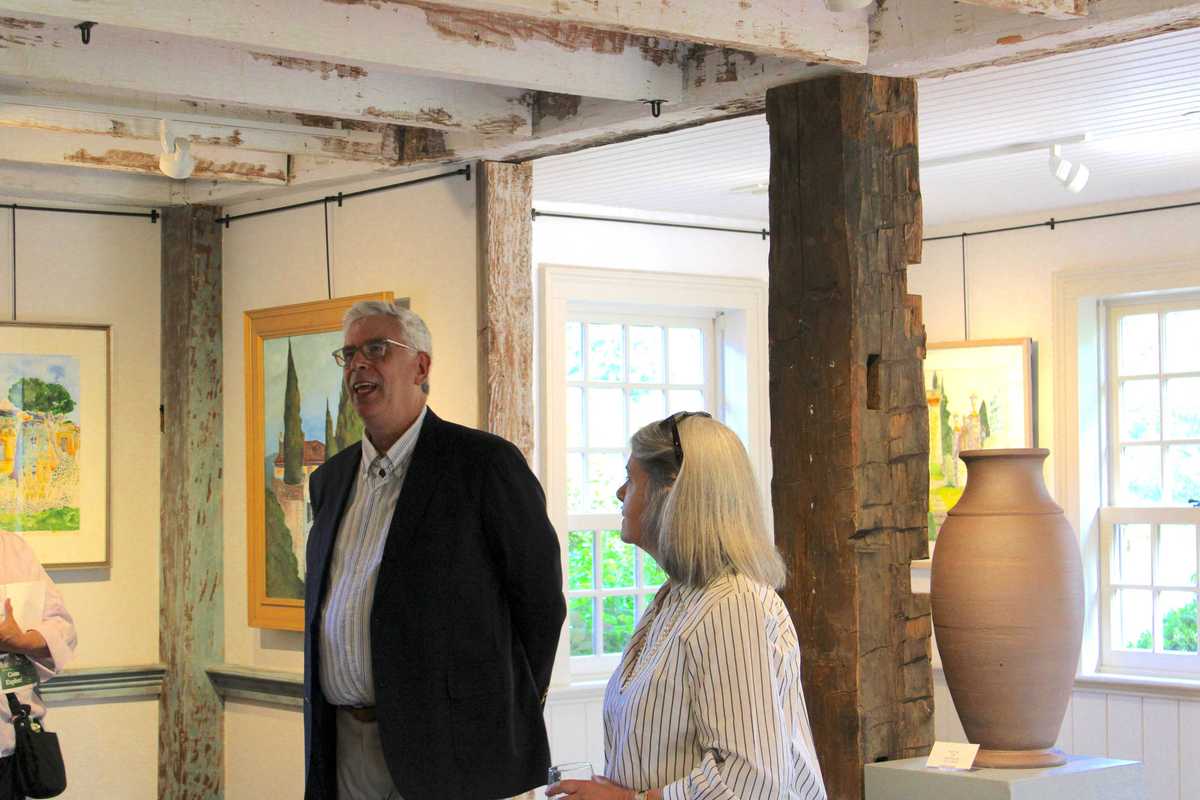
Artist Adam Van Doren and curator Donna Hassler talk to a group of visitors at the Berkshire Botanical Garden. A Stephen Proctor vessel sits to their left.

Photo by Natalia Zukerman

This summer, the Berkshire Botanical Garden in Stockbridge has hosted “Grounded in Nature: Paintings by Adam Van Doren,” an exhibition exploring the intimate relationship between architecture and the natural world.

On view for only a few more weeks in the Leonhardt Galleries, the exhibition features more than 35 watercolor and oil paintings by the New York-based artist, architect, author and Yale professor, curated by art historian Donna Hassler, director emerita of Chesterwood. The works span three distinct places that have shaped Van Doren’s artistic practice: New York City, Cornwall, Connecticut, and his travels throughout Europe.

Keep ReadingShow less
google preferred source

Want more of our stories on Google? Click here to make us a Preferred Source.
google preferred source

Want more of our stories on Google? Click here to make us a Preferred Source.