PINE PLAINS — The Town Board held a public hearing on the 2010 preliminary budget last Thursday, Nov. 5. The hearing was led by town Supervisor Gregg Pulver; the discussion was anything but optimistic.
"I can’t imagine any town having a rosy budget picture in this day and age," said a pragmatic Pulver the day following the public hearing. "We cut a bunch of money out of the budget. It looks like we’re probably going to end up with a 5-percent tax increase."
That increase is due, in large measure, to state-mandated retirement payments (and a slight increase to health care) and the county’s recent procedure regarding voting machines. According to Pulver, those are two items that are "totally out of our control."
The voting machine issue first reared its head three years ago, when the county took over the elections process at the polls. Previous to that the town owned its own voting machines and hired people to man them. Then there was the voting act and the county confiscated the machines, moving them to and from the polling places before and after elections.
"I wasn’t upset because they were paying all the bills at that point," Pulver said, adding there was a whole list of new mandates for the way the elections had to be done. The hitch is that now the county isn’t footing the bill and there’s no way the town can afford the high costs associated with the process. "It became a bloated bureaucracy and a very dysfunctional operation; now who pays the ultimate cost is the taxpayers. Now it costs us three times what we used to spend on our own elections previously."
The town is not yet sure if there will be a chargeback for the expense or if it will have to pay for new machines, which are reportedly needed. Although it didn’t have money in the budget in years past for the machines, this year Pine Plains put $9,000 into the budget to cover costs. Pulver said he’s still not certain if that will be enough, but that it’s a start.
Between the voting machine issue and the money needed for the state retirement fund, more than $40,000 is being added to the 2010 budget, which is still being tweaked. The town did add about $5,500 to the library’s budget line, which brought it from $62,500 to $68,000. Those were the only additions.
"We basically cut any new monies for any programs. If you think of how bare bones the budget was last year, this is the same thing," Pulver said. "It’s troubling for us to come up with new programs. The Recreation Department gets hurt, we’re not keeping up with inflation, the Highway Department’s budget hasn’t gone up in three years — and all of the town’s costs go up."
To cinch up costs, the town is putting in place a plan to use 25 percent less sand and salt on the roads this winter, conditions permitting.
"It’s good for the environment and also good for our pocketbooks," Pulver said. "Steep roads and intersections will get treated the same way, with added attention."
As far as recreation goes, the supervisor said planning and activities may have to revert to relying on volunteers, as in the past. It’s either that or programs may be cut, he said, adding that’s something nobody wants to see.
With all of the necessary expenses, the budget-to-budget increase from last year clocks in at 5-percent, with about $50,000 worth of "new money" being added to the fiscal plan. That brings the total budget figure for 2010 to roughly $1,602,250. One thing the supervisor has been especially strict with in this budget is salaries. There are no raises for anybody — whether an employee or an elected official; that way, thus far, everyone has been able to keep their job.
"The budget is so bare bones that I’m afraid the next step is cutting positions," he said, adding there are six full-time employees of the town, four full-time employees of the Highway Department and two clerical employees. "We can’t really get by without them. But where do you come up [with their salaries] if we don’t raise taxes? We’re hurting the public anyway. It’s never been my or the board’s intention to tax people out of their homes in any way, shape or form."
And there’s another difficulty to be dealt with. Dutchess County Executive William Steinhaus released his projected budget at the last minute, according to Pulver, who said he’s still digesting some of that and waiting to see how the Legislature handles it. The Pine Plains budget, meanwhile, will likely be passed at the next Town Board meeting, set for Thursday, Nov. 19, at 7:30 p.m. at Town Hall. From there the town will have to see what next year’s state budget is; Pulver said he’s keeping his fingers crossed he won’t be forced to make any mid-year cuts.


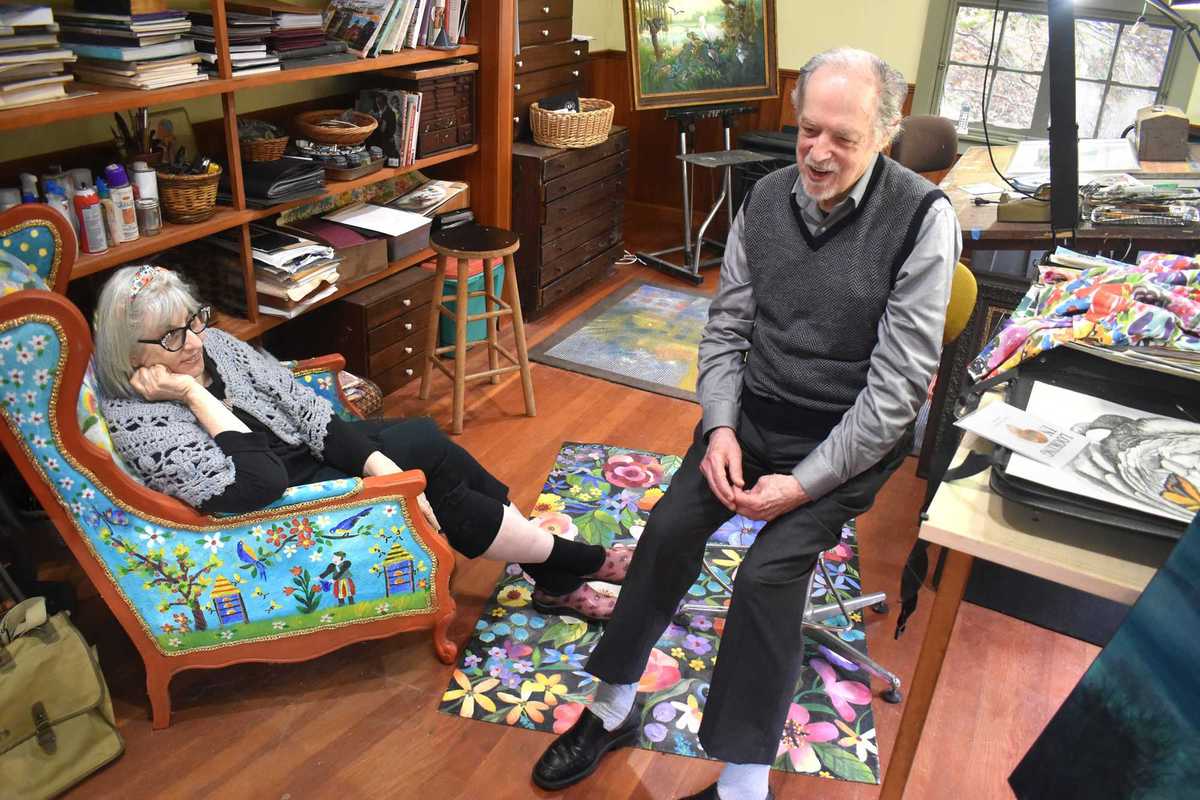
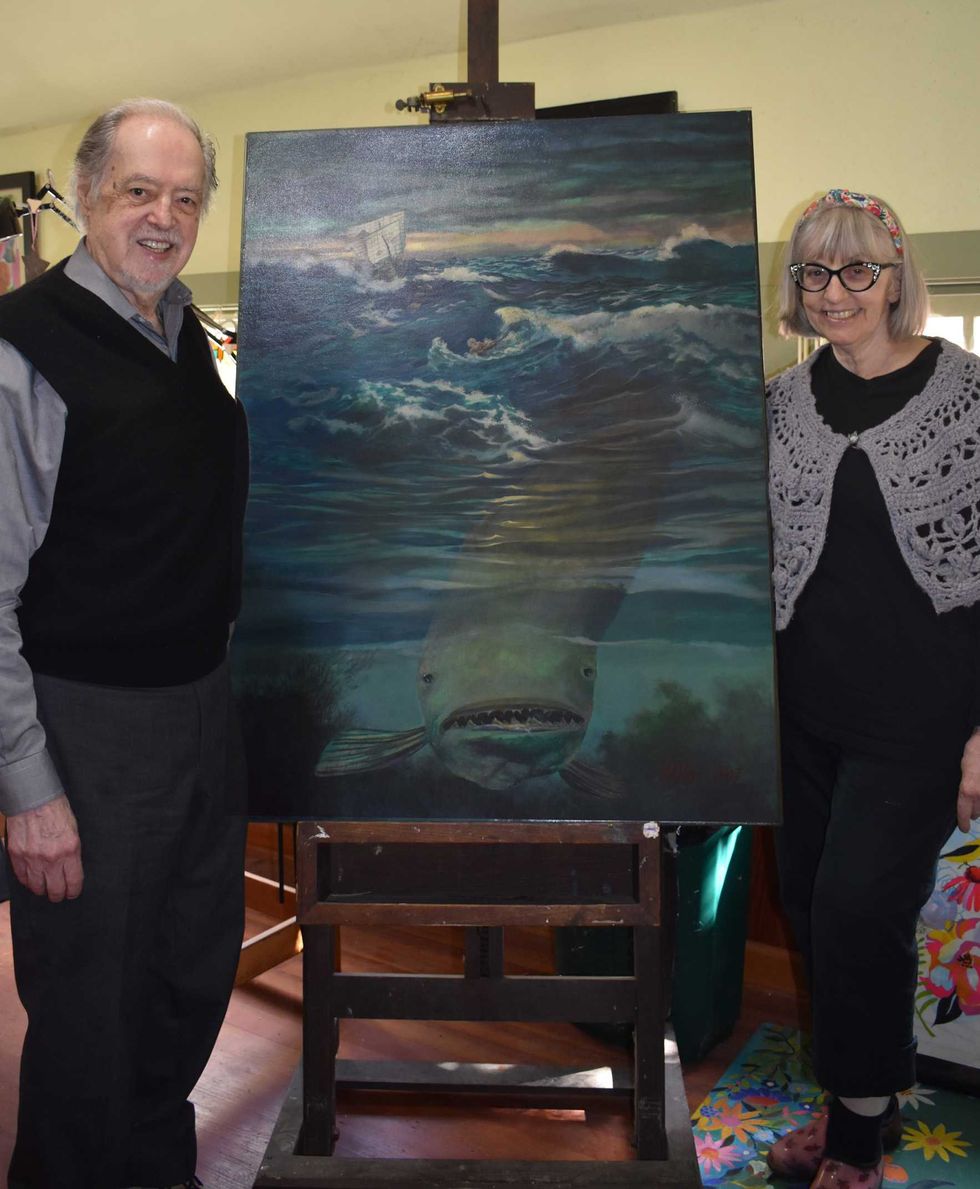 Justine and Victor Valla in their studio with a painting of Victor’s,”Jonah and the Whale.” Robin Roraback


 A ceramic vase by Kathleen Heidemann.Provided
 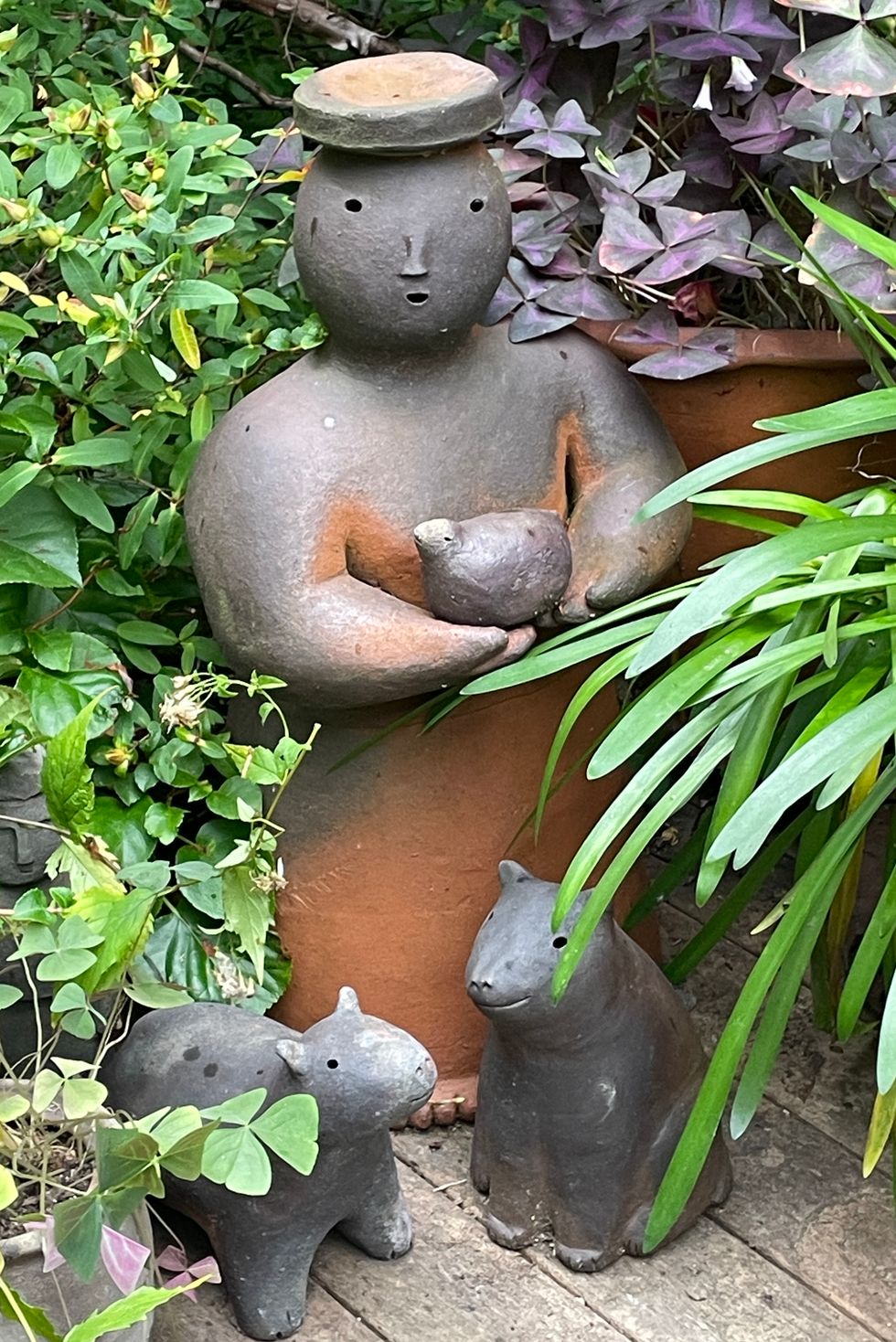 Joy Brown’s delightful ceramic sculptures.Provided