Combing the Eastern flanks for the snow-capped Andes mountains and the foothills of Patagonia, we have so far hunted down 22 distinct species of raptors, birds of prey, of Argentina. They include, of course, the Andean condor, as well as our special targets: the powerful, black-chested mora eagle and the magnificent crested eagle. High in the mountains we saw wild guanacos and other evidence of prey species.
Viewing distances have generally been too great for good bird photography, but we did get close-up photos of three juvenile mora eagles, perched and waiting for their parents to serve them their usual fare of jackrabbit.
We drove northwest from Esquel and Trevelin,where Welsh immigrants settled in the last century, toward the Parque National Los Alerces, home of the giant alerce tree, similar to our redwoods. We descended into a gorgeous, fertile ranching valley — reminiscent of the way Jackson Hole, Wyo., used to look, in the old days before the invention of the ranchette.
u u u
Watered by the Rio Desaguerdo, this valley, we thought, is the perfect place for ranching and fishing — especially if you are on the run from the IRS, the U.S. Marshal Service or Homeland Security, for some reason. So, guess what? This valley turned out to be the retirement retreat of Butch Cassidy and the Sundance Kid. No, really!
Paul Newman and Robert Redford left this part out:"Los bandidos," Cassidy and Sundance, came here, took up ranching, had 300 head of cattle, 1,500 sheep and 28 "good saddle horses." But it is said they were falsely accused of robbing an Argentine bank, fled leaving all behind, then really robbed a bank, and were killed in a shootout in Bolivia.
(I refer, of course, to Cassidy and Sundance, not Newman and Redford, who went on to perfectly respectable acting careers.)
Some of the flavor of the old Wild West is still here today. The narrow-gauged "La Trochita" or "Old Patagonian Express" train still steams its way at nearly 30 km/hr (17 mph) once a week from El Maiten south to Esquel.
It passes through every manner of scenery, including arid mountains, hills, cattle and horse ranches, pampas, swamps and ponds, with Argentine ducks, geese, graceful white and black-necked swans and pink flamingos.
u u u
How about the people? At the risk of over-generalization, the natives here are friendly — except when behind the wheel of any moving vehicle, other than a horse. They tend to be a mixed bag, mainly of Spanish, but also other Europeans, such as Celts, and local Mapuche Indians (et al), with a noticeable influx of Germans toward the end of World War II for some reason. They speak Spanish with an Italian flavor.
Argentina is now going through a difficult, if somewhat belated, period of reconciliation to the Guerra Sucia, the dirty war of 1976 to 1983, with its disparados. Some witnesses to these events are still disappearing today.
u u u
On the brighter side, there appears to be a national policy to bring young Argentinians rapidly into the 21st century world of the Internet and cell phone, thereby leapfrogging unnecessary investments in more telephone poles and snail-mail postal services.
Most towns and villages have one or even several subsidized, low-cost cyber-centers with as many as 20 or 30 computer terminals, relieving people from having to buy their own equipment. A fringe benefit for us is that, if you can master the Spanish-language computer, you can keep in touch with North American family and friends, and The Lakeville Journal. That’s progress.
Sharon resident Anthony Piel, a former legal counsel of the World Health Organization, is traveling in Argentina..

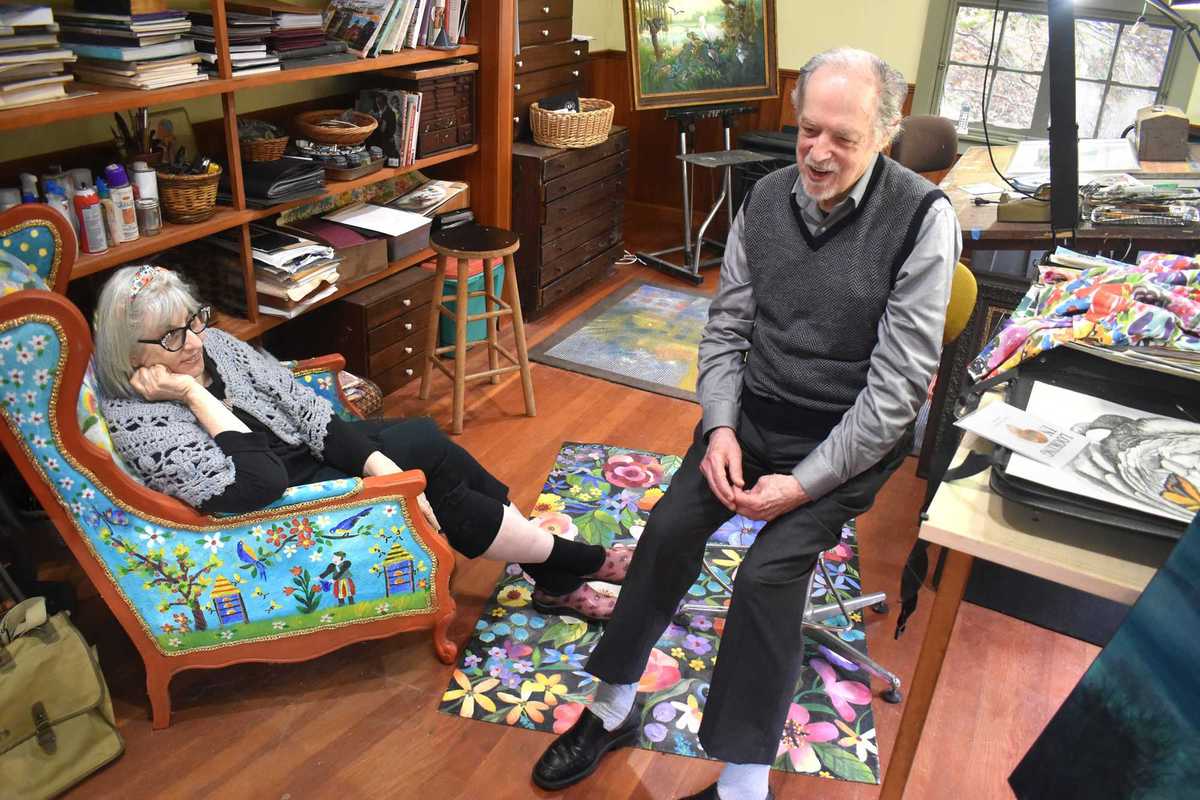
 Justine and Victor Valla in their studio with a painting of Victor’s,”Jonah and the Whale.” Robin Roraback

 A ceramic vase by Kathleen Heidemann.Provided
 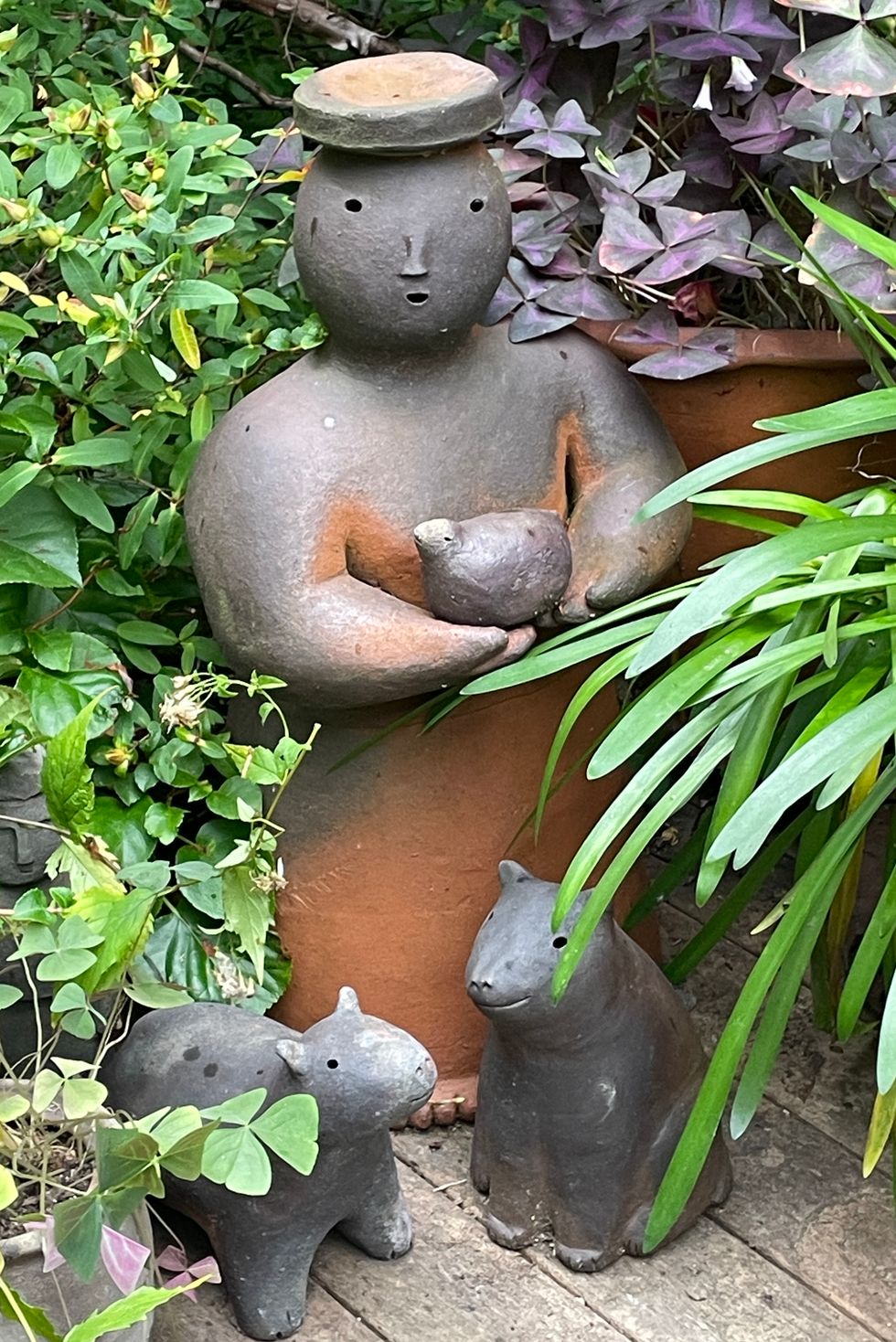 Joy Brown’s delightful ceramic sculptures.Provided