COLEBROOK — Joining the ranks of returning legislators in the Connecticut General Assembly this week is state Rep. John Rigby (R-63), who arrived home from Afghanistan late last month after a stint working with a private contractor on a NATO air base in the country’s Kandahar province.
In a phone interview shortly after his Dec. 18 return, Rigby said he had not expected to spend as long as he did in Afghanistan — more than 14 weeks — but that a replacement for his position was delayed in Iraq.
“It kept getting pushed back,� said Rigby, 41. “They had my replacement, but he was sent to Iraq.� The delay turned from days into weeks as Rigby grew homesick and eager to see his wife, Kelly, 10-year-old son, Everett, and 3-year-old daughter, Soren.
“The arrangement I had was that I was supposed to go and cover until the other person got clearance, and he was going to be permanent,� Rigby said, noting that he wasn’t able to talk about specifics of the mission or the name of the company that employed him.
Rigby did say that he had gone to school to be an aircraft mechanic after graduating Northwestern Regional High School and that he gained experience with aircraft that are currently being modified for missions in Afghanistan.
While he was gone on his extended assignment, Rigby was unable to campaign for re-election to his seat in the state House of Representatives, but local supporters turned out at events leading up the the election and helped him win a razor-thin victory over Democrat William O. Riiska, also of Colebrook. Rigby was certified the winner by 35 votes after a districtwide recount.
Initially thinking he would only be gone for a few weeks, Rigby said he had expected to make some extra money and pay increasing bills when he came home, as he had recently had problems with mortgage payments on his house, along with no business in his day job as a mortgage broker.
“The mortgage business, it got slow, like it did for a lot of different industries,� he said. “I thought the job in Afghanistan would be a good opportunity, because it seemed it would fit with the campaign cycle. I would earn money and come back in time for the campaign.�
The work itself involved a seven-day work week, with 10- to 12-hour shifts each day on a base in the middle of the desert.
“I stayed right on the base where I was assigned,� Rigby said. “You can leave, but it’s kind of a remote part of the country. There’s not much to do outside of the base. It looks pretty mountainous in the distance and the weather makes you think of Colorado high desert.�
Rigby said it was cold at night and warm during the day, and that it “rained once, for 10 minutes.�
Local Afghans would be invited on to the base once a week for an open-air bazaar, in which vendors would offer rugs, jewelry and other items.
“You get a sense that the Afghan people really want to develop business relationships with the Americans and NATO forces,� he said. “They are so poor that they are looking for any kind of economic gain that is available. The forces fighting are such a fringe element and they don’t represent the country as a whole.�
Still, appropriate caution was always taken.
“I was on a secure base, which was not only protected by razor wire, but by blast walls,� he said. “Pretty much anywhere you go you were covered by U.S. Marines and Army, plus a pretty extensive security system with cameras and listening devices, so if there is any kind of breach they can respond. When I first got there, there was a lot more violence and warnings, but it got quieter as we went into the fall. I could hear fighting. I was close enough to hear but I never felt like I was in any danger.�
With a new Democratic gubernatorial administration taking over and dozens of new colleagues to meet at the state Capitol, Rigby said he would be catching up on the issues during the Christmas break and that he would hit the ground running this week in Hartford this week.
“I’ve got my committee assignments, and I’m the ranking member now on the Labor Committee. I’m back on human services, which is great, and appropriations.�
Rigby thanked local volunteers who campaigned for him in his absence and said mostly he was happy to be home with his wife and children.
“It was tough, but I was lucky that I had so many people who pitched in — town committee chairs and a lot of good people. Without them I wouldn’t have been elected.�
Rigby also said he was thankful to have his wife, Kelly, back home in Colebrook.
“It was a lot of work for her with me being gone,� he said. “She did a great job keeping the family together.�

 Dick Hermans in the Oblong Bookstore on Millerton’s Main Street in 1985.Provided

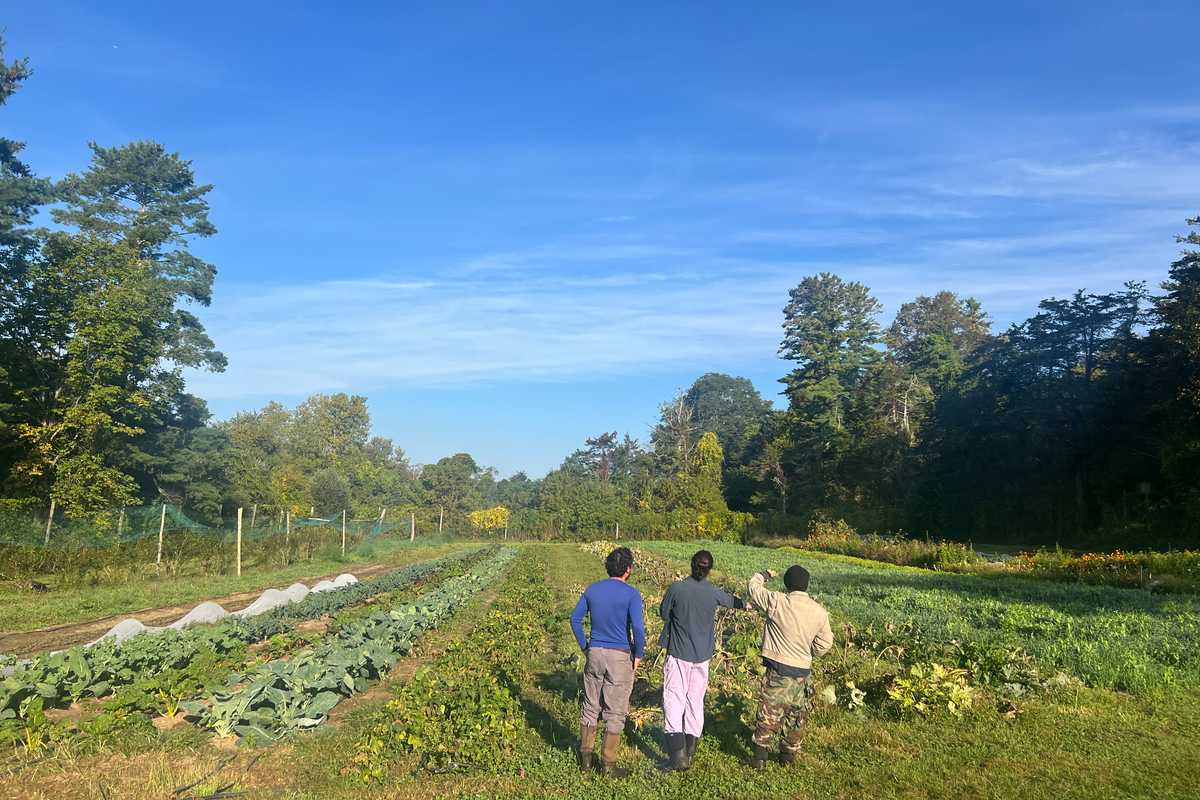
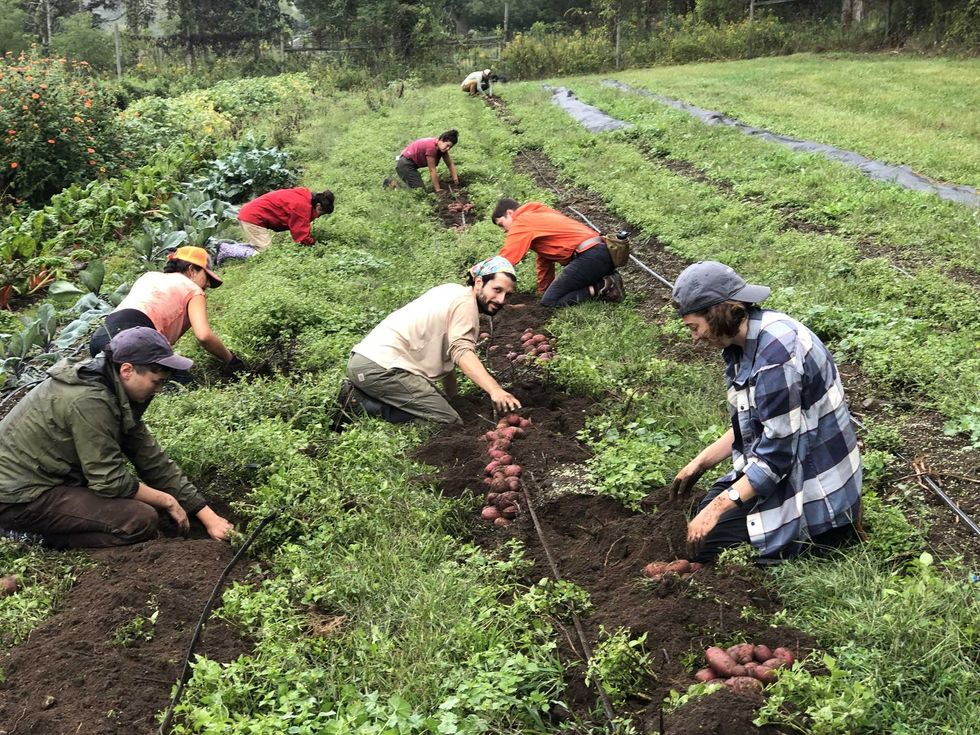 Fall storage crop harvests amid soil building cover crops at Adamah Farm in Falls Village. Janna Siller