Rush Limbaugh, the conservative talk radio icon and reformed substance abuser, has a new and worthy addition to his long line of nasty coinages, like “feminazis,� that became part of the language and culture. The appellation is RINO, acronym for Republicans In Name Only.
For more than a year, Rush has been applying this label to California Gov. Arnold Schwarzenegger, New York City Mayor Mike Bloomberg, Sen. Olympia Snowe of Maine, and others who he feels are insufficiently tied to such Republican core issues as being against abortion, for unlimited use of guns, and providing gung-ho support of as-long-as-it-takes continuation of the war in Iraq. Limbaugh accepts as vindication of his label the fact that Mayor Mike has recently defected from the Republican Party.
As far as Rush is concerned, there are times that President Bush merits the RINO label, such as when Bush does soft and mushy things like increase the budget to fight AIDS. In the aftermath of the 2006 election, Limbaugh pronounced himself pleased at no longer having to “carry the water� — that’s his phrase, too — for Bush. In Rush’s eyes, the quintessential Republican, perhaps the only “real� one on the national level, is Vice President Dick Cheney.
u u u
The RINO label has become so well known in the blogosphere that wags are using the in-name-only concept to coin their own labels. One I think apt is WINO, which stands for Waverer In Name Only. The label was created for Senators Dick Lugar and John Warner, Republicans who say that there must be a profound change in direction in Iraq, but who, when push comes to shove — when a vote is taken on just that issue — unfailingly back their president’s immovable position, with the predictable result that the war continues without impediment.
It is doubtful whether identifying such windbags as WINOS will spur them from blather to action, but it is helpful to us observers to have a shorthand way of conveying that such men are not really serious about changing what is happening in Iraq.
In that spirit, I am going to label our Sen. Joe Lieberman a DINO, a Democrat In Name Only, since he so often votes with the Republicans these days.
And I’ve invented a new acronym to characterize a group of people, some in the Bush administration and some who have left it. They are PSINOs, Public Servants In Name Only. A few of these you have heard of in the unfolding scandal of the replacement of competent U.S. attorneys because they failed in one way or another to advance the Bush agenda. Public servants, especially federal employees, have a positive duty to perform their tasks for the public good and not for the benefit of any particular group. That some White House and Justice Department employees have done otherwise has become apparent, and that scandal continues to grow.
u u u
Other instances of PSINOs in the administration are not well known but deserve to be — the muzzling of scientists in a half-dozen agencies particularly galls me. Thus I was annoyed, but not surprised, to read in a Daily Kos blog post that on Friday, July 20 — many things the administration must announce but doesn’t want to give wide publicity to are released on a Friday afternoon, so they’ll be buried by other news come Monday — the U.S. Fish and Wildlife Service announced it would review eight decisions made by Julie A. MacDonald, a political appointee as deputy secretary of the Department of the Interior. These eight decisions involve 18 endangered species.
Ms. MacDonald had rather arbitrarily rejected studies that either recommended putting certain species on the list or preventing them from being taken off. Conservation groups charge that she altered scientific data to fit administration policy, which was to shorten the endangered species list and to vastly cut back the natural areas previously designated as restricted from development to protect the habitats of certain flora and fauna.
It is good that these decisions are being reviewed, but between 2002 and 2007 Ms. MacDonald made some 200 similar decisions, and many of them have apparently been bad ones, at least from the point of view of conservationists. Those 200 are not coming under review. Among these are her decision to deny protection for the greater sage grouse, an iconic high plains bird; to hand over internal Interior Department memos to lobbyists to aid them in a lawsuit they were bringing to prevent a particular fish being put on the list (and their development project stymied); and to cut by 80 percent the allotted protected area for a bull trout that has tantalized California, Oregon and Washington anglers for a century. In each instance she overruled in-house scientists, and for her good work in the year she made these decisions, she was awarded a $9,628 bonus.
u u u
There are dozens if not hundreds of similar instances of political interference with the legitimate regulatory processes of government now being uncovered. There appear to be PSINOs everywhere in the federal bureaucracy. Witness such things as the 18 graduates of the Jerry Falwell law school in the administration — I wonder if there have been as many graduates of the top 10 law schools hired in the last six years. Whatever happened to the best and the brightest?
PSINOs have thrust the FDA into the pocket of drug companies when it should be very independent of them. PSINOs at the top have disemboweled the EPA. Political appointee PSINOs have turned FEMA into a joke, undercutting the efforts of civil servants who have dedicated their entire careers to helping people in times of disaster but who have been repeatedly thwarted by heckuva-job-Brownies.
The NLRB, National Labor Relations Board, which used to give workers a fair shake in their continuing fight against over-exploitation by employers, has been so loaded up with PSINO union-busters that grievances are no longer being brought to it.
The extent to which the Bush crowd has made a travesty of the federal government is only slowly coming to light, but it is disheartening in its breadth.
Salisbury resident Tom Shachtman has written more than two dozen books and many television documentaries.
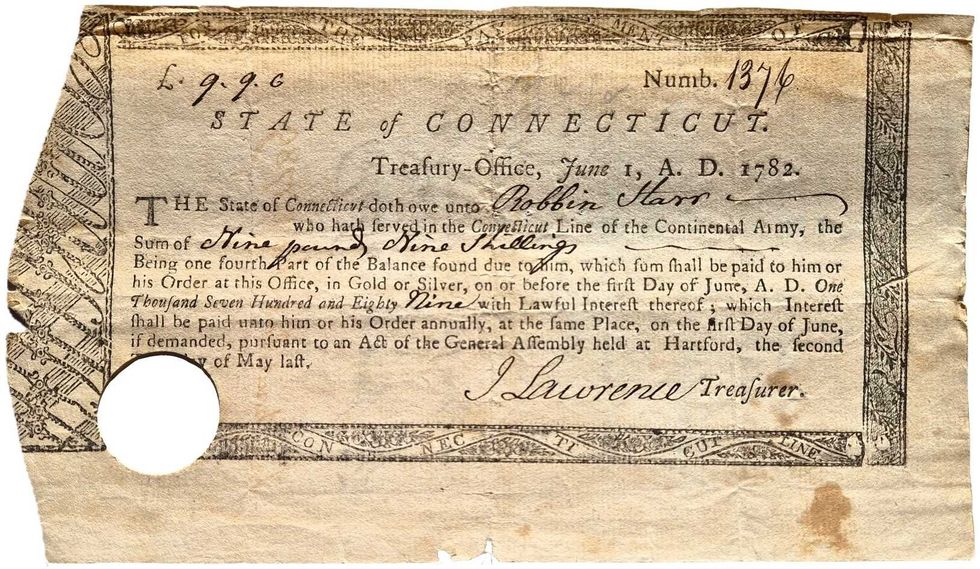 Pay Bill for Robin Starr’s service in the Continental Army.Courtesy the Alex Breanne Corporation
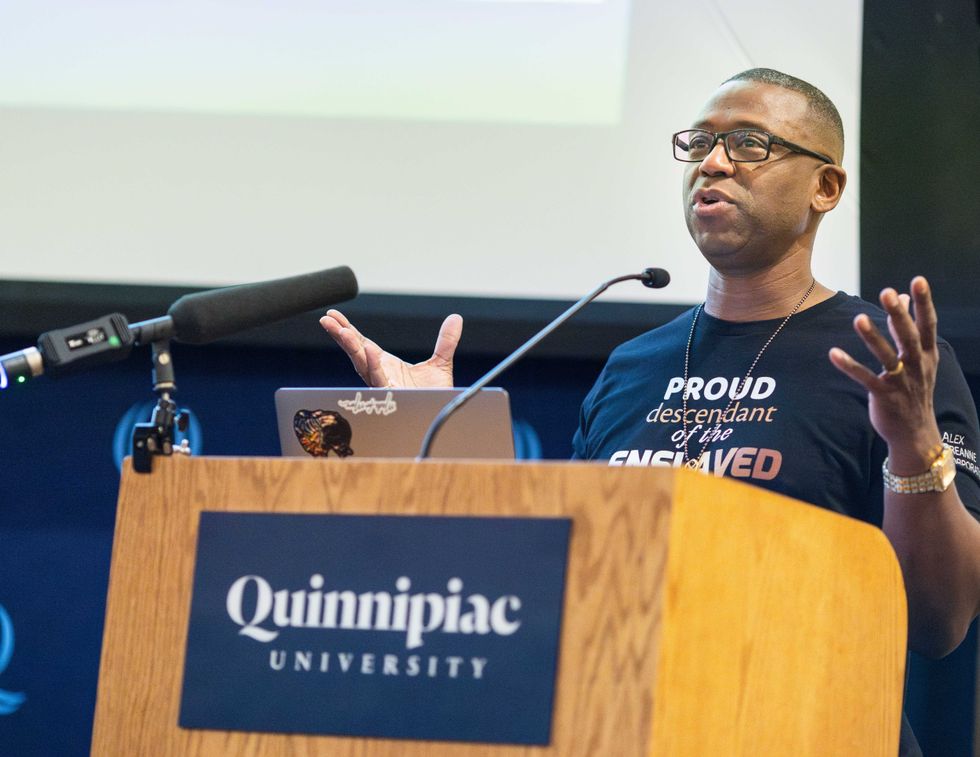 John Mills speaking at Quinnipiac University.Courtesy the Alex Breanne Corporation
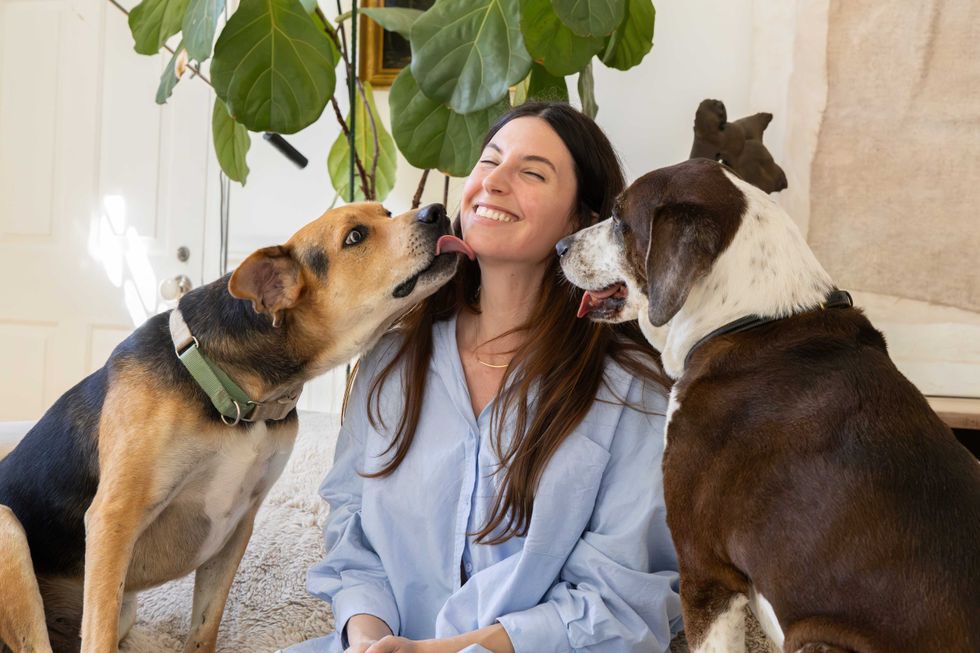 Stephanie Saetta,with her rescue dog George and Blue (left), a shepherd mix awaiting his forever home.Madi Long
 Blue, a 7 year-old Shepard mix, is waiting for his forever home. Madi Long