Two recent incidents in which bears attacked people and livestock have brought attention to a bill introduced in the state Senate by Northwest Corner Sen. Craig Miner (R-30) during this legislative session.
The bill was defeated by a single tie-breaking vote by Lieutenant Governor Nancy Wyman. Despite the 19-18 final vote, Miner isn’t certain he’ll introduce the bill again next year.
As often happens in government, the final bill was quite different from the one Miner introduced.
After 16 years as a state representative, this is Miner’s first year in the Senate. In his years in state government, Miner said he has “kind of become the sportsman’s connection” between the Legislature and agencies such as the Department of Energy and Environmental Protection (DEEP).
“The agency had been speaking to me about bear hunting legislation over the past couple years,” Miner said. This year, DEEP representatives came to speak to the Senate Environment Committee (of which Miner is a member).
“The original proposal would have authorized DEEP to develop regulations that would permit hunting of bears statewide. The idea was that they would, through the regulatory process, make a determination as to how to and when hunting would occur.”
Sen. Bob Duff (D-25) then amended the proposal so it specified that hunting would only take place in Litchfield County.
Eventually the bill was “gutted” by Duff, Miner said, so that it no longer talked about bear hunting at all. It became a bill forbidding the importation of five trophy animals into the state. The revised proposal went to the state Judiciary Committee, which chose not to take the bill up in this session.
Miner isn’t sure whether he’ll bring up the proposal again in the 2018 legislative session. Like many people, he is of two minds about the hunting of bears.
On the one hand, the bear population is growing exponentially, and the bears are becoming increasingly bold around humans.
On the other, he said, “We’re talking about the life of a beautiful animal. It’s something that calls for serious consideration.”
Growth in population
A study by the University of Connecticut shows that most of the bears in the state live in Litchfield County, Miner said.
At present there are an estimated 700 bears living here and “that population is set to explode.
“The survival rate for a first-year adolescent bear is more than 70 percent. The survival rate for a second-year bear is 90 percent. So once a bear makes it to 2 years old, it’s going to live to a ripe old age unless it gets hit by a car or exhibits such bad behavior that it has to be destroyed.”
Bad bear behavior
Two bears have been killed this year already in the area. One bear took a swipe at a woman walking in Simsbury; the DEEP euthanized that animal. Another bear was shot in Kent earlier this month; it’s believed that the 500-pound animal had killed a donkey on a Fuller Mountain Road farm. That bear was killed by the farm’s caretaker; it’s legal to shoot a bear if it is threatening livestock.
“That includes bees and beehives,” Miner noted. “I have many constituents who have lost beehives to bears, and some who have lost other animals.
“Over the next two, three, four months we’re going to see how much bear-human interaction there is and that will have an impact on whether we try to introduce this bill again.
“I do hope from a public safety point of view that we have a nice quiet summer without any more high-profile incidents.”
He stressed repeatedly that he appreciates the beauty and majesty of the bears.
“I love nature. I like seeing bears, I like seeing deer. I spend every hour outside that I can. It’s not a problem for me to see these animals and be outdoors with them. But there’s a point where statistically there are more issues that are of concern.
“And bears aren’t deer. Deer might have ticks and they might eat shrubs but bears are omnivores. They are powerful animals, they eat everything and they’re losing their fear of and respect for humans. This has become a public safety issue.”
People love to hike in Litchfield County, he said. They walk along dirt roads at dusk to visit neighbors.
“There are summer camps in Litchfield County. I can only imagine what people who manage these camps are thinking as they look at the changes in the bear population. They’re going to have to change their protocols.
“This is not an easy subject. These are high-profile, very beautiful animals that many people, including myself, have great admiration and respect for. But that doesn’t mean they should go unmanaged.”
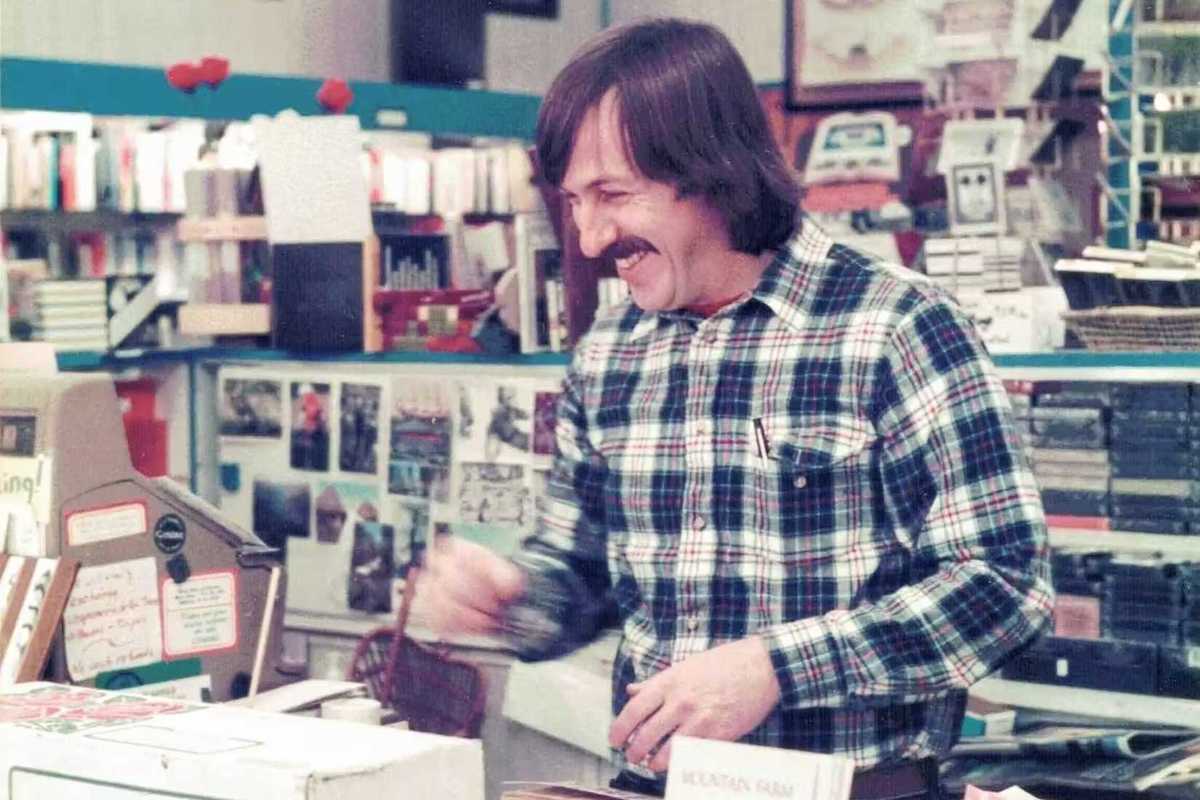
 Dick Hermans in the Oblong Bookstore on Millerton’s Main Street in 1985.Provided


 Fall storage crop harvests amid soil building cover crops at Adamah Farm in Falls Village. Janna Siller