Latest News
Contaminated soil to be tested at Holley Place this week
Aly Morrissey
Aug 05, 2026

A preliminary assessment from a CT DEEP official indicates the green-tinted water at Holley Place is likely due to algae. Further testing is expected this week at the affordable housing construction site to determine the scope of contaminated soil.
Photo by Aly Morrissey
LAKEVILLE — The Holley Place affordable housing project came to an abrupt halt last month after construction crews reported smelling fuel oil shortly after breaking ground.
Environmental testing that was scheduled for Wednesday, Aug. 5, is expected to determine the scope of contamination, what remediation may be required, and how the findings could affect the future of the project, which has faced delays and opposition since it was first proposed nearly a decade ago.
The construction site for the three-story, 14-unit apartment complex is located in historic downtown Lakeville at the intersection of Route 44 and Holley Street. After the project was paused, it resembled a large pit filled with green-tinted water, flanked by construction fencing and piles of dirt.
A supervising emergency response coordinator from the Connecticut Department of Energy and Environmental Protection (DEEP) visited the site and said the green color is most likely caused by algae, DEEP spokesperson Bill Flood said. The preliminary assessment was made by a visual observation and existing data from the site.
Flood said that already-collected samples indicate “there may be oil contamination present above the residential Direct Exposure Criteria (DEC) but below the industrial DEC,” meaning the site could require remediation and further action before it can be used for residential housing.
Additional samples will be collected this week through soil borings drilled at varying depths across the site before being sent to a certified lab for analysis.
An Emergency Response Unit staff member from DEEP will be on-site to observe testing and the agency has requested copies of all sample analysis. Results could be ready between a few days and a few weeks, Flood said.
Director of the Litchfield County Center for Housing Opportunity Jocelyn Ayer, who also serves as a consultant to the Salisbury Housing Committee, said additional testing could include groundwater sampling, which might indicate whether the site itself is contaminated or if oil migrated from a neighboring location.
The presence of oil is not entirely uncommon on a site that has been built on before, Ayer said. The parcel, formerly Bicentennial Park and a parking area, was previously occupied by the Holley Block, a three-story commercial building with upstairs apartments that was razed in 1968 to create the park.
“There’s no question that whatever it is can be remediated,” Ayer said. “It’s just about the cost of it and the extent of it, and we won’t know that until we do additional testing.”
Ayer also said the presence of fuel oil does not present an immediate public health or safety concern. “We just need to make sure that it’s contained,” she said.
The contamination came as a surprise to the Salisbury Housing Committee, Ayer said.
“There was nothing in the Phase I Environmental Site Assessment that indicated there was any kind of underground storage tank or anything like that,” she said. “Otherwise, we would have done further testing.”
A Phase I Environmental Site Assessment does not require soil testing, and Ayer confirmed the soil was not tested prior to breaking ground.
Although the delay is frustrating for committee members and project supporters eager to see affordable housing come to Salisbury, First Selectman Curtis Rand applauded contractors for taking the appropriate steps.
“I know that they did the right thing by pausing and we’ll see what the testing says,” Rand said.
Keep ReadingShow less
Foodies and families flock to Sharon Summer Book Signing event
Phoebe Tobin
Aug 05, 2026

Bowey the Magic Clown twists balloons into animals and objects during the Kids’ Summer Reading Carnival to cap off the 2026 Sharon Summer Book Signing event on Aug. 2.
Photo by Phoebe Tobin
SHARON — The Hotchkiss Library of Sharon closed out its Summer Book Signing Weekend with “Page to Plate” on August 1 and a free Kids’ Summer Reading Carnival on August 2, offering something for cooks and kids alike under a tent on the lawn on Main Street.
Saturday’s “Page to Plate” ran from 10 a.m. to 4:30 p.m. and featured seven food writers and cookbook authors, including Elisa and Robert Bildner (The Berkshires Farm Table Cookbook), Wendy Hollender, Valerie Stivers, and New York Times food columnist Melissa Clark, who closed the day in conversation with fellow cookbook author Jessie Sheehan. By midday, organizers reported around 40 tickets sold, with more walk-up sales as the afternoon went on.
Anna Stockwell, author of The Butter Book, walked the crowd through her butter essentials in the morning — grass-fed, cultured, and salted varieties — before demonstrating a butter board, spreading a pound of butter on a wooden board before topping it with lemon zest, hot honey and edible flowers. “If we’re gonna serve butter, why not make it cute?” she told the audience, before topping the spread and sending attendees up to try it themselves.
She was followed by a guided cheese tasting from Kate J. Truini, owner of New Curds on the Block, an Oakville cheese shop. Guests received individual tasting boxes as Truini walked them through five regional cheeses. “I just love talking about local cheeses,” she said, “so I hope people leave learning something about what cheesemakers are in our area.”
The talks continued into the afternoon after a lunch served by the library. The evening wrapped with a cocktail party for the weekend’s guest authors.
Sunday shifted entirely to family fun with the Kids’ Summer Reading Carnival, free from 11:30 a.m. to 2 p.m. Kids played games like knockdown, duck match, and ring toss. Bowey the Clown, a magician and balloon artist, teamed up with a face a painter, while an ice cream truck was on hand to pass out treats. Every child left with a free book through the library’s partnership with Scholastic’s Literacy Partners program, and families gathered at noon for a brunch conversation with Clark.
Renee DeSimone, the library’s director of circulation and children’s services, said the carnival’s goal was simple: to remind kids “the library is a place for them,” whether or not they already love reading. “The more the kids interact with me, the more they start to read,” she said, adding that many families tell her nightly reading at home is what hooks kids for good.
Keep ReadingShow less
Authors gather in Sharon for library’s annual book signing
Ruth Epstein
Aug 05, 2026

The Hotchkiss Library of Sharon kicks off its Summer Book Signing event with author signings and meet and greets.
Photo by Ruth Epstein
SHARON — The lawn at the Hotchkiss Library was transformed into a literary wonderland Friday during the 28th annual Sharon Summer Book Signing event.
Twenty-four authors were seated under a large tent, greeting guests, discussing their work, and signing copies of their books, which were available for purchase throughout the event.
A new feature this year was a series of author readings, with seven writers sharing excerpts from their books and discussing their work with audiences inside the 133-year-old library.
First to be introduced was Scott Siegler, who serves on the nonprofit board of LJMN Media, which publishes The Lakeville Journal and The Millerton News. Siegler, an American television executive, media investor and Emmy Award winner, discussed his short story collection, “Mobsters in the Mansion,” describing it as a mystery with comedic overtones.
He focused on the main character named Bobby Weigel, who is one of three sons with the same name. “It’s loosely based on a guy I met,” Siegler said, adding the man was delusional and went to jail. “The story is about murder which wouldn’t have happened if [Gerald] Ford had not been president and Bobby Weigel wasn’t so stupid,” he said.
During the follow-up conversation, Siegler said, “I like stories with lots of pivots. You think you’re going in one direction, and it goes to another. The plot is, to some degree, less important than the characters. If a book doesn’t service characters, it’s pretty thin.”
Asked why he gave the three sons the name Bobby, Siegler said he knew boxer George Foreman, who named all his sons George, and he liked that idea.
He said he enjoys the short story form for its emphasis on condensation. “In some ways, they’re closer to a poem than a novel.”
 Scott Siegler reads an excerpt from his book ‘Mobsters in the Mansion’ during the event’s new author readings. Photo by Ruth Epstein
Another speaker was Alex Wright, whose narrative history, “Empire of Ink: The Printers, Rogues, and Radicals Who Invented the American Newspaper,” traces the evolution of American journalism from the Revolutionary War through 1900.The book explores the legacy of smaller, forgotten newspapers, which he referred to as “untold history.”
Wright, a former journalist, said, “In some ways, the world we live in now is the way it was then. Now it’s easy for everyone to write, publish and create videos. The definition of what is community journalism is up for grabs.”
Another featured author was Anne Mackay-Smith, known locally as Anne Vance, who discussed her debut novel, “Death at Bittersweet Clearing: A Civil War Mystery.”
The setting is in Virginia, near where she was raised, and tells the story of a woman who has to keep the farm going while her husband is fighting in the war.
“She finds two bodies in the woods and then a mystery man appears,” Smith said. “Some people think it’s a war death, but she doesn’t think so.”
Smith, who wrote about finance and education for the Wall Street Journal, said, “I always wanted to write fiction, so I’m getting back to where I want to be.”
Asked if there is another book on the horizon, she gave a big smile, a clear impression that there will be another one coming.
 Anne Mackay-Smith of Sharon signs a copy of her book ‘Death at Bitterwood Clearing: A Civil War Mystery’ on Friday.Photo by Ruth Epstein
Keep ReadingShow less

Want more of our stories on Google? Click here to make us a Preferred Source.
Speed camera debate continues across Northwest Corner towns
Alec Linden
Aug 05, 2026
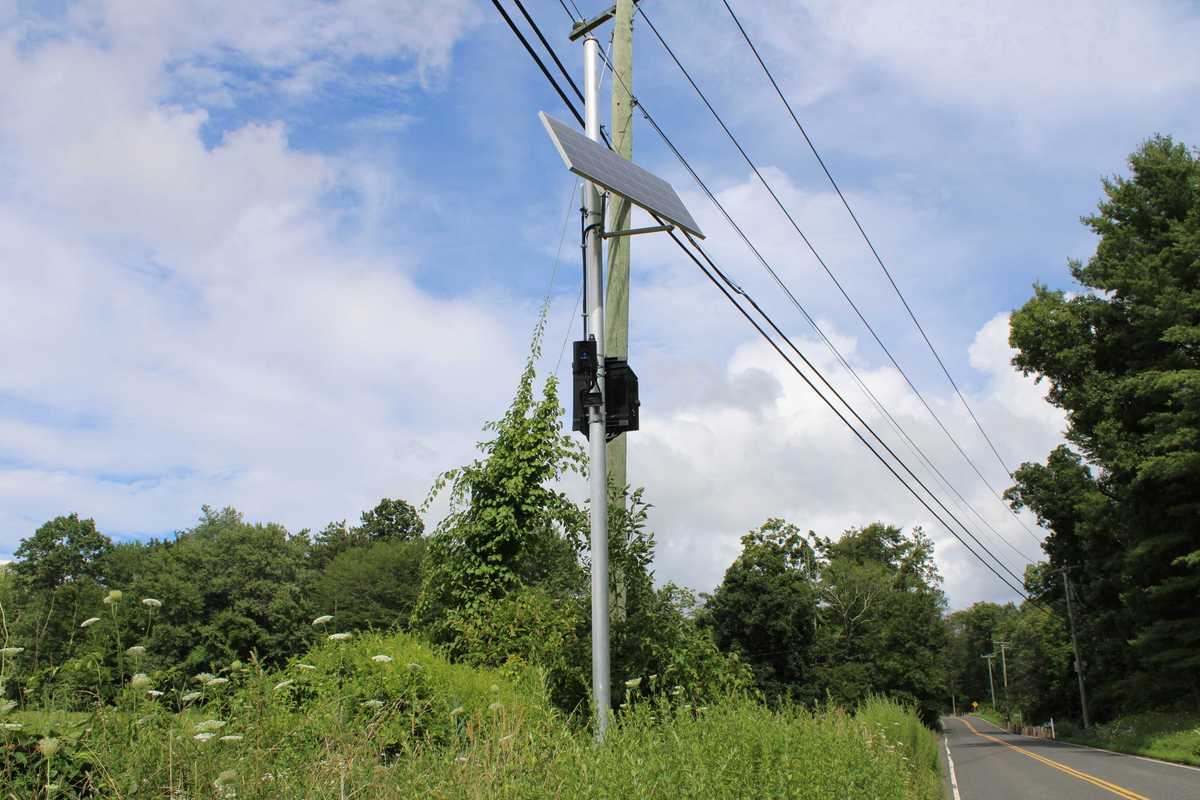
A speed camera is posted on Route 109 in Washington, the first Connecticut town to install the technology more than a year ago.
Photo by Alec Linden
LITCHFIELD — The hot-button issue of speed cameras continues to draw mixed feelings from Northwest Corner town leaders as municipalities consider implementing the traffic enforcement technology to address rampant speeding in the region.
The Northwest Hills Council of Governments hosted an informational session for officials on July 29 with Dacra Tech, a firm that has rolled out camera installations in multiple towns and cities across Connecticut since legislation passed in 2023 that first legalized their use. Brandon Knox, the company’s business development director, said that from his observations, Connecticut could benefit from slower driving.
“I probably see at least three to four crashes every time I’m here,” he said. He explained that the state’s winding, narrow roads and complicated intersections make for more dangerous driving than on the flatter and straighter roads of Illinois, where he and the company are based.
Since the law was passed, residents in the Northwest Corner have demonstrated a mixed response to the technology. A proposed ordinance to install two cameras in Kent was soundly defeated by voters in early 2025, with nearly 400 votes against and 100 in favor.
Elsewhere, town leaders have hesitated to push the systems, citing a lack of public enthusiasm, operating costs and residents’ concerns about data privacy and overburdening low-income drivers.
Salisbury, Falls Village, North Canaan and Cornwall are not currently pursuing speed cameras. Kent First Selectman Eric Epstein said that given the outcome of the 2025 vote, he had no immediate plans to revisit the issue.
Sharon recently completed a study that found widespread speeding at locations across town, but First Selectman Casey Flanagan has said the town is not yet prepared to move ahead with a speed camera ordinance.
Meanwhile, Washington, just south of Kent, was the first town in the state to implement a speed camera program. The town rolled out the first of its three cameras in January 2025 after receiving approval by the state Department of Transportation the previous year.
A year and a half later, Washington remains the only municipality in Litchfield County with active cameras, though Winchester is in the final stages of installing two cameras on Route 44 as it turns into Main Street in Winsted. Winchester’s plan was approved by the DOT on April 9.
Litchfield has held two public meetings to discuss a potential speed camera program, including an informational presentation on the technology in January. However, the town has not adopted an ordinance or received state approval to install the devices.
First Selectman Denise Raap said the community appears evenly divided on the issue.
The question will return to residents at a town meeting in late September, where voters will decide whether the town should begin drafting a speed camera ordinance. If approved, the proposed ordinance would still require additional public hearings and another town vote before it could be adopted.
Knox said that in Washington, which is a client of Dacra’s, citations totaled between 150 and 200 per day after cameras were installed, but are now down to about 50.
Dan Jerram, first selectman of New Hartford, asked if the data could be skewed. “Does it change behavior a quarter mile down the street after they pump the brakes at that one location?”
Knox said the goal is to strategically place cameras in key locations to encourage drivers to slow down both at those sites and throughout town.
The town of Fairfield in Fairfield County, for example, placed 16 cameras all within school zones around town. The program generated approximately $1.3 million in revenue in June, the first month it actively issued citations to drivers. Officials expect that figure to decline as motorists become more familiar with the cameras.
The issue of revenue as part of a speed camera program has been a central focus of public forums across the state as the technology rolls out.
The 2023 statute, known as Public Act #23-116, stipulates that first-time violations must not exceed $50, while all subsequent violations carry a maximum $75 fine. Knox explained that Dacra takes a $13.50 flat fee per ticket, regardless of the amount.
The statute also declares that revenue generated from speed cameras must be used exclusively for road safety enhancements.
Warren First Selectman Gregory LaCava, who attended the July 29 meeting, said the town is evaluating the program and believes it could be a “win-win” for Warren. If approved, the town plans to dedicate citation revenue to a road improvement fund.
Before any cameras can be installed, however, state law requires municipalities to adopt a local ordinance, which includes holding a public hearing and putting it up for a town vote.
Warren has not yet reached that stage, but LaCava said a recent public presentation and discussion at Town Hall was well received. Knox, who has worked with LaCava on the initiative, said growing frustration over speeding has fueled local interest.
“Eventually people got fed up that people were speeding,” Knox said.
Knox also clarified that speed camera citations are civil violations, unlike citations issued during a traffic stop. They do not result in driver’s license points or affect insurance rates.
Before a citation is issued, each potential violation is reviewed by a trained processor from Dacra and a designated municipal employee to ensure it contains sufficient evidence and meets the legal requirements for enforcement.
That collected data, which Knox said is limited to the make and model of the car and the plate number, “resides and stays within this one system,” he said, noting that Dacra does not share data outside the organization.
Knox added that it is up to towns to decide how they want to implement their ticketing system. Some opt to not charge the same vehicle twice in a day, while others may only issue violations every two days, or once a week.
Still, Barkhamsted First Selectman Meaghan Cook questioned how automated enforcement might function effectively in small Northwest Corner communities that are built on direct relationships.
“There is a personal accountability to a resident trooper and disconnected accountability to a camera,” she said.
Keep ReadingShow less
Brian Ohler resigns following medical leave
Christian Murray
Aug 05, 2026

NORTH CANAAN — North Canaan Selectman Brian Ohler resigned last week after a five-month medical leave, saying he could no longer justify remaining absent while the town’s three-member Board of Selectmen continued operating with only two active members.
Ohler’s resignation, effective July 31, follows a medical emergency in February that initially appeared to be a stroke. Although he has undergone extensive testing, doctors have not determined the cause, he said, and the search for answers continues.
“I have come to a very hard decision,” Ohler wrote in a Facebook post after filing his resignation. “It would be selfish of me to remain on such a prolonged medical leave when the residents and businesses of the Town of North Canaan deserve a full and active Board of Selectmen.”
He thanked residents for their support throughout his recovery and said he hopes improved health will allow him to return to public service.
“My love for the Town of North Canaan and the good people who also call it home is eternal,” he wrote. “The prospect of returning once again to elected municipal service in the future will remain the fuel and strength that lives within me.”
Ohler first announced his leave in March after describing symptoms that included double vision, slurred speech and paralysis on the right side of his body. While neurologists have not identified a definitive diagnosis, he has said physicians are also examining whether traumatic brain injuries sustained during his military service in Iraq and Afghanistan may have contributed to his condition.
Ohler notified First Selectman Jesse Bunce on Thursday, July 30, that he was stepping down.
“I wish him the best in his health, and I hope he can find out the cause of his issues,” Bunce said.
His absence had left the three-member Board of Selectmen operating with only Bunce and Selectman Melissa Pinardi. Although the two-member board could continue conducting business since it still met quorum requirements, the arrangement left little flexibility and created the potential for deadlocked votes.
“It’s a tough thing to run the town with two people,” Bunce said. “I do appreciate Brian giving us his resignation so we can move forward.”
Pinardi said it must have been difficult for Ohler to step down.
“Brian put his whole heart and soul into the town,” she said. “I know it was very hard for him to come to that decision. But he didn’t feel like he could give 100% right now.”
Ohler could not be reached for comment.
Replacement process begins
With Ohler’s resignation now official, town officials have begun the process of filling the vacancy for the remainder of his term, which was to end in November 2027.
Under Connecticut law, the town has 30 days from the date of the vacancy to appoint a replacement, according to Town Attorney D. Randall DiBella, a partner at Cramer & Anderson, who represents several towns. The appointment will be made by a vote of Bunce and Pinardi.
Since Ohler was elected as a Republican, DiBella said his replacement must be either a Republican or an unaffiliated voter. In this case, the Republican Town Committee is likely to recommend a candidate for the board’s consideration.
However, if Bunce and Pinardi cannot agree on an appointment, DiBella said the town’s elected Republican officeholders would choose the replacement.
Bunce said he plans to ask the Republican Town Committee to recommend a candidate and noted that Ohler did not suggest any potential successors before resigning.
Residents who disagree with the appointment may circulate a petition to force a special election. However, DiBella said that in his 40 years of representing municipalities, he has never seen a vacancy filled that way.
Long record of public service
Ohler has spent much of the past decade in public service. He represented Connecticut’s 64th House District from 2017 to 2019, before being defeated by Democrat Maria Horn by a thin margin in November 2018, losing by 61 votes. In November 2023, he was elected first selectman in North Canaan, succeeding Charles Perotti, who did not seek re-election.
He served one term before narrowly losing his bid for re-election to Bunce in November. Bunce prevailed by just two votes, 572-570, following a recount. However, Ohler was re-elected to the board of selectmen, just not as first selectman.
Beyond elected office, Ohler served 12 years in the U.S. Army as a military police officer, volunteering for three combat deployments — two in Iraq and one in Afghanistan — before receiving an honorable discharge in 2013.
A lifelong fifth-generation North Canaan resident, Ohler comes from a family with a long history of service to the town.
Keep ReadingShow less
Police Blotter: Troop B
Lakeville Journal
Aug 05, 2026
Police Blotter: Troop B
Police Blotter: Troop B
The following information was provided by the Connecticut State Police at Troop B. All suspects are considered innocent until proven guilty in a court of law.
Stop and Shop larceny
Early in the afternoon on July 29, troopers arrested David Whitman, 80, of Colebrook for the theft of groceries from Stop and Shop in North Canaan. After receiving the call from the store, troopers followed Whitman’s vehicle as he drove away on Route 44 and arrested him for 6th degree larceny. He was released on a $500 non-surety bond and is scheduled to appear at Torrington Superior Court on Aug. 13.
Parked car rear-end
On July 29, a Rivian R1S belonging to Amanda Wilson, 50, of New York City was parked on Route 44 near Town Hall in Salisbury. At approximately 3 p.m., a Ford van belonging to Kenneth Ball, 72, of Creswell, Oregon parked directly behind accidentally rolled into the rear of her vehicle, which was unoccupied. Both vehicles suffered minor cosmetic damage.
Single vehicle boulder accident
On the evening of July 29, Michel Desousa, 22, of Naugatuck was driving south on Route 63 in Falls Village when his Honda Civic drifted off the roadway, striking a boulder. After the impact, the vehicle flipped onto the driver side and slid across the roadway, where it ultimately impacted the embankment on the other side of the road and flipped back onto its wheels. Desousa evaded the scene, and at the time of report it was unknown if he sustained any injuries.
Evading accident scene summons
Troopers were dispatched at approximately 6:45 p.m. on July 29 to the report of a motor vehicle accident on Route 63 near the intersection with Cobble Road in Falls Village. Upon arriving, troopers found that the driver had evaded the scene, but ultimately made contact with Mauricio Souza, 45, of Naugatuck, who admitted to being the operator of the vehicle. Souza was issued a misdemeanor summons for evading responsibility, failure to maintain lane and operating a motor vehicle without a license. Souza was released with a promise to appear at Torrington Superior Court on Aug. 12.
Failure to yield crash
At approximately 7:45 p.m. on July 29, two vehicles collided at the intersection of Route 44 and North Elm Street in North Canaan. Sherrie Heath, 61, of North Canaan was attempting to make a right turn onto North Elm Street from Route 44 in a Toyota Camry but did not yield to a Ford F350 already in the intersection, driven by Walter Hewins, 70, of Ashley Falls, Massachusetts. The two vehicles collided, and both sustained functional damage. No injuries were reported from the incident.
The Lakeville Journal will publish the outcome of police charges. Send mail to P.O. Box 1688, Lakeville, CT 06039, Attn: Police Blotter, or send to editor@lakevillejournal.com.
Keep ReadingShow less
Want more of our stories on Google? Click here to make us a Preferred Source.
loading