Latest News
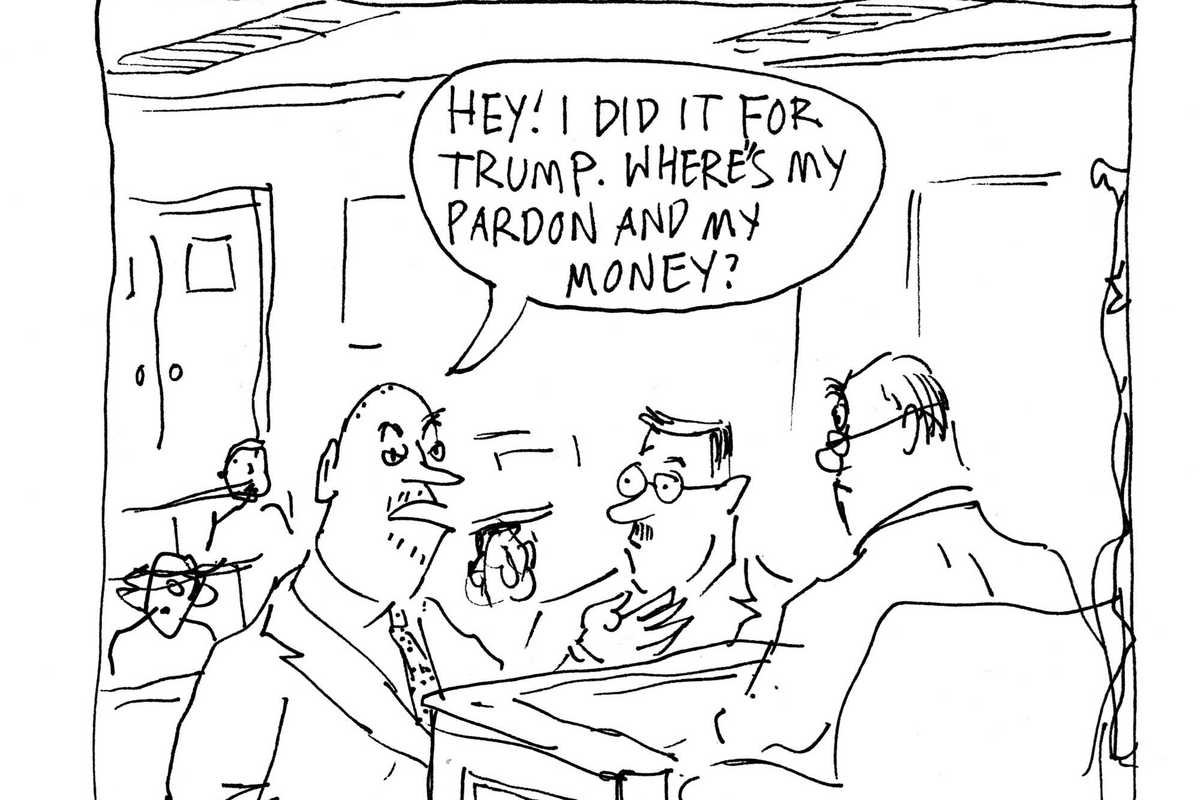
Let's Hear it - May 28, 2026
Lakeville Journal
May 27, 2026

Last Week’s Question
What is one change you’d make to your town center to make it more welcoming?
“Parking downtown. And definitely need a small grocery store perhaps next to the liquor store in the empty building.”
— Robert Bloxsom Jr., North Canaan
“Build more village housing dedicated to low and middle income residents.”
— Dan Dwyer, Salisbury
“Flowers on the posts in town throughout the summer like other towns have”
— Renee Fleming, North Canaan
“Garbage cans like other towns have. So people with takeaway coffee and ice cream can toss trash and people with dogs have a place to put poop. In town and also along the Rail Ramble from Lakeville into Salisbury.”
— Laura van Straaten, Salisbury
“Cornwall Bridge and West Cornwall both need parking and public bathrooms.”
— Michelle Shipp Schatz-Mullins, Cornwall
This Week
Bear encounters are being reported with increasing frequency across the region — rummaged trash cans, damaged bird feeders, and face-to-face surprises.
Have you had a run-in with a bear? What happened, and how did you handle it? And what do you think towns and neighbors should be doing to keep both people and bears safer?
Send your responses to publisher@lakevillejournal.com by Monday, June 1 at 10a.m. or comment on Facebook or Instagram.
We’ll publish a selection in next week’s paper.
Editor’s note: Dan Dwyer is the Board Chair of LJMN Media, Inc.
Keep ReadingShow less
Letters to the Editor - May 28, 2026
Lakeville Journal
May 27, 2026
Trump chaos decimates democracy
Watching the chaos and dangerous decisions stemming from King Trump’s presidency has been staggering. His corruption, deceit, and continuing crimes have decimated so much of our democracy.
The war with Iran is one of the most atrocious decisions King Trump could make. After this debacle the Iranians will never trust us to make any legitimate deal. Trump is sending in our young men to fight an illegitimate war that doesn’t have congressional approval. What about the children that were killed in a bombing that was sanctioned?
King Trump’s sycophants continue to do his bidding while gas and food prices rise significantly. The laws that protect the people and our country are disregarded while Trump rakes in billions.
Is anyone worried about the gutting of the voting rights act. The supreme court ruling enables states to dismantle minority voting power in state legislatures, county commissions and city councils nationwide. This is “Jim Crow” rearing its ugly head again.
Every immigrant, both legal and illegal, is subject to detention by ICE. ICE would classify them as “applicants for admission” a legal designation that requires them to be locked up without opportunity for bond.ICE has been given unprecedented power and the abuses include murder.
King Trump’s executive decisions have violated our constitution repeatedly. He has attempted to end birthright citizenship, reinstate Schedue F to fire civil servants, restrict diversity, close the department of education, all without congressional approval yet he continues to flout every rule of our constitution.
The teflon Don and his minions are butchering our democracy at warp speed with alarming repurcussions. GOP legislators, governors, even the supreme court are in on this flagrant conspiracy to destroy democracy. The United States has never had a dictator at the helm of our country, but unless King Trump is held accountable for his corruption, we will be calling him the “Fuehrer.”
Gretchen Gordon
Sharon
Falls Village should not retreat on affordable housing
Late in 2025, the Falls Village Housing Trust, the Northwest Connecticut Land Conservancy and Habitat came together with the Town of Canaan / Falls Village at the firehouse to discuss plans for a 66 acre parcel and a 14 acre adjacent parcel both owned by Habitat on River Road. Based on guidance provided by the Planning and Zoning regulations originally published in 2013, and updated in 2024, thoughts were brought before the community regarding a mixed-use development to expand affordable housing opportunities and a proposal to offer a substantial part of the property to the NCLC for recreational access to the Mohawk, or Blue Trail.The proposal was met with great enthusiasm by the community as the need for increased affordable housing and expanded recreational opportunities are recognized in all of Northwest Connecticut.
In a surprise move, an initiative brought forth in March of 2026 by one community member sought to reverse the Incentive Housing Zone overlay regulations agreed to in a town meeting in 2013 and made an element of the town’s Planning and Zoning Regulations.
As a result, guidance on the development of this opportunity for the community which had been the foundation of plans for affordable housing are being summarily squashed.Included in the new regulations is also a stipulation disallowing any waivers for housing density which had previously been the purview of the P&Z Commission.This amendment, as well as an effort to change the P&Z regulations regarding the maximum number of housing units which may be built in the IHZ Overlay Zone were passed at a open hearing meeting attended by 5 members of the public on May 14th.
Given the short notice of the public hearing to members of the community, any opposition to this effort was effectively suppressed.
As the P&Z Commission had previously approved the development being done on 10 acres of the IHZ Overlay Zone by the Falls Village Housing Trust, the Commission let stand their development plans. However, this change quashed any effort on the part of Habitat to utilize the density statues for the IHZ Overlay Zone which had existed in the regulations since 2013.
Habitat’s intention had been to develop 3 single family homes on roughly 3 acres of the 70 acres retained after transferring 10 acres to the FVHT.Under the previous Zoning regulations, this was a highly acceptable use of the property, and was in fact encouraged by the community and the P&Z Commission.One voice, in conjunction with their spouse’s position, was sufficient to stop this effort.
Habitat is now researching all means at its disposal to facilitate the development of their property.One voice should not hold such sway over so critical an issue as the providing of affordable housing.
Lyman Whelan
Litchfield
Keep ReadingShow less

Want more of our stories on Google? Click here to make us a Preferred Source.
Crypto companies see beyond bitcoin
Bill Schmick
May 27, 2026
There is a brave new world out there for crypto miners, brokers, and blockchain entities. The same process that allows cryptocurrencies to trade and settle in the blink of an eye is now being applied to other assets. The hope is that this new technology can help some companies escape another long, crypto winter.
It is called asset tokenization. And whether we are talking about stocks, bonds, real estate, or anything else that trades in the real or digital world, all these areas can be tokenized. The first question many ask is what is a digital token?
It is a programmable digital asset, just like any crypto currency,issued on an existing blockchain such as Ethereum.But unlike cryptocurrencies such as Bitcoin, which have their own blockchain, tokens can be issued on just about anything, including asset ownership of things (paintings, properties, dollars), access rights, voting power, identity, predictions etc.
A stock, for example, which trades on a digital market (and most of them do), can now be converted into a digital token on a blockchain. This allows for fractional ownership, faster transactions, and broader market access. While tokens can be applied to anything, they have an obvious use in expanding financial infrastructure where settlement of money is extremely important.
One way to think about this technological trend is as a new way to handle the flow of financial assets that trade globally, 24 hours a day. Money changes hands constantly and the expression ‘time is money’ takes on real meaning when trillions of dollars are involved. Tokens act as a new kind of plumbing that allows money, instead of water, to flow faster, with fewer cracks, leaks or clogs, and therefore greater predictability. In past columns, I have written about stablecoins, which also use blockchain technology to effect fast, secure, and borderless transactions in the currency world. This is simply another use for this technology.
Crypto companies have embraced digital tokenization with open arms. Bullish, a crypto exchange run by the former head of the New York Stock Exchange, acquired a tokenized equity company, Equiniti, for $4.25 billion in a stock transaction a week ago. Recently, Centrifuge, which specializes in tokenizing exchange-traded funds and credit products, announced a deal with Coinbase, a leading cryptocurrency company.
Robinhood, the broker, is also interested in the area but has yet to ink a deal. CEO Vlad Tenev did say that “our strategy is to take crypto infrastructure and apply it to assets that have real-world utility. That’s why we care so much about tokenization.”
Crypto companies hope tokenization will allow them to expand beyond simple cryptocurrency trading. As readers know, crypto currencies can be notoriously volatile and have been subject to periods of massive underperformance.Over the years, the crypto companies have had to weather periodic ‘crypto winters’, which can last for years. If tokenization catches on, it could allow the industry to diversify away from volatile crypto trading toward a more stable and predictable business model.
But tokenization is in its infancy. As it stands, there are only about $27 billion in tokenized real-world assets on the blockchain. That’s a drop in the bucket when one considers the $200 trillion plus in global digital equities alone.
However, the settlement arms of Nasdaq and the Depository Trust and Clearing Corporation (DTCC), which do the lion’s share of equity settlements, are now engaged in pilot programs studying both blockchain-based settlement and tokenized securities. Larry Fink, the CEO of BlackRock, the mega-billion-dollar asset management company, believes tokenization could transform finance. He may be right. One thing is for certain: blockchain technology is here to stay, and its uses will continue to multiply.
Bill Schmick is a founding partner of Onota Partners, Inc., in the Berkshires.Bill’s forecasts and opinions are purely his own and do not necessarily represent the views of Onota Partners Inc.
Keep ReadingShow less
Student or Visitor?
Prithika Venugopal
May 27, 2026
In March 2025, a Tufts University doctoral student from Turkey had her visa stripped away after constructing an opinion piece critical of her university’s position on the war in Gaza. The administration’s argument is that a visa is a privilege, not a right, and that non-citizens do not enjoy the same First Amendment protections as Americans. This view is flawed; it misunderstands the nature of a student visa and the values America claims to uphold.
Legally, the F-1 student visa frames its recipient as no more than a temporary visitor. Federal standards state that students have to maintain a foreign residence they have no intention of abandoning. This suggests someone visiting, not putting down roots. But the reality of a doctoral program tells a different story. Graduate students can spend around seven years on American campuses. They teach undergraduates, conduct research, serve on committees, and become key parts of their university communities. They do not come to America to visit attractions. They come with the intent of changing the world.
Starting in elementary school every kid is taught that America is a ‘melting pot’. A nation where people from all walks of life are invited to become part of a shared civic life. The melting pot assumes that newcomers will engage, debate, and contribute their voices to the national conversation. A student who writes an op-ed in the school newspaper is doing exactly that. She is acting like a citizen in every meaningful sense, even if her passport says otherwise. So when the government punishes her for speaking, it sends a contradictory message: “We want you to join our community, but only if you lose your voice.” They strive to strip them of any authentic thought.
There is a deeper constitutional principle at play. The First Amendment does not say “citizens” have freedom of speech. It says “the people” do. Courts have long recognized that non-citizens within the United States are among “the people” entitled to constitutional protections. Federal judges have already pushed back on the administration’s position. In a similar case regarding a revoked student visa, a judge ruled that the government likely acted in a “viewpoint-discriminatory way to chill protected speech.” Another judge, appointed by President Reagan, deduced that the administration’s choice violated the First Amendment. This matters because of what the Supreme Court has repeatedly said about laws that target specific beliefs. In cases involving religious freedom, the Court has ruled that the government cannot single out particular viewpoints for punishment. If the government only revokes visas from students who speak out on one side of the Gaza conflict, while leaving students with opposing views untouched, that is in no way neutral enforcement.
The government is correct in saying that a visa is a privilege. No one has a right to study in the United States. But once a person is here, the Constitution follows. The government cannot condition a privilege on giving up a constitutional right. It is inherently flawed, similar to a town stating “Usage of the public park is permitted as long as the individual does not criticize the mayor. “ The Supreme Court has struck down such conditions before.
America invites students from around the world to join its universities. It asks them to engage, to learn, and to contribute. When they do that, either by joining a debate or composing an op-ed, the government punishes them. A student visa may call its holder a visitor, but the Constitution treats them as a person. That protection should not depend on which side of a political argument they stand on.
Prithika Venugopal is a 12th grader at Rocky Hill High School
Connecticut Foundation for Open Governement high school essay contest
Each year, the Connecticut Foundation for Open Government sponsors an essay contest open to all high-school students in the state. The contest focuses on First Amendment and open information issues. This year, students chose from three prompts (edited here for space constraints): 1.) the potential limitations on hate speech following the fatal shooting of conservative activist Charlie Kirk; 2.) the arrest and revocation of the student visa of a Tufts University Ph.D. student from Turkey who had written an opinion piece for the school newspaper critical of the university’s position on the war in Gaza; 3.) the banning of the Associated Press from Oval Office events and Air Force One following its refusal to refer to the Gulf of Mexico as the Gulf of America, which is President Trump’s preferred name.
The Lakeville Journal has obtained permission to publish the 2026 top three winners out of 70 entries from across Connecticut. First place went to Nora Kallusky, a senior at Ridgefield High School. There was a tie for Second Place, so Mayumi Iwai, a junior at Greenwich High School, and Prithika Venugopal, a senior at Rocky Hill High School, both received that honor.
Keep ReadingShow less
Secretary of State campaigns on election security message in Salisbury
Ruth Epstein
May 27, 2026
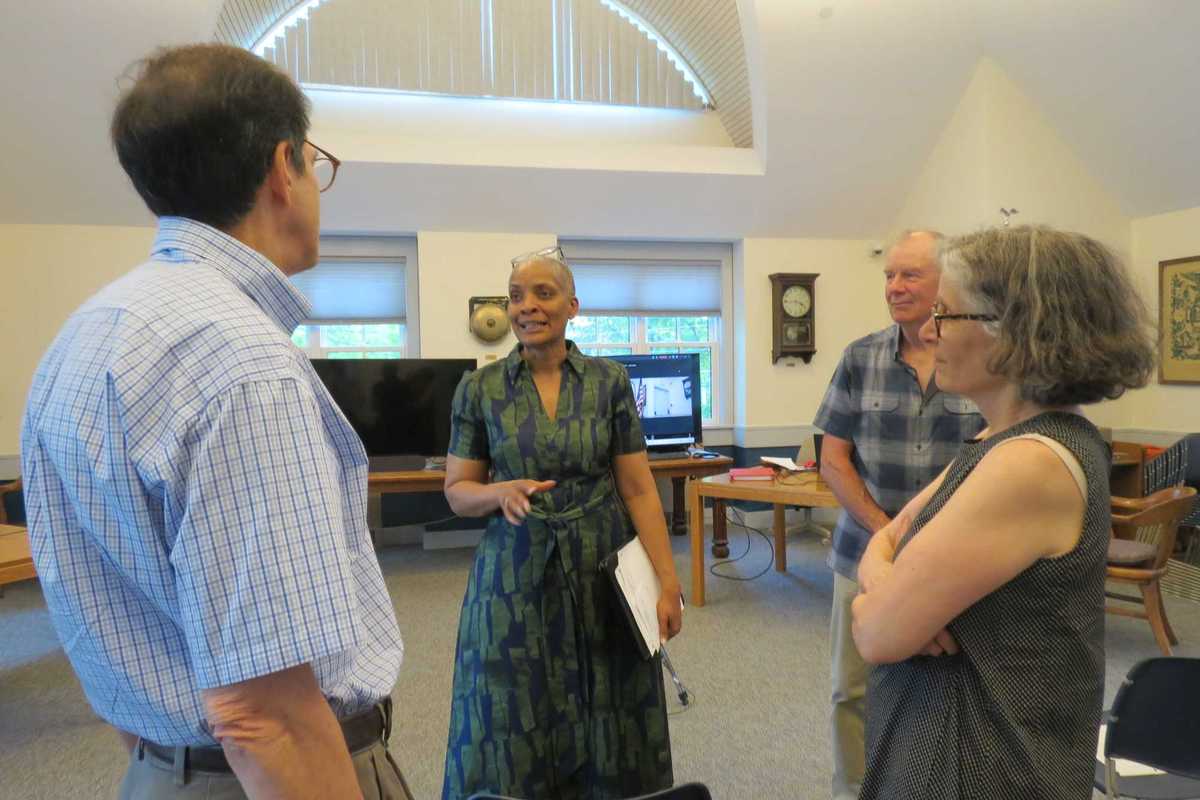
Secretary of State Stephanie Thomas visits with Lee Greenhouse and Flora Lazar at the Salisbury Democratic Town Committee meeting Tuesday as committee Chairman Al Ginouves looks on.
Ruth Epstein
SALISBURY – Connecticut Secretary of State Stephanie Thomas, who recently secured the Democratic endorsement for reelection, spoke Tuesday, May 19, at a meeting of the Salisbury Democratic Town Committee.
Thomas centered her remarks around what she describes as ongoing threats to the country’s election system, describing the past year and half as “crazy.”
She said the administration in Washington, D.C., has sought to alter voting procedures, but said resistance from states has been growing, with many filing lawsuits.
“Thirty states have refused the request to turn over their voting rolls,” Thomas said. “All the cases have been lost by the Department of Justice.”
She also discussed one of President Donald Trump' s executive orders, which she said could give the United States Postal Service a role in determining the eligibility for mail-in voting and allow postal workers to reject ballots from voters not included on newly created federal voter lists.
“That is still in court, and most are being stopped by injunctions,” she said.
Thomas also addressed what she described as threats by the current administration to deploy federal agents to polling locations to oversee elections.
Thankfully, she said, there is bipartisan pushback against the idea across the country.
Thomas said she is equally concerned about what she describes as the gutting of the U.S. Cybersecurity and Infrastructure Security Agency, known as CISA, which is part of the Department of Homeland Security.
She said the cuts end funding for the system that alerts state officials of election security threats across state lines. Connecticut, she said, may ultimately have to pay for voter security measures itself.
The administration also stopped funding the Election Infrastructure Information Sharing and Analysis Center, or EI-ISAC, which alerts state officials to active election threats in other states.
Noting she often hears how lucky people in Connecticut are, Thomas pointed to legislation signed that day – May 19 – by Gov. Ned Lamont enacting a no-excuse absentee ballot law. Voters will no longer need to meet one of the six limited requirements to obtain such a ballot.
Asked about early voting schedules for the November election, Thomas said there will be no changes from last year, though tabulators will now be allowed for those ballots.
In traveling across the state to discuss her role, she often focuses on such topics as business fraud and labor trafficking. Thomas said she enjoys speaking at schools, but lamented that her office has no funding for voter education.
Thomas was raised in New Jersey in affordable housing, and said she recalls times when her home was dark because the electricity was shut off. She worked hard at her studies and was given a scholarship to attend New York University.
Most of her career has been spent in the nonprofit sector as a way of giving back. Although politics was not an aspiration, listening to the Trump and Hillary Clinton debates spurred her interest.
After moving to Norwalk, Conn., Thomas saw there were eight representatives in the area running unopposed. Feeling voters deserved a choice, she launched an unsuccessful 2018 bid for state representative in the 143rd district, running again successfully in 2020. When former Secretary of State Denise Merrill announced she was not seeking re-election in 2022, Thomas threw her hat into the ring.
“It was the best job I ever had until January 2025,” she said, alluding to the official start of the second Trump administration. “It’s been difficult.”
Keep ReadingShow less
Want more of our stories on Google? Click here to make us a Preferred Source.
loading